 (+971) 8007 4267
 (+91) 946 340 7140
 (+1) 628 432 4305

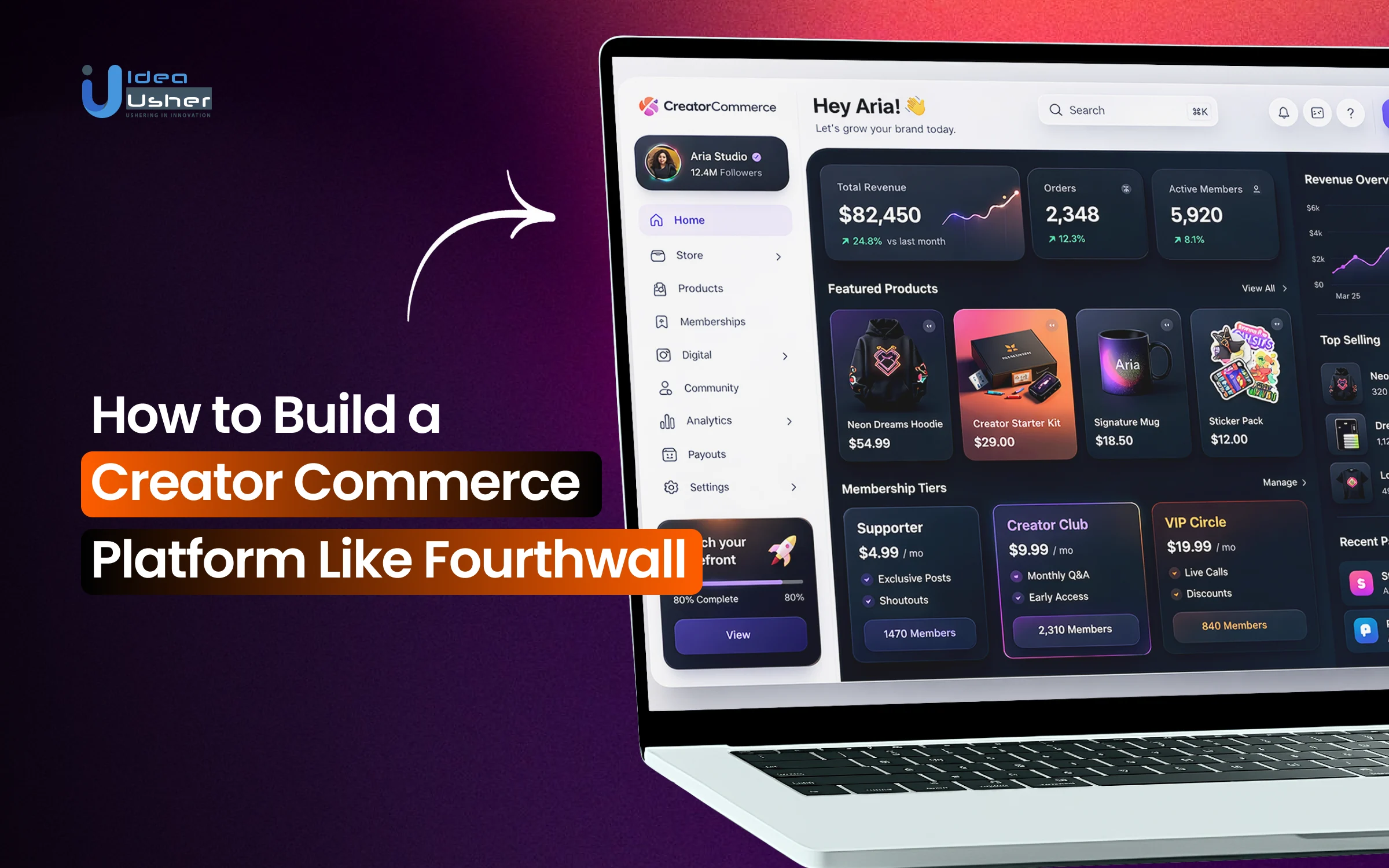
A decade ago, the creator economy mostly depended on views and ad revenue. Creators would grow their audiences, and hope platforms would eventually pay through ads or brand deals. This model gradually became unstable because algorithmic changes could suddenly affect reach and income.
As a result, creators began seeking ways to own their revenue streams. The popularity of creator commerce platforms has started increasing because they can provide built-in storefront creation and product fulfillment systems. These platforms can also handle fan memberships and digital product delivery. Creators can now manage payments and community support from a single dashboard.
Over the years, we’ve developed numerous creator commerce solutions powered by digital content delivery infrastructure and fan membership systems. As IdeaUsher has this expertise, we’re sharing this blog to discuss the steps to build a creator commerce platform like Fourthwall.
The Rise of Creator Commerce Platforms

Source: Polaris Market Research
Investors are now prioritizing the transactional engines that power individual-led enterprises over simple content creation. This inversion of the retail funnel allows creators to leverage high-trust communities to launch sophisticated D2C brands, bypassing traditional advertising.
Modern platforms like Fourthwall and Pietra have evolved into integrated business suites that eliminate friction from third parties. These tools provide creators with the operational capabilities of large corporations, from bespoke memberships to global manufacturing and logistics. By commanding supply chains that once required entire departments, creators are transforming into scalable, high-margin entities that offer significant asset value and data sovereignty.
Why Creators Seek Ownership
Platform dependency is now viewed as a systemic business risk. Algorithms are volatile, and revenue shares are often predatory. Serious creators are migrating to owned infrastructure to secure audience portability. This is the ability to maintain a direct relationship with customers regardless of social media policy changes.
From a strategic standpoint, ownership provides three critical advantages:
- Data Sovereignty: Capturing first-party behavioral data and purchase history instead of letting a social network gatekeep it.
- Margin Protection: Eliminating the platform tax and retaining a higher percentage of every transaction.
- Asset Value: A creator with a proprietary platform is an acquisition target. A creator with just a following is a temporary trend.
From Merch to Commerce Ecosystems
The era of basic logo-printed merchandise is over. Today’s market demands full-scale commerce ecosystems that integrate physical goods, digital assets, and subscription services. We are seeing creator-led ventures thrive in high-margin sectors like biotech, fintech, and specialized SaaS.
These modern ecosystems require a sophisticated backend capable of handling:
- Global Logistics: Automated, cross-border fulfillment and white-label manufacturing.
- Financial Layers: Integrated payment processing, tax compliance, and multi-currency support.
- Community Gating: Tiered access models that blend commerce with exclusive content and networking.
Why Brands Back Creator Platforms
Traditional digital advertising is facing an efficiency crisis due to rising customer acquisition costs and privacy restrictions. Brands are investing in creator platforms to gain a shortcut to high-intent audiences. By owning the platform where the creator lives, a brand secures a permanent, cost-effective distribution channel.
This investment is driven by the need for native market research and supply chain synergy. These platforms serve as real-time focus groups, providing brands with immediate feedback on product market fit. For institutional investors, these platforms represent a diversified bet on the future of retail, where influence is a measurable, scalable asset.

What Is Fourthwall and Why It Works?
Fourthwall is an all-in-one creator commerce platform designed to replace fragmented tools like Shopify and Patreon with a single, branded hub. By integrating custom storefronts, memberships, and print-on-demand logistics, it allows creators to own their audience data and brand identity while operating with the infrastructure of a global enterprise.
All-in-One Creator Storefront
The primary value is the elimination of tab fatigue. Fourthwall collapses memberships, physical products, and digital downloads into a single branded domain. This cohesion significantly boosts conversion rates because the customer journey remains seamless from discovery to checkout within one ecosystem.
This unified model centralizes critical business intelligence. Creators gain a holistic view of CLV by tracking subscribers’ interactions with product drops. This data allows for targeted marketing strategies that were previously impossible to execute across disconnected platforms.
Creator Monetization Features
Fourthwall prioritizes high-impact revenue pillars over vanity features. The platform focuses on three essential areas:
- Integrated Memberships: Subscriptions live on the storefront, enabling native perks such as member-only product access and early-bird drops.
- Hybrid Commerce: Creators sell digital assets alongside physical apparel in a single transaction, diversifying income without technical complexity.
- Engagement Tools: Features like Twitch gifting and personalized video shoutouts monetize emotional connections, turning transactions into community events.
Logistics Without Complexity
The biggest barrier to creator commerce is the physical supply chain. Fourthwall removes this by acting as a full-service logistics partner. They offer an extensive catalog of on-demand products, meaning creators never carry inventory or risk capital on unsold stock.
Critically, Fourthwall serves as the Merchant of Record. The platform manages global sales tax, customs, and international shipping regulations. This transforms the platform from a simple website builder into a global fulfillment network that handles the operational burden of international trade.
Key Features of a Creator Commerce Platform
A competitive creator commerce platform must move beyond basic e-commerce. It functions as a command center that balances front-end branding with back-end power.
Success depends on three pillars: identity, utility, and scalability. By offering a comprehensive suite, the platform captures high-quality data and builds a defensive moat against single-purpose competitors.

1. Creator Storefront Builder
The storefront is a creator’s digital headquarters. Premium platforms offer deep white labeling capabilities. For instance, Wix and Squarespace provide creators with drag-and-drop tools that give them full control over CSS, typography, and layout. This ensures the store feels like a native extension of their brand, which is vital for maintaining fan trust and driving conversions.
2. Print on Demand Infrastructure
Integrated print-on-demand networks are the backbone of physical commerce. Platforms like Printful and Printify allow creators to launch products without upfront capital or inventory risk. The infrastructure manages API connections to global factories to ensure orders are automatically routed, printed, and shipped.
3. Digital Product Sales Tools
Digital assets offer the highest margins in the creator economy. Specialized platforms like Gumroad and Sellfy support the secure delivery of PDFs, video courses, and software. Key requirements include secure hosting to prevent leaks and automated fulfillment immediately following a successful transaction.
4. Membership and Subscription Systems
Recurring revenue provides creator stability. Platforms like Patreon or Circle allow creators to gate exclusive content or community access. Building this into the commerce platform enables hybrid perks, such as a subscription that includes discounts on the storefront or exclusive monthly physical items.
5. Donations and Tipping Tools
Low-friction tipping tools are essential for monetizing live engagement. Tools like Buy Me a Coffee or Ko-fi are optimized for mobile and support one-tap payments. For the operator, these micro transactions provide high-volume data on fan sentiment and the financial health of the creator’s core audience.
6. Creator Analytics Dashboard
Data is a powerful retention tool. Professional dashboards, such as those found in Shopify or specialized tools like Triple Whale, provide more than total sales. They offer granular insights into conversion attribution and Customer Lifetime Value. Tracking these metrics helps creators identify which content drives revenue and where they can reduce subscription churn.
Advanced Features That Differentiate Creator Commerce Platforms
Standard creator storefront builders are no longer enough to dominate the market. To attract institutional investment, a platform must offer operational advantages that move it from a passive tool to an active growth partner. These features create high switching costs by making the platform essential to a creator’s business.
Leading platforms focus on reducing the cognitive load of running a large enterprise. By automating backend processes and providing predictive data, they allow creators to focus on their primary assets: content and community.
1. Automated Merch Fulfillment
True differentiation requires a hands-off production engine. Advanced platforms integrate with global manufacturing hubs to provide real-time product creation. Sophisticated routing logic selects the fulfillment center closest to the customer to reduce shipping times and costs.
This automation includes quality control and returns management. By handling the entire lifecycle of a physical product, the platform eliminates the need for creators to hire operations staff. This represents a scalable infrastructure play that captures margins across the entire supply chain.
2. Multi-Channel Integrations
The modern creator business is fragmented across various social and streaming networks. A leading platform acts as a centralized hub that pushes data and products to these channels. This includes native integrations for social commerce features on YouTube, Instagram, and Twitch.
These integrations allow for synchronized inventory management across all touchpoints. When a product sells out during a live stream, the storefront and social shop modules update instantly. This prevents overselling and maintains brand integrity across the entire digital footprint.
3. Community Engagement Tools
Commerce is now a byproduct of community. Platforms are building native engagement layers that allow creators to interact with fans directly on their owned domain. This includes gated discussion boards, live chat during product drops, and exclusive polls for future designs.
By keeping the conversation on the platform, creators increase dwell time and purchase intent. These tools transform a static shopping site into a dynamic destination, fostering a sense of belonging that traditional e-commerce cannot replicate.
4. Built-in Creator CRM
A robust Customer Relationship Management system separates a storefront from an enterprise. Advanced platforms capture every interaction, from email opens to purchase history. This data allows creators to segment their audience into high-value super fans and casual observers.
Having a built-in CRM means creators can launch automated, personalized marketing campaigns based on fan behavior. For example, a repeat buyer could be automatically invited to join a subscription tier. This automation is critical for scaling revenue without increasing manual workload.
5. AI Product Recommendation Tools
Artificial Intelligence is used to maximize average order value through predictive analytics. By analyzing fan behavior datasets, the platform suggests the right product at the peak moment of interest. This goes far beyond basic related product suggestions.
These AI engines can predict which designs will perform best based on past sales and social trends. They can also optimize pricing in real time to balance volume and margin. For entrepreneurs, these AI layers represent the intellectual property that drives long-term platform valuation.

How to Build a Creator Commerce Platform Like Fourthwall?
Building a creator commerce platform like Fourthwall requires a scalable commerce infrastructure capable of handling sudden spikes in creator traffic and product drops. The system should integrate creator storefront management, digital product delivery, and payment orchestration to help creators run their businesses more efficiently.
Our team has engineered many creator commerce platforms like Fourthwall, and this is the approach generally followed during development.

1. Identify Creator Niche
We begin by auditing the specific workflows of your target creators. Whether they are streamers or educators, we identify the technical pain points their current tools fail to address. This targeted approach ensures your platform enters the market with a clear competitive advantage rather than being a generic storefront clone.
2. Define Monetization Features
Our team prioritizes features that drive the highest ROI. We develop the logic for hybrid monetization, allowing your platform to offer bundled memberships, digital assets, and physical goods in a single transaction. This phase focuses on building a feature set that maximizes Customer Lifetime Value for the creators you onboard.
3. Design User Journeys
We architect two distinct experiences: a high-efficiency command center for creators and a frictionless interface for fans. Our goal is to minimize checkout abandonment and administrative overhead. By designing intuitive UX for both creators and support teams, we ensure creators spend less time on support and more time on content.
4. Build Platform Infrastructure
We deploy a multi-tenant, cloud native architecture designed for massive scalability. Our developers focus on a robust API layer that integrates with any social network or external tool. This infrastructure is built to survive flash traffic events, ensuring stability when thousands of fans hit a storefront simultaneously.
5. Integrate Payments and Fulfillment
We orchestrate global commerce by integrating tier-one payment gateways and automated fulfillment networks. Our systems connect directly to print-on-demand providers and logistics hubs. This includes automating Merchant of Record responsibilities, such as global tax compliance and cross-border shipping logic.
6. Launch MVP and Onboard Creators
We support your initial launch by deploying a stable MVP to a core group of alpha creators. This phase focuses on gathering real-world data and refining the platform based on actual usage patterns. We provide the technical support needed to iterate quickly, ensuring your platform is optimized for a large-scale rollout.
Cost to Build a Creator Commerce Platform Like Fourthwall
Investing in a creator commerce platform requires strategic capital allocation across engineering, supply chain logic, and high-availability hosting. For a platform designed to handle the transactional volume and traffic spikes of the creator economy, initial expenditures typically range from $150,000 to $500,000. This budget covers the transition from a simple website to a financial and logistical engine.

Cost by Feature Complexity
Budgets are primarily dictated by the depth of automation. While a basic storefront is accessible, building a multi-tenant architecture capable of supporting thousands of individual brands requires specialized engineering talent.
| Tier | Range (USD) | Focus |
| Core MVP | $100,000 – $150,000 | Storefronts, digital sales, Stripe integration. |
| Advanced | $150,000 – $300,000 | POD APIs, memberships, custom domains. |
| Enterprise | $350,000 – $600,000+ | AI, built-in CRM, global tax automation. |
Infrastructure Costs
Operational costs scale with the volume of physical and financial transactions. Unlike standard SaaS, these platforms must support massive bursts of “flash traffic” during product drops.
- Cloud Hosting: Starting at $2,000 – $5,000 monthly (AWS/Azure) with auto-scaling capabilities.
- Third-Party APIs: Budget $1,000 – $3,000 for email, tax compliance (Avalara), and fraud tools.
- Compliance: Legal setup for Merchant of Record status costs $10,000 – $25,000 initially to ensure global trade and GDPR adherence.
Scaling and Maintenance
Post-launch, the focus shifts to optimization and security. Maintaining a competitive edge requires continuous reinvestment in the platform’s core code.
Annual maintenance typically accounts for 15% to 25% of the original development cost. High-growth platforms typically allocate $10,000 – $20,000 monthly for new feature sprints, such as social shop integrations. Finally, as the user base expands, AI-driven support systems or dedicated teams become essential to manage the 24/7 technical needs of creators and their fans.

How Merch Fulfillment Works in Creator Commerce Platforms?
Modern fulfillment has evolved from a manual operation into a sophisticated, invisible digital supply chain. In a creator commerce platform, the goal is to bridge the gap between a creator’s viral moment and a fan’s doorstep without the creator ever touching a box. This is achieved through automated, API driven networks that synchronize storefront data with global manufacturing hubs.
Print-on-demand Product Supply Chains
The on-demand model is the engine of the creator economy. Unlike traditional retail, where brands order thousands of units based on predictions, these platforms use a Just-in-Time manufacturing approach.
- The Workflow: When a fan buys an item, the platform triggers an automated work order to a vetted print facility.
- Production: Items like high-quality hoodies or custom-engraved accessories are produced individually.
- Speed: Modern hubs are engineered for high throughput, moving from a digital file to a finished product in under 48 hours.
Inventory-Free E-Commerce Infrastructure
Building a brand once required significant capital and warehouse space. Today’s platforms offer an asset-light infrastructure that eliminates the risk of unsold stock and dead capital.
Key Difference:
In the old model, creators bought inventory first. In the new model, inventory is purely digital, a library of mockups and design files. Physical assets exist only once they are paid for by the customer.
This shift allows creators to experiment with niche designs or limited edition capsules with zero financial risk. The platform manages the balance between digital storefront listings and the complex web of raw-material suppliers on the backend.
Global Shipping and Logistics Integrations
The final frontier of creator commerce is overcoming geographical friction. Leading platforms integrate directly with global carriers and local postal networks to provide professional logistics for solo operators.
| Logistics Layer | How It Works |
| Smart Routing | Orders route to the manufacturing facility closest to the fan to minimize costs and carbon footprint. |
| Merchant of Record | The platform handles legal heavy lifting, managing global sales tax, VAT, and customs automatically. |
| Real Time Tracking | Automated syncs push tracking numbers from the courier back to the fan via the branded dashboard. |
Designing High-Conversion Creator Storefronts
A creator commerce platform must do more than list products; it must translate the emotional energy of a social feed into a transaction.
Unlike traditional e-commerce, where users shop for utility, creator stores are driven by identity and community. High-conversion design focuses on maintaining the parasocial bond throughout the shopping experience, ensuring the fan never feels like they have left the creator’s ecosystem.

1. UI Patterns Used in Top Creator Stores
Successful platforms move away from generic infinite scrolls and adopt modular, visually heavy layouts.
- The Bento Grid: This box-based layout allows creators to mix videos, member-only perks, and product tiles in a single view. It maximizes screen real estate and feels like a modern dashboard rather than a warehouse catalog.
- Mobile First Optimization: Since most creator traffic originates from mobile apps, top stores place critical actions within the thumb zone.
- Scrollytelling: This pattern uses interactive animations to unfold a product’s story as the fan scrolls, building an emotional connection before the price is even visible.
2. Creator Branding Tools
For a creator, the store is a digital headquarters. Platforms distinguish themselves by offering deep white-labeling tools that prevent a templated look.
Key Toolsets:
Advanced platforms provide native CSS editors and builders that allow creators to sync typography and color palettes perfectly. Many now include branding assistants that suggest color schemes based on a creator’s existing social aesthetic for a 1:1 match.
By offering high-quality mockups and lookbooks, these tools allow creators to present products in a lifestyle context. This is crucial because fans are buying into a curated identity, not just a physical object.
3. Conversion Optimization
Conversion optimization in this space is about reducing friction while leveraging social proof.
- Direct-to-Checkout Links: Leading stores use one-tap checkout buttons integrated with digital wallets. Eliminating multi-step forms can increase conversion rates by up to 30%.
- Social Proof Integration: Native carousels that feature fan-submitted photos serve as a powerful trust trigger. Seeing other community members with the merch builds immediate credibility.
- Sticky CTAs: As users explore scrollytelling features, a persistent Buy Now button follows their progress. This ensures that the moment a fan decides to support the creator, the path to purchase is only one tap away.
Key APIs Needed for Creator Commerce Platforms
A creator commerce platform functions as an orchestration layer. It relies on a high-performance API strategy to synchronize disparate systems into a unified experience. By leveraging specialized endpoints, the platform can automate complex workflows that would otherwise require manual intervention, allowing the core engineering team to focus on the unique creator-facing UI.
1. Creator Commerce APIs
The catalog API is the brain of the platform. It must manage thousands of unique SKUs across various merchant stores while maintaining near-zero latency.
- Dynamic Product Routing: We use these APIs to sync product metadata, descriptions, and pricing across multiple frontends simultaneously.
- Inventory Synchronization: For physical goods, the API connects the digital storefront to real-time warehouse data, preventing “overselling” during high-traffic drops.
- Media Management: Robust APIs deliver high-resolution product mockups and digital assets, ensuring fast load times regardless of the fan’s location.
2. Payment Gateway and Payout APIs
Financial trust is the foundation of the creator-platform relationship. We integrate advanced payment APIs to handle the global complexity of “split-pay” logic and multi-currency transactions.
- Unified Checkout: Integration with providers such as Stripe or Adyen enables a seamless one-click experience with Apple Pay or Google Pay.
- Automated Payouts: These APIs handle the distribution of funds, automatically separating the platform fee, manufacturing costs, and the creator’s profit.
- Merchant of Record Services: We utilize tax and compliance APIs to calculate VAT and sales tax in real-time based on the buyer’s jurisdiction, shielding the creator from tax liability.
3. Shipping and Fulfillment Automation APIs
The final step is the physical delivery of the product. Automation APIs remove the logistical burden from the creator by connecting the storefront directly to the factory floor.
| API Function | Operational Impact |
| POD Integration | Automatically sends a print order to the facility closest to the fan once payment is confirmed. |
| Address Validation | Uses location APIs to verify shipping addresses at checkout, reducing “return to sender” costs. |
| Real-Time Logistics | Connects to carriers like UPS or DHL to generate shipping labels and push tracking numbers to the fan’s email. |
Future Trends in Creator Commerce Platforms
The evolution of the creator commerce platform is moving toward total automation and decentralized ownership. As the barrier to entry for content creation disappears, platforms are shifting focus to intelligent commerce. The goal is to move beyond transactions into a space where the platform predicts market trends and secures a creator’s long-term digital equity.
1. AI Monetization
Artificial Intelligence is transitioning from a generative toy to a core operational utility. Platforms are now acting as autonomous business managers for creators. For instance, YouTube has integrated AI-powered tools that help creators optimize revenue streams by analyzing audience engagement patterns in real time.
- Predictive Merchandising: AI models analyze recent video performance and fan comments to suggest product designs likely to sell out.
- Dynamic Pricing Engines: Product prices can fluctuate based on live stream viewership or inventory levels to maximize revenue.
- Automated Content to Commerce: AI identifies products in a video and generates shoppable links without manual tagging.
2. Blockchain Ownership
Blockchain technology provides a new layer of transparency and secondary market revenue. While the initial hype has settled, smart contracts are becoming a standard feature for high-end platforms.
Patreon and specialized Web3 platforms are exploring enhanced digital ownership to give creators more control over their financial destinies.
The Ownership Shift:
Traditionally, creators lost control over the resale of digital assets. Through blockchain integration, creators can bake royalty logic into every product. If a fan resells a digital collectible on a marketplace like Foundation, the original creator automatically receives a percentage of that sale.
This model enables token-gated commerce, where only fans holding a specific token can access exclusive drops. This creates a quantifiable VIP layer within the fan base, driving significant scarcity and demand.
3. Social Commerce
The gap between scrolling and buying is closing. Future platforms are no longer just destinations; they are invisible engines powering transactions inside social apps. TikTok Shop has already demonstrated this by turning viral trends into instant sales through in-app checkouts.
| Trend | Impact on Creator |
| In Feed Checkouts | Fans complete a purchase within a social comment section without leaving the app. |
| Live Stream Shopping | Real-time inventory overlays on platforms like Twitch allow for flash sales during a broadcast. |
| AR Try Ons | Fans use phone cameras to see how merch looks on them before clicking the buy button. |
By embedding commerce into the social fabric, platforms reduce the friction of link-in-bio navigation. This ensures the moment of highest emotional engagement is captured and converted into a successful sale.
Why Businesses Choose IdeaUsher for Creator Commerce Platforms?
Developing a creator commerce platform requires a partner who understands the high stakes of the creator economy.
At IdeaUsher, we build scalable ecosystems designed to handle viral traffic and complex global logistics. With over 500,000 hours of coding experience, our team of ex-MAANG/FAANG developers ensures your platform acts as a high-performance engine for growth.
Marketplace Expertise
We bring deep expertise in architecting high-concurrency environments. When a creator announces a product drop, the resulting traffic spike can crash standard servers. Our team designs multi-tenant systems that isolate data while sharing a robust core, ensuring thousands of simultaneous transactions occur without a hitch.
Full Development
Our approach covers the entire lifecycle, from initial blueprinting to final deployment. We eliminate the need for multiple vendors by providing UI/UX design, frontend and backend development, and complex API integrations. We ensure every layer of your platform is cohesive, secure, and ready to handle global commerce.
Scaling Support
The launch is just the beginning. We provide continuous oversight to address performance issues and roll out regular updates to integrate the latest social commerce features. As your platform attracts bigger names, we scale your cloud infrastructure and optimize database architecture to maintain a premium user experience.

Conclusion
Building a creator commerce platform like Fourthwall requires shifting from retail logic to creator-centric infrastructure. Success involves bridging viral content and physical fulfillment through robust APIs and scalable architecture. By partnering with a team offering deep engineering expertise and extensive development experience, you can transform a storefront into a global engine that helps creators own their income.
FAQs
A1: Building a platform starts with architecting a multi-tenant infrastructure capable of handling sudden spikes in traffic from social media. You must integrate a robust API layer to connect storefronts with global payment gateways and automated print-on-demand partners. Focusing on a seamless creator dashboard and a frictionless mobile checkout ensures the platform remains scalable as your user base grows.
A2: Creator commerce generally splits into physical goods, digital products, and service-based monetization. Physical commerce involves print-on-demand apparel and custom merchandise, while digital commerce focuses on ebooks, courses, and exclusive software. Additionally, many platforms now support social commerce, in which transactions occur directly within apps like TikTok or Instagram via native integrations.
A3: Top platforms offer deep white-labeling tools for personal branding, allowing creators to customize their digital headquarters. Core features include automated inventory management, integrated CRM for audience data, and social commerce modules for in-app checkouts. High-performance platforms also include analytics dashboards that track fan behavior and conversion rates in real time.
A4: These platforms typically generate revenue through a mix of transaction fees and monthly subscription tiers. They may take a percentage of every sale on the storefront or charge flat fees for premium features such as custom domains and advanced AI tools. Additionally, many platforms capture margins through their integrated fulfillment and logistics networks.


