


Key Takeaways
- AI-driven vehicle loan underwriting helps lenders make faster and more informed decisions by analyzing borrower, financial, and vehicle data.
- AI models can improve default prediction, fraud detection, affordability assessment, and risk-based lending beyond traditional credit scoring.
- Alternative data such as cash flow, employment patterns, utility payments, and vehicle valuations can help assess thin-file borrowers more accurately.
- Explainable AI, fairness testing, continuous monitoring, and regulatory controls are essential for building trustworthy underwriting systems.
The biggest AI opportunity in auto lending may come after the initial loan approval. A smarter underwriting system can look at the borrower’s ability to repay alongside the value of the vehicle and the likelihood of future risk. AI-driven vehicle loan underwriting can spot patterns that traditional credit rules often miss and help lenders distinguish between genuinely risky borrowers and customers who simply appear risky on paper. This can reduce unnecessary loan rejections while helping lenders protect their portfolios. The real advantage comes when these systems keep learning from repayment outcomes so lending decisions become more accurate over time.
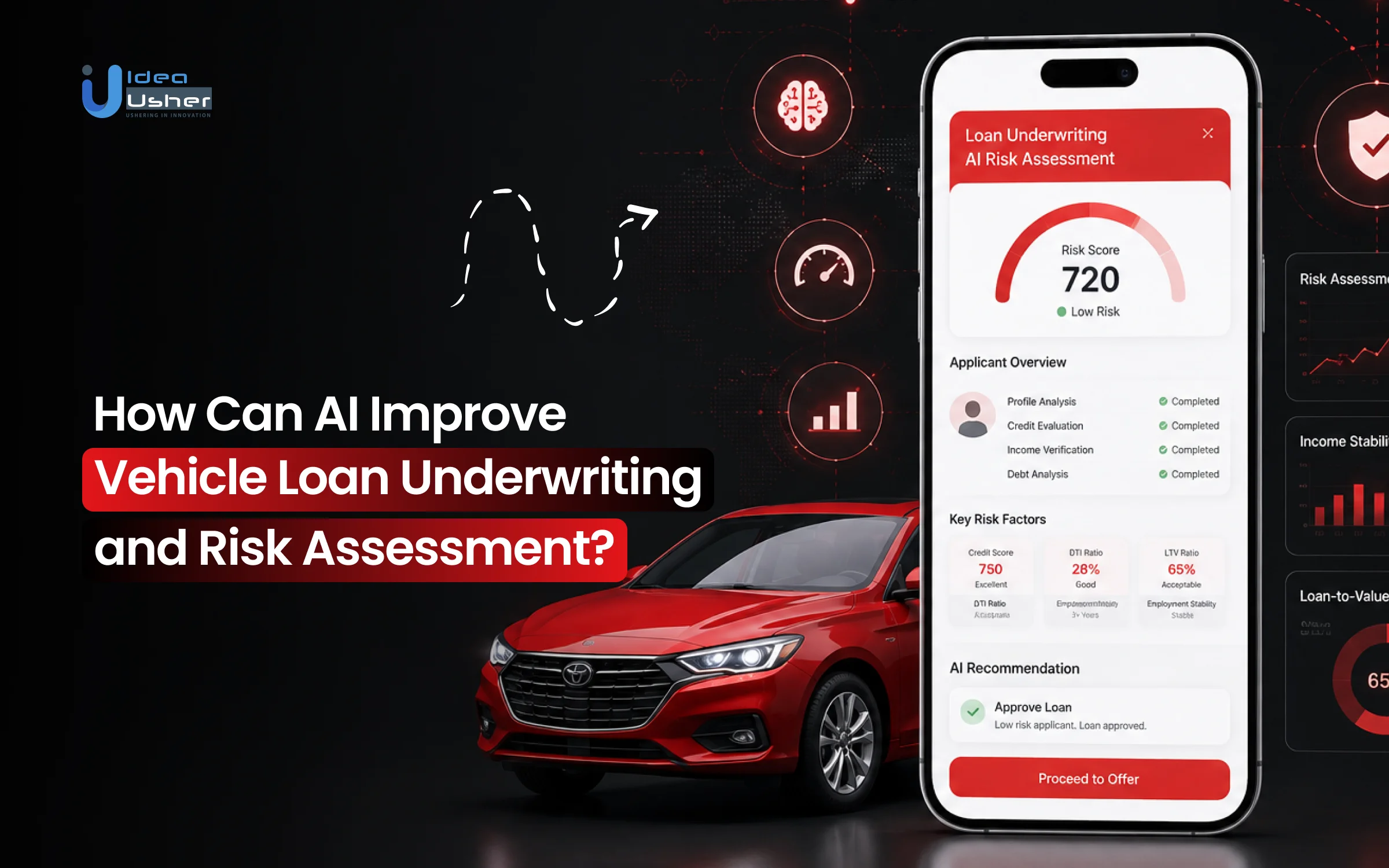
Vehicle loan underwriting is becoming more data-driven as lenders look for faster and more accurate ways to assess borrower risk. We’ve worked on vehicle loan underwriting solutions that use predictive analytics and intelligent document processing to support credit evaluation and improve decision-making. Drawing on this experience, we’re writing this guide to explain how AI can improve vehicle loan underwriting and risk assessment.
Why Auto Lenders Are Investing in AI Loan Underwriting?
According to Mordor Intelligence, the automotive finance market is expected to grow from USD 325.62 billion in 2025 to USD 350.39 billion in 2026 and reach USD 505.59 billion by 2031 at a 7.61% CAGR. This growth is increasing the need for faster and more efficient lending. AI-powered underwriting can help lenders make quicker risk decisions while reducing manual work and protecting profit margins.
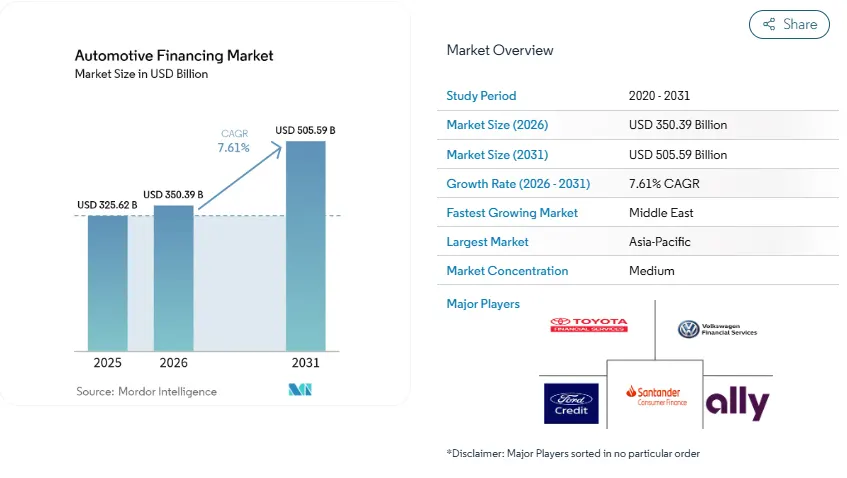
Source: Mordor Intelligence
Manual Processing Delays Loan Approvals
Car buyers expect instant approvals at the dealership. Manual document collection, paystub verification, and traditional credit score checks often take hours or days, causing buyers to abandon deals or choose competing lenders.
- Lost Deal Volume: Borrowers routinely take the path of least resistance. Delays during underwriting lead to abandoned applications at the point of sale.
- Higher Acquisition Costs: Marketing to acquire a borrower is wasted when manual processing bottlenecks prevent conversion.
Market leaders like Upstart have proven how powerful real-time decisions can be. Upstart generates over $1 billion in annual revenue primarily by automating credit decisioning for consumer and auto loans. Their model automates around 90% of loan approvals instantly, demonstrating the market demand for zero-friction financing platforms.
Volume Growth Drives Up Costs
Scaling a traditional lending business requires hiring more human underwriters, creating a linear expense model that drags down profitability. When application volumes surge, payroll expenses spike alongside operational backlog. Automating paper processing removes human touchpoints from routine tasks:
- Document Extraction: Natural language processing parses bank statements, W-2s, and tax returns in seconds.
- Income Verification: Algorithms cross-reference stated income against tax databases and employment records automatically.
- Scalable Infrastructure: Platform capacity expands to handle volume spikes without forcing new headcount additions.
Better Risk and Fraud Detection
Traditional credit scoring often depends too much on historical FICO data. That can make it harder to recognize borrowers with limited credit histories. AI can provide a broader view by looking at cash flow, utility payments, and employment patterns. This helps lenders identify financially responsible applicants who may not fit traditional scoring models.
AI can also strengthen fraud detection before a loan is approved. Modern systems can flag altered paystubs, suspicious income claims, and synthetic identities early in the process. Platforms like Zest AI show the commercial potential of this approach with around $87 million in annual recurring revenue. For lenders, better risk decisions can mean higher approval rates without taking on unnecessary default risk.

How Does AI Predict Vehicle Loan Defaults More Accurately?
Auto loan defaults usually show warning signs before they happen. Traditional credit models can miss these changes because they mainly depend on past data. Predictive AI can monitor shifts in a borrower’s financial health and identify potential risk earlier. For lenders and investors, this means better portfolio protection and more confidence when serving borrowers who may be overlooked by traditional models.
Analyzing Borrower and Loan Risk Signals
Legacy systems look at credit scores, income statements, and debt ratios separately. Machine learning combines these data streams to highlight connections human underwriters miss.
- Cash Flow Dynamics: Software monitors real-time bank data to spot sudden spikes in short-term debt, falling checking account balances, or irregular income.
- Employment and Industry Health: Machine learning evaluates macroeconomic risks within a borrower’s specific job sector to gauge future income stability.
- Vehicle Depreciation Matching: Systems cross-reference loan balances against actual car valuations to limit negative equity exposure.
Specialized platforms like Informed.IQ have built massive traction in this domain, securing $63 million in growth equity funding while powering loan verifications for seven of the top ten US auto lenders and generating an estimated $30 million to $50 million in annual revenue.
Detecting Early Patterns Linked to Default
Traditional credit checks capture missed payments after they occur. Machine learning models identify subtle behaviors that happen weeks before a missed payment.
- Behavioral Shifts: Tracking changes in payment times, app login frequency, and customer service inquiries helps spot financial distress early.
- Micro-Spending Anomalies: Algorithms flag sudden shifts toward high-interest payday loans or buy-now-pay-later services that signal cash flow problems.
Building predictive capability into auto loan platforms gives software owners an immediate edge with risk-averse institutional lenders.
Risk Predictions Into Lending Decisions
AI becomes more valuable when risk insights lead to clear lending actions. Instead of simply rejecting high-risk borrowers, lenders can adjust loan terms to better manage exposure. AI can also flag early signs of repayment trouble so loan managers can step in with suitable payment options before the account reaches default.
How Does AI Use Alternative Data to Assess Borrower Risk?
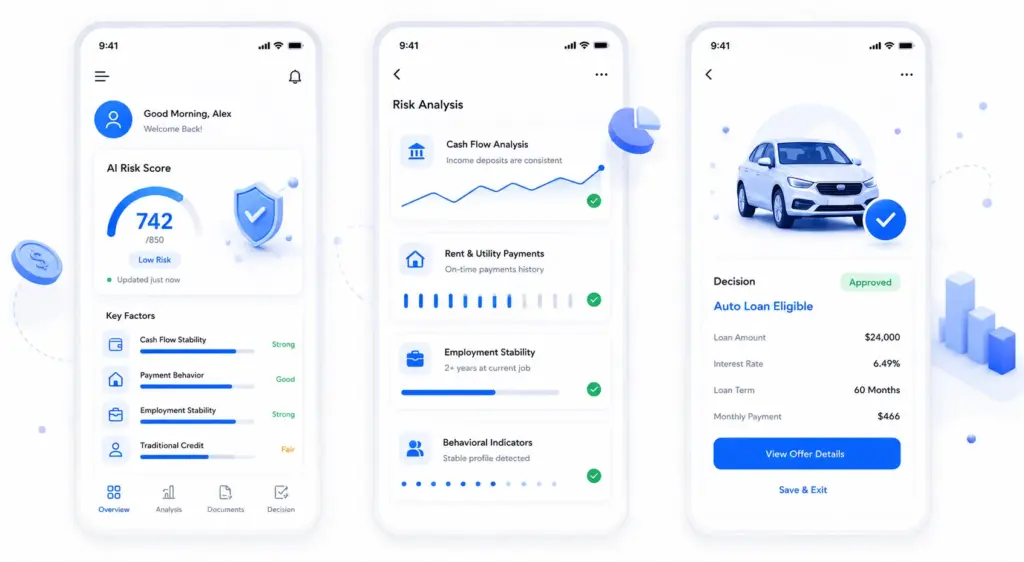
Traditional credit scores exclude millions of potential car buyers who lack extensive credit histories. Machine learning models solve this problem by evaluating alternative financial data, allowing lenders to expand loan volume safely. Building platform capabilities around non-traditional data unlocks underserved customer bases while keeping risk parameters strictly managed.
1. Cash-Flow Data Measures Capacity
Bank account cash flows offer a clearer picture of financial health than static credit bureau reports. Algorithms analyze real-time transaction data to assess how consistently a borrower manages income and living expenses.
- Income Consistency: Systems track real-time deposit patterns to verify stability for gig workers, freelancers, and small business owners.
- Discretionary Income Analysis: Cash-flow models measure regular expenses like rent and utility bills against income to determine actual disposable cash.
Platforms like Scienaptic AI have capitalized on this shift, generating around $39 million in annual recurring revenue by using machine learning to parse alternative data streams and deliver precise credit decisions.
2. Assessing Thin-File Borrowers
Younger buyers, recent immigrants, and underbanked individuals often lack the deep credit histories required by traditional auto lenders. Alternative scoring models evaluate non-credit data points to establish creditworthiness without relying on legacy credit bureau metrics.
- Rental and Utility Payment Records: Consistently paying rent and utility bills on time proves financial reliability.
- Employment and Education Trends: Algorithms cross-reference career trajectories and job stability to predict future income resilience.
- Behavioral Risk Markers: Tracking stability indicators like address duration helps build an accurate borrower profile.
3. Combining Alternative and Traditional Signals
Alternative data is most effective when it works with traditional credit metrics. Hybrid underwriting can use a credit score as the starting point and then bring in additional financial signals to create a clearer picture of a borrower’s risk. This can help lenders find reliable applicants who may fall slightly below standard credit cutoffs.
This approach also gives lenders more flexibility when setting loan terms. Platforms like Trust Science use proprietary scoring systems to help lenders identify creditworthy borrowers and manage default risk. For software companies, building strong alternative data capabilities can create a valuable advantage as lenders look for safer ways to expand approvals.
How AI Detects Fraud During Vehicle Loan Applications?
Auto lending fraud causes billions of dollars in losses every year. Criminals use sophisticated tactics like synthetic identities, doctored paystubs, and organized application rings to exploit legacy underwriting processes. AI-powered fraud engines analyze complex data points across every application to spot anomalies instantly, protecting lender capital before funds are disbursed.
1. Spotting Synthetic IDs and False Info
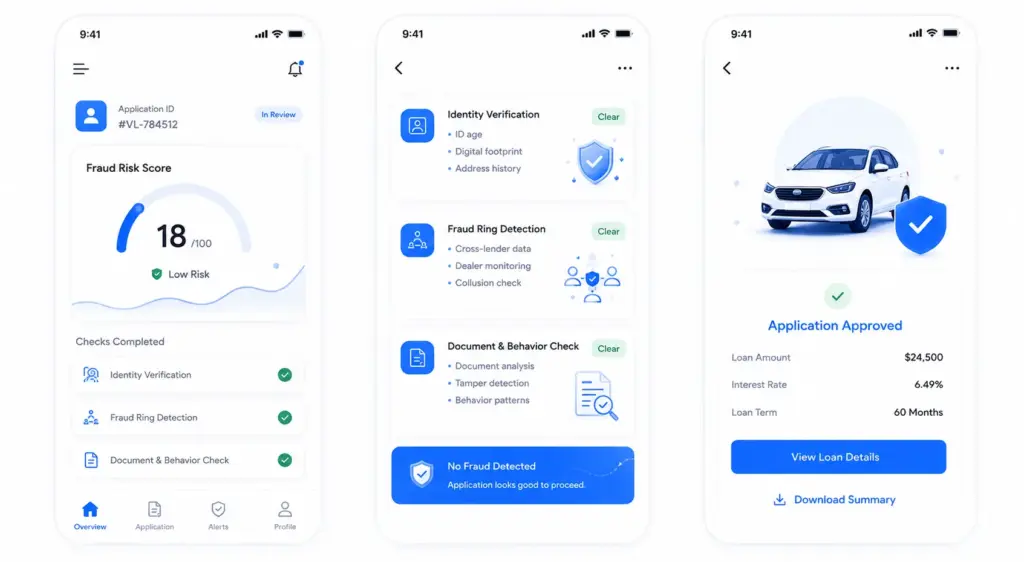
Synthetic identity fraud blends real Social Security numbers with fake names and addresses to create phantom borrowers. Standard credit bureau checks often fail to flag these identities because the underlying data points appear clean on the surface.
| Feature | How It Helps |
| Identity Age Verification | Machine learning checks when identity credentials first appeared across trusted databases. This can help flag recently created or suspicious identities. |
| Digital Footprint Matching | AI compares email history, phone records, and IP patterns to confirm that the applicant has a consistent digital identity. |
Platforms like Point Predictive focus heavily on this issue, generating estimated revenues between $20 million and $30 million annually by identifying auto lending fraud patterns across millions of historical applications.
2. Spotting Organized Fraud Rings
Organized fraud rings submit dozens of fraudulent applications simultaneously across multiple dealerships and lenders. Human underwriters evaluating single applications in isolation rarely notice these broader pattern networks.
- Cross-Lender Data Networks: Machine learning platforms analyze aggregated, anonymized application streams to flag duplicate employer details or shared bank accounts.
- Dealer Network Monitoring: Algorithms track dealer-level submission trends, flagging spikes in suspicious applications coming from specific locations.
- Automated Collusion Flagging: Systems alert fraud teams when multiple applicants share subtle, overlapping details that indicate coordinated activity.
3. Flagging Tampered Documents and Behavior
Fraud can be difficult to catch when altered documents look convincing. AI-powered systems can examine loan documents for signs of manipulation and help lenders identify suspicious applications before approval. They can also detect unusual application behavior that may point to automated submissions or stolen information.
The growing demand for this technology is reflected by Informed IQ, which generates an estimated $30 million to $50 million in annual revenue from AI-powered loan document verification. For lenders, automating these checks can reduce manual review while helping prevent fraud losses before they affect the portfolio.
Machine Learning Models Used in Vehicle Loan Risk Assessment
Choosing the right machine learning model can directly affect how well an underwriting platform performs. Lenders need accurate risk predictions but they also need to explain their decisions. Modern auto finance platforms therefore focus on models that improve approval accuracy while keeping lending decisions clear and understandable.
1. Logistic Regression for Clear Scoring
Logistic regression remains useful in credit risk scoring because lenders can easily understand how it reaches a decision. The model uses established financial factors to estimate the likelihood of default. This transparency can be especially valuable when lenders need to explain why an application was approved or declined.
Zest AI uses interpretable models to help banks and credit unions support fair lending practices. Logistic models are also lightweight and can process large volumes of applications quickly. This makes them a practical choice for lenders that want faster decisions without sacrificing explainability.
2. Random Forest for Complex Patterns
Random Forest models combine hundreds of decision trees to uncover non-linear relationships between borrower variables. This approach catches nuanced risk combinations that linear models miss entirely.
- Feature Interaction Handling: Detects subtle risk triggers, such as how a low savings balance impacts risk differently based on career stability.
- Noise Reduction: Aggregating predictions across multiple decision trees prevents individual outliers from distorting overall credit scores.
- Data Flexibility: Handles missing application data smoothly without breaking the decision pipeline.
3. XGBoost for Maximum Accuracy
Models such as XGBoost can help auto lenders predict default risk with greater precision. They work by learning from previous prediction errors and identifying patterns that may be difficult to catch with traditional credit rules. This gives lenders a stronger basis for separating lower-risk borrowers from those who may require closer review.
Scienaptic AI uses gradient boosting along with ensemble models to improve lending decisions. These approaches can help lenders increase approvals while keeping portfolio risk under control. The real value comes from tailoring the models to the specific risks and recovery patterns found in vehicle lending.
4. Choosing the Right Model
Building a competitive loan engine requires matching specific model architectures to clear operational goals rather than choosing a single algorithm for every task. Deploying a hybrid pipeline that layers complex ensemble predictions alongside explainable scoring models delivers the ultimate balance of predictive accuracy, operational speed, and strict regulatory compliance.
| Strategy Goal | Recommended Model | Primary Benefit |
| Regulatory Compliance | Logistic Regression | Full mathematical transparency and easy auditing |
| Deep Feature Discovery | Random Forest | Uncovers non-linear relationships across mixed data |
| Maximize Portfolio Yield | XGBoost / Ensembles | Highest accuracy for default prediction and risk pricing |
How to Prevent Bias in AI-Powered Vehicle Loan Decisions?
Automated underwriting can sometimes carry forward bias from older credit data. If the training data reflects unfair lending patterns, then the model may learn those patterns even without using protected information directly. A safer AI lending platform should test its models for bias and monitor outcomes regularly. This helps lenders improve risk assessment without creating unfair barriers for borrowers.
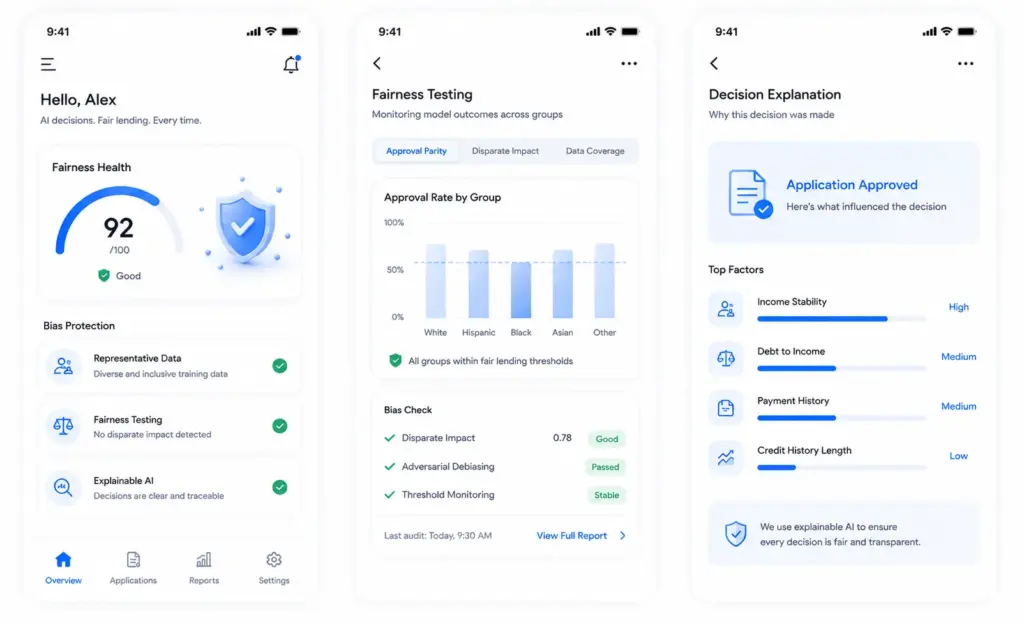
1. Using Representative Data
Biased models usually stem from imbalanced or unrepresentative training sets. If historical loan data mostly reflects traditional prime borrowers, an algorithm will struggle to evaluate non-traditional or thin-file applicants accurately. Platforms like Upstart mitigate historical bias by assessing broader financial signals, generating over $350 million in quarterly fee revenue while proving that expanded data pools can drive higher approval rates without raising default risks.
2. Testing Models for Fair Lending
Fair lending mandates require continuous quantitative testing to verify that AI models treat protected classes equitably. Platforms run real-time audits during development and live deployment to spot disparate impact early.
- Disparate Impact Analysis: Systems compare approval rates across demographic groups to ensure outcomes stay well within statutory threshold ratios.
- Adversarial Debiasing: Developers train secondary algorithms specifically designed to detect and strip out demographic indicators from the main underwriting engine.
- Continuous Threshold Tuning: Automated alerts flag potential scoring drift, prompting engineers to adjust risk thresholds before bias affects real borrowers.
Specialized platforms like Scienaptic AI incorporate automated fairness audits into their decisioning engines, bringing in around $39 million in annual recurring revenue by helping lenders expand credit access safely.
3. Building Explainable AI Workflows
Black-box algorithms create major compliance liabilities because lenders must legally explain why an application was rejected. Explainable AI frameworks translate complex vector calculations into clear, human-readable explanations.
- SHAP and LIME Integration: These mathematical techniques isolate the exact variables that led to a specific decision, identifying top rejection reasons automatically.
- Audit-Ready Reporting: Platforms instantly generate clear adverse action notices that specify exact steps borrowers can take to improve their creditworthiness.
Embedding transparent, bias-resistant algorithms into loan platforms reduces regulatory risk and builds long-term institutional trust. Lenders can scale their loan originations confidently, knowing their decision engine remains compliant, fair, and highly accurate.
Compliance Requirements For AI Vehicle Loan Underwriting
Deploying AI in vehicle lending can make underwriting faster and more efficient. It also means lenders need to take compliance seriously. AI systems must support fair lending and provide clear reasons for credit decisions. Building these controls into the platform from the start makes it easier to keep lending decisions transparent and audit-ready.
Adverse Action and Fair Lending Rules
Lenders using machine learning must strictly follow consumer protection laws. The Consumer Financial Protection Bureau mandates that algorithms cannot operate as black boxes, requiring lenders to state precise reasons when denying credit.
| Governing Regulation | Core Mandate | AI Platform Requirement |
| Equal Credit Opportunity Act (ECOA) | Prohibits credit discrimination based on race, age, gender, or religion. | Filter proxy variables and conduct continuous disparate impact testing. |
| Fair Credit Reporting Act (FCRA) | Requires clear explanation for adverse credit actions. | Map model feature weights directly to standardized denial codes. |
| CFPB Circular Guidance | Disallows generic boilerplate reasons for AI loan rejections. | Output exact, mathematically verified factors driving individual denials. |
Build Explainable AI for Decisions
Machine learning models evaluate thousands of data points at once, making it difficult to trace why a specific decision was reached. Explainable AI frameworks translate complex vector calculations into clear, human-readable explanations that auditors and borrowers can easily understand.
- SHAP Value Analysis: Calculates the exact contribution of each data point, such as income level or payment history, toward the final approval or denial score.
- LIME Interpretability: Builds localized linear approximations around individual loan files to prove that decisions rely on legitimate financial metrics rather than hidden proxy variables.
- Automated Reason Generation: Automatically converts model outputs into legally compliant adverse action letters without human manual review.
Validate Models With Ongoing Testing
Compliance needs to be treated as an ongoing part of AI underwriting. Lenders should regularly test their models and check whether decisions are changing in ways that could create fairness concerns. The CFPB has highlighted the need for regular fair-lending testing of AI-based models.
A well-designed platform can make these checks easier with built-in monitoring and audit trails. This gives lenders better visibility into model performance and helps them respond to potential issues before they become larger compliance problems.
Top 5 AI Vehicle Loan Underwriting Platforms in the USA
We researched the leading AI vehicle loan underwriting platforms in the USA to see what makes them stand out. These platforms show how AI is being used to speed up credit decisions and improve risk assessment while helping lenders serve more borrowers. Their features also offer useful benchmarks for businesses planning to build their own AI-powered vehicle lending platform.
1. Upstart
Upstart is an AI lending platform that supports auto financing through risk-based decisioning and automated underwriting. In 2025, its auto originations grew 5X year over year, while the company reported that 91% of its loans were fully automated in Q2 2026. Upstart also reported more than $61 billion in loans originated by its bank and credit union partners.
2. Zest AI
Zest AI provides AI-powered underwriting that helps lenders evaluate borrowers beyond traditional credit scoring. In one credit union deployment, its technology increased automated auto-loan approvals by 100% while also increasing approvals across several borrower segments. Zest AI’s research also found that roughly 8 in 10 financial institutions were already generating automated underwriting decisions.
3. Scienaptic AI
Scienaptic AI offers an AI credit decisioning platform covering underwriting, fraud detection, risk-based pricing, and portfolio monitoring. The company says its platform has decisioned more than $160 billion in loans across 160+ lenders, using models trained on more than 500 million lending records. Its platform also supports vehicle-loan pricing and indirect auto lending.
4. Ocrolus
Ocrolus supports lending workflows by automating the extraction and verification of financial information from documents such as bank statements. Its API converts bank statements into structured data that lenders can use for financial analysis and underwriting. This makes it useful as an AI-powered data and verification layer within a broader vehicle loan underwriting platform rather than as a dedicated auto underwriting system.
5. Provenir
Provenir provides an AI-powered risk decisioning platform that can combine traditional, alternative, and financial data for automated credit decisions. It can support use cases such as credit risk assessment, fraud detection, identity verification, and risk-based decisioning, making it suitable for lenders that want to build flexible underwriting workflows rather than rely on a single fixed credit model.
Build an AI Vehicle Loan Underwriting Platform with IdeaUsher
Launching a modern lending platform means turning complex AI into a system that lenders can actually rely on. They need faster decisions and lower default risk without adding more technical complexity. IdeaUsher builds custom auto-underwriting platforms that combine AI with secure and scalable financial infrastructure. With over 500,000 hours of coding experience, our team of ex-MAANG/FAANG developers turns complex underwriting concepts into market-ready SaaS applications.
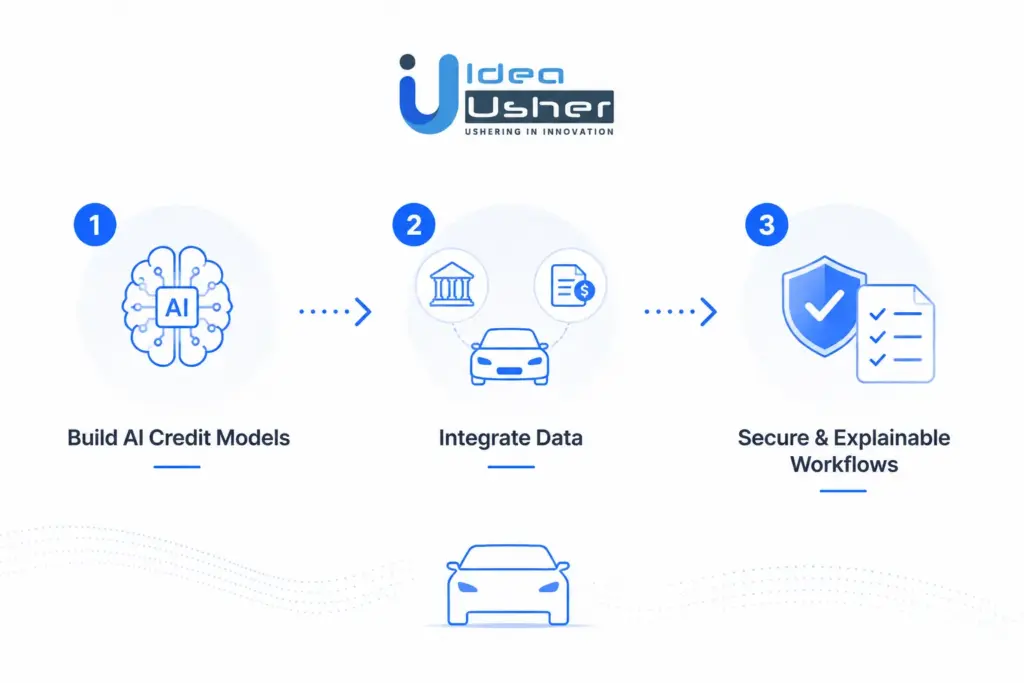
Build AI Credit Models
Off-the-shelf scoring tools rarely offer the flexibility required to capture market share in auto finance. We design custom machine learning architectures tailored to your specific risk appetite and target borrower profiles.
- Custom Scoring Algorithms: We build proprietary risk models that combine alternative data, cash-flow metrics, and traditional credit histories.
- Continuous Model Training: Our engineering team sets up automated data pipelines that refine risk scores continuously as real loan performance data flows in.
Partnering with experienced engineers ensures your platform delivers fast, accurate underwriting decisions right out of the gate.
Integrate Financial and Vehicle Data
Lending platforms fail when data stays siloed in disconnected systems. We architect secure API layers to unite borrower profiles, credit bureau reports, bank statement feeds, and real-time vehicle valuation databases into a single processing hub.
- Financial Aggregation Pipelines: Native connections to Plaid, Yodlee, and major credit bureaus instantly stream income and debt data into the underwriting engine.
- Automated Document OCR: Computer vision pipelines parse uploaded W-2s, paystubs, and bank statements in seconds, flagging suspicious edits automatically.
- Real-Time Asset Valuation: Direct integrations with vehicle pricing tools ensure loan-to-value ratios align with live market values.
Secure and Explainable Workflows
Financial software needs strong security and clear decision-making from the start. We build underwriting platforms with explainable AI so lenders can understand and document how decisions are made. Sensitive borrower data is protected through encryption and role-based access while the system is designed to support strict compliance requirements.
Conclusion
AI is changing vehicle loan underwriting by helping lenders make faster and more informed decisions. It can identify hidden risk signals and improve fraud detection while reducing manual work. For lenders, the biggest advantage is finding the right balance between approving more qualified borrowers and keeping default risk under control. As these systems continue to learn from new lending data, they can become more accurate over time. This gives lenders a stronger foundation for scaling their auto finance operations.
Things to Know About AI-driven Vehicle Loan Underwriting
A1: AI can make vehicle loan underwriting faster and more consistent. It can review borrower data and identify risk patterns that may be difficult to spot through manual checks alone. This helps lenders make better-informed decisions while reducing the time spent on routine underwriting work. It can also help lenders evaluate more information before deciding whether an applicant is a good fit for a loan.
A2: AI can use traditional credit information along with other financial signals to build a clearer picture of a borrower. This may include income details, payment history, existing debt, cash flow, and vehicle-related information. Using more relevant data can help lenders understand repayment ability beyond a basic credit score. This is especially useful when a borrower has a limited credit history or does not fit a traditional credit profile.
A3: AI can help lenders identify borrowers who may have a higher chance of missing future payments. Machine learning models can study past loan outcomes and find patterns linked to repayment problems. Lenders can then use these predictions to support approval decisions and identify risks earlier. The model can become more useful over time when lenders compare its predictions with actual repayment outcomes.
A4: Yes. AI can help identify unusual patterns that may indicate fraudulent activity during a vehicle loan application. It can flag inconsistencies in applicant information and suspicious application behavior for further review. This allows lenders to focus manual checks on applications that present stronger warning signs. Regulators also recognize alternative data as an area where firms may use technology for fraud detection and other lending functions.