 (+971) 8007 4267
 (+91) 946 340 7140
 (+1) 628 432 4305

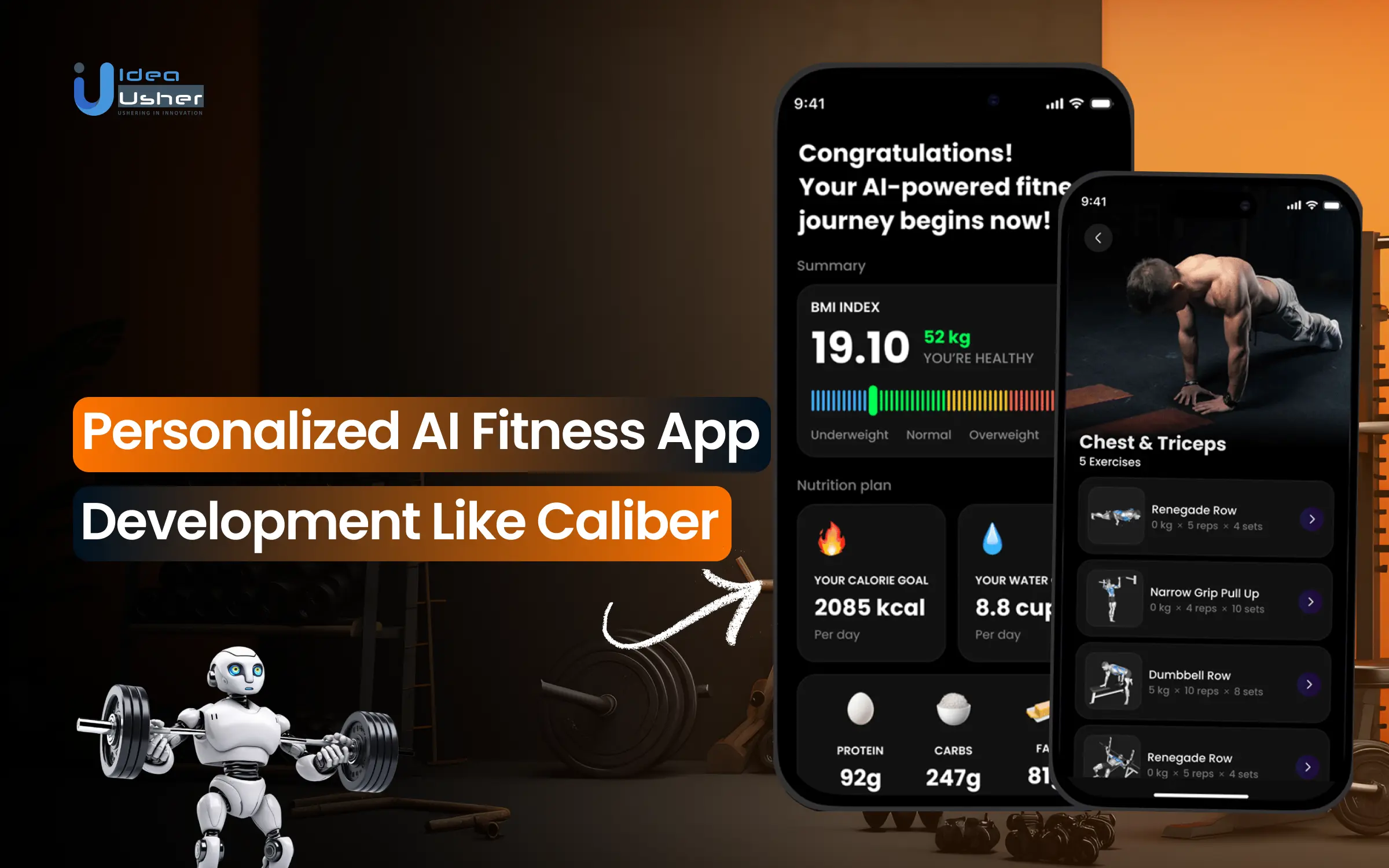
Fitness apps promised convenience, but many users quietly burned out after a few weeks. Workouts felt repetitive, and progress often felt invisible over time. The advice sounded the same for everyone, which slowly eroded trust. That is why many people are turning to AI fitness apps since training plans can adjust intelligently to personal data and changing conditions.
These platforms may combine strength tracking, recovery signals, and coach-style feedback to guide each session. They can also support habit-building, progress visuals, and structured, accountable check-ins. Progress feels acknowledged because recommendations respond to real behavior and form quality rather than assumptions.
We’ve built numerous AI-driven fitness solutions that use personalization models and biometric data pipelines. Drawing from this hands-on experience, we’re sharing this blog to walk through the steps involved in developing an AI fitness app like Caliber.
Key Market Takeaways for Personalized AI Fitness App Development
The global fitness app market was valued at USD 2.10 billion in 2024 and is projected to reach USD 9.67 billion by 2033, growing at a CAGR of 18.2% from 2025 to 2033. This rapid expansion highlights the increasing consumer demand for AI-driven fitness solutions.

This growth signifies a lucrative opportunity for entrepreneurs and developers looking to build a personalized AI fitness app. With the rising adoption of AI for personalized training, real-time analytics, and adaptive workout plans, businesses can tap into a market that is set to boom in the coming years.
A notable example is Caliber, an AI-powered fitness app that offers personalized training plans and expert coaching. Leveraging AI, Caliber has successfully created a scalable, engaging, and results-driven platform, setting a benchmark for AI-driven fitness solutions.

Overview of Caliber
Caliber Platform is a science-based strength-training app from Caliber Fitness that combines resistance training, cardio, nutrition guidance, and habit formation into a single, structured system. It is designed to help users build muscle, lose fat, and steadily improve overall fitness through measurable progress.
The app is available on iOS and Android, with free core features and optional upgrades, including Caliber Plus and premium one-on-one coaching, for deeper personalization.
Standout User Features of the Caliber Platform
Standout user features focus on tools that can adapt to real training behavior and respond intelligently during each session. Workouts can be created and logged in real time, and progress can be measured using strength benchmarks, balance indicators, and visual tracking.
1. Personalized Workout Creation
Users can create unlimited custom workouts without needing a gym setup. During workouts, sets, reps, and weights can be logged in real time, with flexibility to add substitutions, warmups, timers, and session notes as training evolves.
2. Exercise Library and Tutorials
The platform provides access to more than 600 exercises, each supported by step-by-step video demonstrations and professional guidance. These tutorials are designed to help users maintain proper form and reduce the risk of injury while progressing safely.
3. Progress Tracking Metrics
Caliber includes structured metrics such as Strength Score, which benchmarks performance against age- and gender-based potential, and Strength Balance, which highlights muscle-group imbalances affecting posture and mobility. Users can also upload progress photos and track body measurements over time.
4. Workout Groups
Private workout groups allow users to share routines, personal bests, and training updates with friends or family. This social layer supports accountability and helps maintain long term consistency.
5. Integrations and Syncing
The app integrates with Apple Health and Google Health Connect to sync cardio activity, nutrition data, and wearable metrics. Caliber Plus extends this further by adding nutrition targets and macro-level tracking.
6. Coaching Interactions (Paid)
Premium users receive access to in-app chat, video messaging, form reviews, and weekly progress analysis. These interactions are led by elite coaches and provide structured feedback for more personalized results.
How Does the Caliber Platform Work?
Caliber works by combining science-based training logic with real-time coach oversight, enabling intelligent measurement and adjustment of progress. The platform may analyze strength data, lifestyle inputs, and recovery signals to build workouts that can evolve gradually over time.

1. The Science-Based Assessment
The Caliber experience begins with the Fitness Reality Check. This is not a generic questionnaire; it is a comprehensive evaluation.
| Assessment Area | Description |
| Goal Mapping | Defines clear and measurable fitness objectives beyond generic goals. |
| Lifestyle Audit | Analyzes routine sleep and stress to align training with daily life. |
| Equipment Assessment | Adapts workouts to the equipment available to the user. |
| Physical Baseline | Establishes initial strength and movement levels across key muscles. |
2. The Integrated Training System
The Workout Engine
Caliber’s training methodology revolves around fundamental movement patterns rather than trendy exercises. Here is how it works.
Personalized Exercise Selection: Based on your goals, equipment, and any physical limitations, the algorithm selects from a database of 500-plus scientifically validated exercises.
Intelligent Progression: The platform uses the Double Progression Method. It first increases repetitions, then weight. This systematic approach prevents plateaus and ensures continuous adaptation.
Strength Score Calculation
This is Caliber’s secret weapon. After each workout, the platform
- Estimates your one rep max using established formulas like Brzycki or Epley
- Normalizes this against your body weight
- Compares it to age and gender benchmarks
- Updates your overall Strength Score and individual muscle group scores
Strength Balance Tracking: The system creates a visual heatmap of your five major muscle groups. These include legs, chest, back, shoulders, and arms. It identifies imbalances that could lead to injury or limit progress.
The Nutrition Framework
Caliber approaches nutrition through a habits-first lens.
Macro-Based Guidance: Rather than restrictive diets, you receive personalized macronutrient targets covering protein, carbs, and fats based on your goals and activity level.
Integration with Tracking Apps: The platform syncs with MyFitnessPal, Cronometer, or Apple Health to monitor nutritional intake without requiring duplicate logging.
Behavioral Focus: Coaches emphasize sustainable habits such as protein distribution, hydration, and meal timing rather than relying solely on calorie counting.
The Recovery Component
Caliber recognizes that progress happens outside the gym.
- Sleep Optimization: The platform provides evidence-based sleep hygiene recommendations tailored to your schedule.
- Stress Management: Coaches offer strategies to mitigate life stress that impacts recovery and performance.
- Active Recovery: Built-in mobility flows and recovery sessions help prevent overtraining.
3. The Human Tech Feedback Loop
Every Caliber member is paired with a certified professional coach who brings the platform to life.
- Asynchronous Video Form Checks: You record your key lifts, and your coach provides frame-by-frame feedback with visual annotations. This feels like having a personal trainer review every session.
- Weekly Check Ins: Structured video calls ensure alignment, address challenges, and adjust strategy.
- Real-Time Messaging: Unlimited messaging enables support when needed, whether during grocery shopping decisions or duringuncertainty in the gym.
The Technology Platform
The Caliber app serves as the central hub connecting all components.
Workout Execution Interface: Clean, intuitive screens guide each session, with built-in timers, video demonstrations, and logging tools.
Progress Dashboard: Visualizations of your Strength Score, body measurements, habit adherence, and nutritional compliance provide a complete view of your progress.
Adaptive Algorithms: Behind the scenes, machine learning algorithms analyze performance data and suggest optimizations to your coach.
The Science Behind the System
Caliber’s effectiveness comes from its commitment to evidence-based practices.
Hypertrophy Science
The platform applies proven muscle growth principles by balancing mechanical tension, metabolic stress, and controlled eccentric loading. Training variables are adjusted to stimulate adaptation while managing fatigue effectively.
Periodization Principles
Workouts are organized into 3 to 6-week mesocycles that rotate between strength hypertrophy and metabolic conditioning. This structure may reduce plateaus and support consistent long-term progress.
Behavioral Psychology
The system reinforces habit formation through accountability, structured feedback and incremental wins. Coach interaction should help sustain motivation and maintain adherence over time.
Business Model of Caliber
Caliber follows a freemium subscription model, with most users paying $200–$400/month, where 60% of revenue goes to coaches, ensuring a strong subscription-based business.
Membership Tiers
- Free Plan: Users can access a library of curated workout plans and basic tracking features at no cost.
- Caliber Premium Coaching: At approximately $7 per day, this plan includes one-on-one coaching, customized workout routines, and unlimited in-app messaging with trainers.
- Caliber Pro: Starting at $19 per month, this option offers group coaching, structured training programs, and access to coach-designed fitness plans focused on different fitness goals.
Revenue Streams
- Subscription Fees: Caliber’s primary income comes from paid memberships, where users pay for personalized coaching and structured fitness plans.
- In-App Purchases: Additional services like video call consultations with trainers provide users with a deeper level of interaction and support.
Market Positioning
Caliber differentiates itself in the competitive fitness app market by focusing on human coaching enhanced by AI-driven analytics. Unlike fully AI-based fitness solutions, Caliber offers accountability, expert guidance, and interactive coaching, making it a compelling choice for individuals seeking structured, science-backed training with professional support.
Why This Is the Best Time to Invest in an AI Fitness App Like Caliber?
The fitness industry is rapidly evolving with AI, shifting consumer preferences, and technological advancements as the AI fitness market surges from USD 62.7 billion in 2024 to USD 138.5 billion by 2029 (CAGR 17.2%), presenting a prime investment opportunity.
1. Increased Demand for Personalization
- Consumers now prefer tailored fitness experiences over generic workout plans.
- AI-powered apps leverage data analytics and machine learning to create personalized training and nutrition programs, increasing user engagement and retention.
2. Shift in Fitness Trends Post-Pandemic
- The pandemic accelerated the adoption of home and hybrid fitness solutions, making AI fitness apps more relevant than ever.
- Users are actively seeking flexible, remote-friendly, and data-driven fitness coaching over traditional gym memberships.
3. Technological Advancements
- AI, computer vision, machine learning, and real-time analytics have made fitness apps more interactive and efficient.
- Features like form correction, automated workout adjustments, and progress tracking are now more accessible, enhancing user experience.
4. Growing Health Consciousness
- With the rise in chronic diseases and increased awareness of preventive healthcare, people are prioritizing fitness and well-being.
- AI-driven fitness apps provide structured guidance and accountability, making them an attractive solution for long-term health management.
5. Integration Opportunities
- Wearables and fitness trackers (like Apple Watch and Fitbit) are widely used, creating opportunities for seamless app integration.
- Real-time data syncing enhances progress tracking, workout customization, and user motivation.
6. Investment in Mental Health
- Consumers are now looking for apps that combine physical fitness with mental wellness.
- AI fitness apps that incorporate mindfulness, stress management, and holistic well-being features will stand out in the market.
How to Develop an AI Fitness App Like Caliber?
A personalized AI fitness app like Caliber can be developed by first encoding strength science into structured training logic that guides progression. Workout data should then be captured at depth so models can gradually learn performance patterns and adapt plans intelligently.
We have built several Caliber-style AI fitness platforms, and this is the process we typically follow.

1. Training Intelligence Foundation
We start by defining the core training logic before development begins. This includes exercise classification, muscle-group mapping, and progression rules grounded in strength-training science. Establishing this foundation ensures the system behaves consistently and adapts logically as users progress.
2. Strength and Balance Engine
In this phase, we translate workout data into normalized strength scores that reflect true performance. Muscle balance logic is applied to identify asymmetries and potential overload risks. These insights are presented through clear visual layers that support informed progression decisions.
3. Workout Data Pipeline
We design a data pipeline that captures meaningful signals, including rep velocity, perceived effort, rest quality, and historical trends. The pipeline is built for scale, so learning improves over time rather than relying on isolated sessions. This enables long-term personalization driven by real training behavior.
4. Movement and Form Analysis
For advanced implementations, we integrate computer vision to analyze exercise form. Pose estimation models track joint alignment, range of motion, and symmetry patterns. This allows technique quality to directly influence recommendations and risk indicators.
5. Recovery-Based Adaptation
At this stage, recovery inputs from wearables and user feedback are integrated into the training logic. Workouts adjust dynamically based on readiness and fatigue rather than following fixed schedules. This helps regulate intensity in a way that reflects real coaching decisions.
6. Coaching Experience Layer
The final layer focuses on how intelligence is delivered to users and coaches. We build clean dashboards for human trainers and conversational interfaces for AI coaching. This ensures complex insights are communicated clearly and are perceived as supportive rather than technical.
How Much Does It Cost to Make an AI Fitness App Like Caliber?
The development cost of an AI fitness app like Caliber varies based on features, technology, and complexity. Below is a cost breakdown:
| Development Step | Task | Description | Estimated Cost |
| Market Research & Planning | Competitor & User Analysis | Identify gaps in existing fitness apps & user needs. | $1,000 – $5,000 |
| UI/UX Design | Wireframing & Prototyping | Create a user-friendly app layout and experience. | $2,000 – $8,000 |
| Backend Development | Server & Database Setup | Develop a scalable backend for AI & data processing. | $3,000 – $20,000 |
| Frontend Development | App Interface Creation | Build an intuitive user interface for iOS & Android. | $5,000 – $25,000 |
| AI & Machine Learning | Workout & Nutrition AI Model | Implement AI-driven recommendations & tracking. | $7,000 – $30,000 |
| Integration & APIs | Wearables & Third-Party APIs | Connect with fitness devices & external services. | $2,000 – $12,000 |
| Testing & QA | Bug Fixing & Performance Check | Ensure a smooth, error-free user experience. | $2,000 – $10,000 |
| Deployment & Launch | App Store Submission | Publish on Google Play & Apple App Store. | $1,000 – $5,000 |
| Post-Launch Maintenance | Updates & Support | Continuous improvements and bug fixes. | $2,000 – $10,000 |
Total Estimated Budget: $10,000 – $100,000
Building an AI fitness app like Caliber can cost anywhere between $10,000 to $100,000 USD, depending on AI depth, personalization logic, integrations, and scalability goals. This is only a high-level estimate because real costs may shift based on data models, coaching intelligence, and long-term performance requirements. For a more accurate quote tailored to your idea, feel free to connect with us for a free consultation.
How to Prevent AI-Driven Progression from Increasing Injury Risk?
Modern AI fitness apps excel at identifying patterns and optimizing for progress. They detect when a user may be ready to lift heavier, push harder, or train more frequently. This strength is also their weakness. AI reads performance metrics while the body experiences strain. An algorithm may see ten clean reps and suggest adding load while ignoring subtle shoulder discomfort or poor sleep from the night before.

This gap between measurable data and lived physical experience creates ideal conditions for overuse injuries, tendon issues, and burnout. The real question is not whether AI can drive progress. It is whether progress can remain sustainable.
1. Multi-Dimensional Readiness Assessment
Injury prevention starts before the first rep. Traditional programming relies on fixed deload cycles, but AI allows real-time readiness evaluation.
The Implementation
- Biometric integration using heart rate variability, resting heart rate, and sleep quality from wearables to create a daily recovery score
- Subjective feedback capture through short check-ins combined with perceived exertion tracking after workouts
- Movement screen baselines using periodic video assessments to detect early compensations or mobility restrictions
The AI Behavior
When recovery scores fall below a defined threshold for three consecutive days, the system automatically replaces high-intensity sessions with mobility or active recovery work.
For example, Fitbod adjusts workouts based on reported freshness and equipment availability, but it often lacks deep biometric integration. Without sleep and HRV data, decisions rely on incomplete context. Injury prevention requires both subjective perception and objective physiology.
2. Form-Centric Progression Logic
The most dangerous assumption an AI can make is equating completed reps with readiness. True progression depends on movement quality under fatigue.
The Implementation
- Tempo tracking with emphasis on eccentric control to detect technical breakdown
- Form consistency analysis comparing early and late reps across sets
- Asymmetry detection to identify compensatory loading patterns
The AI Rule
Load progression is blocked until form metrics remain stable across three to four sessions. The system rewards mastery rather than chasing numbers.
Apps like Freeletics emphasize speed and completion. This can incentivize form degradation under fatigue. A preventive AI system would instead regulate reps or pause the session when movement quality declines, even if the timed session is not completed.
3. The Autoregulation Feedback Loop
Progressive overload should adapt daily rather than follow a fixed linear path.
The Implementation
Velocity-based effort tracking uses phone sensors or wearables to detect changes in movement speed during a set. When velocity drops, the system interprets the drop as fatigue rather than a strength limit. This data, combined with sleep stress and prior workload signals, helps adjust training intensity and volume safely.
The AI Behavior
If rep velocity drops sharply within a set, the remaining volume is adjusted in real time. Future sessions automatically scale volume or intensity based on accumulated fatigue signals.
4. Structural Balance Enforcement
Strength gains without balance create injury risk. An AI focused only on performance may overdevelop certain muscle groups.
The Implementation
- Full muscle group contribution mapping for every exercise
- Agonist antagonist ratio tracking, such as hamstring to quadriceps balance
- Compensation pattern analysis when specific muscles fatigue prematurely
The AI Mandate
Corrective exercises are inserted automatically, and volume is redistributed even if it temporarily slows progress on priority lifts. The system optimizes for long-term musculoskeletal health.
5. Intelligent Deload Sequencing
Deloads are proactive investments, not setbacks. Timing them correctly requires recognizing subtle fatigue trends.
The Implementation
- Performance trend analysis to detect stalled progress despite rising effort
- Motivation signals, such as delayed starts or shortened sessions
- Biomarker thresholds tied to HRV and sleep efficiency trends
The AI Approach
Instead of rigid deload cycles, the system introduces short volume reductions when early fatigue indicators appear. This prevents deeper burnout while preserving training momentum.
How Does AI Handle Missed Workouts without Breaking the Plan?
AI fitness apps treat a missed workout as a signal, not failure, and they may quietly adjust load timing and recovery models. The system can recalibrate volume intensity and session order to ensure progress continues smoothly.

The Problem with Rigid Programming
Traditional training plans operate on a simple principle. Day 1 leads to Day 2, which leads to Day 3. Miss Day 2 and the entire sequence feel compromised. This rigid structure creates what psychologists call the what the hell effect. Once the chain is broken, abandoning the plan feels easier.
Older fitness apps, such as the original StrongLifts 5×5, followed mathematically elegant but biologically rigid progression models. If prescribed squats failed on Monday, the same weight appeared again on Wednesday.
Miss Wednesday and the system forced a deload. The body was treated like a machine while fatigue, recovery, and motivation were ignored.
AI fitness platforms take a different approach. Missed workouts are not failures. They are data points that reflect life rhythm, recovery capacity, and shifting priorities.
The AI’s Three-Phase Response System
1. The Intelligent Pause (0-2 Missed Days)
When a single workout is missed, intelligent AI systems observe before reacting.
What happens behind the scenes
- The adaptive window opens as the system identifies which adaptations were targeted, such as strength, hypertrophy, or endurance and estimates how quickly they decay
- Weekly volume is recalibrated across remaining days while avoiding overload in consecutive sessions
- Intensity decisions are made to preserve load, adjust volume, or modulate both, depending on context
Example implementation
Fitbod simply moves a missed workout to the next day. This works at a basic level but misses deeper insights. Advanced AI analyzes what replaced the workout.
Sleep quality, stress levels, daily activity, and recovery signals indicate whether the workout should be repeated, modified, or skipped to maintain momentum without overload.
3. The Strategic Reset (3-7 Missed Days)
After nearly a week away from training, forcing catch-up sessions becomes risky.
How AI responds
- An adaptation decay calculator estimates likely losses in strength, skill, and conditioning
- Re-entry protocols create a short ramp phase over two to three sessions to restore coordination and confidence
- Goal timelines are automatically adjusted so progress remains intact without penalties
Why this works
Detraining is not linear. The first few missed days mainly affect coordination and motor patterns. True strength loss usually appears after two to three weeks. AI systems differentiate these phases and respond with precision rather than panic.
3. The Compassionate Restart (7+ Missed Days)
After illness, travel, or extended disruption, pretending nothing happened is the fastest way to injury or burnout.
The restart protocol
- A fresh baseline assessment is suggested, with lighter retesting of key movements
- Decay curves replace harsh score drops by showing how quickly performance typically rebounds
- Early sessions are designed to help you feel successful in rebuilding confidence and habit strength
AI systems understand that long-term consistency depends on psychology as much as physiology. By prioritizing manageable wins before chasing past peaks, they help users return without fear or frustration.
Challenges of Developing an AI Fitness App
Building an AI-powered fitness app involves various technical, data-driven, and user-centric challenges that must be addressed to ensure a successful and engaging product.
1. Data Accuracy and Reliability
AI fitness apps require precise data to provide effective workout recommendations. Collecting and validating user metrics like heart rate and movement accuracy can be challenging. Integrating real-time data from wearables and using AI to cross-check inconsistencies can enhance reliability.
2. Complexity of Personalization
Crafting truly personalized workout plans for each user requires advanced AI models. Machine learning algorithms must continuously adapt based on user progress, feedback, and changing fitness levels to ensure workouts remain relevant and effective.
3. User Engagement and Retention
Keeping users motivated is essential to prevent drop-offs. Features like gamification, AI-driven progress tracking, and interactive challenges can make workouts more engaging and help sustain long-term user interest.
4. Technical Limitations
AI-based motion tracking and real-time analysis depend on high-quality user input. If users do not record movements under optimal conditions, the app’s accuracy may suffer. Providing clear usage guidelines and leveraging advanced computer vision can help mitigate these limitations.
5. Data Privacy and Security
Sensitive fitness and health data must be handled in compliance with regulations like GDPR and HIPAA. Implementing end-to-end encryption and transparent data policies builds trust while ensuring user privacy and security.
6. Integration with Wearables and Platforms
Seamless compatibility with fitness devices, smartwatches, and third-party health platforms is crucial for a connected fitness experience. Standardized APIs and cloud-based data synchronization can simplify integration across different ecosystems.
7. Building Trust in AI Recommendations
Users may hesitate to rely on AI-driven workout and nutrition plans fully. Providing clear, science-backed explanations of AI-generated suggestions and allowing human trainer validation can improve trust and adoption.
Future of an AI Fitness App
AI-driven fitness apps are evolving rapidly, leveraging cutting-edge technology to enhance personalization, engagement, and overall effectiveness.
1. Hyper-Personalization with AI
AI will use real-time data from wearable devices to create adaptive workout and nutrition plans. As algorithms become more sophisticated, fitness recommendations will be fine-tuned to match individual progress, goals, and health conditions.
2. AI-Powered Virtual Coaching
Virtual trainers will provide real-time feedback using AI-driven motion analysis, ensuring correct exercise form and reducing injury risks. The availability of 24/7 AI coaches will make expert-level guidance more accessible to users worldwide.
3. Predictive Analytics for Injury Prevention
AI will proactively assess movement patterns to detect potential injury risks before they occur. By identifying overtraining signs and incorrect postures, AI fitness apps will help users adjust their routines for long-term safety and performance.
4. Gamification for Higher Engagement
Gamified challenges, social leaderboards, and interactive rewards will make workouts more engaging and competitive. AI-driven entertainment elements, such as fitness games and immersive workout scenarios, will further enhance motivation.
5. Holistic Health Integration
Future AI fitness apps will expand beyond physical training to include mental wellness and nutrition guidance. Features like stress management exercises, meditation routines, and AI-assisted meal planning will create a well-rounded fitness ecosystem.
6. Immersive VR and AR Workouts
The integration of virtual reality (VR) and augmented reality (AR) will revolutionize workout experiences, offering interactive, real-time coaching in immersive environments. AI-powered virtual fitness adventures will redefine home workouts.
Conclusion
The AI-driven fitness industry is booming, and developing an app like Caliber offers a tremendous opportunity for entrepreneurs and developers. By harnessing AI for personalized coaching, real-time feedback, and predictive analytics, you can build a fitness app that boosts user engagement and fosters long-term retention. Although challenges such as data accuracy, security, and user engagement exist, strategic planning and the appropriate technology stack can help you navigate them. As AI continues to transform the fitness landscape, now is the ideal time to invest in AI-powered fitness solutions. This is the perfect moment for you to dive into this industry.
Looking to Develop an AI Fitness App For Your Business?
Take your fitness innovation to the next level with Idea Usher! With over 500,000 hours of coding expertise, we’re leaders in developing cutting-edge AI solutions tailored specifically for the fitness industry. Our AI-powered apps offer hyper-personalized workout plans, real-time coaching, predictive analytics for injury prevention, and seamless integration with wearables to enhance user experience. Whether you’re building a freemium subscription model or an AI-driven fitness coaching platform, we provide the expertise to turn your vision into reality. Partner with Idea Usher to unlock the full potential of AI in fitness and revolutionize the way users achieve their health and wellness goals.


FAQs
Q.1. What is AI fitness, and how does it work in the gym?
AI fitness refers to using artificial intelligence to enhance workout experiences by creating personalized training programs based on individual fitness levels, goals, and preferences. These apps analyze user data and provide real-time feedback during workouts, ensuring that users receive tailored guidance throughout their fitness journey.
Q.2. How do AI-powered fitness apps differ from traditional fitness apps?
Unlike traditional fitness apps that often provide generic workout routines, AI-powered fitness apps customize training based on various factors such as age, weight, and performance. They adapt in real-time according to user feedback and progress, making the training experience more effective and personalized.
Q.3. Are AI-based fitness apps suitable for beginners?
Yes, AI-based fitness apps are designed to accommodate all fitness levels, including beginners. They typically offer guided workouts, instructional videos, and personalized coaching to help users learn proper techniques and build confidence as they progress in their fitness journey.
Q.4. How do AI workout apps provide real-time feedback?
AI workout apps utilize advanced algorithms and data from sensors or user inputs to analyze performance instantly. This allows them to offer immediate feedback on aspects such as form, intensity, and exercise effectiveness, helping users make adjustments on the fly for optimal results.


