


Key Takeaways
- An AI credit repair app like Dovly must include features like AI-driven credit analysis, automated dispute workflows, and identity protection.
- Key components include an AI credit engine for analysis, automated credit disputes, and personalized credit improvement plans.
- Developing such an app involves defining the product scope, mapping user journeys, and integrating necessary data and APIs.
- The estimated cost to build this platform ranges from $60,000 to over $600,000+, depending on complexity and features.
- Overall, costs are driven by regulatory requirements, AI depth, and infrastructure needed for security and compliance.
Credit repair still relies heavily on manual disputes, fragmented credit data and limited guidance, making it difficult for consumers to identify effective actions to improve their financial position. This gap is driving AI credit repair app development, as fintech businesses build platforms that analyze credit data, automate disputes and combine credit repair with building and protection.
Modern credit repair platforms integrate AI-powered credit analysis, credit-bureau APIs, automated dispute management, personalized action plans, credit-score monitoring, bill reporting, identity protection, fraud alerts and financial guidance into a unified credit health ecosystem. The shift is from simply reporting credit changes to actively helping users identify issues, take corrective action and build stronger credit profiles through personalized digital workflows.
In this blog, we will talk about AI credit repair app development inspired by Dovly, its core features, development cost factors, compliance requirements and how IdeaUsher can help you build a secure intelligent credit improvement app designed to streamline credit analysis, automate dispute workflows, and deliver personalized credit-building experiences.
AI Credit Repair App Market Growth and Business Potential
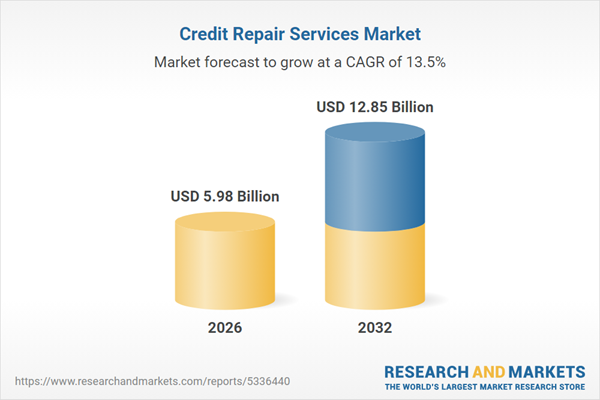
The credit repair services market is entering a strong growth phase and is projected to reach $5.98 billion in 2026 and $12.85 billion by 2032, growing at a 13.51% CAGR as consumers and businesses seek more accessible credit-management solutions, creating opportunities for AI-driven fintech apps that automate credit analysis, dispute management, and personalized credit improvement.
Historically, credit repair relied on labor-intensive agencies to manually prepare and mail dispute letters. AI-first platforms automate report analysis, document processing, and dispute workflows, creating faster, scalable alternatives. The CFPB recorded more than 4.8 million credit and consumer-reporting complaints from January 2024 to June 2025.
A. Why Are AI Credit Repair Apps Gaining Market Adoption?
Rising financial pressure, persistent credit-reporting problems, and growing demand for digital financial tools are creating stronger opportunities for AI-powered credit management platforms.
- Surging Consumer Debt & Credit Report Errors: U.S. household debt reached $18.8 trillion in Q4 2025, according to the Federal Reserve Bank of New York, while incorrect information remained the most common credit-reporting complaint in 2024.
- 80% Lower Operating Costs & Affordable Pricing: AI automation can reduce credit repair operating costs by up to 80%, enabling subscription pricing around $15–$40/month versus traditional services charging $100–$250/month.
- AI-Generated Disputes Against Bureau Rejection Filters: LLMs can generate item-specific dispute drafts aligned with FCRA and applicable reporting requirements, reducing reliance on repetitive templates while supporting more structured workflows.
- Predictive Score Simulation & Real-Time Credit Tracking: Continuous bureau monitoring and predictive score modeling show users how specific actions could affect future credit outcomes, creating stronger engagement and reducing churn.
B. Why Are Enterprises Investing in AI Credit Repair Apps?
Financial institutions, mortgage lenders, auto dealerships, and fintech platforms are increasingly exploring white-label and proprietary AI credit solutions to improve customer retention, automate workflows, and create new revenue opportunities.
| Strategic Value Driver | Traditional Financial Ecosystem | AI Credit Repair App | Business Impact |
| Applicant Lead Recovery | Rejects 30%–50% of subprime or thin-file applicants. | Turn-down-to-turnaround workflows nurture rejected applicants. | Converts lost acquisition costs into future high-margin loan originations. |
| Operational Scalability | High variable costs from manual legal review. | Cloud-native automation handles millions of concurrent disputes. | Enables 80%+ gross margins versus 20%–30% for human-led agencies. |
| Personalized Monetization | Relies on generic credit card advertising. | AI-driven cross-selling promotes secured cards, credit builders, and balance transfers. | Increases LTV through personalized financial product placement. |
| Regulatory Compliance | Higher risk from non-compliant manual correspondence. | Automated audit trails and semantic compliance checks align workflows with CFPB rules. | Reduces regulatory exposure and legal audit overhead. |
Enterprise adoption becomes especially compelling when credit-repair capabilities are integrated into broader lending, financial wellness, and customer-retention workflows. Several measurable trends reinforce the opportunity.
- Monetizing Turned-Down Applicants: Lenders and auto dealers reject up to 50% of applicants due to poor credit. White-label AI credit repair programs can re-engage rejected leads and support loan requalification within 60–180 days.
- High-Margin SaaS Monetization: Dispute automation software represents 38% of the credit repair technology market ($1.06B), enabling cloud-native platforms to generate recurring subscription revenue without proportional staffing increases.
- Growing Digital Credit Management: 72% of U.S. adults used a financial app or website in 2024, creating demand for AI-powered credit monitoring, personalized insights, and automated improvement workflows.
The Enterprise Takeaway: AI credit repair apps transform credit restoration from an expensive, manual service into a scalable software utility. By combining dynamic dispute engines, automated workflows, compliance controls, and personalized credit insights, financial enterprises can pursue new revenue opportunities while improving customer retention.

What Is an AI-Driven Credit Repair App, Dovly?
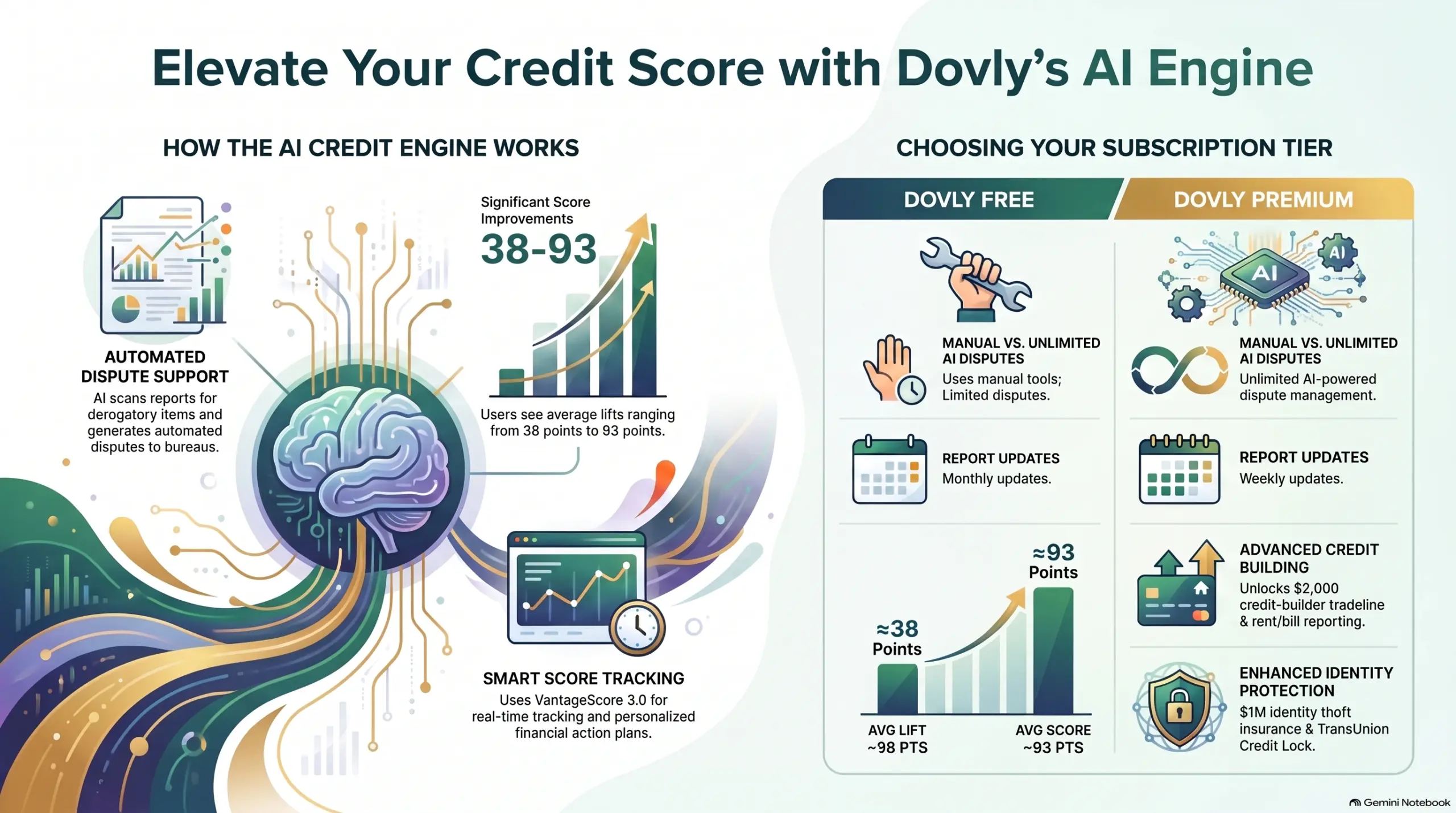
Dovly is an AI-powered credit health platform that helps consumers fix, build, monitor, and protect their credit. Its AI engine analyzes TransUnion credit reports, flags potential errors, offers personalized guidance, and manages disputes. Unlike basic monitoring tools, Dovly actively improves user credit profiles.
Operating as an “AI credit engine,” the platform integrates automated dispute support, score tracking, credit-building, action plans, monitoring, fraud protection, and financial guidance. Users review TransUnion reports, select disputes, track updates, and receive tailored recommendations based on their financial goals.
A. Core Credit Repair Concepts & Platform Terminology
Dovly’s credit repair system relies on several key financial and technical concepts that help users understand how the platform analyzes reports, disputes errors, and improves credit health efficiently overall system
- AI Dispute Support Engine: Dovly’s automated system that scans credit reports for derogatory items (like late payments, charge-offs, or collection accounts) and generates automated disputes.
- Soft Credit Pull: An initial credit check that accesses a user’s credit profile without lowering or affecting their credit score.
- VantageScore 3.0: The primary credit scoring model Dovly uses to calculate and reflect score updates.
- CROA-Compliant: Adherence to the Credit Repair Organizations Act, ensuring standard consumer rights, transparency, and legal compliance in credit dispute practices.
- Credit Lock: A security feature that allows users to instantly block unauthorized access to their TransUnion credit files to prevent identity fraud.
B. Subscription Tiers & Comparison
Dovly offers flexible subscription tiers designed to meet different credit repair needs, ranging from free basic tools to premium AI-powered features that enhance monitoring, disputes, credit building, and identity protection.
| Feature / Tier | Dovly Free | Dovly Premium |
| Pricing | $0 / month | ~$39.99 / month or $99.99 / year |
| Dispute Limits | Manual / Limited dispute tools with TransUnion | Unlimited AI-powered disputes across credit bureaus |
| Report Updates | Monthly TransUnion report & score updates | Weekly TransUnion report updates & real-time monitoring |
| Credit Building | Basic insights & pre-qualified offer unlocks | $2K credit-builder tradeline & bill/rent reporting features |
| Security & ID Insurance | Security score tracking & basic breach alerts | $1M ID Theft Insurance & TransUnion Credit Lock |
C. Ecosystem Overview & Key Operational Highlights
Dovly’s ecosystem combines AI-driven credit monitoring, bureau integrations, and user-friendly digital access, delivering real-time insights, security features, and measurable credit improvement across its platform and subscription tiers overall system overview
- Supported Interfaces: Accessible via web browsers and mobile apps on both iOS (Apple App Store) and Android (Google Play).
- Bureau Coverage: Direct automated dispute and reporting integration primarily targets TransUnion, with broader bureau coverage on premium tiers.
- Average Results: Dovly reports that active Free users see an average score lift of ~38 points, while engaged Premium users average a 93-point increase.
- Non-Clinical/Financial Advice Notice: Dovly operates as an automated software and credit-monitoring tool rather than an accredited legal or financial advisory firm.
How Does AI Credit Repair App like Dovly Work?
A Dovly-like credit app works through a continuous credit intelligence cycle that connects user data, AI analysis, personalized recommendations, dispute automation, credit building, monitoring, and protection to support ongoing credit improvement.
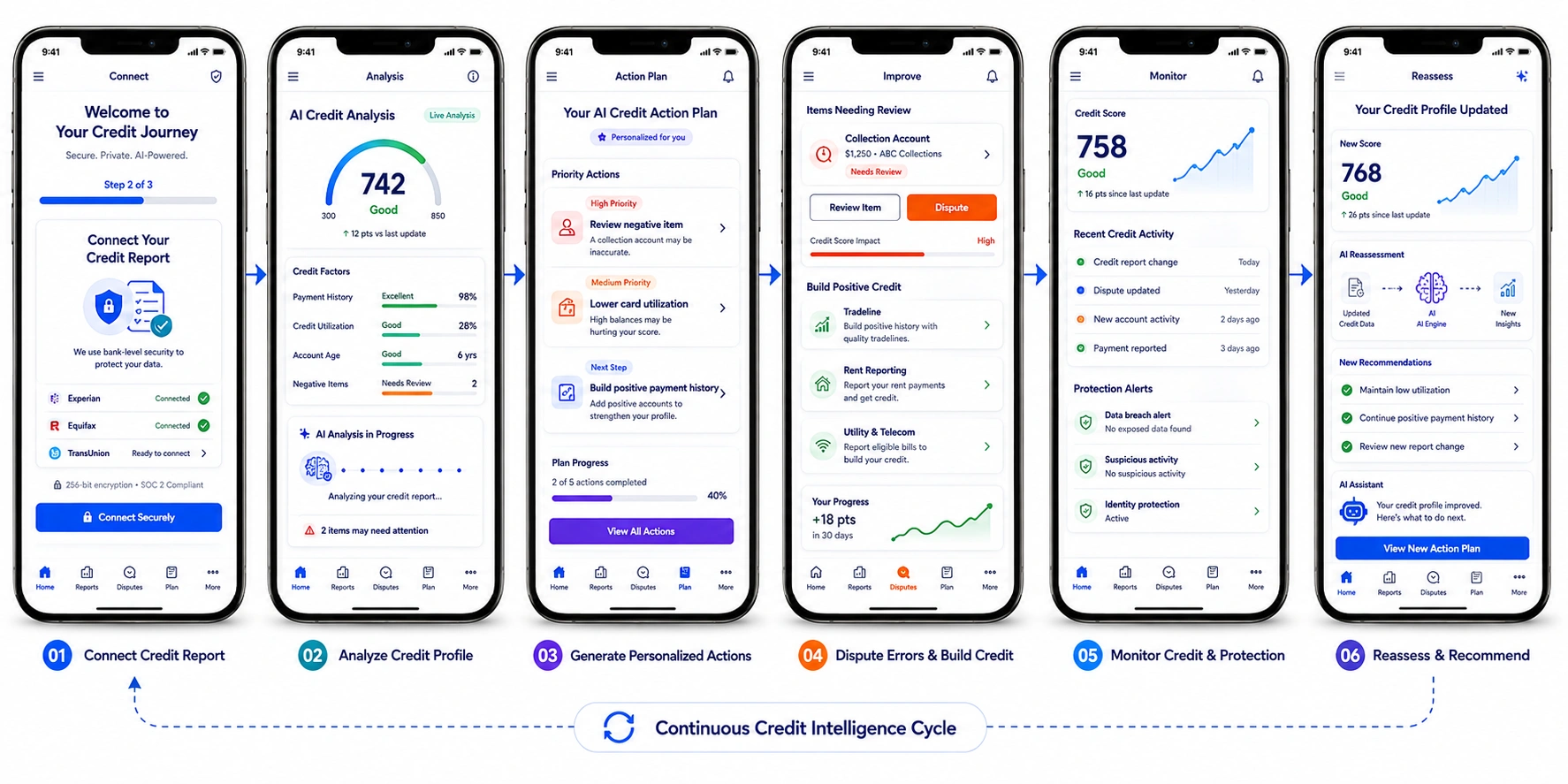
Each stage works together as a continuous credit improvement loop, allowing the platform to analyze new information, recommend actions, automate eligible workflows, and adapt recommendations as the user’s credit profile evolves.
| Working Stage | What Happens | AI / Technology Powering It |
| 1. Sign Up for the Credit Report | Users create an account, complete identity verification, and securely connect their credit-report data to the platform. | Identity Verification, Credit Bureau APIs, Secure API Integration, Data Encryption |
| 2. Analyze the Credit Profile With AI | The platform parses credit-report data, evaluates score factors, and identifies potentially problematic or inaccurate information. | NLP, Credit Report Parsing, Machine Learning, Anomaly Detection |
| 3. Generate Personalized Credit Actions | The system converts credit insights into prioritized recommendations based on the user’s profile, credit history, and improvement goals. | Recommendation Models, Predictive Analytics, Rule-Based Decision Engines |
| 4. Dispute Errors and Build Positive Credit | Users confirm potentially inaccurate items for dispute while eligible users can access credit-building tools such as tradelines and bill reporting. | AI Dispute Detection, Workflow Automation, Rules Engine, Document Intelligence |
| 5. Monitor Credit Changes and Protection Signals | The platform tracks credit changes, dispute outcomes, alerts, data breaches, and other signals that may affect the user’s credit health. | Real-Time Event Processing, Anomaly Detection, Alert Engines, Fraud Detection |
| 6. Reassess the Profile & Recommend Next Actions | Updated credit information feeds back into the system so recommendations can evolve as the user’s credit profile changes. | Predictive Models, Recommendation Engine, Continuous Model Evaluation, AI Assistant |
These stages together form a continuous, data-driven credit improvement loop. Understanding the workflow alone is not enough; it is equally important to see why conversational AI cannot power system independently.
Why a Chatbot Alone Cannot Power a Credit App
A conversational AI can improve user support, but it cannot independently power a Dovly-like credit platform. The core product requires multiple AI and automation layers working together to analyze credit data, recommend actions, manage disputes, and monitor changes.
- Credit Report Intelligence: NLP and document-processing models interpret credit reports, account details, payment history, balances, inquiries, and other relevant credit data.
- AI Error & Anomaly Detection: Machine learning and rule-based models identify potentially inaccurate, inconsistent, unusual, or harmful credit-report entries while fraud detection helps flag suspicious activity.
- Personalized Recommendation Engine: Recommendation and predictive models assess credit profiles, current issues, financial goals, and credit-building opportunities to prioritize relevant actions without presenting predictions as guaranteed outcomes.
- Automated Dispute Intelligence: AI connects potentially inaccurate items with controlled dispute workflows, while deterministic rules handle eligibility, validation, consent, compliance checks, and user confirmation before submission.
- AI Credit Assistant: Generative AI provides credit explanations, report summaries, conversational guidance, and action support, while the underlying intelligence engine handles analysis, recommendations, monitoring, and financial-data processing.
Key takeaway: The AI value in a Dovly-like platform comes from the combination of specialized models, financial-data infrastructure, rules, automation, monitoring, and user controls, not from adding a chatbot to the application.
Core Features of AI Credit Repair App like Dovly
An effective Dovly-like platform should combine AI-driven credit analysis, automated dispute workflows, credit building, real-time monitoring, and identity protection. These features turn credit data into personalized actions while helping users actively improve and protect their credit health.
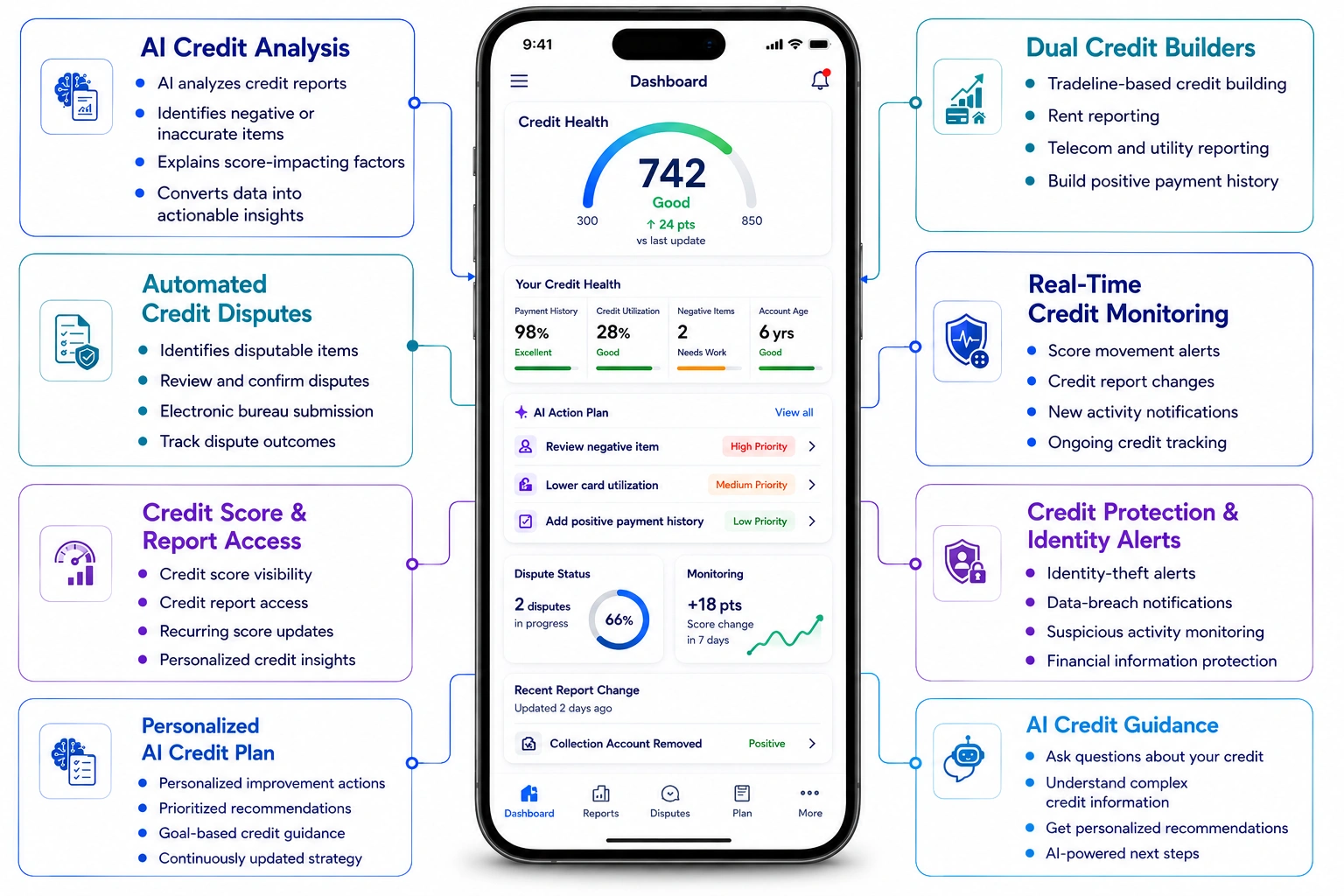
1. AI Credit Engine for Credit Report Analysis
An AI credit engine analyzes credit reports to identify negative or potentially inaccurate items, evaluate factors affecting credit scores, and convert complex financial data into actionable insights. It forms the intelligence layer that powers personalized credit improvement decisions.
2. AI-Powered Automated Credit Disputes
Automated credit disputes streamline the process of challenging potentially inaccurate information. The platform can identify disputable items, let users review and confirm selections, electronically submit disputes to credit bureaus, and track outcomes, reducing manual effort while keeping users involved.
3. Credit Score and Report Access
Credit score and report access gives users a clear view of their current credit health and the factors influencing it. A Dovly-like platform can integrate TransUnion data, provide recurring score updates, and use report information to drive personalized recommendations.
4. Personalized AI Credit Improvement Plans
Personalized AI credit improvement plans transform individual credit data into prioritized actions based on credit history, negative items, financial goals, and building needs. Instead of simply monitoring changes, the platform can continuously recommend relevant steps for improving credit health.
5. Dual Credit Builders for Tradelines and Bills
Dual credit-building tools help users establish positive payment history alongside dispute management. A Dovly-like platform can offer tradeline-based building and eligible rent, telecom, and utility reporting, creating complementary pathways for strengthening a consumer’s credit profile.
6. Real-Time Credit Monitoring and Change Alerts
Real-time credit monitoring helps users stay informed about important changes after disputes, payments, or other credit activity. Automated alerts can flag score movements, report changes, and potentially harmful activity, keeping users engaged with their ongoing credit improvement journey.
7. Credit Protection and Identity Theft Alerts
Credit protection extends the platform beyond repair and building by helping users respond to identity-related threats. Features such as identity-theft alerts, data-breach notifications, suspicious-activity monitoring, and applicable insurance can protect sensitive financial information and strengthen user trust.
8. AI Credit Guidance and Recommendations
AI credit guidance gives users understandable answers and practical recommendations based on their credit profile, report, and goals. An AI assistant can explain credit information, answer questions, and suggest next steps while working alongside the platform’s deeper recommendation engine.
How to Develop an AI Credit Repair App Like Dovly
Building a Dovly-like platform requires more than developing credit-monitoring features. Our development process combines product strategy, bureau integrations, AI credit intelligence, automated workflows, security, compliance, testing, and continuous optimization.
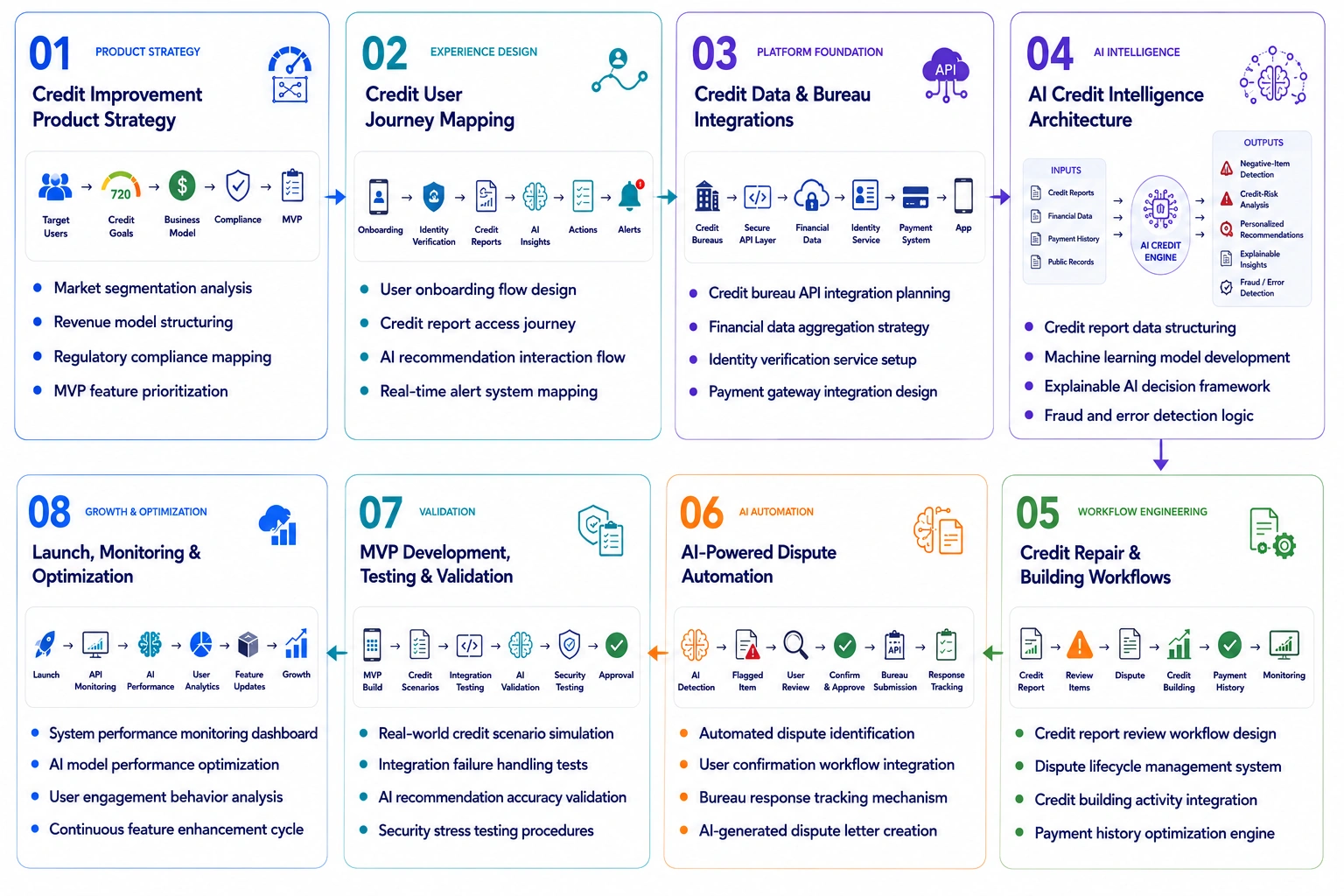
1. Define the Credit Improvement Product Scope
We define the platform’s core credit-improvement model, target market, business model, geographic scope, regulatory boundaries, and MVP priorities before selecting technologies or beginning development.
- Market Segmentation Analysis: Identifies user groups based on credit profiles, financial behavior, and improvement needs.
- Revenue Model Structuring: Defines subscription plans, freemium options, and value-added credit services for monetization.
- Regulatory Compliance Mapping: Ensures alignment with credit laws, reporting standards, and regional financial regulations.
- MVP Feature Prioritization: Selects essential features for initial launch focusing on usability, impact, and scalability readiness.
2. Map the User’s End-to-End Credit Journey
Our developers map every critical interaction from onboarding and identity verification through credit-report access, AI analysis, recommendations, disputes, credit building, monitoring, and ongoing alerts.
- User Onboarding Flow Design: Creates smooth registration experience with identity checks and secure account setup processes.
- Credit Report Access Journey: Defines how users securely retrieve and view credit reports from multiple bureaus.
- AI Recommendation Interaction Flow: Structures how users receive, understand, and act on personalized credit improvement suggestions.
- Real-Time Alert System Mapping: Designs notification system for credit changes, disputes updates, and score fluctuations.
3. Plan Credit Bureau and Financial Data Integrations
We identify and plan credit-bureau APIs, financial-data providers, identity services, reporting partners, and payment integrations required to securely deliver credit reports, scores, disputes, and credit-building capabilities.
- Credit Bureau API Integration Planning: Establishes secure connections with major bureaus for real-time credit data access.
- Financial Data Aggregation Strategy: Combines banking, transaction, and alternative data sources for enhanced credit insights.
- Identity Verification Service Setup: Implements secure KYC systems to validate user identity and prevent fraudulent access.
- Payment Gateway Integration Design: Enables subscription billing, transaction processing, and secure financial operations within platform.
4. Design the AI Credit Intelligence Architecture
We design the AI architecture around credit-report parsing, data normalization, inaccurate-item detection, recommendation models, rule engines, explainable decisions, and secure financial data processing.
- Credit Report Data Structuring: Converts raw bureau data into standardized formats for consistent AI processing and analysis.
- Machine Learning Model Development: Builds predictive models to assess credit risk and improvement opportunities accurately.
- Explainable AI Decision Framework: Ensures users understand why specific credit recommendations or alerts are generated.
- Fraud and Error Detection Logic: Identifies inconsistencies, suspicious entries, and potential inaccuracies in credit reports.
5. Build the Credit Repair and Building Workflows
Our team develops connected workflows for report review, item selection, dispute tracking, tradelines, eligible bill reporting, payment history, monitoring, and other credit-building actions.
- Credit Report Review Workflow Design: Enables users to analyze credit reports and identify negative or incorrect items easily.
- Dispute Lifecycle Management System: Tracks dispute submission, bureau responses, and resolution status in real time.
- Credit Building Activity Integration: Supports tradelines, bill reporting, and positive credit behavior tracking mechanisms.
- Payment History Optimization Engine: Encourages timely payments and monitors impact on overall credit score improvement.
6. Integrate AI-Powered Dispute Automation
We connect the AI engine with dispute workflows to identify potentially inaccurate information, generate recommendations, capture user confirmation, submit eligible disputes, and track bureau responses.
- Automated Dispute Identification System: Detects questionable credit entries using AI-driven pattern recognition and rule-based logic.
- User Confirmation Workflow Integration: Ensures users review and approve disputes before submission to credit bureaus.
- Bureau Response Tracking Mechanism: Monitors dispute outcomes and updates users with real-time resolution status.
- AI-Generated Dispute Letter Creation: Produces structured, compliant dispute letters tailored to specific credit report issues.
7. Develop and Test the MVP With Realistic Credit Data
We build and test the MVP using realistic credit-report scenarios, incomplete data, integration failures, dispute edge cases, AI recommendations, notification flows, and security conditions before production deployment.
- Real-World Credit Scenario Simulation: Tests platform behavior using diverse credit profiles and financial situations.
- Integration Failure Handling Tests: Ensures system stability when external APIs or data sources experience downtime.
- AI Recommendation Accuracy Validation: Evaluates correctness and relevance of credit improvement suggestions generated by system.
- Security Stress Testing Procedures: Assesses platform resilience against data breaches, attacks, and unauthorized access attempts.
8. Launch, Monitor and Optimize the Credit Platform
After launch, we monitor API health, AI performance, dispute outcomes, security events, user engagement, and workflow reliability to continuously improve recommendations, features, and credit-management experiences.
- System Performance Monitoring Dashboard: Tracks uptime, response times, and API reliability across all platform services.
- AI Model Performance Optimization: Continuously improves prediction accuracy and recommendation relevance using real user data.
- User Engagement Behavior Analysis: Studies user interactions to enhance experience, retention, and feature adoption rates.
- Continuous Feature Enhancement Cycle: Implements updates based on feedback, analytics, and evolving credit industry requirements.
Cost to Build an AI-Driven Credit Repair App Like Dovly
The cost to build an AI-driven credit repair app like Dovly depends on its features, AI capabilities, credit bureau integrations, security requirements, compliance scope, and platform complexity. A basic MVP may require less investment, while advanced enterprise solutions demand significantly higher development budgets.
Development Cost Breakdown by Phase
A Dovly-like platform requires specialized fintech development across product planning, AI engineering, integrations, secure workflows, testing, and deployment, making each development phase a distinct budget component.
| Development Phase | Estimated Cost (MVP → Enterprise) | What the Phase Covers |
| Product Discovery & Planning | $4,000 – $20,000 | Defines product scope, target users, business model, compliance boundaries, MVP features, and technical requirements. |
| UI/UX Design | $5,000 – $30,000 | Designs onboarding, credit dashboards, report views, dispute flows, recommendations, monitoring screens, and secure user experiences. |
| Backend Development | $10,000 – $60,000 | Builds APIs, user management, credit workflows, databases, business logic, notifications, and scalable backend infrastructure. |
| Credit Bureau Integrations | $8,000 – $50,000 | Connects credit reports, scores, dispute systems, reporting services, identity verification, and required financial-data providers. |
| AI Credit Engine | $10,000 – $100,000 | Develops report parsing, inaccurate-item detection, recommendation logic, personalization, explainability, and AI-powered credit intelligence. |
| Dispute Automation | $6,000 – $40,000 | Builds dispute selection, user confirmation, electronic submission, status tracking, response handling, and audit workflows. |
| Credit-Building Features | $7,000 – $50,000 | Implements tradelines, bill reporting, payment tracking, credit-building workflows, and reporting-partner integrations. |
| Security & Compliance | $6,000 – $60,000 | Implements encryption, identity verification, consent controls, access management, audit trails, fraud prevention, and compliance safeguards. |
| Testing & Quality Assurance | $5,000 – $40,000 | Tests credit workflows, AI recommendations, APIs, security, edge cases, notifications, performance, and cross-platform reliability. |
| Deployment & Optimization | $4,000 – $50,000 | Handles cloud deployment, production monitoring, analytics, performance optimization, maintenance, and post-launch improvements. |
| Total Estimated Cost | $60,000 – $600,000 | Overall development investment across MVP, mid-level, and enterprise-grade implementations. |
Note: These are indicative development ranges, not fixed quotes. Actual costs vary based on the number of platforms, bureau partnerships, AI sophistication, geographic market, compliance scope, third-party API fees, and whether you build an MVP or enterprise-grade product.
Development Cost According to Platform Level
The development budget depends on the platform level, feature depth, integrations, AI capabilities, and compliance requirements. The following estimates outline the expected investment for building a credit management platform at MVP, growth, and enterprise levels.
| Platform Level | Estimated Cost | What This Platform Include |
| MVP (Fintech-Ready) | $60,000 – $130,000 | Credit dashboard, 1–2 bureau integrations, KYC verification, basic AI credit insights, manual/semi-automated disputes, secure backend, monitoring, and admin panel. |
| Mid-Level (Growth Product) | $140,000 – $250,000 | Full bureau integrations, automated dispute workflows, AI recommendations, credit report parsing, personalization, fraud checks, monitoring, cloud infrastructure, and compliance. |
| Enterprise (Dovly / Credit Karma Level) | $260,000 – $600,000+ | Multi-bureau architecture, AI credit intelligence, live monitoring, fraud detection, automated disputes, credit building, compliance, analytics, and ML optimization. |
Note: A basic MVP can validate the credit-improvement concept, while mid-level and enterprise platforms require substantially more investment in AI automation, bureau infrastructure, security, compliance, credit-building capabilities, and scalability.
This breakdown reflects real-world fintech development economics rather than generic app estimates. In credit repair platforms like Dovly, costs are driven by regulated financial infrastructure, not just software features. Key cost drivers include:
- Bureau integrations that are contract-heavy, compliance-driven, and expensive to maintain
- AI credit systems that require data pipelines, model training, and continuous optimization
- Dispute automation that functions as a regulated financial workflow system, not a simple feature
- Enterprise-grade requirements for security, auditability, and regulatory compliance
- Infrastructure scaling based on highly sensitive financial data and strict industry regulations
Factors That Influence Development Budget
The final budget depends less on the number of screens and more on the financial infrastructure, AI depth, integrations, automation, compliance requirements, and scalability your credit platform needs.
- Credit Bureau Data Licensing & API Access: Experian, Equifax, and TransUnion access involves per-report fees, certification, usage tiers, and contractual minimums, typically $0.50–$3 per pull and $1,000–$10,000/month at scale.
- FCRA & Credit Repair Compliance Engineering: Dispute validation, permissible-purpose checks, audit trails, adverse action, and compliant consent workflows typically add $5,000–$25,000 initially, plus $1,000–$5,000/month for legal maintenance.
- Identity Verification & Fraud Prevention: KYC/AML, liveness detection, synthetic identity prevention, device fingerprinting, and fraud scoring typically cost $0.50–$2 per verification, with enterprise platforms adding $2,000–$8,000/month.
- Bureau-Specific Dispute Workflow Automation: Supporting e-OSCAR, API, mail workflows, response timelines, reinvestigations, and evidence packaging typically costs $6,000–$20,000, plus $500–$3,000/month operational costs.
- Financial Data Partnerships & Reporting Integrations: Rent reporting, utility networks, Plaid, Finicity, and tradeline integrations typically cost $3,000–$15,000 per provider, with 5%–20% revenue-sharing models where applicable.
Compliance Requirements for AI Credit Repairing App
Credit apps handle highly sensitive financial and identity information, making security and compliance core product requirements. A Dovly-like platform should protect consumer data while maintaining controlled access, transparent consent, traceable dispute activity, and regulatory safeguards.
| Compliance Requirement | What It Protects | Controls to Implement |
| Financial & Identity Data Protection | Credit reports, SSNs, financial records, account details, and PII. | Data classification, encryption, tokenization, secure APIs, data minimization, privacy controls. |
| Encryption & Secure Data Storage | Financial and identity data in transit and at rest. | TLS, AES-256, encrypted backups, key management, secrets management. |
| Strong Identity Verification | Unauthorized access, identity theft, fraudulent accounts, and credit-data misuse. | MFA, identity verification, device checks, session controls, risk-based authentication. |
| Role-Based Access Controls | Unauthorized internal or external access to credit and dispute data. | RBAC, least-privilege access, privileged-access management, session controls. |
| Consent & Data-Access Logs | Unauthorized data usage, unclear permissions, and incomplete consumer activity records. | Explicit consent, permission management, timestamped logs, access history, retention controls. |
| Dispute Audit Trails | Untraceable dispute actions, submission errors, missing evidence, and compliance gaps. | Immutable logs, dispute history, user confirmations, evidence records, bureau responses. |
| FCRA & Credit Repair Rules | Violations involving credit reporting, disputes, consumer rights and credit-repair services. | Compliance mapping, disclosures, dispute validation, consent checkpoints, record retention. |
Note: These security and compliance controls form the foundation of any credit app. They ensure sensitive financial data is protected, user trust is maintained, regulatory obligations are met, and all credit-related actions remain transparent, auditable, and legally compliant across the entire platform lifecycle.
Practical Challenges in Building an AI-Driven Credit Repair App
Building a Dovly-like platform involves complex engineering and compliance challenges beyond typical app development, including inconsistent financial data, strict regulations, and unpredictable credit bureau behavior, while ensuring AI accuracy, legal safety, and fast, secure, trustworthy experience for sensitive financial information.
1. Inconsistent and Restrictive Credit Bureau Integrations
Challenge: Credit bureaus use inconsistent legacy systems, limited APIs, batch files, delayed updates, and strict access rules, which significantly complicate integration reliability.
Solution: Our developers design resilient ingestion pipelines that support APIs, batch files, and secure feeds, along with schema versioning, normalization, validation, retries, queues, and monitoring to ensure stable and uninterrupted credit data processing.
2. Incomplete and Outdated Credit Report Data
Challenge: Credit reports from bureaus often conflict, contain outdated entries, and show ambiguous statuses, requiring careful reconciliation to avoid misrepresenting financial profiles.
Solution: We build reconciliation logic that compares multi-bureau data, flags inconsistencies, prioritizes freshness and reliability, and presents contextual explanations so that we ensure transparency without blindly resolving conflicts.
3. Noisy Financial Data and AI Model Bias Risks
Challenge: Credit data is noisy and imbalanced, with rare edge cases such as disputes and mixed files leading to biased or inaccurate model training.
Solution: Our developers use curated datasets, synthetic augmentation, and strict feature validation to reduce noise, along with explainability tools and continuous retraining pipelines to ensure models remain accurate, fair, and adaptable over time.
Build Your AI-Driven Credit Repair App With Idea Usher
IdeaUsher is a fintech product engineering partner with 11+ years of experience across 50+ countries. Supported by 250+ experts, 1,000+ completed projects, and a 4.9/5 Clutch rating, we build custom, high-capacity AI credit repair platforms from scratch.
Instead of generic templates, we build scalable, cloud-native fintech architectures with automated discrepancy detection, multi-bureau data ingestion, and intelligent dispute generation workflows to help you lead in digital financial wellness.
Why Enterprises Partner With Us
Financial institutions and fintech startups choose us to build Dovly-like platforms because we transform manual credit repair into frictionless, automated, and legally compliant AI workflows.
- AI-Powered Credit Discrepancy Detection: We build intelligent algorithms that audit credit reports, cross-reference bureau data, and flag errors, outdated accounts, and potential fraud.
- Automated Credit Dispute Generation: Our engineers develop workflows that generate personalized, FCRA-compliant dispute letters and securely submit them to major credit bureaus.
- Multi-Bureau Credit Data Integration: We develop secure, high-throughput API pipelines connecting Experian, Equifax, and TransUnion for real-time credit data retrieval and synchronization.
- Personalized Credit-Building Engine: We integrate ML microservices that analyze financial behavior, forecast score changes, and deliver actionable, step-by-step credit improvement strategies.
- FCRA-Compliant Cloud Security: We deploy AES-256 encrypted, isolated cloud microservices to protect sensitive financial data and support FCRA and privacy compliance.
- Zero Vendor Lock-In Delivery: We deliver clean, fully documented, and auditable source code, giving your organization 100% platform ownership from day one.
Ready to revolutionize consumer financial health with an enterprise-grade AI credit repair platform? Partner with Idea Usher’s principal fintech and AI software architects to map out your custom product build today.
Conclusion
The AI-driven credit repair app like Dovly represents an opportunity to combine credit intelligence, automated dispute workflows, credit building, monitoring, and identity protection in one platform. The technology, integrations, security, and compliance requirements make this a specialized fintech product rather than a conventional mobile app. A clear product strategy and experienced development team can help turn the concept into a scalable platform that delivers personalized credit guidance while maintaining the reliability and trust consumers expect from financial services.
FAQs
A.1. An AI credit repair app needs credit bureau integrations, AI report analysis, automated dispute workflows, personalized recommendations, credit-building tools, monitoring, identity protection, secure data infrastructure, and compliance controls.
A.2. AI credit repair app development can cost approximately $60,000 to $600,000+, depending on AI complexity, bureau integrations, security requirements, dispute automation, credit-building features, platform scope, and compliance needs.
A.3. AI credit repair software can involve FCRA, credit repair, consumer protection, privacy, and data security requirements. Regulatory obligations depend on services offered, business structure, partnerships, and operating jurisdictions.
A.4. An AI credit repair app can generate revenue through premium subscriptions, credit-building services, financial product referrals, value-added protection features, and B2B partnerships, depending on its business model and regulatory structure.