 (+971) 8007 4267
 (+91) 946 340 7140
 (+1) 628 432 4305

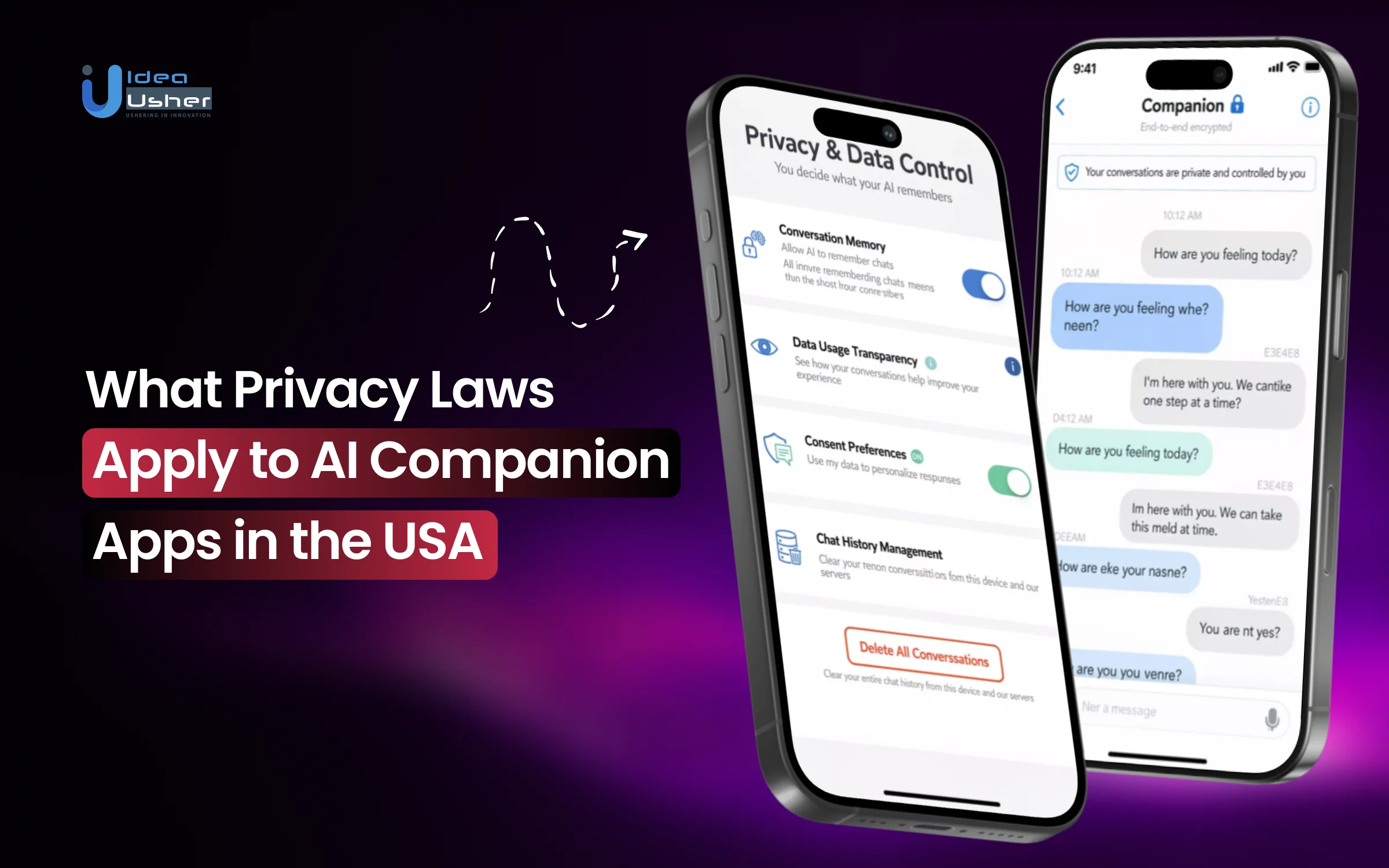
AI companion apps often involve deeply personal interactions, from everyday conversations and emotional reflections to long-term memory and behavioral patterns. As these apps become more embedded in users’ lives, questions around data privacy, consent, and responsibility grow more urgent. Understanding the AI companion app USA privacy laws is essential, as users trust these systems with information far beyond basic app usage.
The U.S. legal framework for AI companion apps is not defined by a single law. Instead, it combines federal oversight, state-level privacy laws, and sector-specific regulations that govern how personal data is collected, stored, shared, and retained, particularly when personalization, memory, and emotionally sensitive data are involved.
In this blog, we break down the key U.S. privacy laws affecting AI companion apps, explain their impact on product design and data handling, and outline what developers need to consider to remain compliant while maintaining user trust.
Understanding Data Privacy in AI Companion Apps
AI companion apps are fundamentally different from many other digital products because they simulate personal interaction, emotional support, and ongoing conversation. As a result, they collect and process highly sensitive user data, making privacy considerations central, not optional, to their development and launch.
A. What Makes AI Companion Apps Privacy-Sensitive?
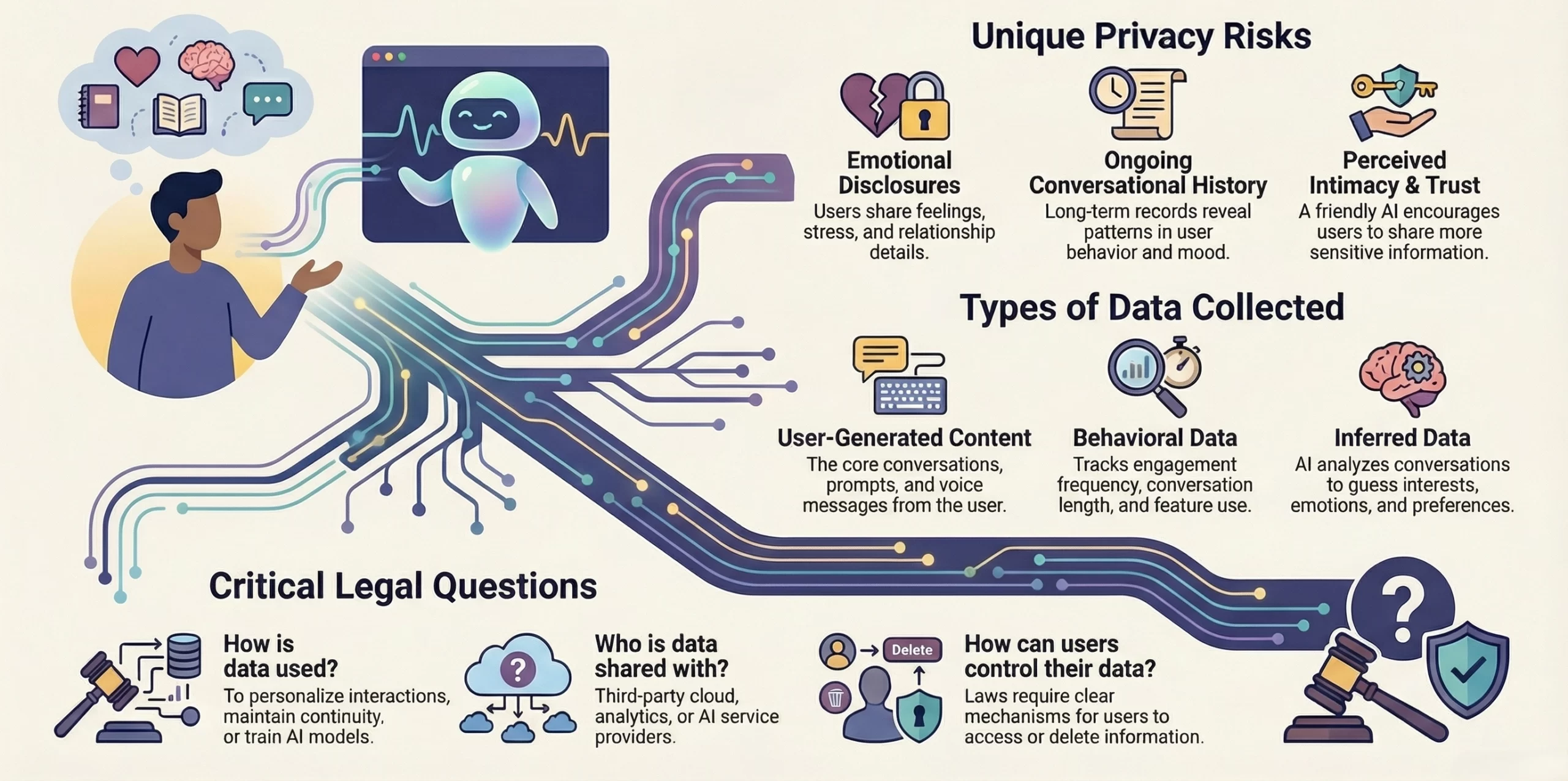
AI companion apps often create an environment where users feel comfortable sharing personal and emotional details. The conversational nature of these apps can result in the collection of data that goes far beyond basic account information.
- Emotional and personal disclosures: Users may discuss feelings, stress, relationships, or life events with an AI companion. Even if not explicitly requested, this info can be captured and stored during normal interactions.
- Ongoing conversational history: AI companion apps retain conversation history to maintain continuity and personalization, creating long-term data records that reveal patterns about user behavior, mood, and preferences.
- Perceived intimacy and trust: AI companions being supportive or friendly make users more likely to disclose sensitive information, raising privacy and data handling expectations.
B. Types of Data Commonly Collected
To operate effectively, AI companion apps usually collect multiple categories of data, each with its own privacy implications.
- Identifiers: This includes email addresses, usernames, device identifiers, or account IDs. Although basic personal data and identifiers are crucial, as they link data to a specific individual.
- User-generated content: Conversations, voice messages, prompts, and other inputs form the core of an AI companion app, often including deeply personal information based on user interactions.
- Behavioral data: AI companion apps track engagement frequency, conversation length, and feature use, revealing individual habits, routines, and patterns over time.
- Inferred data: AI systems analyze conversations and behavior to infer interests, emotions, or preferences. This data may be considered personal under some privacy laws, even if not explicitly shared.
C. Why Privacy Laws Apply Differently to AI Companions?
AI companion app USA privacy laws evaluate these apps differently because they continuously collect and process personal data, often becoming an integral part of users’ daily interactions.
- What data is collected: AI companion apps collect conversations, voice inputs, and shared context in addition to account identifiers, which may include sensitive personal information users disclose during normal use.
- How the data is used: Companies use data to personalize interactions, improve accuracy, maintain continuity, and train or refine AI models, provided these uses align with user disclosures.
- Who the data is shared with: Companies often share data with third-party service providers, including cloud, analytics, or AI vendors, which creates additional legal obligations.
- How long the data is retained: Companies may store conversation history long-term, but laws require them to retain data only as necessary and for a clear purpose.
- How users can control or delete their data: Users have rights to access, correct, or delete data, requiring clear control mechanisms despite persistent histories.
Because these apps often process sensitive or inferred data, regulators may enforce stricter standards on user consent, data minimization, access, and deletion. The interactive, persistent nature of AI companions complicates compliance more than static apps.
D. Establishing the Legal Foundation
Before examining specific U.S. privacy laws, it’s important to recognize that regulators evaluate AI companion apps based on function and data impact, not branding. An app positioned as “friendly,” “emotional,” or “supportive” may still be legally treated as a data-intensive AI system.
This foundational understanding makes it easier to evaluate why certain federal and state privacy laws apply and why compliance planning must begin at the product design stage, not after launch.
Overview of the U.S. Privacy Law Landscape for AI Applications
The U.S. lacks a single federal privacy law, relying instead on federal, state, and sector-specific rules. For AI app developers, compliance varies based on app function, data handled, and user location.
A. Fragmented Regulatory System
Unlike unified privacy regions, the U.S. data privacy approach has developed gradually, with different laws based on industry, data type, and location. Consequently, AI companion app USA privacy laws often face overlapping rules instead of clear regulations.
At a high level, privacy regulation in the U.S. falls into three broad categories:
- Federal oversight and enforcement: Although no single federal privacy law exists, the FTC enforces against unfair or deceptive data practices, including misrepresentation of data collection, use, or protection.
- State-level consumer privacy: States have enacted privacy laws granting user rights based on user residency, creating varying compliance obligations for AI companion apps operating nationwide.
- Sector-specific privacy regulations: Specialized laws govern health, children’s, or financial data, and AI companion apps may trigger these rules unintentionally through user-shared information.
B. Why This Matters for AI Companion Apps?
AI companion apps often don’t fit into one regulatory category. A product may process consumer data, inferred emotional info, and regulated data types, so businesses must assess compliance across multiple legal layers instead of relying on one privacy policy.
This legal structure also means that privacy obligations can evolve as laws change or as new states adopt consumer privacy legislation. An AI companion app that is compliant today may require updates to data practices, disclosures, or user controls in the future.
C. Preparing for Law-Specific Analysis
Understanding the overall U.S. privacy landscape is essential before examining individual laws. It shows why companies must integrate compliance into AI companion app design and data flows rather than treat it as a checklist exercise.
With this context in place, the next sections can break down the specific federal considerations, state privacy laws and sector-based regulations that are most relevant to AI companion apps operating in the U.S. market.
What 72% Teen Usage Reveals About AI Companion App Privacy Responsibilities?
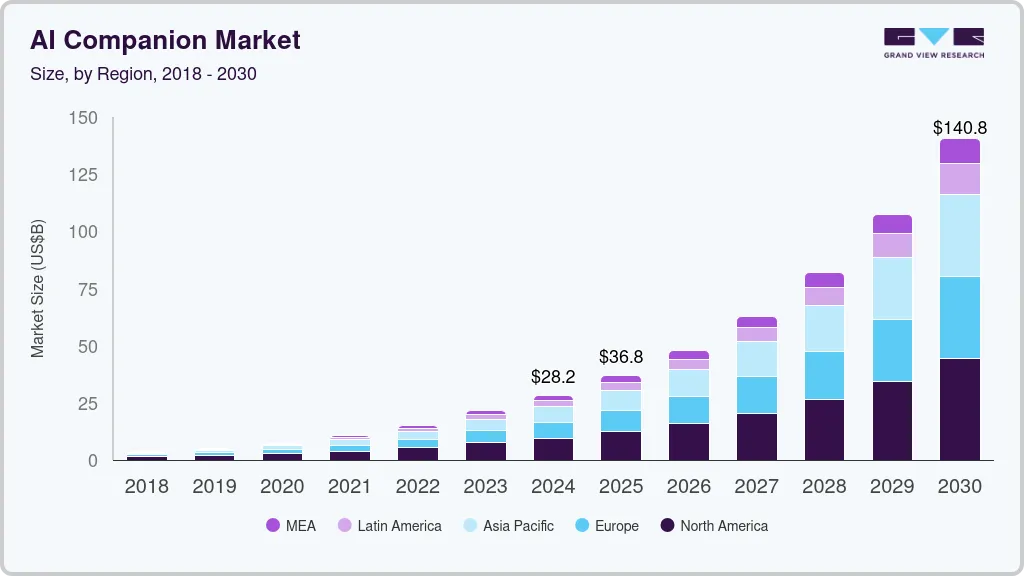
The global AI companion market valued at USD 28.19 billion in 2024 is projected to reach USD 140.75 billion by 2030, with a CAGR of 30.8% from 2025 to 2030. This growth indicates rising demand for conversational, emotionally responsive AI products, along with increasing expectations for responsible data handling and privacy.
A survey found that 72% of teens have used AI companion apps, highlighting widespread adoption among younger users and why developers must prioritize age-related privacy protections.
A. What This Level of Adoption Means in Practical Terms
Widespread adoption across age groups signals that AI companion apps are no longer niche products. As usage expands, privacy considerations move from edge cases to core product requirements.
- Diverse user groups are engaging: High adoption brings users with varying digital literacy, expectations, and vulnerability, increasing the need for clear disclosures and consistent data practices.
- Younger users are part of the ecosystem: Even general audience apps may include minors, affecting data collection, consent, and access control considerations for developers.
- Data collection scales with engagement: As usage grows, so does the volume and sensitivity of collected data, making structured privacy practices essential rather than optional.
B. Why These Trends Matter for Privacy Laws?
Adoption trends show why privacy laws emphasize user rights, transparency, and data minimization. As the user base grows and includes younger audiences, users expect companies to handle personal data responsibly.
- Privacy laws reflect real-world usage: Regulations protect users based on actual product use, making safeguards essential for unintended or mixed audiences as adoption grows.
- Age-related protections at scale: Increased engagement from younger users makes children’s data and consent laws a practical concern, regardless of original app intent.
- Growth increases accountability: Rapid expansion raises expectations for clear data collection, storage, and use disclosures, positioning privacy compliance as a foundation for sustainable growth.
Strong market growth and broad user adoption highlight why U.S. privacy laws apply to AI companion apps and why companies must integrate compliance early in product design and deployment. Early compliance ensures both legal adherence and user trust from launch.
Federal Privacy & Consumer Protection Laws Affecting AI Companion Apps
AI companion app USA privacy laws follow key national data standards, even without a comprehensive federal law. These laws shape companies’ data practices and apply nationwide, regardless of user location.
A. Federal Trade Commission Oversight
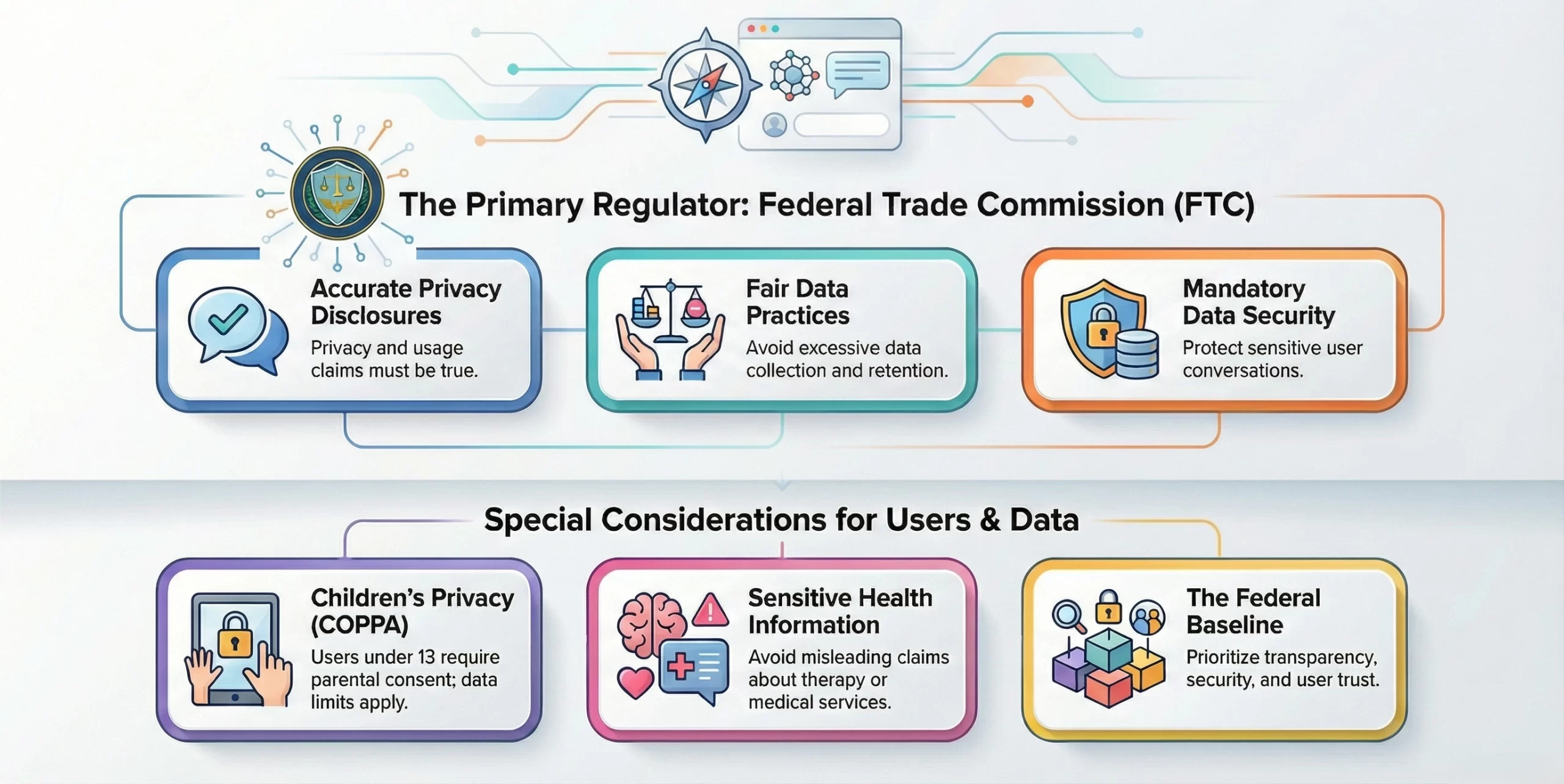
The Federal Trade Commission (FTC) is the main federal authority overseeing AI companion apps, enforcing laws against unfair or deceptive practices related to privacy and data security.
- Accuracy of privacy disclosures: If an app claims conversations are private, not stored, or not used for training, those statements must be accurate. Mismatches can trigger enforcement.
- Fair data practices: Even if data collection is legal, the FTC may intervene if practices are unfair, such as collecting excessive data, retaining sensitive data without reason, or lacking security safeguards.
- Data security expectations: AI companion apps must take reasonable steps to protect user data, as poor security exposing personal conversations or identifiers can be considered consumer harm under federal law.
B. Children’s Privacy Considerations
If an AI companion app is directed at children or knowingly collects data from users under 13, it may fall under the Children’s Online Privacy Protection Act (COPPA). This law imposes strict requirements around parental consent, data collection, and data retention.
Key implications include:
- Age-based access decisions: Apps must clearly determine whether they allow child users and, if so, how they verify age or obtain parental consent.
- Limits on data collection: COPPA restricts the amount and type of data that can be collected from children, which can directly impact how AI companions function.
Even apps not designed for children must consider how they handle underage users to avoid unintended violations.
C. Health & Sensitive Information at the Federal Level
AI companion apps handle sensitive mental health and personal data. Though not usually regulated as healthcare providers, regulators supervise their data practices. Misleading claims about medical services, therapy, or privacy can lead to regulatory problems. Clear messaging and disclosures are essential.
D. Why Federal Laws Form the Compliance Baseline?
Federal laws set minimum standards for AI companion apps in the U.S., emphasizing user harm, transparency, and trust over technical data definitions. Despite state laws, federal enforcement remains vital. Enterprises should prioritize honest communication, responsible data handling, and security.
State-Level Consumer Privacy Laws Affecting AI Companion Apps
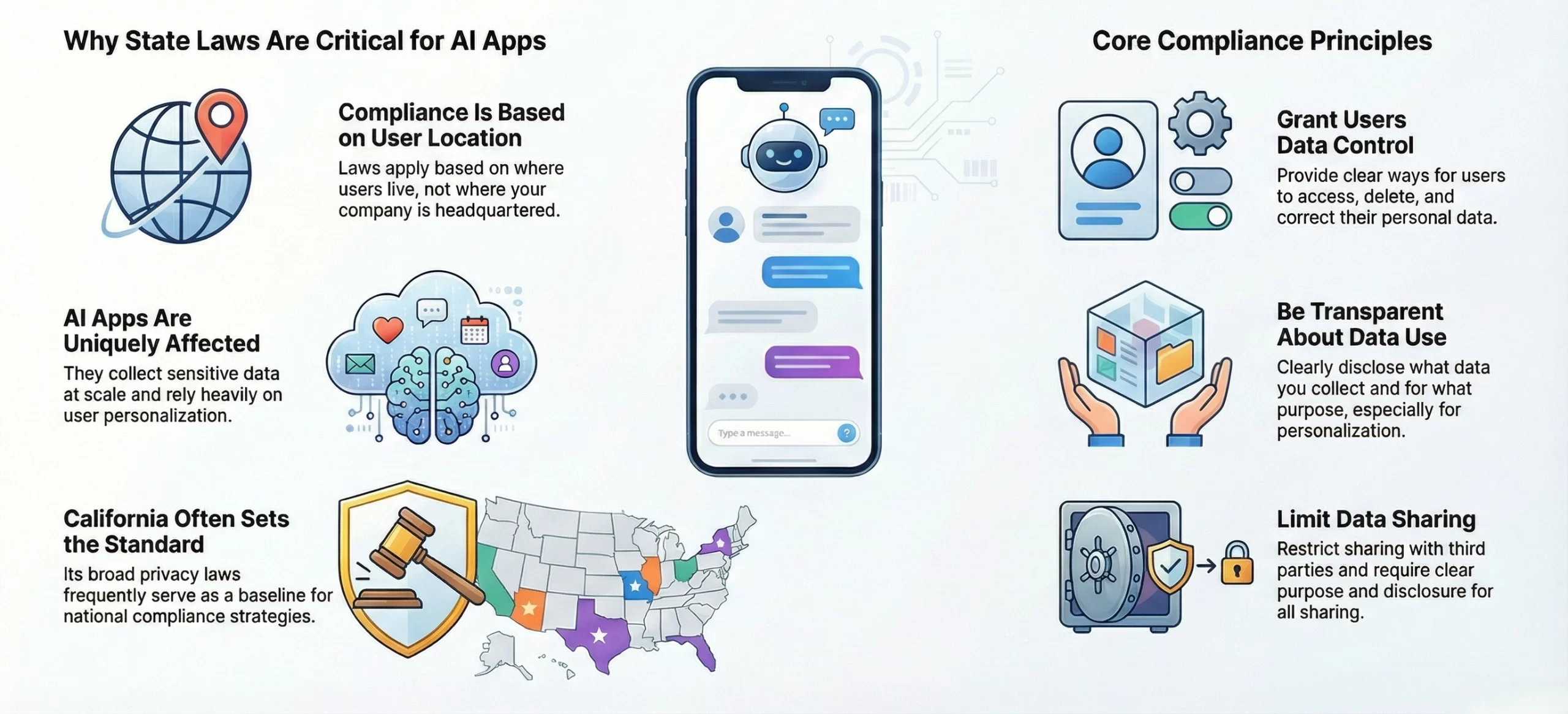
State privacy laws impact how AI apps handle user data in the U.S. Unlike federal rules, AI companion app USA privacy laws impose specific rights and obligations that vary by location. Enterprises must usually comply based on user geography, not the company HQ.
A. Why State Privacy Laws Matter Most?
Recently, many states have enacted broad consumer privacy laws across industries, emphasizing individual control over personal data and transparency in data collection and use.
AI companion apps are particularly affected because they typically:
- Collect personal and conversational data at scale
- Operate nationally or globally through app stores
- Rely on personalization, inference, and ongoing data processing
As a result, even a small or early-stage AI companion app may fall within the scope of multiple state privacy laws if it has users in regulated states.
B. Common Themes Across State Privacy Laws
While state laws differ in scope and thresholds, many of them share core principles that directly impact AI companion apps.
- Consumer rights over personal data: Users can know, access, and delete personal data, including conversation histories, inferred preferences, and behavioral data linked to their account.
- Transparency requirements: Companies must clearly disclose data collection, purposes, and use, with heightened importance for personalization or model improvement.
- Limits on data use and sharing: Laws restrict third-party sharing and require clear purpose and disclosure for data shared with vendors or service providers.
- Opt-out and control mechanisms: Some laws allow opt-outs for profiling or targeted uses, requiring AI companion apps to assess regulated features and user controls.
C. California and Its Influence
California’s privacy framework is often the most influential in the U.S. The California Consumer Privacy Act and its later amendments have shaped how companies nationwide approach privacy compliance.
For AI companion apps, California law is notable because it:
- Applies to many businesses regardless of where they are located
- Defines personal information broadly, including inferences drawn about users
- Requires clear processes for access, deletion, and correction requests
Because California residents represent a large portion of the U.S. market, many AI companion apps choose to align their privacy practices with California requirements as a baseline.
D. Expanding State Privacy Coverage
Other states have followed California by passing their own privacy laws, which vary but often include compliance steps like data protection assessments or stricter sensitive data rules.
For AI companion apps, this expanding patchwork means privacy compliance is not static. As new states adopt consumer privacy laws, enterprises may need to update disclosures, internal processes, and user controls to remain compliant.
E. Practical Impact on AI Companion App Development
State-level privacy laws impact AI companion app design, data storage, and user requests. Features like conversation history, emotional inference, and personalization must adhere to evolving state standards.
Understanding state privacy laws is crucial to identifying applicable laws for an AI companion app. The next section examines sector-specific regulations based on data shared, even if the app isn’t for a regulated industry.
Sector-Specific Privacy Laws That May Apply to AI Companion Apps
AI companion app USA privacy laws may also be governed by sector-specific regulations, depending on data type and user category, not marketing approach. Thus, these laws can apply even if the app isn’t made for regulated industries.
1. Children’s Data & Age-Based Regulations
AI companion apps for children or those collecting data from users under 13 must comply with COPPA, which imposes strict rules on handling children’s personal information. These apps face challenges in verifying age, obtaining parental consent, managing data retention and responding appropriately when children use the app or disclose their age.
2. Health-Related Information & Mental Well-Being
These apps collect emotional, stress, or mental health data. While not healthcare providers, these data types can raise regulatory issues. Enterprises must carefully handle health data and avoid claims about diagnosis, treatment, or medical advice to reduce legal risks.
3. Financial & Highly Sensitive Personal Information
Users may share financial or employment details during AI chats. Although not a financial service, this raises security expectations. Enterprises should evaluate necessity, implement safeguards, and avoid storing sensitive data without a clear purpose to reduce compliance risks.
4. The Risk of Unintentional Coverage
Sector-specific laws may apply based on user behavior rather than app design, exposing AI companion apps to risk. Developers should define use policies, limit retention, and avoid features encouraging regulated data sharing to reduce unintended regulatory exposure.
5. Why Sector-Specific Laws Matter
Specialized data regulations complicate AI app compliance due to real-world edge cases beyond privacy rules. After reviewing federal and state laws, the next section outlines applicable U.S. privacy laws based on data type, user location, and app behavior.
What Privacy Laws Apply to AI Companion Apps in the USA?
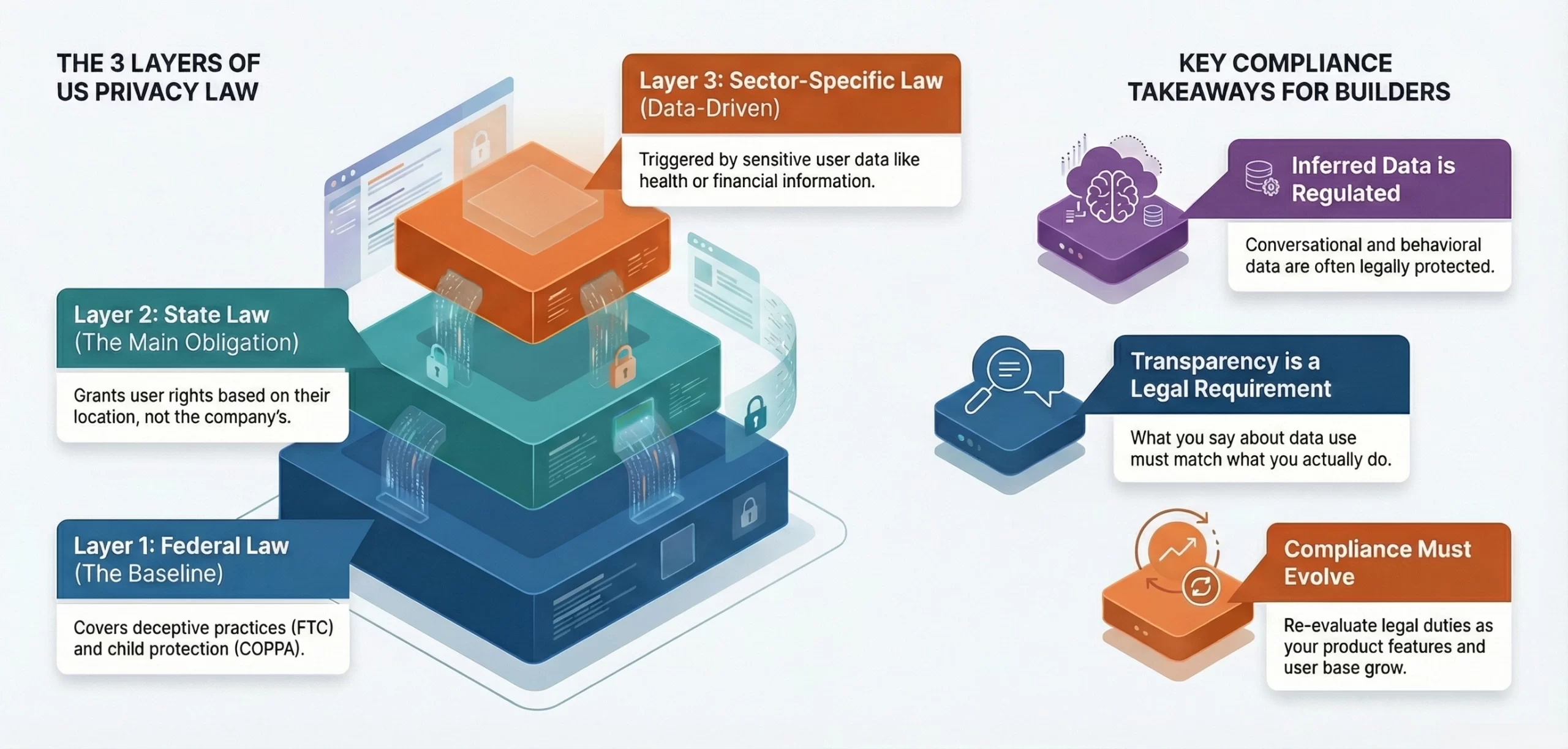
AI companion app USA privacy laws include federal oversight, state consumer privacy statutes, and sector-specific regulations. Understanding this legal framework helps companies design compliant systems and manage user data responsibly.
A. Federal Laws That Apply Nationwide
At the federal level, AI companion apps are primarily regulated through consumer protection and data security expectations rather than a unified privacy statute.
- Federal Trade Commission authority: The FTC can take action against any AI companion app in the U.S. that misrepresents data collection, storage, sharing, or protection, due to its broad authority to combat unfair or deceptive practices.
- Children’s Online Privacy Protection Act: If an AI companion app targets children under 13 or collects their data, COPPA applies. It requires parental consent, limits data collection, and enforces strict data rules. Even general apps must consider COPPA if child users are foreseeable.
B. State Consumer Privacy Laws
State privacy laws introduce the most direct and detailed obligations for AI companion apps. These laws generally apply based on user residency, not where the company is headquartered.
- Comprehensive state privacy statutes: States like California and others grant user rights including access, correction, deletion, and opt-out of certain data uses.
- Broad definitions of personal data: State laws often include inferred, behavioral, and profile data, directly affecting AI companion app personalization.
- Operational requirements: Laws require updated disclosures, request-handling processes, and controls over data retention and sharing, demanding ongoing compliance review.
For most AI companion apps, state privacy laws represent the largest ongoing compliance obligation.
C. Sector-Specific Laws Triggered by Data Type
In addition to general privacy laws, certain sector-specific regulations may apply depending on what users share during interactions.
- Children’s data regulations: Beyond COPPA, some states impose heightened protections for minors, affecting age-related data handling and content practices.
- Health-related information: Even if not covered by health laws, collecting or implying use of health or mental health data increases regulatory scrutiny.
- Highly sensitive personal information: Financial or identity data may raise higher expectations for security, minimization, and retention, even without a specific governing statute.
D. How Applicability Is Determined
Whether a specific privacy law applies to an AI companion app depends on several factors working together:
- The types of personal data collected and inferred
- Whether the app processes sensitive or regulated data
- The states or age groups of its users
- How data is stored, shared, and retained
- What the app promises users through its disclosures and marketing
Because AI companion apps are interactive and continuously evolving, legal applicability can change over time as features expand or user behavior shifts.
E. Key Takeaway for AI Companion App Builders
AI companion app builders navigate a complex privacy landscape across federal, state, and data laws, crucial for developing and scaling AI apps in the U.S.
- There is no single privacy law for AI companion apps in the U.S.: Compliance is determined by a combination of federal enforcement, state consumer privacy laws, and sector-specific regulations. Builders should expect overlapping obligations rather than a single governing statute.
- User location matters as much as app design: State privacy laws apply based on where users live, not where the company operates. Even early-stage apps can fall under multiple state laws once they reach a national user base.
- Conversational and inferred data increase legal exposure: AI companion apps often collect personal, behavioral, and inferred data through normal use. This data is frequently covered by privacy laws, even if it was not explicitly requested from users.
- Transparency and accuracy are legal requirements, not best practices: How an app describes its data collection, storage, and usage must align with actual behavior. Misalignment can create regulatory risk regardless of technical intent.
- Privacy compliance must evolve with the product: As features expand, data retention grows, or user behavior changes, the set of applicable privacy laws may change as well. Ongoing review is necessary to remain compliant.
Designing AI Companion Apps with Privacy in Mind
Designing privacy-focused AI companion apps requires integrating privacy into design, engineering, and planning, not just legal compliance. This approach reduces regulatory risk and enhances user trust.
1. Building Privacy Into Product Design
Privacy should be prioritized early in product development. Decisions on storage, personalization, and model behavior impact data collection and retention. Clear data boundaries reduce exposure and facilitate compliance with privacy laws.
Clear separation between core functionality and optional data-driven features can also give users meaningful choice without degrading the core experience.
2. Data Minimization & Retention Practices
AI companion apps often benefit from retaining conversation history, but storing data indefinitely can create legal and operational risk. Developers should carefully evaluate what data is truly necessary to support personalization and continuity.
Establishing defined retention periods, anonymizing data where possible, and regularly reviewing stored information can reduce exposure while still supporting product goals.
3. User Control & Transparency
Providing users with clear insight into how their data is used is a key component of privacy-conscious design. This includes easy-to-understand disclosures, accessible privacy settings, and straightforward ways to request data access or deletion.
When users feel they have control over their information, privacy compliance becomes a product feature rather than a constraint.
4. Ongoing Review & Adaptation
Privacy laws and user expectations continue to evolve, especially as AI technology advances. AI companion apps should be designed with flexibility in mind, allowing teams to update data practices, disclosures, and controls without major architectural changes.
Regular internal reviews of data flows and privacy risks help ensure that compliance keeps pace with product growth and regulatory change.
5. Privacy as a Competitive Advantage
For AI companion apps, privacy builds trust. Users engage more with products that respect their data and are transparent about use. By prioritizing privacy as a core design principle, developers can create more resilient, long-term successful products.
Conclusion
Understanding the privacy obligations that surround AI companion apps helps clarify what companies owe users and what users should expect in return. AI companion app USA privacy laws USA combine federal oversight, state statutes, and sector-specific rules that evolve quickly. For developers, compliance is not a one-time task but an ongoing responsibility tied to transparency, restraint, and accountability. For users, awareness supports informed choices and meaningful control over personal data shared through everyday interactions with AI systems. This balance remains central as innovation and regulation continue to intersect nationally.
Why Choose IdeaUsher for Your AI Companion Platform Development?
IdeaUsher specializes in building AI companion apps that prioritize user safety without compromising engagement or personalization. We help founders design systems that prevent misuse, harmful interactions, and ethical risks while maintaining a strong user experience.
Why Work with Us?
- Safety-Centric AI Architecture: We integrate content moderation, behavioral risk detection, and usage boundaries directly into AI response pipelines.
- Human-in-the-Loop Controls: Our platforms support escalation logic, monitoring dashboards, and intervention mechanisms for high-risk interactions.
- Ethical AI Implementation: We ensure transparency, explainability, and bias-aware model behavior to meet platform and policy expectations.
- Long-Term Trust Building: Safety features are designed to support retention, brand credibility, and platform approvals.
Review our portfolio to understand how we build secure, responsible AI-driven platforms for real-world deployment.
Connect with our team to design an AI companion app that protects users, meets safety standards, and is ready for market adoption.


FAQs
A.1. AI companion apps must comply with FTC enforcement standards, state privacy laws like CCPA and CPRA, and sector-specific rules if handling children, health, or financial data. Compliance depends on user location and data types collected.
A.2. Yes. Most state privacy laws apply based on where the user resides, not the company’s location. If your AI companion app serves U.S. residents, you may still have legal obligations under applicable state statutes.
A.3. Yes. Many state privacy laws classify inferred preferences, emotional analysis, and behavioral profiles as personal data. AI companion apps that personalize responses or track engagement must treat this data as regulated information.
A.4. Conversation data may be used for training only if properly disclosed and legally justified. Privacy laws closely examine whether users were informed, consented when required, and given meaningful control over how their data is reused.