 (+971) 8007 4267
 (+91) 946 340 7140
 (+1) 628 432 4305

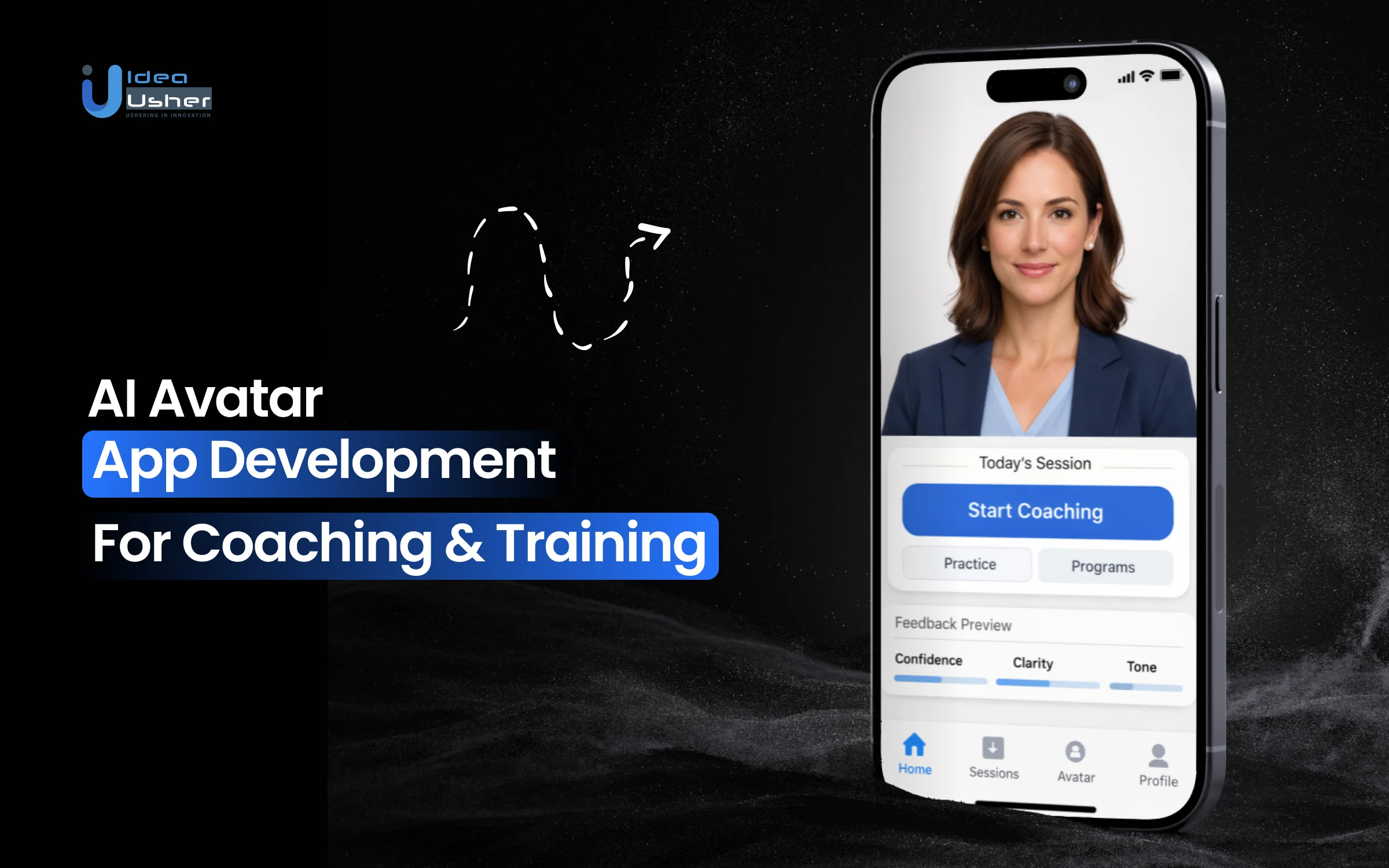
Coaching sessions usually start with energy and intent. But somewhere between the first lesson and the third follow-up, attention fades, and momentum quietly disappears. That is why many people started using AI avatar apps because they can explain concepts on demand and repeat guidance without fatigue. They can also simulate practice conversations and reinforce skills between sessions.
As training programs expanded across time zones and digital platforms, people began looking for guidance that still feels present beyond live sessions. By turning knowledge into always available interactive guidance, this technology quietly keeps learning active even after meetings are over.
We’ve developed several AI avatar-based coaching systems that leverage technologies such as multimodal speech intelligence and learner-state modeling. Given our years of expertise in this space, we’re sharing this blog to discuss the steps to develop an AI avatar app for coaching & training.
Overview of AI Avatar Apps for Coaching
AI avatar apps for coaching and training are interactive systems that simulate realistic conversations and scenarios for skill practice. They may act like a virtual coach that responds to voice tone, language, and decision style in real time. Over repeated sessions, the avatar can adapt difficulty and feedback based on how the user is improving. This allows people to practice complex behaviors safely and build skills that transfer to real work situations.
Can AI Avatar Apps for Coaching & Training Be Profitable?
AI Avatar apps for coaching and training are proving to be a great way for entrepreneurs and businesses to tap into the rising demand for personalized, scalable learning. These platforms offer the unique ability to provide one-on-one coaching at scale, with virtual avatars delivering tailored advice and guidance. Plus, AI avatars learn and improve over time, making them a cost-effective alternative to traditional coaching. For example, Replika, an AI chatbot for mental health and coaching, earned $14 million in 2021 through its premium subscription service. Similarly, Synthesia, an AI video platform used for corporate training, raised $90 million in 2023 and serves major clients such as Google and Nike.
There are plenty of ways to monetize AI avatar platforms, including subscription models, pay-per-session pricing, and premium pricing for more advanced services. Entrepreneurs can customize these platforms for specific niches like leadership development, career coaching, language learning, or fitness.
As more people embrace online, on-demand learning, AI avatar apps offer a convenient, affordable, and personalized solution that appeals to a wide audience. Companies like Hour One and Kuki are already proving that this model can be highly profitable. Hour One raised $20 million in Series A funding, while Kuki earns revenue through enterprise subscriptions, with businesses paying $5,000 to $30,000 per month for access. These success stories show just how much potential there is in building AI-powered coaching platforms.
Exciting developments are happening in this space, too!
For example, D-ID has launched new high-quality AI avatars (Express and Premium+) designed for real-time conversations and content creation. The Express avatars can be trained with just a minute of video to replicate head movements, while the Premium+ models add lifelike details like hand and torso movements after a few minutes of recording.
As D-ID’s CEO Gil Perry puts it,
“We believe the best way to interact with AI models is face-to-face; that is why we are creating these new hyper-realistic avatars and a natural user interface.”
With the growing popularity of AI avatars, it’s clear they have significant potential to add value to the coaching and training sector.
Key Market Takeaways for AI Avatar Apps
According to GMinsights, the AI avatar market is growing rapidly, reaching $5.9 billion in 2023 and expected to expand at a strong 30% annual growth rate from 2024 to 2032. This growth is largely fueled by the increasing demand for innovative training and coaching solutions that make learning more engaging and accessible.
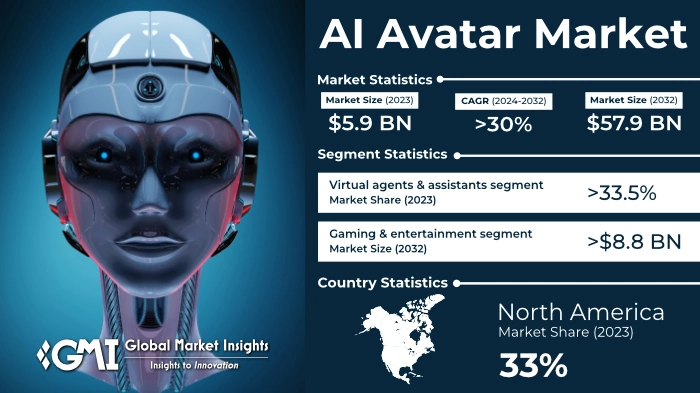
Source: GMinsights
AI avatars offer a unique way to create immersive, interactive learning experiences, allowing users to engage with lifelike digital characters that can simulate real-world situations. This is especially useful in fields like therapy and coaching, where personalized feedback and realistic role-playing can significantly improve training results.
A great example of how AI avatars are being used in coaching and training is the NextLPC app, developed by Biz4Group for aspiring therapists. This app uses AI-powered avatars to deliver interactive, personalized learning with real-time feedback. Studies show that this kind of personalized approach can increase learning outcomes and student engagement by 15%. Other platforms like Colossyan and Synthesia are also making waves by offering tools to create custom avatars for training videos, which can be tailored to meet specific learning needs.
Overall, AI avatars are transforming how we learn and train, making education more engaging, personalized, and accessible to everyone. The future of training and coaching looks exciting with these innovative technologies leading the way!

Must-Have Features of AI Avatar Apps Used For Coaching & Training
Here are some of the key features of AI avatar apps for coaching,
1. Adaptive Learning
AI avatars can analyze a learner’s performance data to identify their strengths and weaknesses. This enables them to adjust the content and pace of training accordingly, ensuring that each learner receives a personalized learning experience.
2. Real-time Feedback
AI avatars can provide immediate feedback on a learner’s performance, highlighting areas for improvement and reinforcing correct behaviors. This real-time feedback loop accelerates skill development and helps learners quickly master new concepts.
3. Personalized Coaching
AI avatars can offer personalized coaching sessions, providing guidance, motivation, and support throughout the learning journey. These digital coaches can answer questions, offer encouragement, and provide constructive criticism, fostering a positive and engaging learning environment.
4. Realistic Simulations
AI avatars can create realistic simulations of real-world scenarios, allowing learners to practice and apply their skills in a safe and controlled environment. These simulations can range from simple role-playing exercises to complex problem-solving challenges, providing valuable hands-on experience.
5. Language Translation
AI avatars can translate training content into multiple languages, making it accessible to a wider audience. This capability is particularly valuable for multinational companies that operate in diverse markets.
Features That Can Enhance AI Avatar Apps For Coaching & Training
AI avatars are transforming the landscape of coaching and training. By integrating these innovative features, companies can further elevate their learning and development programs.
1. Hyper-Personalized Learning Paths
AI avatars can create highly personalized learning paths for each individual, tailoring content and pace to their specific needs and learning styles. This ensures optimal learning outcomes and maximizes the effectiveness of training programs.
2. Real-time Skill Assessment
AI avatars can continuously assess learners’ skills and knowledge, providing real-time feedback and identifying areas for improvement. This enables businesses to make data-driven decisions about training programs and employee development.
3. Natural Language Processing for Seamless Interaction
Advanced natural language processing capabilities allow AI avatars to engage in more natural and intuitive conversations with learners. This enhances the overall learning experience and fosters a deeper connection between the learner and the avatar.
4. Emotional Intelligence for Empathetic Coaching
By incorporating emotional intelligence, AI avatars can recognize and respond to learners’ emotions, providing empathetic coaching and support. This can significantly improve learner motivation and engagement.
5. Integration with Existing LMS
Seamless integration with existing LMS platforms allows AI avatars to access and leverage valuable learner data, such as performance metrics and learning history. This enables them to provide more targeted and effective coaching.
6. Continuous Learning and Adaptation
AI avatars can continuously learn and adapt to new information and trends, ensuring that they remain up-to-date and relevant. This enables them to provide the most current and effective training.
7. Accessibility Features for Diverse Learners
By incorporating accessibility features such as text-to-speech, speech-to-text, and adjustable font sizes, AI avatars can cater to the needs of diverse learners, including those with disabilities. This promotes inclusivity and ensures that all learners have equal access to high-quality training.
How AI Avatar Apps for Coaching & Training Work?
AI avatar coaching apps work by combining a trained language model with real-time voice and behavior analysis so responses feel human and relevant. As conversations unfold, the system can subtly interpret intent, tone, and confidence, then adapt guidance using established coaching frameworks.

Layer 1: The Intelligence Core
Primary Technology: Large Language Models (LLMs) combined with specialized coaching frameworks
This is not a generic chatbot wrapped in an avatar. Leading platforms like Talespin and Synthesis use fine-tuned LLMs trained on coaching methodologies, behavioral science principles, and domain-specific knowledge.
How it works in practice
When a user says, “I am struggling with an underperforming team member,” the system performs multiple steps:
- Contextualizes the issue against established coaching frameworks such as GROW or OSCAR
- Retrieves relevant organizational policies from its knowledge base
- Generates responses aligned with validated coaching principles
Real example:
Synthesis’s AI Mentor may identify this as a performance management scenario and structure the response using the SBI Situation, Behavior, Impact model, while aligning with company HR guidelines.
Layer 2: The Perception System
Primary Technology: Multimodal AI combined with affective computing
This layer allows the avatar to perceive the user through multiple signals.
Voice Analysis
Beyond spoken words, the system analyzes prosody, including tone, pace, and emphasis.
- Detects confidence from vocal stability
- Identifies uncertainty from filler words and pauses
- Recognizes engagement through speech energy
Visual Analysis (via webcam)
- Facial Action Coding to detect micro-expressions such as eyebrow movement or lip tension
- Eye tracking to distinguish engagement from distraction
- Posture analysis to detect openness or defensiveness
For example, a platform like Talespin may detect crossed arms, downward gaze, and slowed speech simultaneously. The system interprets this pattern as defensiveness and adapts the coaching strategy accordingly.
Layer 3: The Response Engine
Primary Technology: Real-time rendering combined with emotional AI
This layer converts cognition into expression through three parallel processes.
- Text Generation: The LLM generates the coaching response.
- Speech Synthesis: Text-to-speech adds tone, pacing, and emotional nuance.
- Facial Animation: Emotional mapping translates sentiment into facial expression.
The system must achieve lip sync accuracy and emotional congruence. Advanced platforms use viseme mapping to ensure mouth shapes align with phonemes while layering appropriate emotional cues.
Example flow
If the AI delivers an empathetic response:
- Text: “I understand this is challenging.”
- Audio: Warm tone with a slightly slower pace
- Visual: Gentle eye contact, slight head tilt, and a subtle sympathetic smile
Layer 4: The Memory and Adaptation Layer
Primary Technology: Vector databases combined with behavioral tracking
This layer transforms isolated sessions into long-term developmental relationships.
Memory types
| Memory Type | What It Does | Example |
| Short-term memory | Maintains session context and conversation continuity | “You mentioned earlier that deadlines are stressing you.” |
| Long-term memory | Tracks progress and challenges across multiple sessions | “Last month you struggled with delegation. How did the 70 percent rule work for you?” |
| Behavioral pattern recognition | Identifies recurring hesitation or growth opportunities | “You often hesitate when discussing compensation. Let us practice that today.” |
Layer 5: The Analytics and Dashboard Layer
Primary Technology: Business intelligence combined with predictive analytics
While users interact with the avatar, the system generates two parallel data streams.
Individual progress metrics
These signals help clarify how learning grows over time. Skill acquisition velocity may show how fast new behaviors settle, while emotional regulation improvement can reflect steadier responses under pressure. The confidence development trajectory then indicates whether decisions gradually feel more natural with continued practice.
Organizational insights
These insights help explain how training performs at scale. Team-wide competency gaps may reveal where skills are uneven, while departmental effectiveness can show what actually works. ROI attribution and forecasting will then connect behavior change to measurable business value over time.
Mechanisms to Support Adaptive Learning for the AI Avatar
To create an adaptive learning experience in an AI avatar app for coaching and training, several user-friendly mechanisms can be introduced:
Personalized Learning Paths
The AI avatar can design customized learning journeys tailored to each user’s profile. If a user has trouble with particular topics, the avatar can adjust the focus to those areas, offering extra practice and guidance to help them build confidence.
Similar to language learning apps, this approach allows the curriculum to adapt as the user improves, introducing new challenges at the right pace.
Real-Time Feedback
The avatar can provide immediate feedback throughout each interaction. As users practice new skills, the AI can assess their performance and offer helpful tips to improve understanding and retention. This real-time feedback mirrors the experience of working with a live coach, making the learning process interactive and responsive.
Apart from that, adding gamified elements like quizzes or interactive challenges keeps users engaged. Based on a user’s progress, the avatar can adjust the difficulty level to provide just the right level of challenge. This keeps learning fun and helps users stay motivated as they advance.
Development Steps for AI Avatar Apps Used For Coaching & Training
Developing an AI avatar app for coaching and training starts by defining the behaviors the system should improve and the intelligence the avatar must learn. A conversational core with memory and emotion awareness is then built so interactions remain natural and adaptive over time.
We have developed multiple AI avatar applications for coaching and training across different sectors, and this is how we approach the process.

1. Coaching Intelligence & Outcomes
We start by defining what the avatar should help users improve, such as leadership presence, sales confidence, or structured onboarding. We identify behavioral and emotional outcomes like decision clarity, response confidence, and engagement levels that guide how the avatar adapts its coaching approach.
2. Avatar Personality & Trust
We design an avatar that users can comfortably engage with over repeated sessions. This includes selecting the right realism level, voice tone, facial expressions, and overall coaching persona aligned with the coaching context.
3. Conversational AI & Memory
We build the conversational engine using carefully selected language models grounded in coaching frameworks. Long-term memory allows the avatar to retain user goals, past conversations, and progress, creating continuity across sessions.
4. Emotion & Sentiment Detection
We integrate multimodal emotion analysis to understand how users feel during coaching sessions. Facial cues, voice tone, and speech patterns help the avatar adjust its tone and guidance in real time.
5. Real-Time Rendering & Performance
We bring the avatar to life with real-time rendering and optimized streaming pipelines. Neural or 3D engines synchronize speech, expressions, and gestures with minimal latency across devices.
6. Analytics & Enterprise Controls
We add dashboards and control layers to give clients clear visibility into coaching performance. These tools support user management, program customization, and secure platform scaling.
Cost of Developing an AI Avatar App for Coaching & Training
Developing an AI avatar app for coaching and training involves more than adding visual avatars and AI responses. We follow a cost-effective development approach for our clients by prioritizing core coaching intelligence first and scaling complexity only where it delivers measurable value.
| Component | Description | Cost Range (USD) |
| 1. Research and Planning | – Market Research: Identifying target audience and industry trends.- Feature Identification: Defining core features and NLP requirements.- Technical Analysis: Feasibility assessment. | $1,000 – $5,000 |
| 2. AI Model Development | – Natural Language Processing: Basic NLP for user queries.- Machine Learning: Limited adaptive learning and recommendations.- Computer Vision: Simple facial recognition. | $5,000 – $15,000 |
| 3. Backend Development | – Server Infrastructure: Cloud-based server setup.- API Development: Core API functionality.- Database Design: Basic database for user and performance data. | $3,000 – $10,000 |
| 4. Frontend Development | – UI/UX Design: Simple, intuitive interface design.- Frontend Development: Using frameworks like React Native or Flutter. | $4,000 – $10,000 |
| 5. AI Avatar Creation and Animation | – 3D Model Design: Simple, engaging 3D avatar model.- Animation: Basic facial expressions and gestures.- Voiceover: Simple voice recording and sound effects. | $5,000 – $15,000 |
| 6. Core Feature Development | – Personalized Learning Paths: Basic algorithm for content customization.- Real-time Feedback: Core feedback mechanisms.- Gamification: Essential game-like elements. | $5,000 – $15,000 per feature |
| 7. Testing and Quality Assurance | – Unit Testing: Individual component testing.- Integration Testing: Component interaction testing.- User Acceptance Testing (UAT): Limited real-user feedback. | $2,000 – $5,000 |
| 8. Deployment and Maintenance | – Deployment: Initial app deployment.- Maintenance: Essential updates and security patches. | $2,000 – $5,000 |
Total Cost Estimate: $10,000-$100,000.
Factors Affecting the Cost of Developing an AI Avatar App
The cost of developing an AI avatar app for coaching and training can vary significantly based on a number of factors, both general to app development and specific to AI avatar technology.
- AI Model Complexity: The complexity of AI models, particularly for natural language processing and computer vision, can significantly impact development time and cost.
- Data Requirements: Collecting and processing large amounts of training data to improve the AI model’s performance can be resource-intensive.
- Avatar Creation and Animation: Creating high-quality, realistic AI avatars requires specialized skills and tools, which can increase costs.
- Continuous Learning and Adaptation: Implementing mechanisms for the AI avatar to learn and adapt over time requires ongoing development and maintenance.
How Long-Term User Progress Is Measured in AI Avatar Apps?
Long-term progress in AI avatar coaching apps is measured by tracking how a user’s behavior evolves across weeks and months rather than judging single sessions. The system may compare patterns like decision consistency, confidence signals, and adaptability against the user’s own baseline to see what is actually changing.

Tier 1: The Micro (Session-Level)
What is measured: Response time, emotional regulation during difficult scenarios, and specific skill execution, such as active listening ratio and persuasive language use.
Example in practice:
Take Talespin’s Reality Lab. When a manager practices a difficult feedback conversation, the platform does not just score right or wrong choices. It analyzes vocal biomarkers, such as pause frequency and pitch stability, to assess emotional composure.
The system might report:
“In this simulation, Sarah maintained appropriate empathetic tone consistency 85% of the time, up from 62% in her previous session, with a 40% reduction in stress-induced speech disfluencies.”
Tier 2: The Macro (Cross-Session Patterns)
What is measured: Learning velocity, consistency of application over time, and adaptive flexibility across scenario types.
Example insight:
“Mark’s conflict resolution skills show strong retention at 92% consistency across four different scenario types over eight weeks, but he struggles to adapt these skills to remote team settings.”
This layer addresses whether skills improve, decay, or remain stable over time and across contexts.
Tier 3: The Meta (Behavioral Transformation)
What is measured: Cognitive habit formation, confidence development, and applied wisdom in novel situations.
Example insight:
“Over 12 weeks, Priya’s decision-making has shifted from risk-averse pattern matching to strategic, principle-based thinking, evidenced by her handling of three entirely novel crisis simulations.”
Talespin excels here with its Behavioral Telemetry. Over a 12-week period, the system might detect that Priya, once prone to reactive decisions, has developed strategic patience. This is evidenced by her consistently taking 15 to 20% longer to respond in crisis simulations while demonstrating 50% more consideration of second-order consequences in her reasoning.
The Technical Architecture of Longitudinal Measurement
1. The Memory Stack
Unlike traditional LMS platforms that store quiz scores, AI Avatar platforms build a Competency Vector Database.
Key components include:
| Component | Description |
| Embedded Session Memories | Interactions are stored as embeddings that capture content delivery style and emotional signals. |
| Progressive Context Windows | The system weights recent progress while retaining long-term behavioral patterns. |
| Cross-Session Correlation Engine | The engine links improvements in one skill to gains in related competencies. |
2. Behavioral Baseline and Deviation Tracking
Every user establishes a personalized behavioral baseline within their first three to five sessions. Progress is not measured against a generic ideal. It is measured against the individual’s starting point.
Example: A naturally empathetic manager may begin with strong empathy scores but low decisiveness metrics. Their growth trajectory focuses on decisiveness improvement while maintaining empathy, rather than chasing generic leadership scores.
The AI avatar adapts its coaching strategy accordingly, and progress is measured against this personalized development path.
3. Real-World Transfer Indicators
The most advanced systems integrate Applied Competency Signals.
These include:
- Pre and post-behavioral surveys, including longitudinal 360-degree feedback
- Linked performance metrics that correlate simulation outcomes with real-world KPIs, such as sales close rates or team retention
- Voluntary engagement tracking, such as unprompted return sessions
- Cross-platform skill application, where learned frameworks are detected in emails or communication tools with explicit user consent
This layer bridges the gap between simulated learning and lived behavior.
The Progress Dashboard: What Leadership Actually Sees
For training managers and coaches, the output is not raw data. It is actionable intelligence.
The Longitudinal Progress Report Includes
Competency Heat Maps: Visual representations showing which skills are improving, plateauing, or degrading over time.
Confidence Competency Matrix
Users are mapped across four stages: Unconsciously Incompetent, Consciously Incompetent, Consciously Competent, and Unconsciously Competent. This reveals not just capability, but effort and naturalization.
Predictive Growth Curves
Using comparative analytics across thousands of anonymized users, the system forecasts readiness. For example: “Based on Sarah’s current trajectory, she will be ready for advanced leadership simulations in approximately three weeks.”
ROI Translation Layer
Behavioral metrics are translated into business outcomes.
Example: “A 40% improvement in constructive feedback delivery across the management cohort correlates with a 15% reduction in team conflict escalation incidents, saving approximately 200 managerial hours per quarter.”
Successful Business Models for AI Avatar Apps for Coaching
Most successful AI avatar coaching platforms make money through enterprise subscriptions, enabling companies to scale training while tracking real skill improvement. Some platforms also serve as infrastructure providers, enabling coaching firms to resell AI avatars and share revenue steadily over time.

Model 1: Enterprise SaaS
This is the most dominant and lucrative model. Platforms sell annual subscriptions to corporations, typically priced per employee seat or structured by usage tiers. The value proposition focuses on replacing traditional training costs while offering deep analytics and global scalability.
How It Works in Practice
Companies like Talespin and Synthesis deploy multi-layered enterprise pricing.
- Base Platform Access: $45,000 to $125,000 annually for administrative tools, a core avatar library, and analytics dashboards
- Per-User Pricing: $75 to $250 per employee per year based on usage depth and feature access
- Implementation and Customization: One-time fees ranging from $25,000 to $150,000 for custom avatars, scenario design, and enterprise integrations
Revenue Validation
Talespin reportedly reached $28 million in ARR in 2025, with many enterprise clients paying more than $200,000 annually for full deployments. The scalability is clear.
A single Fortune 500 company with 10,000 employees at $150 per user per year generates $1.5 million in annual revenue with largely fixed platform costs.
Model 2: Platform as a Service
Instead of selling directly to end users, platforms provide the underlying technology for coaching practices, consulting firms, and training organizations to deliver branded AI coaching experiences. This creates a scalable ecosystem where the platform earns through recurring fees and revenue sharing.
Financial Structure
- Monthly Platform Fee: $2,000 to $10,000 per coaching organization
- Revenue Share: 15 to 30% of coaching fees generated on the platform
- Transaction Fees: $8 to $25 per coaching session delivered
Market Evidence
Platforms such as CoachHub, which integrate AI avatar capabilities, demonstrate the strength of this model.
CoachHub reached $110 million in revenue in 2025 while partnering with over 500 coaching firms. Their AI-enhanced offerings command fees approximately 40% higher than those of traditional digital coaching services.
Model 3: Freemium to Premium
This model targets individual professionals, small businesses, and independent coaches by offering free access with clear upgrade paths. Users experience value early, then convert to paid plans as their coaching needs expand.
Tiered Pricing Structure
- Free Tier: 3 basic avatars, 5 sessions per month, limited analytics, conversion rate of 8 to 12%
- Professional Tier: $97 per month with unlimited sessions, access to 20 or more avatars, and basic analytics
- Business Tier: $297 per month with custom avatars, team management features, and advanced analytics
- Enterprise Tier: Custom pricing with API access, custom development, and dedicated support
Market Validation
Apps like Mursion, now integrated with AI avatar technology, report that 22% of free users convert to paid plans within 90 days. Average revenue per paying user reaches $1,450 annually.
The SMB segment alone grew 320% in 2025 as small businesses adopted affordable alternatives to traditional training programs.
Top 5 AI Avatar Apps for Coaching & Training in the USA
Here are five notable coaching and training apps that utilize AI avatars,
1. NextLPC
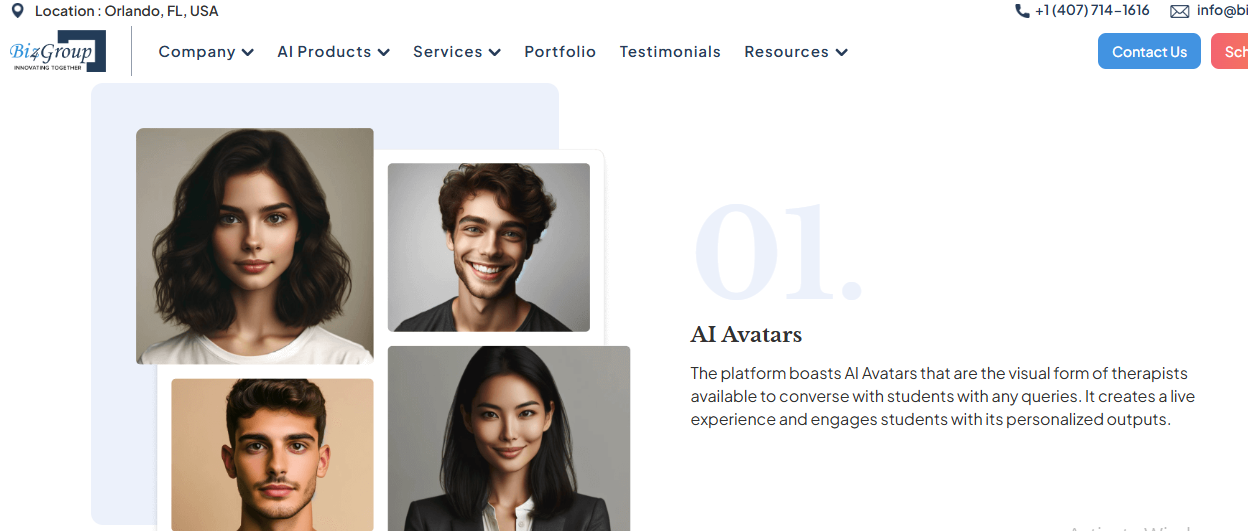
NextLPC is an innovative AI education app designed specifically for aspiring therapists. It features lifelike avatars that simulate real-life therapy scenarios, providing students with interactive and personalized instruction. The app has shown a 15% increase in learning outcomes based on a Stanford University study. It offers various resources, including case studies and quizzes across multiple therapy modalities.
2. Alelo MyCoach
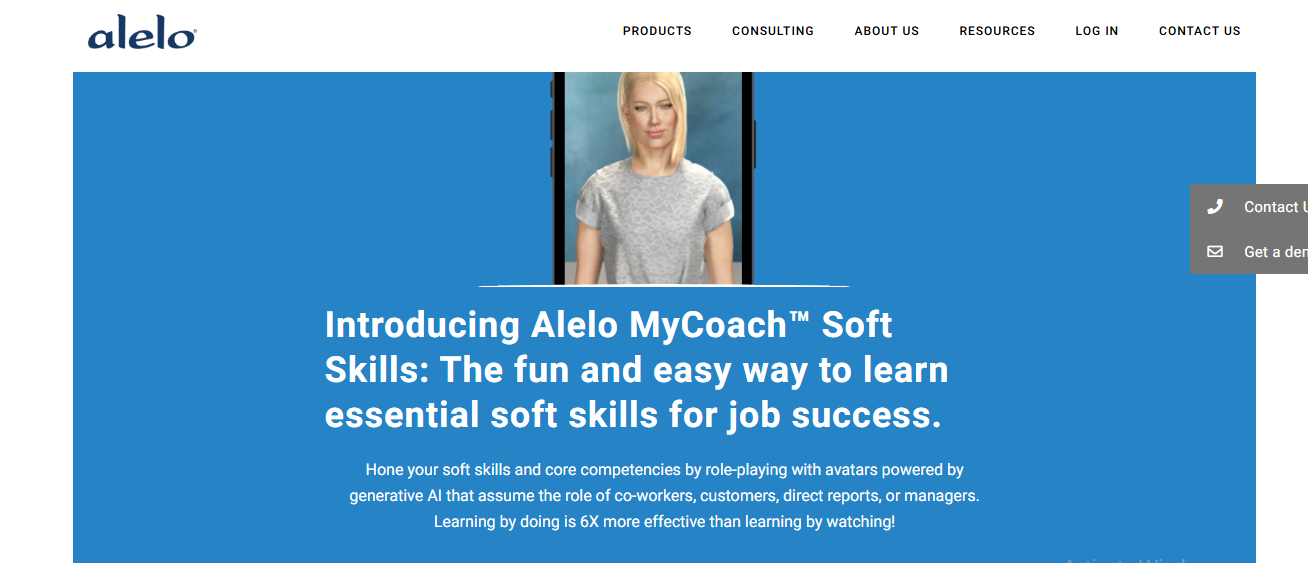
Alelo MyCoach focuses on developing soft skills through avatar-based training. It allows users to practice essential skills like problem-solving and emotional intelligence in realistic scenarios. The app claims that learners can acquire skills twice as fast compared to traditional methods. Alelo is utilized in various sectors, including healthcare and corporate training, and has been adopted by organizations globally to improve employee training outcomes.
3. Soul Machines
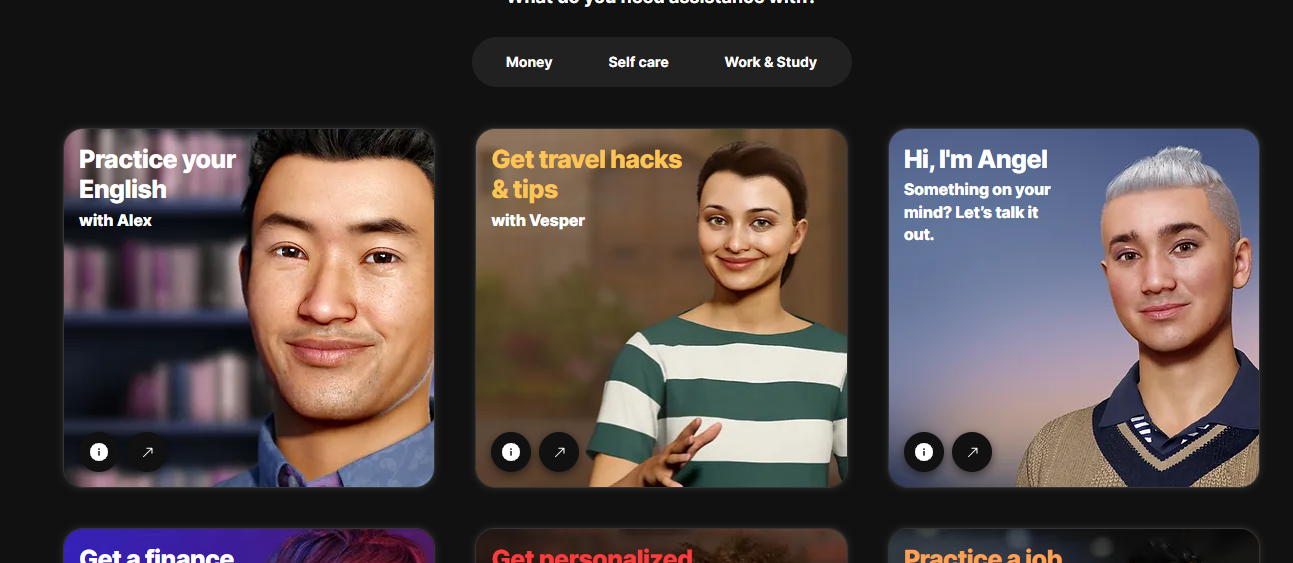
Soul Machines offers personalized coaching through AI assistants that provide one-on-one support in various areas, such as fitness, finance, and language practice. Users can engage with different avatars tailored to specific goals, ensuring a customized experience. The platform emphasizes judgment-free interaction, making it accessible for users seeking guidance without the pressure of traditional coaching environments
4. AI Tutor by DeepBrain
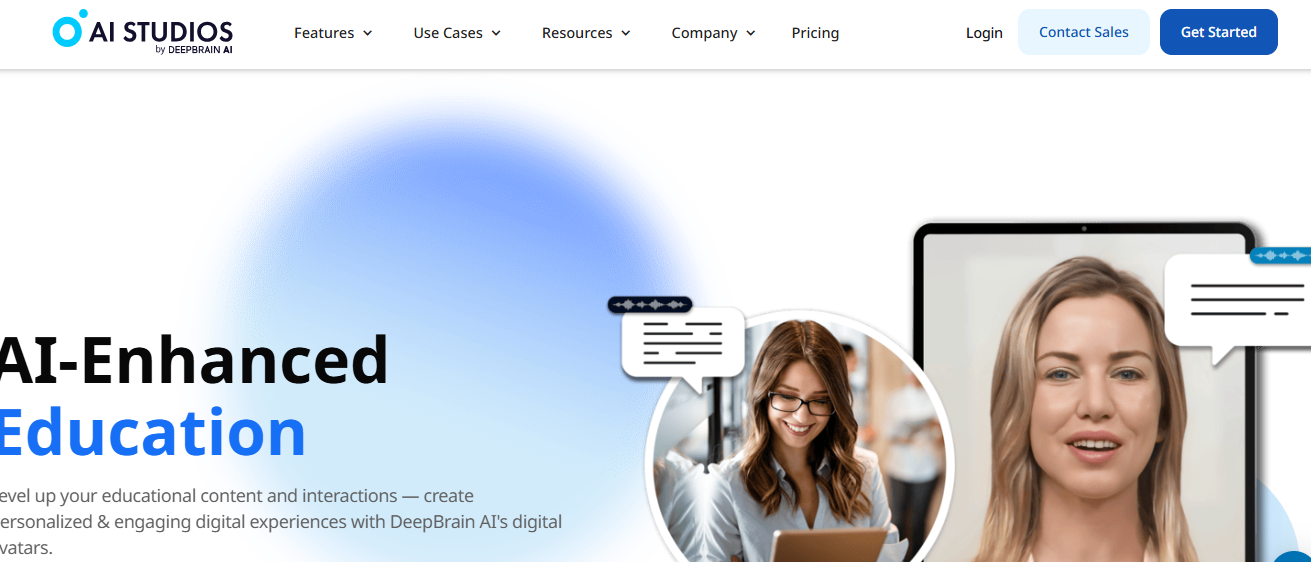
DeepBrain’s AI Tutor app employs digital avatar teachers to deliver personalized learning experiences around the clock. The avatars can communicate in over 80 languages, making it suitable for a global audience. This app focuses on enhancing student engagement through interactive lessons and instant feedback mechanisms. By utilizing AI technology, DeepBrain allows educators to scale their teaching efforts effectively while maintaining high-quality interactions with students.
5. Krikey AI
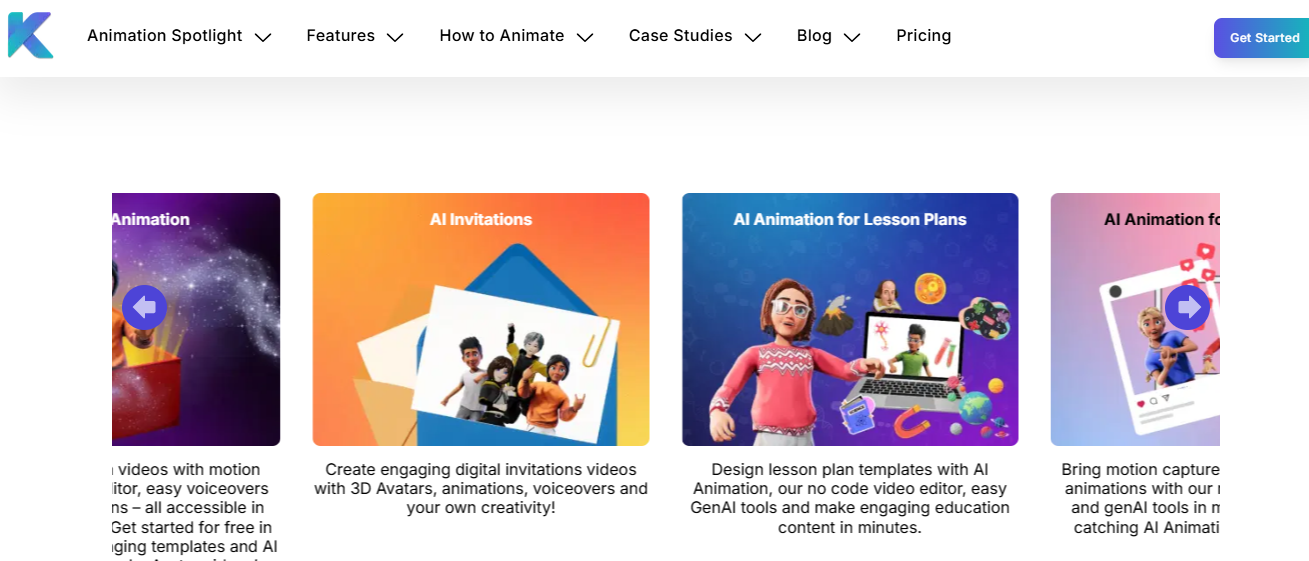
Krikey AI stands out as an animation-focused platform that enables users to create engaging 3D avatars quickly. Although primarily aimed at gaming and entertainment, it also serves educational purposes by allowing users to animate characters for storytelling or instructional videos. Krikey supports 16 languages and provides customization options that make it versatile for various applications.
Conclusion
I think AI avatar apps have the potential to completely transform coaching and training. They offer personalized learning experiences, real-time feedback, and interactive engagement that can really boost learning outcomes. For individuals, these apps provide an affordable and accessible way to receive coaching, empowering them to reach their goals without the barriers of time or cost that often come with traditional coaching.
From a business perspective, AI avatar apps are a game-changer. They allow companies to meet the growing demand for personalized, scalable learning. Virtual avatars can offer one-on-one coaching at scale, delivering tailored advice and guidance to employees or clients. Plus, as these AI avatars continue to learn and improve, they become an increasingly cost-effective solution compared to traditional coaching methods. It’s a smart move for businesses looking to invest in employee development while keeping costs down.
Looking to Develop an AI Avatar App for Coaching & Training?
At Idea Usher, we specialize in building innovative AI avatar apps that transform the learning experience. With over 500,000 hours of coding expertise, our team will help you design a personalized AI avatar that offers real-time feedback, adapts to individual learning styles, and provides support around the clock. Whether it’s for coaching, skill-building, or professional development, we’re here to help you unlock the full potential of AI-powered learning. Let’s bring your AI coaching vision to life!


FAQs
A1: The cost usually depends on how realistic the avatar needs to feel and how advanced the coaching intelligence is. A focused MVP may cost less and help validate outcomes quickly, while an enterprise platform may require deeper AI models and integrations. Most teams start modularly so investment can scale with adoption.
A2: AI avatar apps are designed to support coaching rather than replace it. They may consistently deliver guidance, simulate practice, and reinforce learning between sessions. Human coaches still provide judgment, empathy, and context that AI should complement over time.
A3: They can be secure when built with privacy first design and enterprise compliance in mind. Data is typically encrypted and access is tightly controlled across roles. With the right architecture, these platforms may safely operate inside regulated environments.
A4: Timelines depend on scope and readiness of training data. A modular approach may allow an initial version to launch faster while advanced capabilities are added gradually. This helps teams reach the market early without sacrificing technical depth.