


Key Takeaways:
- A platform that is affiliated with a casino keeps a record of which affiliates bring in players and whether or not they sign up or make a deposit.
- It also illustrates the amount of revenue that those players produce over time.
- The commissions based on CPA, RevShare, and hybrid arrangements are determined according to the terms agreed upon by each affiliate.
- Operators also need clear reports, fraud checks, and links to their present casino systems.
- The cost of custom development is about $70,000 to $300,000, and Idea Usher designs affiliate platforms to meet each operator’s particular requirements.
The casino affiliate platform that you create has to be designed with an architecture capable of handling high-volume player data, ensuring strict compliance, and providing real-time financial tracking. It is also necessary for this architecture to securely and automatically calculate commissions on Net Gaming Revenue (NGR) for each player who has been referred. Without such automatic calculation, manual management results in tracking errors, loss of revenue, and delays in payouts.
It is more difficult to keep track of revenue than clicks. For instance, NGR is affected by bonuses, taxes, chargebacks, and player wins, which means that each deduction has to be configurable. In a similar way, in some US states CPA or RevShare arrangements are restricted, so the commission rules have to take the player’s location into account.
Consequently, when carrying out a project involving the development of a casino affiliate platform, there is only one option available: either to obtain a license for software such as Affilka or MyAffiliates or to develop your own. In order to assist you in making your decision, this blog looks at both options based on the way Idea Usher scopes iGaming builds for operators.

Understanding Casino Affiliate Platforms
A casino affiliate platform is the software that runs an online casino’s partnerships with outside marketers, called affiliates. Casinos work with affiliates who promote their brands and earn commissions for qualifying player referrals.
The platform then keeps the records behind those partnerships and calculates exactly what each affiliate is paid.
1. What a Casino Affiliate Platform Is
Casino affiliate software is the system an operator uses to track partners, referred players, and the money between them.
However, the software is not the same as the affiliate program. The program is the business arrangement, while the platform is the tool that runs it.
It connects three participants:
- Operator: the licensed casino that owns the brand and pays commissions.
- Affiliate partner: the publisher or marketer who promotes the casino to new players.
- Referred player: the person who signs up through an affiliate’s link.
2. How Casino Affiliate Programs Work
Operators acquire players by letting approved partners promote their brands. For example, affiliates include casino review websites, content publishers, streamers, and email marketers. Each partner then sends traffic using its own tracked links.
A typical referral moves through four stages:
- A referral link or campaign ID identifies the affiliate.
- The player clicks through and registers an account.
- The player makes a deposit and starts playing.
- The commission agreement decides what the affiliate earns from that activity.
3. What Affiliate Software Manages for an Operator
Day-to-day, the platform replaces spreadsheets and manual checks with one shared record. For instance, MyAffiliates is the most common affiliate software in StatsDrone’s public database of gambling programs.
Most platforms handle four core responsibilities:
- Referral tracking: recording which affiliate brought in each new player.
- Commission agreements: storing each partner’s deal terms in one place.
- Reporting: giving affiliates and operators the same view of performance.
- System connections: linking to the casino’s player and financial systems.
A casino affiliate platform manages player acquisition partnerships and the tracking and payment records behind them. Without it, operators cannot easily prove who referred each player or what each partner earned.
Why Casino Operators Invest in Affiliate Platforms
Casino operators invest in affiliate platforms mainly because their programs quickly become hard to manage as they grow. At first, a few partners fit easily in a spreadsheet.
However, dozens of affiliates, several campaigns, and recurring player revenue soon require dedicated software that keeps every referral, commission, and payment accurate.
1. Growing Competition for Online Casino Players
First, regulated online casino revenue is growing fast in the US. According to the American Gaming Association, iGaming revenue rose 27.6% to a record $10.73 billion in 2025.
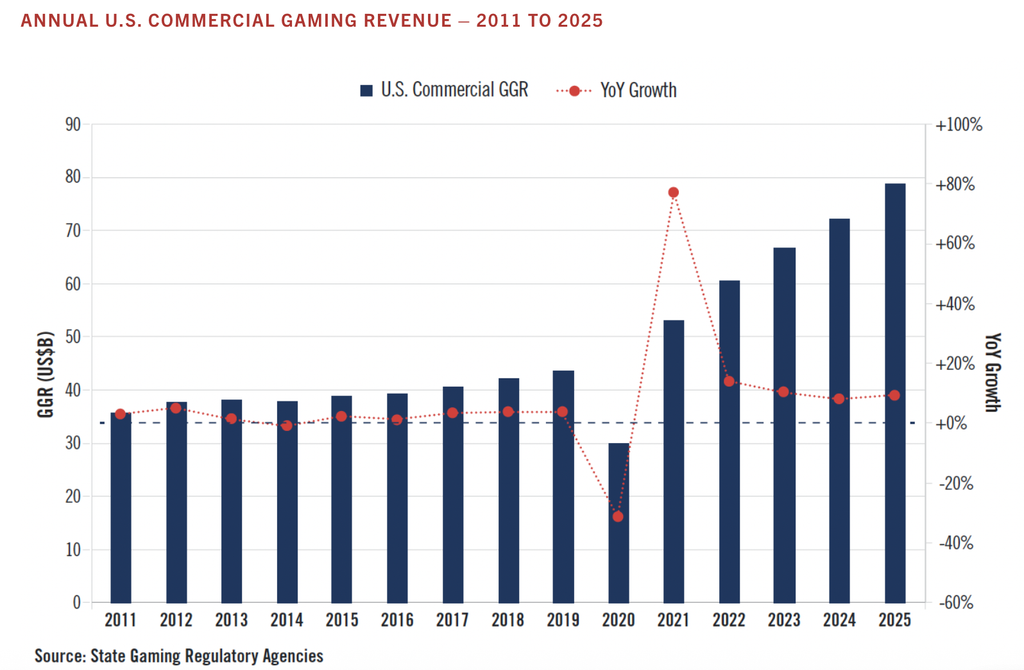
Yet that revenue came from just seven states with lawful online casinos, so operators compete hard for the same players.
As a result, this competition shapes how operators spend on acquisition:
- Note that this figure covers total online casino revenue, not affiliate marketing revenue.
- Meanwhile, regulated markets keep expanding, and Maine’s iGaming legislation became law in early 2026.
- Consequently, operators need to measure what each new player costs to acquire.
- In addition, they must weigh commission expenses against the revenue those players produce.
2. Problems With Manual Affiliate Management
Spreadsheets work well for a small program. However, they break down as volume grows, because every new partner, deal, or brand adds data someone must check by hand. Over time, small errors compound into costly disputes.
In practice, the most common failures are:
- Missing conversions: registrations or deposits never reach the affiliate’s record.
- Complex deals: similarly, hybrid and tiered commissions are easy to miscalculate by hand.
- Delayed reports: as a result, affiliates wait days for the numbers they need.
- Payment disputes: consequently, partners challenge payouts they cannot verify.
- Multi-brand confusion: finally, separate brands mean separate sheets and duplicate players.
3. Existing Casino Affiliate Software in the Market
Fortunately, operators do not have to start from scratch. Instead, an established software category already exists, with several vendors building platforms specifically for iGaming.
For example, leading options include:
- Affilka by SOFTSWISS: supports RevShare, CPA, CPL, and hybrid commission plans across multiple casino brands.
- Income Access: a Paysafe company that has partnered with more than 300 affiliate programs since 2002.
- Scaleo: affiliate tracking software with a dedicated offering for casino operators.
That said, some operators eventually outgrow these products. In those cases, they commission custom systems built around their own deals and brands.
Dedicated affiliate platforms become valuable when operators need consistent tracking, financial accuracy, and more control over affiliate operations. With that context in place, the next question is how that tracking actually works behind the scenes.
How Casino Affiliate Programs Work From Click to Payout
In everyday terms, a casino affiliate program works as a chain of recorded events, from click to payout. First, an affiliate sends a visitor to the casino through a tracked link.
Then, that visitor registers, deposits, and plays, and the platform turns that activity into a commission the operator approves and pays.
1. Affiliate Links Connect Visitors to Casino Campaigns
First, every approved affiliate receives a unique referral URL. That link carries an affiliate ID, so the casino knows which partner sent each visitor. In addition, campaign sources and tracking identifiers show which page, banner, or promotion drove the click.
As a result, a single click can record:
- the affiliate who sent it
- the campaign or sub-ID behind it
- the traffic source, such as a review site or newsletter
2. Player Registration and Deposits Create Conversions
Next, the visitor creates a player account, which becomes the first conversion. However, registration alone rarely earns a commission. Instead, most programs wait until the player passes verification and makes a first-time deposit (FTD).
Typically, the casino records three events:
- Registration: the new account is linked to the referring affiliate.
- Verification: identity and age checks confirm a real, eligible player.
- First-time deposit: the first real-money deposit marks a qualifying customer.
3. Gaming Activity Determines Eligible Revenue
After that first deposit, the player keeps playing, and that activity generates revenue for the casino. Under a revenue share deal, the affiliate earns a percentage of that revenue while the player stays active.
For example, most iGaming programs pay 25% to 45% of net gaming revenue, according to Scaleo’s 2026 benchmarks.
Consequently, ongoing earnings depend on:
- how long the player stays active
- how much revenue the player generates over time
- the deal type agreed with the operator, such as RevShare, CPA, or hybrid
4. The Platform Calculates and Approves Commissions
Finally, the platform turns tracked events into earnings at the end of each period. Before any money moves, the operator validates the activity and removes anything suspicious.
Only then does the commission reach approval and payment.
In practice, this stage covers:
- Calculation: applying each affiliate’s agreed deal to their players’ activity.
- Validation: checking for duplicate, fraudulent, or ineligible players.
- Approval: the operator signs off the final commission figure.
- Payment records: statements and payouts are logged for both sides.
This workflow only works reliably when player events and financial records reach the affiliate platform correctly. Otherwise, one missed deposit or late revenue update changes what a partner is paid.
Essential Casino Affiliate Platform Features
An essential casino affiliate platform must do four jobs well: track conversions, calculate commissions, manage partners, and connect reliably to the casino backend. Everything else, however useful, can usually wait until after launch.
Therefore, operators should prioritize the twelve features below, grouped by job, before they invest in advanced tools.
1. Player Tracking and Attribution Features
First, tracking features connect each affiliate to the players they refer. Without them, no commission can be proven or paid.
For instance, client-side-only tracking can misattribute 40% to 50% of mobile conversions, which shows why accuracy comes first.
- Affiliate links and campaign tracking: records the partner, campaign, and source behind every click.
- Registration and FTD tracking: captures sign-ups and first deposits as conversions.
- Persistent attribution and deduplication: keeps each player tied to one affiliate and blocks duplicate credit.
2. Revenue and Commission Features
Next, commission features turn tracked activity into accurate earnings. Because casino deals vary widely, the platform must support several models at once. In addition, it needs to handle adjustments when revenue changes after the fact.
- CPA, RevShare and hybrid support: pays flat fees, revenue percentages or both on the same player.
- Revenue calculation and adjustments: works out eligible revenue and applies corrections such as chargebacks.
- Approvals, statements and payouts: moves commissions from review to payment with a clear record.
3. Affiliate and Operator Management Features
Meanwhile, management features keep the program running day to day. They give affiliates a self-service portal and give operators control over who joins. As a result, the affiliate team spends less time on manual requests.
- Affiliate registration and approval: screens new partners before they can promote the brand.
- Partner dashboards and marketing materials: show affiliates their stats and supply approved banners and links.
- Performance reports and audit records: tracks results and logs every change for review.
4. Integration, Security and Scaling Features
Finally, integration and security features make the platform dependable at scale. The affiliate system relies on data from other casino systems, so weak connections create gaps.
Similarly, strong controls protect commissions from fraud and unauthorized changes.
- PAM, wallet, CRM, and sportsbook integration: pulls player, transaction, and bonus data from the casino backend.
- Fraud monitoring and access controls: flags suspicious traffic and limits who can edit deals or payouts.
- APIs and multi-brand configuration: shares data with other tools and runs several brands from one platform.
Casino Affiliate Platform Features at a Glance
For quick reference, the table below summarizes each feature and its launch priority.
| Feature | What it does | Business benefit | MVP or advanced |
| Affiliate links and campaign tracking | Records click sources | Shows which partners drive traffic | MVP |
| Registration and FTD tracking | Captures sign-ups and first deposits | Confirms qualifying conversions | MVP |
| Persistent attribution and deduplication | Locks each player to one affiliate | Prevents double payouts | MVP |
| CPA, RevShare and hybrid support | Runs several deal models | Fits each partner’s terms | MVP |
| Revenue calculation and adjustments | Computes eligible revenue | Keeps commissions accurate | MVP |
| Approvals, statements and payouts | Manages the payment workflow | Reduces payout disputes | MVP |
| Affiliate registration and approval | Screens new partners | Protects brand and compliance | MVP |
| Partner dashboards and marketing materials | Offers self-service stats and creatives | Cuts manual support work | MVP |
| Performance reports and audit records | Reports results and logs changes | Supports audits and decisions | MVP |
| PAM, wallet, CRM and sportsbook integration | Syncs casino backend data | Removes data gaps | MVP for PAM and wallet; advanced for CRM and sportsbook |
| Fraud monitoring and access controls | Flags abuse and limits edits | Protects commission spend | MVP for access controls; advanced for fraud scoring |
| APIs and multi-brand configuration | Connects tools and brands | Supports growth | Advanced |
In short, essential features should protect conversion accuracy, financial reporting and operator control before any optional tools arrive. Once those foundations work, advanced features add far more value.
Build, Buy or Customize Casino Affiliate Software
Casino operators can buy ready-made affiliate software, build a custom platform, or combine both in a hybrid setup. However, none of these approaches is automatically better for every operator.
Instead, the right choice depends on deal complexity, existing systems, budget, and how much long-term control the business needs.
1. Ready-Made Affiliate Software for Faster Deployment
Licensed software suits operators who want to launch quickly with standard deals. For example, Affilka and Income Access already power many iGaming programs.
However, iRev estimates annual licensing at $15,000 to $50,000.
- Standard CPA, RevShare, and hybrid configurations
- Vendor-managed updates and infrastructure
- Recurring fees and limited customization
2. Custom Affiliate Development for Specific Requirements
By contrast, a custom build makes sense when standard products cannot fit the business. Typically, that happens when:
- commission rules are unique to the business
- tracking or reporting needs are proprietary
- the platform must connect to existing casino infrastructure
- the operator must own the source code and data
- several brands run under a complex operating model
3. Hybrid Platforms Using Existing Tools and Custom Integrations
Alternatively, operators can keep vendor software and build only the missing pieces. Common additions include:
- custom APIs that link the vendor to internal systems
- middleware that routes player data
- reporting layers for finance teams
- reconciliation between commissions and payments
4. Comparing Cost, Control and Time to Market
Overall, each path trades speed for control differently.
Ready-Made vs Custom vs Hybrid Casino Affiliate Software
| Factor | Ready-made | Custom | Hybrid |
| Initial investment | Lowest | Highest | Moderate |
| Implementation | Configure and connect | Full design and build | Integrations on vendor core |
| Commission customization | Vendor options only | Unlimited | Extended by custom logic |
| Integration flexibility | Vendor APIs | Built for your stack | Flexible via middleware |
| Ownership | Vendor owns platform | You own code and data | Shared |
| Maintenance | Vendor | Operator or build partner | Split |
| Long-term costs | Recurring license fees | Hosting and upkeep | License plus upkeep |
For partners suited to each path, see Idea Usher’s list of top casino affiliate platform development companies.
Custom development makes the most sense when the operator’s requirements cannot be met economically through configuration or selective integration. Otherwise, buying or extending existing software is usually faster.
Tracking Casino Players and Deposits Accurately
In practice, accurate tracking means the right affiliate gets credit for every qualifying player, every time. However, when the casino and affiliate systems fall out of sync, conversions go missing or get counted twice. As a result, reports become unreliable, and affiliates start disputing payments they cannot verify.
1. Server-to-Server Tracking and Postback Events
A postback is a message the casino’s server sends directly to the affiliate platform when a player acts. Because it travels server to server, it avoids the cookie loss and browser privacy settings that weaken browser-based tracking. For example, AnyTrack’s integration guide shows that Income Access programs such as BetMGM Partners exchange conversions through postback URLs.
Registration and First-Time Deposit Events
First, the system must capture each registration and FTD with both the player ID and affiliate ID attached.
- Validate that each FTD meets the deal’s qualifying rules.
- Reject events that lack a valid affiliate ID.
Delayed and Duplicate Conversion Events
However, events sometimes arrive late or more than once. Therefore, the platform should accept late events within a set window and ignore any event ID it has already processed.
2. Player Attribution Across Multiple Sessions
Next, returning players must stay linked to their original affiliate. Typically, the platform stores the affiliate ID on the player’s account at registration and applies a defined attribution window.
- Cookies recognize a visitor on only one browser and device.
- Server-side records follow the player account instead, within privacy and consent rules.
3. Tracking Casino and Sportsbook Conversions Together
Similarly, one player may use both casino and sportsbook products. A shared player identity lets one platform credit the same affiliate across both.
- Product-specific reports for each vertical
- Clear policies on which products earn commission
4. Verifying the Accuracy of Affiliate Conversions
Finally, operators must confirm that tracked data matches the casino’s records. To do this, every event needs a unique ID and timestamp.
- Regular reconciliation against player and payment data
- Exception reports for missing or mismatched conversions
Common Affiliate Tracking Errors and How Platforms Handle Them
| Error | What goes wrong | How the platform handles it |
| Delayed deposit | FTD arrives after the reporting cutoff | Accepts it within a late-event window |
| Duplicate event | The same deposit posts twice | Ignores repeated event IDs |
| Missing affiliate ID | A conversion has no partner attached | Flags it in an exception report |
| Returning player | The player returns on a new device | Matches the account to the original affiliate |
In short, reliable tracking depends on verified casino events and consistent attribution rules, not simply on generating affiliate links.
Managing Casino Affiliate Commissions and Revenue
Casino commissions are harder to calculate than a fixed payment per sale, because player value keeps changing after sign-up. Depending on the deal, an affiliate may earn a one-time fee per first deposit, a share of ongoing gaming revenue, or both.
Therefore, the commission engine must apply each agreement exactly as written.
1. CPA Commissions for Qualified Depositing Players
Under a CPA deal, the operator pays a fixed amount for each qualifying new depositor. However, a deposit alone rarely qualifies. Instead, the player usually must meet three conditions set in the agreement:
- Deposit qualification: a minimum first deposit defined in the contract.
- Verification: completed identity and age checks.
- Eligibility: a new, unique player from an approved market.
2. Revenue Share and Net Gaming Revenue Calculations
Under revenue share, the affiliate earns an agreed percentage of the revenue their players generate over time. As a result, the platform must calculate that revenue correctly every period.
a. Gross Gaming Revenue vs Net Gaming Revenue
Gross gaming revenue (GGR) is the amount players wager minus what they win back. Net gaming revenue (NGR), by contrast, is GGR after the deductions the contract allows.
According to Track360, most casino affiliate deals pay on NGR rather than gross revenue.
b. Bonus Costs, Chargebacks and Revenue Deductions
Consequently, affiliate earnings can differ sharply from GGR. For example, consider one affiliate’s players over one month, using hypothetical figures:
| Step | Item | Amount |
| 1 | Gross gaming revenue | $50,000 |
| 2 | Bonus costs | −$8,000 |
| 3 | Gaming taxes | −$4,000 |
| 4 | Payment processing fees | −$1,500 |
| 5 | Chargebacks | −$500 |
| 6 | Net gaming revenue | $36,000 |
| 7 | RevShare rate | 35% |
| 8 | Payable commission | $12,600 |
Assumptions: the contract permits all four deductions, the rate is a flat 35%, and no carryover balance exists from earlier months.
3. Hybrid, Tiered and Sub-Affiliate Commissions
Many programs combine models to suit different partners. In addition, larger programs reward volume and let approved affiliates recruit others.
- Hybrid: a smaller CPA plus a lower RevShare on the same player.
- Tiered: higher rates once an affiliate passes set FTD or NGR thresholds.
- Sub-affiliate: an approved master affiliate earns a share of recruits’ commissions.
4. Automated Commission Approval and Payout Records
Finally, finance teams need to check commissions before money moves.
Therefore, the platform should separate pending figures from approved ones and record every change.
- Pending vs approved: commissions stay in review until finance signs off.
- Deductions shown: each statement lists the deductions applied.
- Audit trail: every edit records who changed what, and when.
- Settlement status: each payout shows as scheduled, paid, or held.
In short, commission software must follow the operator’s approved agreements and preserve enough financial evidence to explain every calculation.
Affiliate Dashboards and Program Management Tools
An affiliate platform serves two audiences, so each needs its own view of the same data. Affiliates need clear visibility into their referrals and earnings.
Meanwhile, operators need tools to manage partners, campaigns, contracts, and payments in one place.
1. Affiliate Registration and Approval
First, onboarding should screen partners before they promote the brand.
- Online registration with company and tax details
- Document checks, including licenses where states require them
- Contract approval before tracking links activate
- Permission settings for each affiliate and sub-affiliate
2. Affiliate Dashboards and Performance Reports
Next, affiliates need numbers they can trust without emailing the operator. A useful dashboard shows:
- referrals, registrations and FTDs
- commissionable revenue
- pending earnings and payment history
3. Marketing Assets and Campaign Management
In addition, operators should control which materials affiliates use.
- Approved links, creatives and landing pages
- Campaign IDs for every promotion
- Market restrictions that block offers in unapproved regions
4. Operator Reports and Commission Statements
Finally, finance and affiliate managers need program-wide reporting.
For example, one operator that left MyAffiliates set up Trackdesk’s Report Builder to show net revenue per affiliate and payout reconciliation across brands.
- Partner performance rankings
- Reconciliation summaries and commission statements
- Historical exports for audits
Operator Dashboard vs Affiliate Dashboard
| View | Operator dashboard | Affiliate dashboard |
| Scope | All partners and brands | Own traffic only |
| Key metrics | NGR, commission cost, fraud flags | Clicks, FTDs, earnings |
| Actions | Approve partners and payouts | Get links and creatives |
| Financial records | Statements, reconciliation, exports | Payment history |
In short, effective reporting makes performance and commission calculations understandable to both sides of the partnership.
Integrating Affiliate Software With Casino Systems
An affiliate platform does not manage player accounts or financial transactions on its own. Instead, it reads them from the casino systems that already control those records.
Therefore, the quality of each integration decides whether tracking and commissions can be trusted.
1. Player Account Management Integration
First, the player account management (PAM) system is the main source of verified player data.
For a deeper look, see Idea Usher’s guide to casino PAM system development.
- Player identifiers
- Account states, such as active, blocked or self-excluded
- Registration events
- Eligibility and verification status
2. Casino Wallet and Payment Data Integration
Meanwhile, the wallet and financial ledger supply the money side of every commission. Without them, the platform cannot confirm that a deposit cleared or was later reversed.
- Verified deposits
- Chargebacks and refunds
- Financial corrections
- Settlement events
3. CRM and Bonus Engine Integration
In addition, bonuses reduce the revenue that commissions are based on. The platform therefore needs bonus cost data, while the bonus rules themselves stay inside the bonus engine.
- Bonus cost per player
- Campaign attribution for promotions
- Clear separation of bonus logic from commission rules
4. Casino and Sportsbook Integration
Similarly, one affiliate system can cover several verticals when players share one identity. As a result, an affiliate who refers a sportsbook player can also earn from that player’s casino activity, if the deal allows it.
- Shared player IDs across products
- Product-specific revenue
- Distinct commission policies per vertical
5. Multi-Brand and Multi-Currency Operations
For groups running several casinos, one platform can serve every brand and market. However, each brand still needs its own reports, rates, and access rules.
- Brand-specific reporting
- Exchange-rate rules for commissions
- Settlement currencies per affiliate
- Controlled data access by brand
6. API Integration and Data Ownership
Finally, operators should confirm what their existing systems allow before building. For instance, a vendor may limit API access or data exports.
Idea Usher’s casino platform migration guide explains why affiliate records should be exported before a platform contract ends.
- Available APIs and event streams
- Data export rights
- Vendor permissions
- Ownership of player and affiliate data
In short, successful integration depends on reliable access to authoritative player and financial records. Once that data flows correctly, the next priority is keeping it secure and free from fraud.
Preventing Affiliate Fraud and Payment Disputes
Fake registrations and bonus abuse cost operators twice, first in bonuses and again in commissions. Meanwhile, duplicate conversions and unexplained adjustments trigger disputes with honest partners.
Therefore, the platform must block invalid payouts while still proving every legitimate one.
1. Detecting Fake Registrations and Bonus Abuse
First, the affiliate platform should share risk signals with the casino’s existing fraud controls. For example, most bonus-abuse cohorts withdraw within 72 hours of bonus clearance.
Idea Usher’s guide on how a casino bonus engine stops bonus abuse covers the detection side in depth.
- Shared devices, IP addresses, or payment methods
- Registrations that never deposit
- Fast deposit, wager, and withdrawal cycles
2. Preventing Duplicate Attribution and Invalid Payouts
Next, one conversion must never pay twice.
- Attribution precedence rules decide which affiliate gets credit
- Qualification rules confirm each FTD before payment
- Event deduplication blocks repeated postbacks
3. Matching Affiliate Reports With Casino Revenue
In addition, affiliate figures must always match the casino’s financial records.
a. Revenue Reconciliation and Exception Reports
Regular reconciliation compares commissionable revenue against PAM and ledger totals. Consequently, exception reports flag any gap before statements reach affiliates.
4. Handling Commission Disputes and Corrections
Finally, when affiliates question their earnings, operators should answer with evidence.
- Commission-rule history
- Event and transaction records
- Documented adjustments
- Review and escalation workflows
Affiliate Fraud and Reporting Risks
| Problem | Business impact | Platform safeguard |
| Fake registrations | Commissions paid on non-players | Device and payment linking |
| Bonus abuse | Lost bonus and commission spend | Shared fraud signals and payout holds |
| Duplicate conversions | Double payouts | Event ID deduplication |
| Revenue mismatch | Over- or underpaid affiliates | Scheduled reconciliation |
| Unexplained adjustments | Disputes and partner churn | Audit trail with recorded reasons |
In short, a reliable affiliate platform prevents invalid payouts while preserving clear evidence for legitimate affiliate earnings.
Compliance Requirements for Casino Affiliate Software
Compliance for casino affiliate programs varies by jurisdiction, so no single software setup meets every market’s rules. Instead, the platform should support the operator’s own legal obligations in each market it serves.
In practice, that means configurable controls and clear records, not a promise of automatic compliance.
1. Affiliate Registration and Jurisdictional Requirements
First, some regulators oversee affiliates directly. In New Jersey, for example, the Division of Gaming Enforcement treats revenue-share affiliates differently from flat-fee affiliates, who may only need vendor registration.
Meanwhile, the UK Gambling Commission’s LCCP code 1.1.2 makes operators responsible for the third parties they contract with.
- Store license or registration status per state
- Collect partner documents and track their expiry
- Block deal types an affiliate is not licensed for
- Support prompt contract termination for breaches
2. Responsible Gambling and Marketing Restrictions
Next, affiliates market on the operator’s behalf, so their promotions must follow the operator’s rules.
In the US, the FTC’s Endorsement Guides also expect affiliates to disclose their paid relationship with the brand.
- Approved campaigns and creatives only
- Market eligibility and geo restrictions
- Suppression of self-excluded players from affiliate marketing
- Prohibited targeting rules, such as reaching minors
3. Privacy and Secure Player Data Sharing
In addition, tracking data often contains personal information. For instance, the UK Gambling Commission says operators using affiliates for direct marketing must comply with the Data Protection Act 2018 and PECR.
- Share only the data affiliates need
- Role-based access controls
- Defined retention periods
- Consent records where required
4. Compliance Monitoring and Audit Records
Finally, operators need records that prove what happened and when. Idea Usher’s guide to casino KYC and AML covers the player-side checks that sit alongside these records.
- Signed agreements and their versions
- Campaign approvals
- Commission-rule changes
- Monitoring actions and reports
In short, regulatory controls must be planned around the operator’s actual markets and reviewed with qualified legal and compliance professionals. This section is general information, and not legal advice.
Casino Affiliate Platform Development Costs in 2026
Custom casino affiliate platform development costs an illustrative $70,000 to $300,000 in 2026, depending on final scope.
However, the real budget depends on your existing casino backend, commission rules, and launch markets. Therefore, treat every figure below as a planning range, not a quote.
1. Casino Affiliate Platform Cost by Development Phase
Most of the budget sits in tracking and the commission engine, because that is where financial accuracy is built.
| Phase | Estimated cost |
| Discovery and system architecture | $8,000 to $20,000 |
| PAM, wallet and external integrations | $17,000 to $65,000 |
| Affiliate tracking and commission engine | $25,000 to $100,000 |
| Dashboards, reporting, fraud and compliance features | $12,000 to $75,000 |
| Testing, deployment and rollout | $8,000 to $40,000 |
| Illustrative total | $70,000 to $300,000 |
These are editorial planning assumptions, not verified quotes or industry averages.
Get a Custom Casino Affiliate Platform Cost and Integration Assessment, scoped around your existing backend, commission policies, and launch markets.
2. Features That Increase Development Costs
Several requirements push a project toward the upper end of the range. For example, each extra brand or state adds its own rules, reports, and testing.
| Requirement | Illustrative added cost |
| Advanced attribution models | $8,000 to $25,000 |
| Complex commission structures | $10,000 to $35,000 |
| Several brands or jurisdictions | $10,000 to $40,000 |
| Each additional casino integration | $5,000 to $20,000 |
| Data migration from existing software | $8,000 to $30,000 |
| Custom reporting and analytics | $5,000 to $25,000 |
| Enhanced security and audit controls | $8,000 to $30,000 |
3. Ongoing Maintenance and Third-Party Expenses
After launch, costs continue every year. As a planning allowance, budget 15% to 20% of the original build for annual maintenance.
| Ongoing item | Illustrative annual cost |
| Maintenance allowance (15% to 20% of build) | $10,500 to $60,000 |
| Infrastructure and hosting | $3,000 to $24,000 |
| Vendor API fees | $1,000 to $12,000 |
| Monitoring and security | $2,000 to $15,000 |
| Improvements and compliance changes | $5,000 to $30,000 |
4. Three-Year Total Cost of Ownership
A fair comparison looks beyond the first invoice. For example, iRev estimates licensed platform fees at $15,000 to $50,000 a year. The hypothetical example below compares a mid-sized program over three years.
| Cost item | Licensed software | Custom build |
| Implementation or development | $20,000 | $150,000 |
| Licensing (3 years at $40,000) | $120,000 | $0 |
| Hosting (3 years) | Included | $18,000 |
| Maintenance (years 2 and 3 at 15%) | Included | $45,000 |
| Integration changes | $10,000 | Included in maintenance |
| Three-year total | $150,000 | $213,000 |
In this example, licensing costs less over three years. However, custom ownership removes the license fee in year four and avoids future migration and exit costs.
5. Casino Affiliate Platform Development Timeline
The timeline depends on integration depth and commission complexity, not on the number of features.
Durations vary too widely to state without a scoped plan, so the table maps each stage to its cost instead.
| Stage | What drives its length | Cost range |
| Discovery and architecture | Deal complexity, markets | $8,000 to $20,000 |
| Casino integrations | PAM and wallet access | $17,000 to $65,000 |
| Commission engine | Deal types, carryover rules | $25,000 to $100,000 |
| Validation and rollout | Reconciliation, parallel run | $8,000 to $40,000 |
In short, evaluate custom development costs against integration complexity, required financial controls, and long-term ownership, not feature count alone.
How To Develop A Casino Affiliate Platform That Tracks Revenue
Idea Usher develops custom casino affiliate platforms through a phased engagement that connects tracking, commissions, and reporting to the operator’s existing casino systems. Its iGaming software development services already cover bespoke full-stack builds, third-party integrations, QA and testing, DevOps, and application maintenance.
As a result, each phase below ends with a reviewable output before the next one begins.
The eight phases describe a proposed delivery approach, and the exact outputs are confirmed with each operator during scoping.
1. Assess the Casino and Affiliate Requirements
First, the team reviews the operator’s business goals, target markets, and current affiliate deals. In particular, it inventories the PAM, wallet, CRM, and any existing affiliate software. This shows what the new platform must connect to and what it must replace.
Proposed outputs:
- Requirements brief
- Integration inventory
- Prioritized launch scope
2. Design the Platform and Data Architecture
Next, the team maps how tracking, financial, and player data will move between systems. It also defines who can see which data, from affiliates to finance teams. Importantly, the plan confirms that the operator owns its source code and affiliate data.
Proposed outputs:
- Architecture design
- Data ownership plan
- Access and permission model
3. Integrate PAM, Wallet and Casino Systems
Then, the team connects the affiliate platform to the systems that hold player and financial records. Each registration, deposit, and revenue update is mapped to an event the platform can process.
Proposed outputs:
- API integrations
- Event mapping
- Synchronization specifications
4. Develop Affiliate Tracking and Attribution
After that, the team builds the tracking layer that identifies valid referrals. Server-to-server events record each registration and first deposit against the correct affiliate.
Meanwhile, attribution rules decide which partner gets credit when more than one is involved.
Proposed outputs:
- Tracking links and campaign IDs
- Event processing pipeline
- Attribution and validation rules
5. Build Commission and Reporting Modules
Next, the commission engine applies each affiliate’s agreed CPA, RevShare, or hybrid deal. In addition, dashboards give affiliates and operators the same view of performance and earnings. As a result, every payout leaves a record that finance teams can trace.
Proposed outputs:
- Commission engine
- Affiliate and administrative dashboards
- Payout records and statements
6. Implement Fraud and Compliance Controls
Similarly, the platform enforces the restrictions the operator defines for each market. Suspicious activity goes to a review queue instead of straight to payout.
Where required, the team also connects compliance tools, such as the checks covered in Idea Usher’s casino KYC and AML guide.
Proposed outputs:
- Permission controls
- Suspicious-activity review workflows
- Audit records and required compliance integrations
7. Test Conversion Accuracy and Commission Calculations
Before launch, testing proves that the numbers are right, not just that the screens work. Therefore, each test area below compares platform results with records the operator already trusts.
a. Attribution and Registration Testing
First, test referrals confirm that each registration and FTD reaches the correct affiliate. In addition, duplicate and late events are replayed to check that the platform counts each one only once.
b. Revenue and Commission Reconciliation
Next, calculated commissions are compared with manual calculations based on the agreed deal terms. Any gap goes into an exceptions report for review before sign-off.
c. Integration, Security and Performance Testing
Finally, the team checks that data moves securely between systems and that the platform handles expected traffic peaks.
Proposed outputs:
- Test results
- Exceptions report
- Launch-readiness checklist
8. Deploy the Platform and Support Future Updates
At launch, the new platform can run alongside existing software for one full commission cycle, so results can be compared before cutover. Afterward, monitoring tracks event delivery, reconciliation gaps, and payout timing.
As the program grows, the platform is updated for new deals, brands, and regulatory changes.
Proposed outputs:
- Deployment plan
- Operational monitoring
- Maintenance scope
In short, Idea Usher’s role is connecting affiliate acquisition requirements with the custom software, integrations, and testing that an operator’s casino infrastructure requires.
Turn Your Commission Deals Into a Platform You Own
Casino affiliate programs rarely fail at recruiting good partners. Instead, they usually fail later, when tracking gaps, unclear NGR deductions, and disputed payouts erode partner trust.
However, an affiliate platform built around your own PAM, wallet, and commission rules can close those gaps before the very first payout dispute.
With one team covering integration, commission logic, and testing, Idea Usher’s experienced iGaming engineers build and verify the system against your real deals.
- Server-to-server tracking for every FTD
- CPA, RevShare and hybrid commission engine
- Configurable NGR deductions and carryover rules
- Direct PAM, wallet and CRM integration
- Fraud review queues and payout holds
- Per-state rules and affiliate license records
- Affiliate and finance dashboards
- Full source-code and data ownership
Bring your three most complex commission deals to a free scoping call. We will map them to your backend and return a phased cost and integration assessment. Book your assessment with Idea Usher.
Conclusion
In short, you build a casino affiliate platform that tracks revenue by connecting it to your casino’s PAM and wallet. From there, S2S tracking, an NGR-based commission engine, and fraud controls keep payouts accurate and explainable.
However, casino affiliate platform development only pays off when your deals, brands or markets outgrow licensed software.
FAQs
Q1. What Is the Difference Between Casino Affiliate Software and PAM?
A1. Casino affiliate software manages partner relationships, while a player account management (PAM) system manages players. Specifically, the affiliate platform tracks referrals, applies deal terms, calculates commissions, and pays partners on schedule. By contrast, the PAM holds each player’s identity, wallet, verification status, and transaction history, which confirms conversions for the affiliate platform.
Q2. Can Casino Affiliate Software Track Returning Players?
A2. Yes, casino affiliate software can track returning players by linking each affiliate to the player’s account ID at registration. As a result, later deposits and gaming activity credit the original affiliate. Under a revenue share deal, the affiliate keeps earning from that player for as long as the contract allows.
Q3. How Are CPA and Revenue Share Commissions Different?
A3. CPA pays the affiliate a fixed fee for each qualifying first-time depositor. By contrast, revenue share pays an agreed percentage of the player’s net gaming revenue over time. Consequently, CPA gives operators predictable acquisition costs, while revenue share links affiliate earnings to long-term player value, and hybrid deals combine both.
Q4. Can Affiliate Software Integrate With an Existing Casino?
A4. Yes, affiliate software can integrate with an existing casino through APIs and server-to-server events. Typically, it needs read access to the PAM for player IDs and registrations, plus wallet data for deposits and chargebacks. However, operators should first confirm that their current platform vendor permits API access and data exports.
Q5. How Can Casinos Prevent Affiliate Fraud?
A5. Casinos can prevent affiliate fraud by linking affiliate tracking to their existing fraud and KYC controls. For example, the platform should flag shared devices, IP addresses, and payment methods between affiliates and players. In addition, payout holds, event deduplication, and regular revenue reconciliation catch invalid conversions before commissions are paid.
Q6. Is Custom Affiliate Software Better Than Ready-Made Software?
A6. Custom affiliate software is better only when ready-made products cannot meet your requirements economically. For instance, unique commission rules, several brands or states, and multi-vertical products often justify a custom build. Otherwise, licensed tools such as Affilka or Income Access usually launch faster and cost less in the early years.