

Key Takeaways
- Real estate tokenization makes property investment more accessible by breaking large assets into smaller digital interests.
- The process connects the property with its legal structure and uses blockchain to manage the investment rights.
- Investors can earn through rental income or property appreciation depending on how the tokenized asset is structured.
- The main opportunity is to build secure platforms that simplify access to and management of tokenized real estate investments.
Many people have started viewing blockchain as the technology that could make property ownership more accessible. But the real challenge starts before the first smart contract is written. Real estate tokenization only works when the digital token reflects what an investor is actually entitled to under the legal structure. If those two things don’t match, putting the asset on a blockchain doesn’t make ownership clearer, instead, it can make the situation even more complicated. That is why the strongest tokenization projects don’t start with blockchain. They start by figuring out what the investor is buying, what rights come with it, and how those rights can be represented digitally. The technology comes after the investment model is clear.
Real estate is entering a phase where ownership can be divided and managed in ways that were difficult to achieve through traditional investment models. We’ve worked on real estate tokenization solutions that use smart contracts and blockchain infrastructure to turn these ideas into practical investment systems. In this blog, we’ll explore how tokenized property works and what investors and businesses need to consider before entering this emerging Web3 market.
Why Is Real Estate Tokenization Becoming a Business Opportunity?
According to ScienceSoft, by 2030, the global market for tokenized real estate could reach $3 trillion and account for 15% of real estate assets under management. Its research also suggests that institutional and high-net-worth investors already see tokenized real estate as a promising asset class. This signals a shift beyond blockchain experimentation. As more property owners look for new ways to raise capital and structure investment opportunities, tokenization is creating room for businesses that can provide the infrastructure behind these deals.
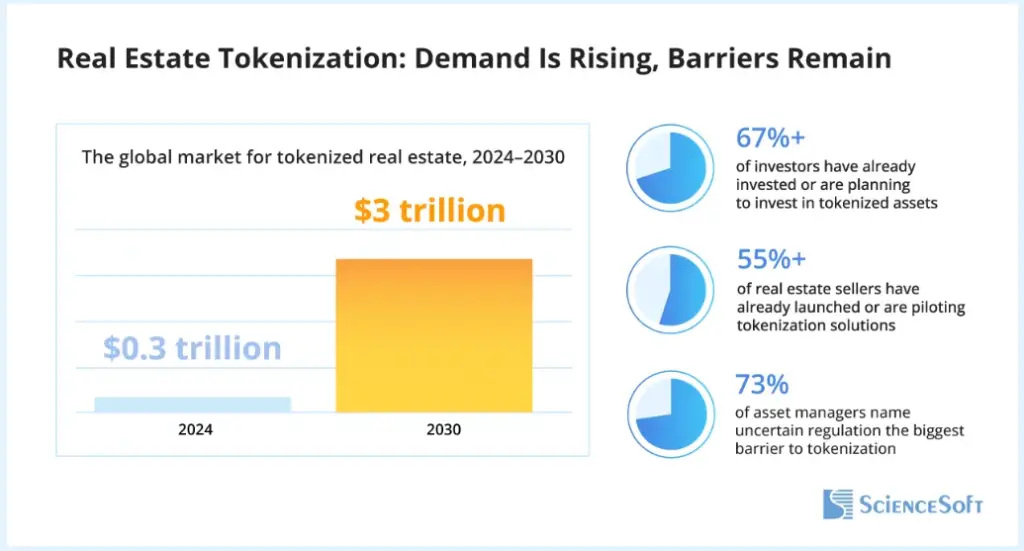
Source: ScienceSoft
The opportunity is not limited to selling property tokens. It extends to building platforms that handle issuance, investor access, compliance, ownership records, and asset management.
Lower Barriers to Property Investment
A major opportunity comes from changing the size of the investment itself. A high-value property does not necessarily need to be offered as one large investment when its economic interest can be divided into smaller units. This opens the door for platforms that connect property owners with a broader pool of investors without requiring each investor to purchase an entire asset.
The St. Regis Aspen Resort in Colorado used a tokenized structure to offer an ownership interest in the property. The offering raised $18 million and represented a 18.9% ownership stake through Aspen Digital tokens. For businesses, this creates an interesting model: instead of treating a property as a single transaction, a platform can turn it into an investment product with a defined ownership structure and digital access layer.
New Revenue Models From Assets
Tokenization also creates opportunities beyond simply selling fractional property interests. Businesses can build platforms around the infrastructure required to bring these assets to investors and manage them afterward.
| Business Layer | Opportunity |
| Property owners | Raise capital through tokenized offerings |
| Investment platforms | List and distribute tokenized assets |
| Investors | Access smaller positions in selected properties |
| Asset managers | Manage ownership and investor distributions |
| Marketplaces | Facilitate compliant secondary transfers |
The bigger opportunity is therefore not the token itself. It is the ecosystem that develops around the tokenized asset. A platform can become the bridge between property owners and investors while handling the digital processes that traditional real estate deals often manage through separate systems.
Growing Demand for Digital Markets
The market opportunity becomes more interesting when tokenization moves beyond individual properties. Deloitte estimates that $4 trillion of real estate could be tokenized by 2035, up from less than $300 billion in 2024, with tokenized private real estate funds alone potentially reaching $1 trillion.
That points toward a broader market for digital real estate investment rather than a collection of isolated token offerings. Businesses can potentially build platforms where investors discover multiple assets, complete verification, purchase digital interests, monitor their portfolios, and receive distributions from one place. As this infrastructure develops, the commercial opportunity shifts from tokenizing one property to building the systems that can support an entire tokenized real estate market.
Why Is Real Estate Becoming a Tokenized Asset?
Real estate has always struggled with liquidity. A property worth millions of dollars cannot be traded as easily as a stock because selling it usually requires finding a buyer for the entire asset and completing a lengthy closing process. Tokenization offers another approach by representing smaller ownership interests digitally. It does not eliminate the complexity of property transactions, but it can make the investment side easier to divide and transfer.
1. The Liquidity Problem Persists
Real estate can be extremely valuable, yet turning that value into cash is rarely simple. Selling a property worth millions of dollars can involve negotiations, intermediaries, legal work, financing checks, and long settlement periods. Even when demand exists, the asset cannot easily be divided for investors who want a smaller exposure. Deloitte estimates that less than $300 billion of real estate was tokenized in 2024, compared with a potential $4 trillion market by 2035.
The interesting part is that tokenization does not make the building itself more liquid. Instead, it can make the investment interest in that building easier to divide and transfer. That distinction matters. A commercial property can remain difficult to sell as a physical asset while its tokenized interests may have a more flexible market around them.
Traditional property transaction vs. tokenized interest
| Traditional Model | Tokenized Model |
| Large capital requirement | Smaller investment units |
| Manual ownership records | Digital ownership records |
| Multiple intermediaries | More automated workflows |
| Longer settlement process | Potentially faster settlement |
| Limited trading windows | Digital markets can operate continuously |
The opportunity, then, is not simply “making real estate liquid.” It is creating a more flexible layer around an asset that has traditionally been difficult to divide and trade.
2. Fractional Ownership Gains Momentum
High property prices can keep many investors away from real estate. Tokenization changes that by allowing investors to buy a smaller interest in a property instead of committing enough capital to purchase the entire asset. This makes it possible to spread smaller investments across multiple properties and build exposure gradually.
Lofty shows how this model can work in practice. The platform has tokenized properties across the United States, with some assets attracting hundreds of investors. One property listed on the platform had around 231 buyers. This model gives investors a way to participate in individual properties without taking on the cost of owning an entire building.
3. Blockchain Reshapes Investment Infrastructure
The more important change may not be fractional ownership at all. Blockchain can alter what happens after an investor buys an interest. Ownership records can be maintained digitally while smart contracts can automate parts of settlement, transfers, and income distribution. McKinsey identifies programmability and faster settlement as two important potential advantages of tokenized assets.
This creates a different infrastructure model for property investment:
Property → Legal Structure → Digital Token → Investor → Distribution → Transfer
Instead of every stage depending on separate manual processes, parts of the investment lifecycle can be connected through programmable systems. Lofty, for example, uses smart contracts to support rental-income payouts and allows investors to trade tokenized property interests through its marketplace.
That does not eliminate the need for lawyers, property managers, banks, or regulators. It changes how these components can interact with the investment platform.
4. Institutions See Larger Opportunities
Institutional interest becomes more significant when tokenization moves beyond individual homes and luxury properties. Real estate funds, loans, securitized assets, and development projects can also become candidates for on-chain ownership structures. Deloitte estimates that tokenized private real estate funds could reach $1 trillion, while tokenized real estate loans and securitizations could reach $2.39 trillion under its 2035 projection.
One example is Kin Capital, which has planned a $100 million real estate debt fund on Chintai with a $50,000 minimum investment for qualified institutional investors. This illustrates a different direction for tokenization: rather than simply dividing a building into smaller pieces, financial institutions can use blockchain to structure and manage more sophisticated real estate investment products.
What Does Real Estate Tokenization Put On-Chain?
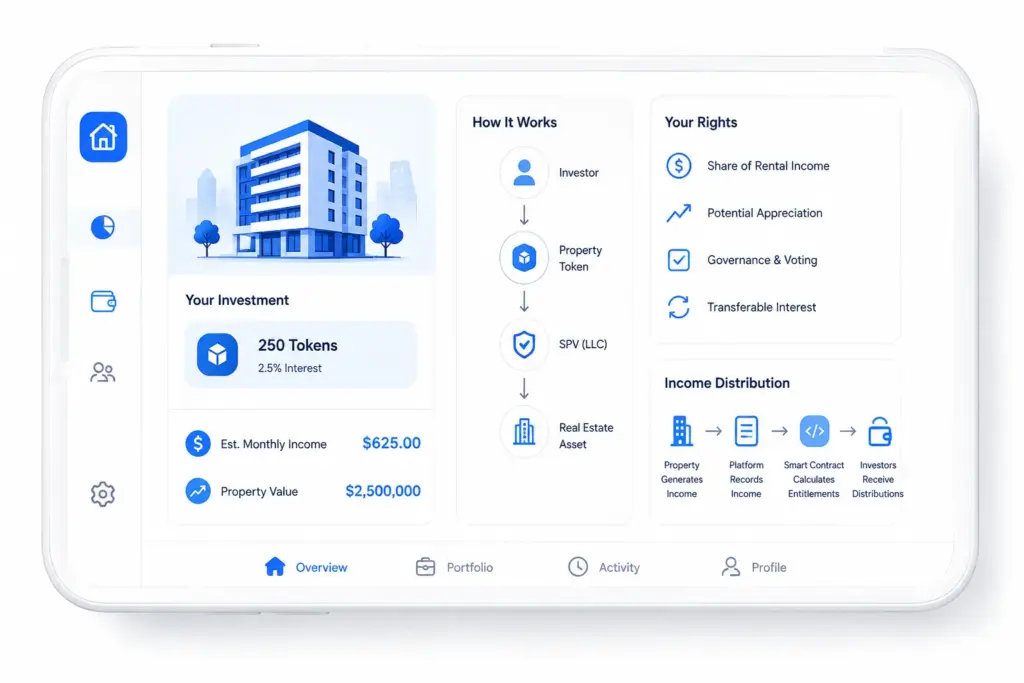
A property token is not simply a digital version of a building. It represents a defined investment interest that connects the physical asset with a legal structure and a set of investor rights. Understanding this relationship is important because the value of a token depends on what it actually gives the holder access to.
1. Property Ownership vs. Token Ownership
A common misconception is that buying a property token means your name has been added to the property deed. In most tokenization models, that is not how ownership works. The physical property remains registered through a legal structure while the token represents the investor’s interest in that structure. This distinction tells investors what they actually own and what rights they can exercise.
| Asset Layer | What It Represents |
| Physical property | The actual building or land |
| Legal entity | Holds or controls the property |
| Token | Represents the investor’s defined interest |
| Smart contract | Enforces the token’s digital rules |
For investors, this means the token should never be evaluated in isolation. The underlying legal documents are just as important as the blockchain record because they define what that digital ownership actually means.
2. Economic Rights vs. Legal Ownership
The value of a token can come from the economic rights attached to it rather than direct ownership of the building. An investor may receive a share of rental income or benefit from the appreciation of the underlying asset. Those rights depend on the legal agreement behind the offering.
This is why two tokens that both represent real estate can work very differently.
For example:
- One token may give investors a claim on rental income.
- Another may represent an interest in an SPV that owns the property.
- A third could provide rights linked to a real estate debt instrument.
The important question is not simply “How much property does one token represent?” It is “What does the token legally entitle its holder to receive?” That answer determines much of the investment’s actual value.
3. Tokens Backed by An SPV
A Special Purpose Vehicle or SPV is often used to connect the digital token with the physical property. Instead of placing the building directly on a blockchain, the property can be held by a separate legal entity. Investors then receive tokens linked to their interest in that entity. The structure can look like this:
Investor → Property Token → SPV → Real Estate Asset
This approach can make ownership easier to manage when multiple investors participate in the same property. It also creates a clear legal layer around the investment. The blockchain records the token and its transfers while the SPV remains responsible for holding the underlying asset.
Lofty AI uses a property-specific LLC structure for its tokenized properties. Investors purchase tokens associated with an individual property rather than becoming direct owners of the physical building. This illustrates why the legal wrapper matters just as much as the blockchain infrastructure.
4. Rental Income Becomes Programmable
Smart contracts can make rental income distribution easier for tokenized properties. For example, if a property generates $100,000 in distributable rental income, the platform can calculate each eligible investor’s share based on their token holdings and automate the payment. The exact distribution method will depend on the legal structure and terms of the investment. This creates a useful connection between the physical asset and its digital representation:
Property generates income → Platform records the income → Smart contract calculates entitlements → Eligible investors receive distributions
The same infrastructure can potentially support other investor rights too. Voting, transfers, redemption rules, and corporate actions can all be incorporated into the token’s design when the underlying legal framework allows it.
How Does Real Estate Tokenization Work From Property to Token?
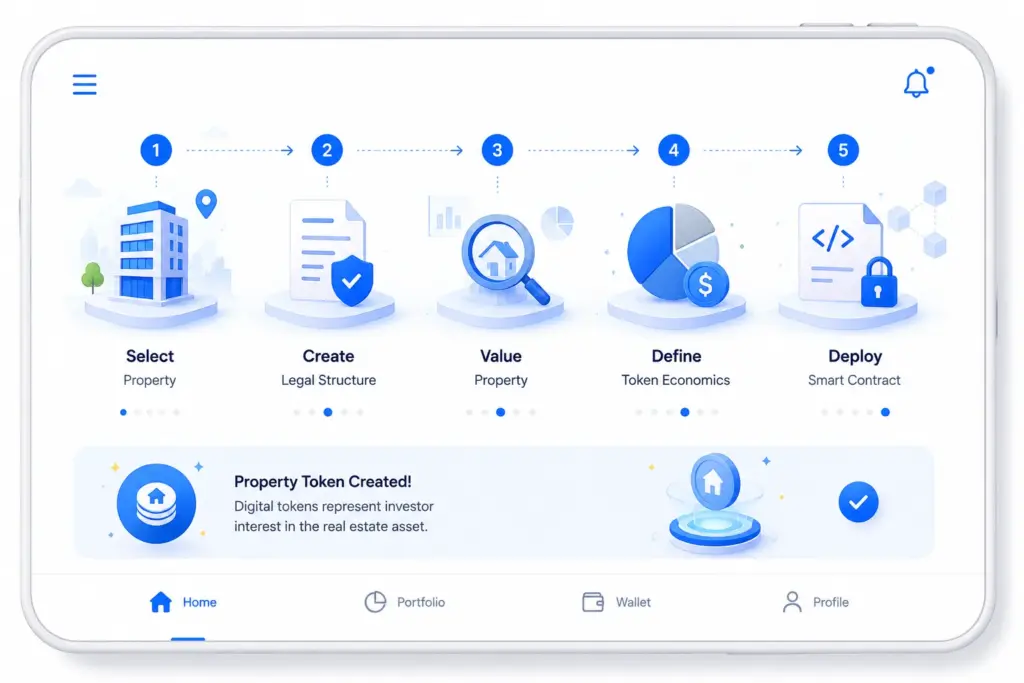
Tokenizing a property involves much more than putting an asset on a blockchain. The process starts by deciding whether the property is suitable for tokenization and then building the right investment structure around it. Only after the legal and financial foundation is clear can the property be represented through digital tokens.
1. Selecting The Right Property
Not every property makes an attractive tokenization candidate. The first step is to assess whether the asset has a clear investment story and enough value or income potential to interest investors. A property worth $10 million, for example, may be more suitable for fractional investment than a small asset with limited investor demand.
The selection process usually looks at factors such as:
| Consideration | Why It Matters |
| Property value | Determines potential investment size |
| Rental income | Creates a potential income stream |
| Location | Influences investor demand |
| Ownership status | Helps establish a clean legal structure |
| Market demand | Determines whether investors may participate |
The goal is not simply to find an expensive property. It is to find an asset that can support a clear investment proposition and a structure that can be explained to potential investors.
2. Creating The Legal Structure
Once the property is selected, the next step is deciding how investors will legally participate. In many structures, an SPV holds the property while the tokens represent an interest in that entity. This creates a connection between the physical asset and the digital investment. Think of the structure as the foundation beneath the token:
Property → SPV → Investor Interest → Digital Token
The important part is getting the legal rights right before the token is issued. If the governing documents give investors certain rights, those rights need to align with the way the token is designed and managed.
3. Valuing The Property Before Issuance
The token’s value begins with the underlying asset. That makes property valuation and due diligence an important part of the process. Before investors are invited into the offering, the property may need to be assessed for ownership history, outstanding liabilities, physical condition, income potential, and market value.
For instance, if a property is independently valued at $5 million, the issuer could structure an offering around a defined portion of that value. The number and price of tokens would then depend on the investment structure rather than being chosen arbitrarily.
This stage gives investors something important: a basis for understanding what sits behind the token.
4. Defining Token Economics And Rights
After the asset and legal structure are established, the issuer has to decide what the token actually represents. This is where token economics becomes important. The issuer determines the number of tokens, their price, the rights attached to them, and how investors participate in the property’s economics. A simple structure might look like this:
| Token Detail | Example |
| Property value | $5 million |
| Tokens issued | 500,000 |
| Indicative token price | $10 |
| Total represented value | $5 million |
| Investor rights | Defined by offering documents |
The numbers are only illustrative. A real offering may represent equity in an SPV, a share of income, debt exposure, or another defined economic interest. The token should reflect those rights rather than simply assigning an arbitrary fraction of the property’s market value.
5. Developing The Smart Contract
The smart contract turns the token design into executable blockchain rules. It can control how tokens are issued and transferred while supporting functions such as ownership records or distributions. For regulated real-world assets, permissioned standards such as ERC-3643 can also connect transfers with investor identity and eligibility requirements.
The development process should also account for what happens after launch. A contract may need to handle changes in ownership, restricted transfers, investor eligibility, and other conditions defined by the offering. This is why smart contract development should follow the legal and economic structure rather than being treated as a separate technical exercise.
6. Verifying Investors Before Purchase
Tokenization does not mean anyone with a crypto wallet can automatically buy a property interest. Depending on the offering and jurisdiction, investors may need to complete identity checks and satisfy eligibility requirements before purchasing or receiving tokens. A typical onboarding flow can be:
Investor registration → Identity verification → KYC/AML checks → Eligibility review → Wallet approval → Token purchase
ERC-3643, for example, uses an identity registry and compliance contracts to verify whether participants meet predefined requirements before allowing certain token transfers. This layer becomes particularly important when a platform wants to support investors across different jurisdictions.
7. Issuing And Distributing Tokens
Once the property, legal structure, smart contracts, and investor onboarding are ready, the tokens can be issued. The issuer defines the offering and makes the eligible tokens available to approved investors through the platform. A real-world example is Mountain Retreat Villa, which was tokenized through Binaryx. The project attracted 283 investors who collectively invested $385,000 through an ERC-20 smart contract.
The important point is that issuance is not the end of tokenization. It is the point where the digital investment starts interacting with the real asset and its investors.
8. Managing Income And Transfers
Once tokens are issued, the platform needs to keep the investment running smoothly. It can track property income and update ownership records as investors buy or transfer their interests. This makes the platform an active part of the investment rather than just a place where tokens are initially sold.
For example, if a property generates $200,000 in distributable income, the platform can calculate each eligible investor’s share based on their token holdings and the investment terms. Transfer rules can also be applied when needed. This helps keep investor records and property-related payments aligned as the asset continues to operate.
Which Real Estate Assets Are Worth Tokenizing?
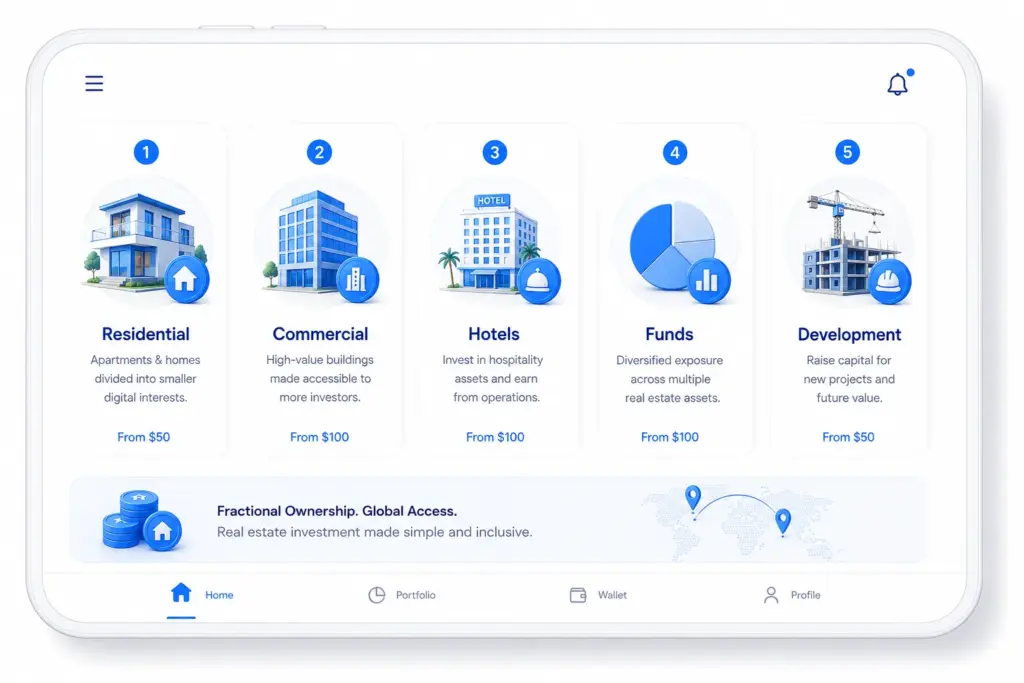
Not every property is automatically a good candidate for tokenization. The strongest opportunities tend to come from assets where investors can clearly understand the underlying value and where ownership or income can be structured into smaller investment interests. Looking at existing projects also shows that tokenization is already being applied across homes, commercial buildings, hotels, funds, development projects, and real estate-backed debt.
1. Residential Properties Can Scale
Residential properties can be a practical starting point for tokenization because investors already understand their rental and appreciation potential. A single apartment can be divided into smaller digital interests so investors do not need enough capital to purchase the entire unit. This can make high-value residential assets more accessible.
Layan Verde in Phuket offers a real example. Sabai tokenized apartments in the development and listed them through its digital marketplace. One apartment valued at $454,950 had an entry point of $50 per token. The same approach can also be extended to residential portfolios where investors gain exposure to several properties through one investment structure.
2. Commercial Buildings
Commercial properties can be strong candidates for tokenization because their high values often put them out of reach for individual investors. Tokenization can divide the investment into smaller interests while preserving exposure to the property’s underlying value and income potential.
RedSwan CRE shows how this model can work at scale. Its platform has tokenized more than $5 billion in real estate assets and attracted around 13,000 investors. For businesses, this suggests that tokenization can support larger property portfolios instead of being limited to individual property offerings.
3. Hotels Can Support Income
Hotels have a different advantage. Their value is closely connected to their operating performance, which can make rental and hospitality income an important part of the investment proposition. Tokenization can divide an interest in the underlying asset while allowing investors to participate in income generated through hotel operations.
Dania Beach Hotel in Florida was tokenized by Reental with a stated property value of $5.6 million. The offering allowed investors to participate from $100, showing how a hospitality asset with a multimillion-dollar valuation can be structured into smaller digital investment interests.
| Hotel Asset | Tokenization Opportunity |
| Boutique hotels | Fractional investment |
| Hotel apartments | Rental income exposure |
| Resort properties | Income and appreciation |
| Hospitality portfolios | Diversified exposure |
The model can be particularly attractive when investors want exposure to hospitality without taking responsibility for operating an entire property.
4. Funds Can Create Diversification
Tokenization can also be applied to real estate funds rather than a single property. Investors can gain exposure to multiple assets through one digital investment structure. This can make diversification easier and reduce the need to evaluate and manage each property separately. Aurum Equity Partners’ $1 billion real estate fund is a notable example.
The fund focuses on data-center real estate and was tokenized using Zoniqx’s infrastructure. For investors, this model can provide access to a broader property strategy through one investment rather than relying on the performance of a single asset.
5. Development Projects Need Capital
New developments can benefit from tokenization because raising capital is often one of the biggest challenges before construction is complete. A tokenized structure can give developers another way to bring investors into a project without requiring each participant to fund the entire development.
Layan Green Park in Phuket offers an example of this approach. Sabai Property used tokenization to open the development to international investors through a digital investment model. Unlike an income-producing property, a development project depends more heavily on successful construction and future property value. This makes the project’s structure and investor exit plan especially important.
6. Real Estate Debt Generates Income
Real estate tokenization can also represent the financing behind a property rather than the property itself. Investors can purchase digital interests tied to a real estate-backed loan and earn returns based on the loan terms. This gives tokenization a place in the debt market as well as property ownership.
Robinland offers an example through its tokenized real estate debt products. One offering involved a first-lien loan secured by multifamily condos in Sunset Park, New York. It had a $1,000 token price, a 24-month maximum term, and an estimated 8% APR. For investors, the appeal is more about income from the loan than gains from rising property values.
What Makes Property Tokenization Ready?
A property becomes more attractive for tokenization when its fundamentals support a clear investment proposition. A high valuation alone is not enough. Investors also need to understand how the asset generates value and what legal structure sits behind their digital interest.
A practical screening framework:
High Value + Stable Cash Flow + Strong Demand + Clear Legal Structure = Strong Tokenization Candidate
The ideal asset may differ depending on the platform’s strategy. A residential marketplace may prioritize affordable rental properties while an institutional platform may focus on large commercial portfolios or real estate debt. The key is matching the asset with an investment structure that can work both legally and economically.
How Do Investors Make Money From Tokenized Real Estate?
Tokenized real estate does not create a new source of value on its own. The return still comes from the underlying property or the financing attached to it. What changes is the way an investor can gain exposure to those returns. Depending on the structure, a token may provide access to rental income, property appreciation, or payments from a real estate-backed loan.
1. Rental And Operating Income
Income-producing properties can pass part of their cash flow to token holders. A residential building may generate rent each month, while a hotel or commercial property can earn income through its operations. If the token gives investors a claim on that income, distributions can become part of the investment return.
The amount an investor receives depends on the number of tokens held and the terms of the offering. For example, an investor holding 2% of the eligible token supply could receive 2% of the distributable income if the structure provides for proportional distributions. The platform can use smart contracts to calculate these payments and maintain a record of what each investor is entitled to receive.
The basic flow looks like this:
Property Income → Distributable Amount → Investor Share → Token Holder
This model can be attractive to investors who want recurring income rather than waiting for the property to be sold.
2. Property Appreciation Creates Gains
An investor can also benefit when the underlying property becomes more valuable. Suppose a tokenized property is initially valued at $10 million and later reaches $12 million. The $2 million increase represents a 20% rise in the property’s value before considering costs, taxes, fees, or the specific rights attached to the tokens.
The investor does not necessarily receive this increase immediately. Their ability to realize the gain depends on the structure. It could happen when the property is sold, when tokens are redeemed, or through a secondary-market transaction.
Example scenario
| Property Value | Later Value | Increase |
| $10 million | $12 million | $2 million |
| $10 million | $15 million | $5 million |
The important point is that token holders are still exposed to the performance of the underlying real estate. Blockchain does not remove normal property-market risk.
3. Token Sales Can Create Gains
Tokens may also change in value after their initial offering. If demand for the underlying asset increases, investors may be willing to pay more for the same token in a compliant secondary market. An investor who purchased tokens at $20 and later sells them for $28 would have a $8 gain per token before fees and taxes.
However, this type of return depends heavily on whether a functioning secondary market exists. A token can represent a valuable property and still be difficult to sell if there are not enough eligible buyers.
This creates an important distinction: Token value can rise ≠ guaranteed liquidity
The investment needs both an asset that investors want and a market where eligible participants can actually trade the associated interests.
4. Real Estate Debt Pays Interest
Not every tokenized real estate investment is based on property ownership. Some products represent interests in loans secured by real estate. In this model, investors are effectively participating in the financing rather than waiting for the property itself to appreciate. For example, an investor could put $10,000 into a tokenized real estate loan carrying a 8% annual interest rate.
If the loan terms remain unchanged for a full year, the gross interest would be $800 before applicable costs and taxes. The actual return can differ based on the repayment schedule and terms of the offering.
| Investment Type | Primary Return Driver |
| Rental property | Property income |
| Appreciation asset | Increase in property value |
| Secondary token | Change in token price |
| Real estate debt | Interest payments |
This gives investors another way to participate in real estate without taking the same risk profile as direct property ownership.
What Determines Token Value?
The price of a real estate token should ultimately have a connection to the value and economics of the asset behind it. A token representing an interest in a profitable property may have stronger fundamentals than one linked to an asset with declining income. Yet market demand also matters because investors ultimately determine what they are willing to pay.
Several factors can influence that price:
- Underlying property value
- Rental or operating income
- Investor rights attached to the token
- Remaining investment period
- Demand from eligible buyers
- Availability of secondary trading
- Property debt and liabilities
A token priced at $100 does not automatically mean the underlying asset is worth a particular amount. Investors need to understand the token supply, legal structure, economic rights, and valuation of the property before judging whether that price makes sense.
Who Can Build a Business Around Real Estate Tokenization?
Real estate tokenization creates opportunities at different stages of the property investment cycle. Developers can use it to raise capital, while asset managers can bring existing funds to digital platforms. This also leaves room for fintech and PropTech companies to build the infrastructure that connects properties with investors.
1. Developers Can Raise Capital
Property developers often need significant capital long before a project starts generating income. Tokenization gives them another route to reach investors by dividing an investment opportunity into smaller digital interests. This can be useful for projects where traditional financing does not cover the full capital requirement or where developers want to reach investors beyond their existing network.
St. Regis Aspen Resort offered a tokenized interest representing roughly 19% of the property and raised $18 million from investors.
2. Funds Can Go On-Chain
Real estate funds already pool capital across multiple properties. Tokenization can add a digital layer to that structure and make fund interests easier to issue and manage. This can be particularly relevant for managers that want to reach a broader investor base without rebuilding their fund operations for every offering.
| Traditional Fund Process | Tokenized Fund Model |
| Manual subscription process | Digital investor onboarding |
| Periodic ownership records | On-chain ownership records |
| Separate investor reporting | Digital portfolio tracking |
| Manual transfer processes | Programmable transfer rules |
Aurum Equity Partners has used this approach with a $1 billion real estate fund focused on data-center assets. On a much larger institutional scale, Goldman Sachs has also supported a blockchain-native real estate fund with LRC Group, Ownera, Archax, and Apex Group. The fund uses GS DAP for tokenized fund shares.
For asset managers, this makes tokenization less about creating a new type of property and more about modernizing how existing investment products are distributed and administered.
3. Platforms Can Connect Investors
Some businesses may not own properties at all. Their opportunity is to build the marketplace between property owners and investors. These platforms can help investors discover assets, complete verification, purchase digital interests, and monitor their holdings from one interface.
The platform model can serve both sides:
Property side: Asset onboarding → Documentation → Token issuance → Investor access
Investor side: KYC → Property discovery → Investment → Portfolio tracking
Platforms such as Lofty and RealT show how digital marketplaces can bring fractional property investment to smaller investors. Industry research also identifies Blocksquare and Propy as infrastructure and transaction platforms within the broader real estate blockchain ecosystem.
The business opportunity is therefore not necessarily owning real estate. It can be owning the digital infrastructure through which real estate investments are created and managed.
4. Fintech And PropTech Can Expand
Fintech and PropTech companies can add tokenization to products they already understand. A PropTech platform could bring digital ownership into property management while a fintech product could add token-based investment options. This lets businesses enter the market without building an entire real estate marketplace from scratch.
For example, Caliber, a real estate-focused asset manager, is using blockchain and Chainlink infrastructure to modernize how private real estate funds are financed, administered, and distributed. The key opportunity is integration. Tokenization becomes more valuable when it connects with systems that already handle property data, investor accounts, payments, and compliance.
5. Marketplaces Can Enable Trading
Issuing a token is only the beginning if investors eventually want to exit their positions. This creates a separate business opportunity for marketplaces that can support compliant transfers and secondary trading. The value proposition is different from a primary issuance platform:
| Primary Market | Secondary Market |
| New tokens are offered | Existing tokens are traded |
| Property owner raises capital | Investors seek liquidity |
| Issuer controls the offering | Marketplace facilitates transactions |
| Focus on distribution | Focus on price discovery and transfer |
TradeX on Alt DRX is an example of a digital real estate marketplace designed around secondary trading. Investors can buy and sell digital real estate units through the platform rather than waiting for the underlying property to be sold.
6. Banks Can Enter Digital Assets
Banks and institutional investment firms can approach tokenization from a different angle. They already have custody systems, compliance teams, investment products, and large investor networks. Tokenization can therefore become an additional settlement and distribution layer rather than an entirely new business.
The institutional activity is becoming broader. Goldman Sachs, for example, is involved in a blockchain-native real estate fund using its GS DAP platform.
What Are the Real Benefits of Tokenizing Property?
The value of tokenization goes beyond making property ownership digital. Its bigger advantage is that it can change how investors enter a deal and how property investments are managed afterward. The impact can be seen in everything from smaller investment sizes to automated administration and new ways of accessing property markets.
1. Fractional Access To Property
High property prices can keep smaller investors out of the market. Tokenization changes the entry point by dividing an asset into smaller investment interests. Dubai’s PRYPCO Mint shows how this can work in practice. Its first tokenized property was a AED 2.4 million apartment in Business Bay that attracted 224 investors from 44 nationalities. The average investment was around AED 10,714.
The bigger advantage is the ability to spread capital across several properties instead of putting a large amount into one asset. An investor who may not be ready to commit $500,000 to a single property could potentially build exposure through smaller positions. This makes real estate investment more flexible without changing the underlying property.
2. Faster Settlement And Lower Costs
Traditional property transactions can involve extensive documentation and several parties before ownership changes hands. Tokenization can move parts of this process into a digital environment. Once the required checks are completed, blockchain infrastructure can record transactions and automate certain steps through smart contracts.
| Traditional Process | Tokenized Process |
| Paper-heavy documentation | Digital records |
| Manual ownership updates | On-chain updates |
| Multiple reconciliation steps | Automated transaction records |
| Longer settlement cycles | Potentially faster settlement |
The benefit is not that every real estate transaction becomes instant. Legal checks and regulatory requirements still apply. The improvement comes from reducing repetitive administrative work and keeping transaction records in a shared digital system.
3. Programmable Income Distribution
Managing rental income becomes harder as the number of property investors grows. Smart contracts can simplify this process by calculating each investor’s share and triggering distributions based on the rules of the offering. This reduces repetitive work and gives investors a clearer view of what they are entitled to receive.
Sabai Property demonstrates this model through its tokenized marketplace. The platform reports more than 20,000 registered users and over $3.3 million in property value on its marketplace. Investors can track their digital interests while the platform connects property income with the corresponding investment position.
4. Transparent Ownership And Records
Property records often sit across several systems. Blockchain can create a shared digital record that makes token ownership easier to track. Dubai’s property tokenization initiative shows how this can work alongside an official land registry. Its first offering attracted investors from 44 nationalities and introduced Property Token Ownership Certificates through the Dubai Land Department.
The important part is the connection between the token and the legal ownership structure. A blockchain record alone does not make someone the owner of a building. The token must represent rights that are recognized by the underlying legal framework.
5. Broader Access To Property Capital
Property owners can use tokenization to reach a wider pool of eligible investors. Dubai’s pilot shows the potential of this model. Its second tokenized property attracted 149 investors from 35 nationalities and was fully funded in just 1 minute and 58 seconds. The waiting list later grew beyond 10,700 investors.
For businesses, the bigger opportunity is reaching investors without changing the underlying property. A digital investment model can make it easier to present the same asset to participants across different markets. This can create a broader capital base when the offering is structured for the right investors.
6. Potential Secondary Market Liquidity
Secondary markets can give investors a way to exit without waiting for the underlying property to be sold. Dubai’s tokenization project has already introduced controlled secondary trading for eligible investors. The pilot covered 10 properties worth more than $5 million and issued around 7.8 million tokens that could later be resold within the approved market.
However, tokenization alone cannot guarantee liquidity. Investors still need enough buyers and sellers for an active market to develop. Blockchain can make transfers easier to manage, but the real test is whether the tokenized property attracts consistent demand.
How to Build a Real Estate Tokenization Platform?
Building a real estate tokenization platform is more involved than creating a property marketplace with blockchain payments. The platform has to connect the physical asset with its legal structure and then translate the investment rights into a secure digital system. A strong product should therefore be designed around the asset and investment model first. Blockchain becomes one part of the architecture rather than the entire product.
1. Define The Asset And Model
The first decision is what the platform will actually tokenize. A business may want to represent ownership in individual properties. Another may focus on real estate funds or property-backed debt. The choice affects everything that follows because the token structure and investor experience need to match the underlying investment.
| Model | Typical Investor Exposure |
| Property equity | Interest linked to property ownership |
| Rental income | Share of eligible property income |
| Real estate fund | Interest in a property portfolio |
| Property-backed debt | Returns from real estate financing |
For example, a platform built around $2 million residential properties will need a very different investment flow from one designed for institutional funds worth hundreds of millions of dollars. Defining this model early prevents unnecessary development and gives the product a clear commercial direction.
2. Legal And Compliance Framework
The legal structure should be decided before development begins. The platform needs to establish what investors are actually purchasing and which entity holds the underlying asset. In many models, an SPV sits between the property and the investor. The token then represents a defined interest in that structure.
Compliance also needs to be built into the product rather than added after launch. Depending on the market and offering, this can include:
- Investor eligibility checks
- KYC and AML verification
- Securities compliance
- Transfer restrictions
- Accredited investor requirements
- Transaction reporting
This stage is critical because a technically flawless platform can still fail if its token structure does not align with the applicable legal framework.
3. Choose The Blockchain And Standard
The blockchain should be selected according to the platform’s requirements rather than popularity alone. Transaction costs, scalability, ecosystem support, privacy needs, wallet compatibility, and regulatory requirements can all influence the decision. The token standard matters just as much. A basic fungible token may not be suitable when investors need identity checks or transfer restrictions.
Standards such as ERC-3643 are designed for permissioned tokens and can support compliance checks before transfers take place.
A practical selection framework:
Asset requirements → Compliance needs → Token standard → Blockchain → Infrastructure
This approach keeps the technology aligned with the investment product instead of forcing the investment model to fit a particular blockchain.
4. Design The Smart Contract Architecture
Smart contracts form the execution layer of the platform. They can manage token issuance and transfers while enforcing predefined rules around ownership and eligibility. The architecture should also account for what happens after the initial sale. A real estate tokenization platform may need separate contracts for:
Token issuance → Investor eligibility → Transfers → Distributions → Corporate actions
Security should be treated as a core requirement here. Smart contract vulnerabilities can directly affect investor assets, so contracts should undergo code review and independent security audits before significant capital is placed into the system.
5. Build Investor And Issuer Workflows
The platform needs to serve two very different users. Property issuers want to bring assets onto the platform and manage offerings. Investors want to discover opportunities and understand exactly what they are buying.
Issuer journey: Property submission → Due diligence → Offering creation → Token issuance → Investor management
Investor journey: Registration → KYC → Property discovery → Investment → Portfolio tracking
The interface should also make important information easy to understand. An investor considering a $25,000 position should be able to see the property’s valuation, investment terms, expected income structure, holding period, and applicable restrictions before committing funds.
6. Integrate KYC Payments And Custody
A tokenization platform needs more than blockchain connectivity. Investors still need a way to verify their identity and move money into and out of the investment. Wallet infrastructure also needs to work with the compliance model established for the offering.
| Integration | Purpose |
| KYC/AML provider | Verify investor identity |
| Banking or payment rails | Accept investment funds |
| Wallet infrastructure | Hold and transfer tokens |
| Custodian | Safeguard digital assets |
| Data provider | Supply property information |
The platform can use APIs to connect these services rather than building every component internally. This can reduce development time while allowing the core product to focus on the tokenized real estate experience.
7. Add Distributions And Trading
The platform should continue working after an investor receives tokens. If the underlying property generates income, the system can calculate eligible distributions based on the investment structure. A secondary marketplace can then provide a mechanism for approved investors to transfer their interests. Consider a property generating $500,000 in distributable income.
The platform could use the token ownership records to determine each eligible investor’s share. The payment process can then follow the rules established in the offering documents.
For secondary trading, the architecture needs additional controls:
Seller eligibility → Buyer eligibility → Transfer validation → Settlement → Ownership update
This is where tokenization can become more valuable than a simple digital property listing platform. The system can support the asset throughout its investment lifecycle.
8. Audit, Test, and Launch
Before launch, the platform needs to be tested across both blockchain and traditional application layers. Smart contracts should be audited while the investor interface, payment integrations, compliance checks, and administrative controls should go through separate testing.
A useful pre-launch sequence is:
- Unit and integration testing
- Smart contract security review
- KYC and compliance testing
- Payment and wallet testing
- Load and performance testing
- User acceptance testing
- Mainnet deployment
A controlled launch is often safer than immediately opening the platform to a large number of investors. The first offering can help identify operational issues before the platform begins handling larger properties or higher transaction volumes. Once the core workflow is stable, the platform can expand into multiple assets, investment structures, and potentially multiple jurisdictions.
Which Markets Are Leading Real Estate Tokenization?
Real estate tokenization is developing differently across major financial markets. The biggest difference is not simply how much property has been tokenized. It is how each jurisdiction connects digital assets with existing property and securities laws. For a business building a platform, this makes the legal structure just as important as the blockchain technology.
United States Sets Rules
The U.S. treats tokenized securities as securities even when ownership is recorded on a blockchain. The SEC’s current position is clear: changing the format of a security does not change the federal securities laws that apply to it. Section 2(a)(1) of the Securities Act of 1933 and Section 3(a)(10) of the Securities Exchange Act of 1934 define what constitutes a security.
For real estate platforms, this means the token structure needs to be designed around the underlying investment. Registration or an available exemption may be required for an offering. State laws and Article 8 of the Uniform Commercial Code can also become relevant to how ownership and transfers are recognized.
UAE Builds Property Infrastructure
The UAE is taking a more direct approach by connecting tokenization with the property registry itself. Dubai Land Department launched its real estate tokenization project with VARA, Dubai Future Foundation, and the Central Bank of the UAE. The initiative allows fractional property ownership through blockchain-based infrastructure.
Dubai has projected a tokenized real estate market of AED 60 billion, roughly $16.3 billion, representing around 7% of its total real estate transactions. The project has also moved toward regulated secondary-market trading.
The legal point is important here: Dubai is not simply putting property data on-chain. It is testing how blockchain-based ownership can work alongside the official land registration system.
EU Applies Existing Securities
The European Union requires more careful classification. MiCA Regulation (EU) 2023/1114 governs many crypto-assets, but Article 2 excludes crypto-assets that qualify as financial instruments. A token representing an investment security therefore cannot simply be treated as an ordinary crypto-asset under MiCA.
For a real estate platform, the first question is therefore what does the token legally represent? If it represents a financial instrument, existing EU securities rules may apply instead. That can affect issuance, investor access, trading, custody, and disclosure requirements.
| Platform Question | Why It Matters |
| What does the token represent? | Determines the regulatory category |
| Who can invest? | Affects onboarding requirements |
| Can tokens be transferred? | May require transfer controls |
| Where will trading occur? | Can trigger market rules |
| Which EU country is involved? | Local requirements may still apply |
Singapore Supports Institutional Projects
Singapore has become an important market for institutional blockchain projects. The Monetary Authority of Singapore is exploring tokenization through Project Guardian. Its work covers areas such as digital assets and tokenized investment products.
For real estate businesses, this creates opportunities to build platforms for institutional investors and managed investment products. However, the legal treatment still depends on what the token represents and whether it falls under Singapore’s regulated financial products..
Choosing The Right Jurisdiction
There is no single jurisdiction that works for every tokenization business. The right choice depends on the property, the investor base, the token structure, and whether the platform will support only primary issuance or also secondary trading. A useful way to evaluate the market is:
Property location → Investor type → Token classification → Offering rules → Trading model
A platform targeting a $500 million institutional property fund may need a very different structure from one offering $5,000 fractional interests to retail investors. The legal framework should therefore be mapped before selecting the blockchain or building smart contracts.
One example outside the markets above is Manhattan’s 436 & 442 East 13th Street, which was tokenized by DigiShares. The two-property portfolio was valued at approximately $31.5 million, showing how tokenization can be applied to substantial U.S. multifamily assets rather than only small individual properties.
Where Is Real Estate Tokenization Heading Next?
The next stage of real estate tokenization is likely to be less about proving that property can exist on-chain and more about making the infrastructure useful at scale. The market is moving toward institutional products, regulated trading, automated property analysis, and faster settlement.
1. Institutions Are Moving On-Chain
Institutional investors are looking beyond individual property tokens and exploring blockchain for funds and larger real estate portfolios. This shift could make tokenization more useful for asset managers that want to modernize how investment products are issued and managed.
Caliber is one example of this direction. The company is building blockchain infrastructure around private real estate assets and reported $3.7 million in platform revenue for a recent quarter. That figure covers the wider business rather than a specific tokenized property. Still, it shows how real estate firms are beginning to build businesses around digital asset infrastructure.
2. Secondary Markets Could Mature
Primary issuance is only one part of the investment lifecycle. Investors also need a way to exit their positions without waiting for the underlying property to be sold. This is creating demand for secondary marketplaces where eligible investors can trade tokenized interests under defined rules.
The next generation of these markets could provide:
| Current Challenge | Potential Development |
| Limited buyers | Larger investor networks |
| Difficult price discovery | More visible market pricing |
| Manual transfers | Programmable settlement |
| Investor restrictions | Automated eligibility checks |
The challenge will remain liquidity. A blockchain can make a transfer technically easier, but it cannot guarantee that someone will want to buy the token. Successful secondary markets will need strong investor demand alongside regulatory clarity.
3. Tokenized Funds Could Scale
Tokenization can extend beyond individual properties to entire real estate funds. A fund can hold multiple assets while investors receive digital interests in the portfolio. This gives asset managers a way to bring existing investment structures onto blockchain without rebuilding the fund from scratch.
Deloitte estimates that tokenized private real estate funds could reach around $1 trillion by 2035. The European real estate fund launched by Apex Group and its partners uses tokenized fund shares through Goldman Sachs’ GS DAP infrastructure. The model shows how blockchain can work alongside traditional fund administration while making ownership and investor management more digital.
4. AI Could Transform Property Analysis
AI can add another layer to tokenized real estate by helping investors and asset managers analyze the property behind a digital investment. Instead of relying entirely on static valuation reports, platforms could combine property records with market data and operating information to identify changes in asset performance.
Potential applications include:
- Automated property valuation
- Rental income forecasting
- Market comparison
- Document analysis
- Property risk assessment
- Due diligence support
This could become especially useful when a platform manages thousands of properties. A human team may struggle to review every asset continuously, while AI systems can monitor large datasets and flag properties that need closer attention.
5. Stablecoins Could Speed Settlement
Large property transactions often involve several payment and settlement steps. Stablecoins could simplify this process by giving tokenized real estate platforms a blockchain-based payment option where their use is legally allowed. An investor could use a dollar-pegged digital asset to purchase a property token and settle the transaction on the same network.
The benefit becomes more noticeable with larger deals. A $1 million transaction could potentially reduce the need to reconcile separate payment and ownership systems. The bigger opportunity is atomic settlement, where payment and the transfer of the investment interest can happen together through programmable infrastructure.
6. Real Estate Meets DeFi
The next step could be connecting tokenized property with DeFi applications. A digital real estate interest could potentially be used in lending or as collateral. But property tokens cannot be treated like ordinary cryptocurrencies. They may carry legal restrictions and represent securities. Any DeFi model must therefore keep investor eligibility and transfer rules intact.
A possible future structure could look like:
Tokenized Property → Verified Investor → Compliant DeFi Protocol → Lending or Liquidity
If these systems mature together, real estate could become part of a much broader real-world asset economy. The biggest opportunity may ultimately be building the infrastructure that allows physical assets to interact with digital financial markets without losing the legal protections attached to them.
Contact IdeaUsher for Real Estate Tokenization
Turning a real estate tokenization idea into a working platform requires more than adding blockchain to a property marketplace. The product needs to connect the investment model with smart contracts, investor workflows, and the systems that keep the platform running after tokens are issued. At IdeaUsher, we bring 500,000+ hours of coding experience and a team that includes ex-MAANG and FAANG developers to projects that require strong technical execution.
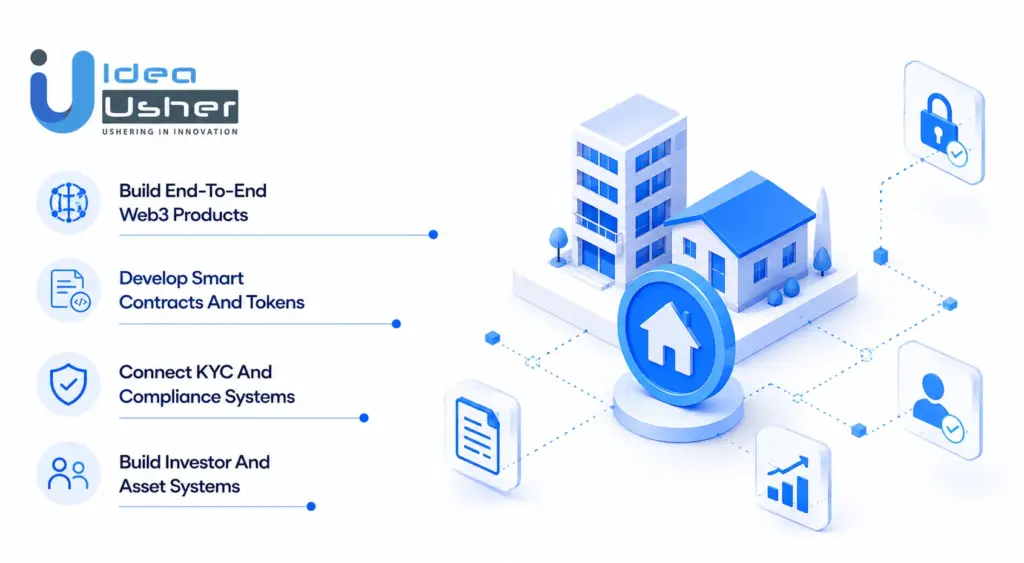
Build End-To-End Web3 Products
A tokenization platform can start with a single $2 million property and grow into a much larger marketplace. We build the architecture with that growth in mind from the start. This helps the platform add new assets and investors without having to rebuild its core systems later.
Develop Smart Contracts And Tokens
Smart contracts determine how tokens are created and how they behave after issuance. They can manage ownership records and enforce predefined rules around transfers and investor eligibility. Our team can develop the blockchain layer around the specific rights represented by the property token.
The focus is not simply on creating a token. It is on making sure the token logic matches the investment structure. This becomes especially important when a platform handles assets worth millions of dollars and needs stronger controls around issuance and transfers.
Connect KYC And Compliance Systems
Investor verification needs to be part of the platform workflow. We can integrate KYC and AML services to help verify investors before they participate in tokenized offerings. Compliance rules can also be connected with the token transfer logic where the investment structure requires it.
| Requirement | Platform Support |
| Investor verification | KYC integration |
| Risk screening | AML checks |
| Eligibility | Investor qualification rules |
| Token transfers | Compliance controls |
| Records | Digital audit trail |
This creates a smoother onboarding experience while giving administrators better control over who can access specific investment opportunities.
Build Investor And Asset Systems
Managing the property after token issuance is just as important as launching the offering. Investors need to see their holdings and track relevant investment information. Property owners and administrators need their own tools to manage assets and investor activity. We can build dashboards that bring these workflows together.
Whether the platform starts with a $5 million property portfolio or is designed for much larger institutional assets, the system can be structured around the needs of investors, issuers, and administrators.
Conclusion
Real estate tokenization is changing how investors can access property and how businesses can structure real estate investments. The opportunity goes beyond fractional ownership. With the right legal model and technology, tokenized assets can support more flexible investment experiences. For businesses ready to explore this market, the next step is building an infrastructure that can turn the concept into a practical and scalable investment platform.
FAQs
A1: The process usually starts by selecting a suitable property and establishing its legal ownership structure. The investment rights are then defined and represented through smart contracts. After completing required investor verification, eligible participants can purchase tokens and receive the benefits specified in the offering.
A2: Yes, tokenized property interests can potentially be traded through a compliant secondary marketplace. This can give investors an alternative exit instead of waiting for the underlying property to be sold. However, tokenization does not guarantee liquidity because the market still needs eligible buyers and sellers.
A3: Many types of real estate can potentially be tokenized, including residential properties, commercial buildings, hotels, development projects, funds, and real estate-backed debt. The best candidates usually have a clear legal structure and a strong investment case. The property should also have enough investor demand to support the tokenized offering.
A4: Tokenized real estate can be legally structured in many markets, but the requirements depend on the jurisdiction and the nature of the investment. A token may be treated as a security if it represents an investment interest or financial right. Businesses therefore need to consider securities laws, investor eligibility, KYC/AML requirements, and property regulations before launching an offering.