

Key Takeaways
- Personalized environments and behavioral data are making therapy more immersive through VR mental health apps that deliver interactive treatment experiences.
- Platforms like BehaVR combine VR exposure therapy, biometrics, mindfulness, adaptive protocols, and clinician oversight to personalize care.
- Building these solutions requires VR environments, biometric integration, AI personalization, clinician dashboards, EHR connectivity, and strong security.
- These platforms support anxiety, phobias, PTSD, stress management, and behavioral therapy while creating scalable healthcare opportunities.
People are beginning to see immersive technology differently as mental healthcare becomes more personalized. Instead of only reading advice or watching videos on a phone, users can step into environments designed to support relaxation and behavioral change. VR mental health apps like BehaVR show how this approach can turn therapy into a more interactive experience. Building something similar is not just about creating VR content. The real challenge is designing a therapy journey that feels useful to the user and gives clinicians meaningful insight into their progress.
We’ve worked on VR mental health solutions that combine immersive environments with real-time behavioral data to create more personalized therapeutic experiences. This experience gives us a practical understanding of what goes into building a platform like BehaVR, from designing meaningful VR sessions to creating the technology that supports personalization, progress tracking, and long-term engagement.
What Is Driving Demand for VR Mental Health Apps?
According to Databridge Market Research, the global VR therapy for mental health market was valued at USD 1.83 billion in 2024 and is projected to reach USD 10.71 billion by 2032, growing at a 24.7% CAGR. This growth reflects the rising need for mental healthcare that is easier to access and more personalized. VR therapy can help reduce some traditional barriers by delivering guided therapeutic experiences digitally without requiring patients to visit a clinic for every session.
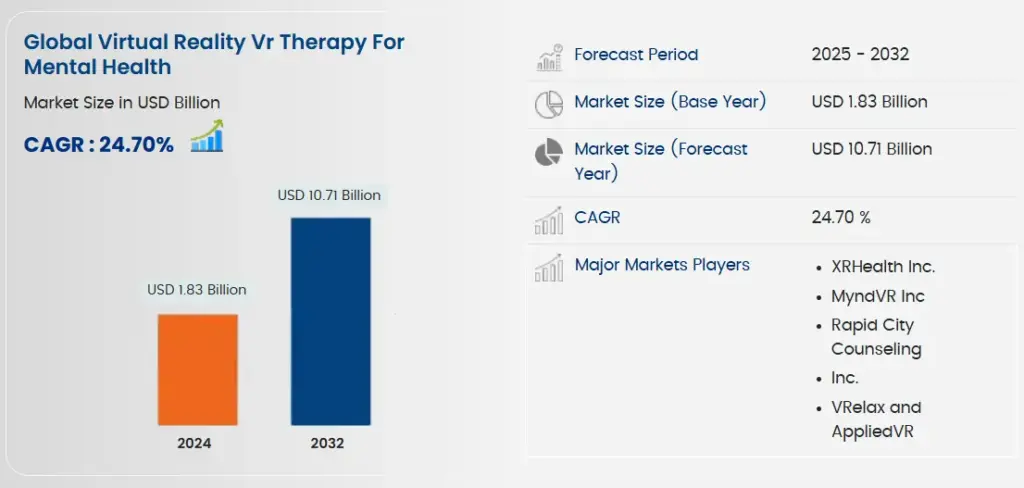
Source: Databridge Market Research
Virtual reality offers a direct structural response to this bottleneck. By shifting evidence-based therapeutic modules into immersive digital environments, VR applications scale care delivery without requiring proportional increases in clinical headcount. Patients can engage with structured protocols from home or local community hubs, bypassing traditional scheduling friction.
- Self-guided exposure modules: Users gradually process specific phobias or anxiety triggers in safe environments, reducing clinical supervision hours required per patient.
- Asynchronous monitoring: Telehealth clinicians track biometric markers and behavioral progression remotely, expanding their caseload capacity without lowering quality.
- Reduced logistical barriers: Virtual sessions eliminate transit time and transportation costs, directly improving session attendance and program retention rates.
From an investment standpoint, platforms operating in this market address a massive, underserved baseline demand. Enterprise platforms like XRHealth demonstrate this potential, scaling its spatial computing network to hit roughly $13 million in annual recurring revenue by blending VR therapeutics with licensed clinician networks. High patient volume combined with structural supply shortages creates a highly favorable landscape for scalable software solutions.
Personalized Digital Health
Personalization is becoming a major advantage for VR mental health platforms. Instead of giving every user the same experience, these apps can respond to changes in stress and emotional state during a session. Biometric data can help therapists understand patient responses and adjust therapy based on individual needs.
This also creates stronger opportunities for recurring revenue. Platforms like TRIPP generate over $8 million in annual revenue by offering personalized VR experiences through subscription models. For developers and healthcare businesses, this shows how adaptive experiences can improve engagement while supporting premium B2B and B2C offerings.
Immersive Therapy
VR makes evidence-based therapies easier to deliver in a controlled setting. Therapists can use immersive environments to support Exposure Therapy and CBT for conditions such as PTSD, anxiety, phobias, and fear of public speaking. Patients can gradually face challenging situations while the therapist adjusts the experience based on their response.
This approach is also gaining traction across clinical settings. Amelia Virtual Care raised over $17 million to expand its clinical VR platform and provide immersive therapy tools to therapists worldwide. Its growth highlights the increasing interest in VR as a practical addition to traditional mental healthcare.

How Does BehaVR Use VR for Mental Health?
BehaVR uses prescription-grade VR to help patients manage stress, chronic pain, and behavioral health challenges. Its immersive experiences turn therapeutic techniques into interactive sessions that feel more engaging than traditional approaches. The platform also supports biofeedback and clinician monitoring. This allows treatment experiences to become more personalized while giving providers better visibility into patient progress.
Immersive Environments for Stress and Anxiety
VR can help users stay focused during relaxation by creating an immersive environment that feels removed from everyday distractions. BehaVR uses calming virtual settings to help users shift their attention away from stressful thoughts and practice techniques designed to reduce physiological arousal. The business model also shows how VR therapy can move beyond consumer wellness. BehaVR has built its presence by working with healthcare systems and payer networks.
VR-Based Exposure for Managing Fear
Fear and phobia management relies heavily on exposure therapy. Traditional methods ask patients to picture terrifying scenarios in their head or face them directly in the real world, both of which bring significant practical limitations. Virtual reality solves this problem by creating hyper-realistic simulations under strict clinician control. Patients confront feared situations step by step while remaining physically safe inside a medical clinic.
| Exposure Stage | Traditional Approach | BehaVR Spatial Approach |
| Pacing | Hard to control real-world triggers | Dialed up or down in real time |
| Safety | High real-world risk or panic | Zero physical danger |
| Data Collection | Patient self-reporting after session | Continuous biometric tracking during session |
This controlled environment helps the brain form new emotional associations. Over multiple sessions, the fear response weakens without overwhelming the patient or placing them in actual harm.
Mindfulness and Behavioral Skills Through VR
Mindfulness training usually requires high mental discipline, which makes it tough for beginners dealing with severe anxiety. VR removes the steep learning curve by replacing abstract visualization with vivid visual feedback. When a patient practices deep breathing inside BehaVR, the virtual world responds directly to their body. A calm breath might make a surrounding forest glow or cause water to settle, giving immediate visual reinforcement for correct emotional regulation.
Other specialized platforms have proven the high market demand for biofeedback-driven relaxation. For instance, Healium built a consumer and enterprise mental wellness platform around brainwave and heart-rate tracking, scaling its bootstrapped operations to $5.1 million in annual revenue.
How Does BehaVR Personalize the Patient Experience?
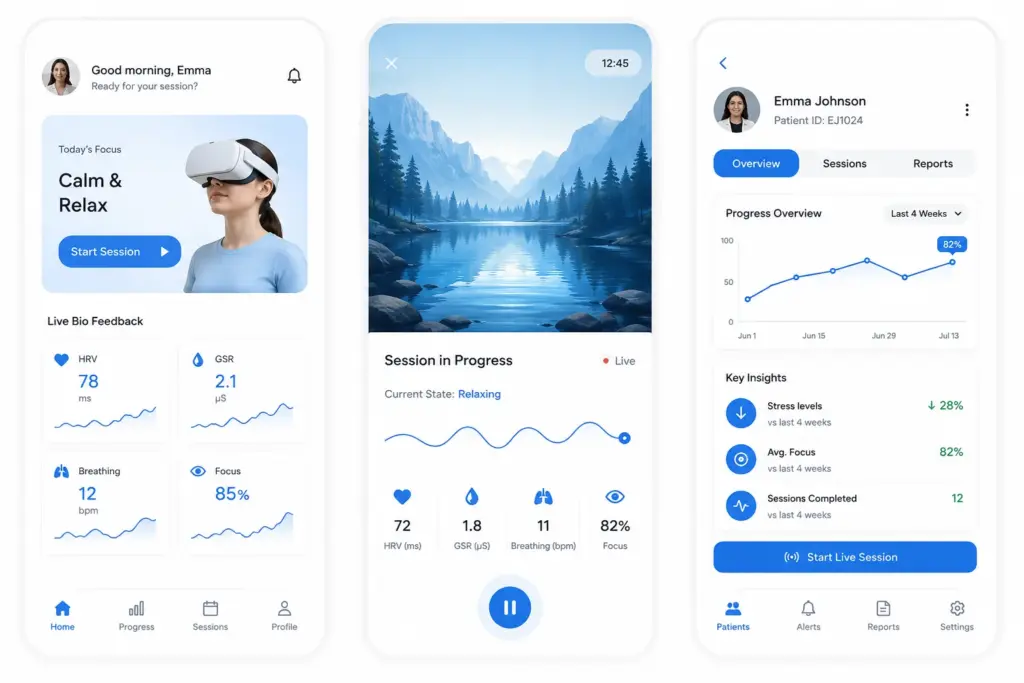
A digital therapeutics platform like BehaVR needs to do more than deliver VR content. It should respond to patient activity and physiological signals so the experience can adapt as the session progresses. This requires a strong connection between VR hardware and real-time analytics. The platform should also turn patient data into useful insights that clinicians can review and use to personalize therapy.
1. Real-Time Biometric Feedback
A core differentiator for this type of platform is how it consumes and acts on physiological data. When patients enter a virtual environment, their body signals provide immediate context about their emotional state. Key biological indicators tracked by the system include:
- Heart Rate Variability: Measures nervous system balance to detect stress spikes or deep relaxation states.
- Galvanic Skin Response: Captures subtle changes in sweat gland activity to gauge physical arousal.
- Eye Tracking: Monitors gaze direction and pupil motion to measure cognitive load.
2. Adaptive Protocols
Beyond immediate body shifts, the platform processes patient responses to shape long-term therapeutic paths. This requires a rules engine bridging clinical guidelines with adaptive logic. The dynamic adaptation loop operates across three stages:
- Baseline Assessment: Onboarding questions and initial body readings establish a patient profile.
- Path Selection: The system matches the patient profile against clinical protocols to deliver the right module.
- Session Learning: Models evaluate how quickly the patient calms down after a stressor, modifying difficulty levels for future sessions.
3. Clinician Control and Tracking
Automated adaptation is essential, but a commercially viable platform keeps healthcare providers in control. Clinicians need complete visibility into what happens inside the virtual environment and the power to adjust settings when needed. The platform relies on a secure provider dashboard that delivers three main tools:
- Live Oversight: Clinicians monitor patient bio-responses on a tablet or computer during active sessions.
- Manual Overrides: Providers can alter the environment or trigger specific exercises instantly.
- Progress Reports: Aggregated session data converts into clear charts showing patient progress over weeks or months.
Integrating these data streams into Electronic Health Record systems makes the tool indispensable to care teams. When providers can easily track patient progress, platform adoption speeds up and enterprise sales cycles shrink.
Key Features of a VR Mental Health App Like BehaVR
Building a VR mental health app like BehaVR means creating a full clinical toolkit. Users do not just passively watch content inside BehaVR. They interact with dynamic environments that respond to their mind and body. Here is how the core features work together to deliver real clinical results.
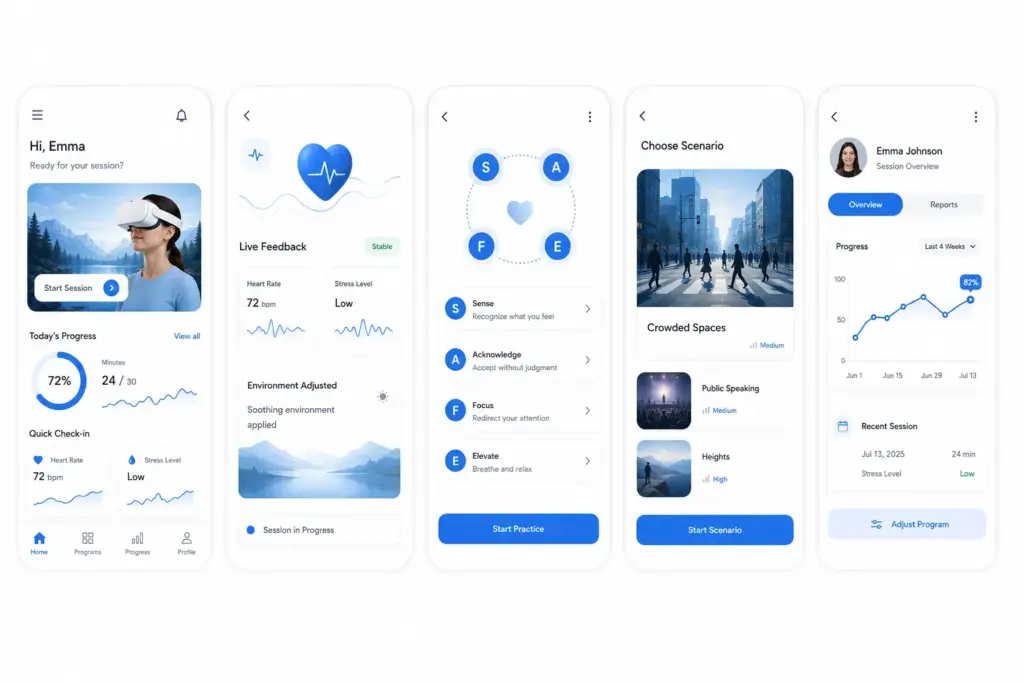
1. Personalized VR via Biometrics
Inside BehaVR, users put on a headset equipped with biosensors. The software reads heart rate variations and skin response continuously.
- Instant Reaction: If a user gets anxious, BehaVR spots it in seconds.
- Smart Adjustments: The app dims bright colors or changes background audio automatically to bring stress levels down.
Investors should note that this closed-loop feedback mechanism makes BehaVR far more effective than basic relaxation apps.
2. SAFE Protocol for Stress and Anxiety
BehaVR incorporates the SAFE protocol to give users a structured framework for managing stress, anxiety, and fear.
- Sense: Users learn to recognize physical signs of anxiety inside a calm virtual space.
- Acknowledge: The system guides users to accept these sensations without panic.
- Focus: Interactive visual cues redirect attention away from distress.
- Elevate: Guided breathing shifts the body back into a relaxed state.
This step-by-step approach gives users repeatable tools they can use in real life.
3. Immersive Exposure Therapy
Facing phobias or trauma in the real world can feel overwhelming. BehaVR solves this by offering controlled exposure therapy in safe virtual worlds. Users step into custom scenarios like crowded rooms, public speaking stages, or high places. Clinicians can dial the intensity up or down based on how the patient copes. This controlled exposure helps users build resilience without feeling unsafe.
4. Mindfulness and Emotional Regulation
BehaVR makes mindfulness more engaging by turning simple exercises into interactive VR experiences. Patients can use visual breathing exercises and focus-based activities to stay present and practice emotional regulation. This approach can make mindfulness easier to follow for people who find traditional meditation difficult.
5. Clinician-Guided VR Programs
BehaVR keeps clinicians involved throughout the treatment process. Doctors can monitor patient activity and make changes to a session when needed. This combination of VR automation and professional oversight makes the platform better suited for clinical and enterprise healthcare settings. It also gives providers greater visibility into treatment outcomes and helps them make informed decisions throughout the patient’s care journey.
6. Progress Tracking and Assessments
Every time a user finishes a session in BehaVR, the platform logs detailed performance data.
- Baseline Testing: In-app quizzes measure mood and anxiety levels before and after sessions.
- Biometric Trends: Graphs track heart rate stability over weeks of use.
This clear data gives patients tangible proof of their recovery and helps clinicians optimize treatment plans.
7. HIPAA-Compliant Cloud and EMR Integration
BehaVR is designed to fit into existing healthcare workflows with secure data handling and EMR connectivity. This allows clinicians to prescribe VR therapy and review patient activity without relying on separate systems. Strong privacy and HIPAA compliance are also essential for gaining the trust of healthcare providers and larger health networks.
How to Build a VR Mental Health App Like BehaVR?
Building a VR mental health platform app demands more than standard app engineering. You are creating a software as a medical device product. Succeeding in this space means combining immersive design with strict clinical compliance. Here is the strategic roadmap for bringing a BehaVR competitor to market.
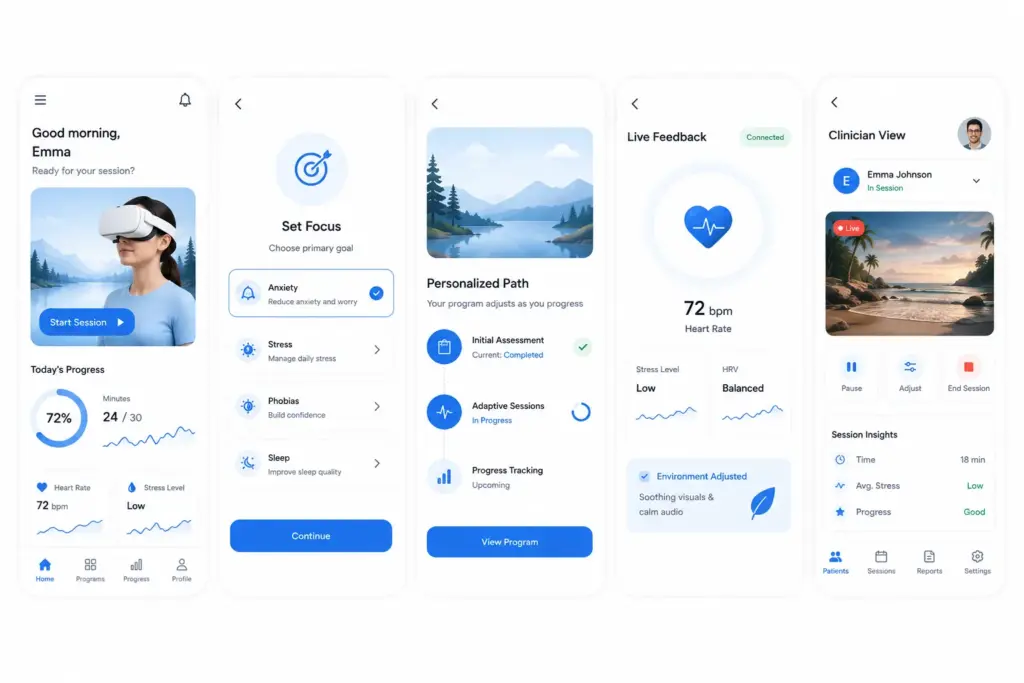
1. Define the Clinical Use Case
Start with one clear medical use case instead of trying to address every mental health concern at once. Choose a specific condition and define who the platform will serve. From there, map the patient journey from onboarding to regular therapy sessions. A focused scope makes development more manageable and helps prevent expensive changes later.
2. Design Immersive VR Experiences
Virtual environments in therapy must be carefully tuned. Bright colors, fast movement, or sudden sounds can easily trigger panic instead of healing. Keep visual scenes calm, simple, and predictable to keep patient stress low. Work with clinical psychologists from day one. Your design team needs to craft spatial environments that anchor the patient and encourage deep focus.
3. Add Personalized Treatment Paths
A static video playlist will not keep patients engaged or yield strong clinical results. Your system needs flexible logic that adjusts to user needs.
- Initial Survey: Collect baseline scores on anxiety and stress levels.
- Dynamic Scaling: Adjust scenario intensity based on past patient performance.
- Branching Scenarios: Let patients progress at their own comfortable pace.
Custom paths make the app far more effective and increase user retention over multi-week care programs.
4. Integrate Biometrics and Feedback
Biometric integration can make a VR therapy platform more responsive to the patient. The system can capture signals such as heart rate and use them to adjust the virtual experience during a session. This creates a feedback loop that helps patients recognize stress responses and practice regulating them in real time.
5. Build Clinician Dashboards
Doctors will not adopt your platform if it adds extra administrative friction. They need a simple web dashboard to manage patients efficiently.
- Live Session View: Let clinicians watch what the patient sees inside the headset during a appointment.
- Parameter Controls: Give providers simple toggles to pause, end, or soften the VR environment remotely.
A clean, web-based control panel makes adoption seamless for busy clinical teams.
6. Implement Secure Healthcare Integrations
Data security should be built into the platform from the start. Patient information needs strong protection while the system should also support healthcare standards such as HL7 FHIR for smoother EHR integration. Meeting HIPAA and other applicable privacy requirements can help your platform earn trust from hospitals and enterprise buyers.
7. Test for Safety and Clinical Validity
Before launching a VR healthcare platform, it is important to prove that the experience is safe and clinically useful. Early usability tests can uncover issues such as motion sickness while pilot studies can provide evidence of patient outcomes. Strong clinical data can also make it easier to build trust with hospitals and insurance providers.
Cost to Build a VR Mental Health App Like BehaVR
Start with one clear medical use case instead of trying to address every mental health concern at once. Choose a specific condition and define who the platform will serve. From there, map the patient journey from onboarding to regular therapy sessions. A focused scope makes development more manageable and helps prevent expensive changes later.
Detailed Cost Breakdown
The budget required for a BehaVR-style platform depends directly on your feature depth, visual fidelity, and clinical ambitions. A basic wellness app launches on a smaller budget, but a software as a medical device platform demands dedicated infrastructure across every layer.
| Development Component | Estimated Budget Range | Primary Cost Drivers |
| UI/UX Design | $10,000 to $25,000 | Spatial interfaces, accessibility standards, user testing |
| VR & 3D Environments | $40,000 to $120,000 | Custom 3D environments, particle effects, spatial audio |
| Backend & Cloud Infrastructure | $25,000 to $60,000 | Real-time pipelines, database scaling, API gateways |
| Biometric Integration | $15,000 to $40,000 | Hardware SDKs, real-time stress algorithms, sensor syncing |
| Clinician Dashboard | $15,000 to $35,000 | Live streaming bio-data, remote control features, web portal |
| AI & Personalization | $25,000 to $70,000 | Adaptive logic engines, session models, recommendation systems |
| Healthcare Integrations | $20,000 to $50,000 | EHR connectivity, HL7 FHIR standards, clinical workflows |
| Security & Compliance | $15,000 to $40,000 | HIPAA encryption, SOC 2 audits, end-to-end data safety |
| Testing & Clinical Validation | $20,000 to $60,000 | Motion sickness testing, pilot study support, QA automation |
| Estimated Total | $185,000 to $500,000+ | Full end-to-end product development |
Building a leaner MVP focuses on a single therapeutic module and basic clinician web tools. Scaling into a fully validated system with multiple dynamic worlds easily pushes total investments toward $1 million or more over time.
Post-Launch Expenses
Your initial capital expenditure covers getting to launch. Running a commercial platform requires sustained operational funding to maintain clinical reliability and hardware support. Main post-launch expense areas include:
- Cloud Infrastructure and Streaming: Real-time data streaming and secure cloud storage scale as active patient sessions increase.
- Content Updates: Adding fresh 3D environments and therapy modules keeps patients engaged over multi-month care plans.
- Device Management: MDM software licenses are needed to manage, update, and lock down physical VR headsets deployed across clinical sites.
- Compliance Maintenance: Annual HIPAA audits, penetration tests, and evolving cybersecurity certifications require ongoing budget.
- Clinical Support: Dedicated technical support teams must remain available to assist clinicians during active patient appointments.
Planning for an operational run-rate equal to 15% to 25% of your initial development budget ensures your platform stays compliant and reliable after launch.
Budget Factors
A few core technical choices will swing your total budget higher or lower:
- Number of Custom Environments: Simple geometric meditation spaces cost far less than complex, high-poly public spaces used for exposure therapy.
- Biometric Hardware Selection: Supporting consumer wearables via Bluetooth is relatively simple, while integrating multi-sensor VR headsets requires custom C++ or C# engine plugins.
- Regulatory Strategy: Seeking formal FDA clearance as a prescription digital therapeutic adds substantial clinical trial and regulatory consulting costs compared to launching a general wellness platform.
What Business Models Work for VR Mental Health Apps?
Monetizing a VR mental health platform requires choosing a strategy that fits your regulatory goals. Selling direct to consumers works very differently than pitching to hospital systems or securing insurance coverage. Selecting the right commercial model depends on whether your app provides general wellness or clinical therapy.
1. Consumer Subscriptions
A direct-to-consumer model sells guided mindfulness and stress management directly through public app stores like Meta Quest or Pico.
- Pricing Structure: Monthly subscriptions range from $10 to $30, while annual passes cost around $100.
- Key Advantages: Launches quickly without waiting for clinical trials or regulatory approvals.
- Main Drawbacks: High churn rates and rising ad costs on consumer channels.
Take TRIPP as a prime example of this model. By offering consumer VR wellness subscriptions, they built a massive user base and generated over $2 million in estimated annual recurring revenue while securing more than $25 million in total venture funding. This consumer path works well for general wellness apps, but platforms targeting severe clinical conditions often struggle to keep retail users engaged long term.
2. Provider Licensing
Enterprise B2B licensing targets health networks, outpatient clinics, and rehabilitation centers that purchase hardware and software bundles for their clinical staff. Key features of this enterprise structure include:
- SaaS Tiering: Clinics pay annual seat licenses per headset, typically $1,500 to $3,000 per active device.
- Turnkey Bundles: Platforms pre-install clinical software onto managed headsets and ship them to providers.
- Predictable Revenue: Multi-year enterprise contracts give your business reliable recurring cash flow.
A prominent example here is Amelia Virtual Care (formerly Psious), which sells its exposure therapy VR platform directly to mental health clinics. Before merging with XRHealth, Amelia built a network of over 2,000 clinicians and generated roughly $3 million to $5 million in annual revenue through provider licenses.
Hospitals favor this model because it fits directly into existing clinic budgets without requiring complex insurance billing setups.
3. Payer Reimbursement
A digital therapeutic can create a stronger business model when its software fits into existing healthcare reimbursement pathways. However, earning payer support usually requires clinical evidence and the right regulatory clearance first. Once those requirements are met, providers may have more opportunities to prescribe the solution and receive reimbursement for eligible care and monitoring.
AppliedVR demonstrates the power of this prescription model. After earning FDA de novo clearance for its chronic pain platform, AppliedVR raised over $71 million in capital and scaled across 240+ health systems, paving the way for multi-million-dollar reimbursement contracts with major insurers.
Build a VR Mental Health App with IdeaUsher
Creating an enterprise-grade VR mental health app requires more than immersive experiences. It also needs strong security and reliable clinical workflows. Working with an experienced technical team can help turn your VR wellness concept into a scalable platform that is ready for real-world use. A strong technical foundation also makes future growth easier.

From Concept to Immersive VR Product
IdeaUsher helps founders convert therapeutic ideas into rich virtual reality products. Building custom spatial environments allows clinicians to deliver guided exposure therapy, biofeedback training, and stress relief exercises effectively. Developing custom software gives you complete control over patient engagement, clinical workflows, and data security.
VR, AI, and Personalization
Static 360-degree videos fall short of modern clinical needs. Combining spatial computing with intelligent software engines opens up higher therapeutic efficacy. Key elements of a modern spatial mental health platform include:
- Adaptive Environments: VR scenes that change lighting, audio, and visual complexity based on real-time biometric stress signals.
- AI Guided Therapy: Interactive digital avatars that guide patients through cognitive behavioral therapy exercises.
- Interactive Regulation Tools: Hands-on virtual mechanics for deep breathing practice, mindfulness, and sensory grounding.
Interactive spatial experiences allow patients to safely practice emotional regulation techniques inside controlled digital environments.
Scalable and Secure VR Engineering
With over 500,000 hours of coding experience, IdeaUsher’s team of ex-MAANG/FAANG developers brings strong technical expertise to complex VR and cloud-based products. We focus on building immersive applications that feel responsive while keeping the underlying architecture reliable and scalable.
Our technical capabilities cover Unreal Engine and Unity for VR development along with Flutter and React Native for connected web and mobile experiences. For cloud infrastructure, we work with technologies such as AWS, GCP, and Kubernetes to support secure data handling and real-time application performance.
Conclusion
Building a VR mental health app like BehaVR requires more than creating immersive environments. The product needs a clear therapeutic purpose, evidence-based content, personalized experiences, and strong data security. BehaVR shows how VR can combine immersive therapy with biometrics, cloud technology, and clinician oversight to support more scalable mental healthcare.
The key is to start with a focused clinical use case and build the technology around it. With the right VR experiences and a well-designed care journey, businesses can create solutions that are engaging for users while still fitting into real healthcare workflows.
Things to Know About VR Mental Health Apps
A1: VR therapy has shown promising results for conditions such as anxiety, specific phobias, social anxiety, and PTSD. Recent reviews suggest that VR exposure therapy can reduce anxiety and phobia symptoms while providing a controlled environment for gradual exposure. However, effectiveness can vary by condition and the way the VR program is designed.
A2: VR mental health apps are being explored for anxiety, phobias, PTSD, stress, and other psychological conditions. Exposure-based applications have some of the strongest evidence because VR can recreate difficult situations in a controlled setting. Research into depression and substance use is also growing but remains less established.
A3: VR is generally better viewed as a tool that supports therapy rather than a complete replacement for a therapist. Many platforms allow clinicians to guide exposure sessions and monitor patient progress. Self-guided VR can also be useful for certain anxiety conditions, but more research is needed to understand its long-term effectiveness.
A4: A strong VR mental health platform should be built around its specific therapeutic goal. Useful features can include guided VR sessions, adjustable exposure levels, progress tracking, personalized treatment paths, clinician dashboards, and secure data management. For clinical products, evidence-based content and appropriate safety controls are just as important as the immersive experience.