


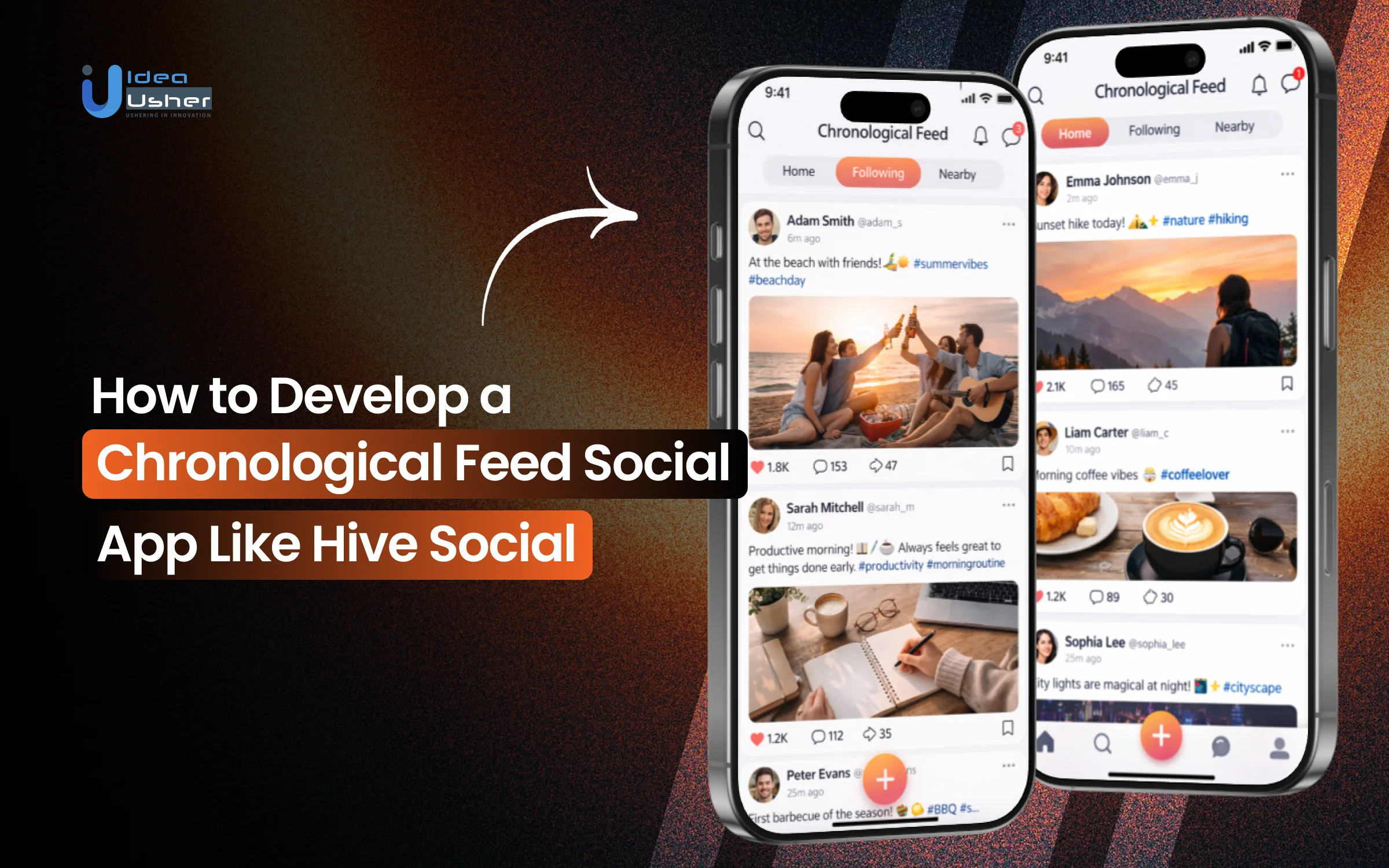
Scrolling through most social apps can feel like you are always catching up, and you may notice posts appear late or not at all. That uncertainty is slowly changing how people engage, and many users have begun moving toward chronological feeds because they feel more reliable. The timeline shows content as it happens, so nothing important quietly disappears while still supporting rich posts with text, images, short videos, and interactive elements like polls and questions.
Profiles can also feel more expressive with options to personalize identity and share small details that build connection. Platforms usually support this using timestamp-based ordering and efficient caching layers. This approach can consistently deliver fast updates while keeping the feed simple and predictable.
We’ve built numerous social networking solutions that use technologies such as distributed feed architecture and real-time event streaming systems. As IdeaUsher has years of expertise, we’re sharing this blog to discuss the steps to develop a chronological feed social app like Hive Social.
Market Demand for Chronological Feed Social Apps
According to Grand View Research, the global social networking app market size was estimated at USD 49.09 billion in 2022 and is anticipated to reach USD 310.37 billion by 2030, growing at a CAGR of 26.2% from 2023 to 2030. This surge reflects a pivot toward platforms offering structural predictability and user agency. As investors seek high-intent environments, the demand for chronological interfaces has emerged as a sophisticated market correction against algorithmic manipulation.

Source: Grand View Research
This shift marks a fundamental rejection of the “black-box” models used by legacy giants to curate content. By returning to a linear flow, new platforms reduce the technical overhead of complex recommendation engines while lowering the cognitive load for users. From a business perspective, these low-latency assets prioritize direct delivery and transparency, creating a more sustainable and trustworthy digital ecosystem.
Shift Away From Algorithm Fatigue
Algorithm fatigue has reached a critical mass. Users are disillusioned by feeds that prioritize viral content over posts from people they actually follow. This fatigue manifests as decreased engagement and a migration toward private channels.
- Predictability: In a chronological app, 100% of a following can see a post if they are active. Reach is not dictated by opaque updates.
- Real-World Proof: Platforms like Mastodon have gained traction by guaranteeing that users only see content from those they follow, in the exact order it was posted.
- The Clean Feed Premium: Users are more willing to pay for ad-free environments. They engage more with niche ads when they occur in a predictable feed.
Demand For Real-Time Content Control
Modern users and professionals view their feeds as curated information streams. The demand for control is a demand for productivity. When an app allows a user to toggle exactly what they see, it transforms from a distraction into a utility.
Founders who provide granular control are building products that respect the user’s time. Bluesky is a prime example of this trend; it allows users to choose from various custom feeds and strictly chronological views, putting the sorting power back in the hands of the community.
Niche Communities Driving Growth
The town square model is being replaced by the living room model. Large platforms are often too noisy for specific professional cohorts. We see a shift toward micro-communities where topical authority outweighs follower count.
The strategy here is verticalization. The opportunity lies in building specialized versions of Hive for specific sectors like FinTech or AI research. These platforms command higher average revenue per user because the audience is highly segmented for targeted commerce.

What Makes Apps Like Hive Social So Engaging?
Hive Social succeeds by prioritizing social utility over social engineering. By restoring user agency, the platform fosters organic engagement rather than forced interactions. For investors, this creates higher sentiment and lower churn, as the app becomes a self-curated digital home.
Strategic engagement is driven by high-visibility content and aesthetic ownership. This approach builds durable communities where users feel invested in their digital space. It fosters long-term loyalty that legacy platforms, bound to rigid structures, cannot easily disrupt.
1. Multi-Format Posting In One Unified Feed
Modern users demand versatility. A unified feed allows text, images, and video to coexist, catering to creators who balance professional updates with visual portfolios. Supporting diverse media formats captures broader user behaviors and reduces the need for app switching.
Features like Polls and GIF support keep the experience dynamic. This multi-format approach increases time on the app without relying on intrusive notifications. It ensures the feed remains a fresh, high-value stream of content tailored to varied audience preferences.
2. Profile Customization As A Retention Driver
Profile customization is a powerful psychological retention tool. Allowing users to personalize their space via Color Themes and Zodiac Signs reintroduces digital identity. When a user invests effort into their profile, the switching cost to a competitor increases.
Features like Profile Music create emotional investment by letting users curate their visitors’ experiences. In an era of sterile, identical layouts, these personal touches stand out. It transforms a standard account into a personal gallery, making the platform particularly “sticky” for creative cohorts.
3. Community First Discovery Vs Algorithm Push
Discovery here is a deliberate act of participation. Through interest-based Hives and the Asks feature, users find their own tribes rather than receive pushed content. This ensures relevance is defined by the user rather than a machine’s prediction.
Opt-in communities drive significantly higher engagement rates. This creates a high-trust environment where peer-to-peer recommendations outweigh sponsored noise. For founders, these organic networking loops provide a stable, self-sustaining growth model that bypasses expensive engagement hacks.
Lessons From Hive Social’s Rapid Growth
Hive Social’s rise provides a blueprint for capturing lightning in a bottle. The platform demonstrated that when a legacy giant falters, a well-positioned alternative can acquire millions of users overnight with zero ad spend. In late 2022, Hive Social reportedly crossed the 1.5 million-user mark just days after a major management shift at a leading competitor, underscoring how market share is highly fluid.
Success in this space requires a lean, “burst-ready” operational model. Hive’s growth was not fueled by a massive corporate machine, but by a “right place, right time” alignment of features. However, rapid scaling brings architectural pressures. For investors, the lesson is that 70% of startups fail primarily due to premature scaling or technical collapse during these critical windows of opportunity.
What Worked During User Influx Phases
When mainstream platforms undergo unpopular shifts, “refugee” users seek immediate alternatives. Hive Social successfully converted this traffic by offering a familiar yet refreshed UI.
- Zero-Friction Onboarding: By mirroring the aesthetic of popular apps, Hive reduced the learning curve to nearly zero.
- The Viral Loop: Organic word of mouth was driven by the novelty of Profile Music. At its peak, Hive reached the #1 spot on the iOS App Store in multiple regions entirely through organic social shares.
- Lean Feature Set: They launched with core essentials, allowing the community to dictate the roadmap through the Asks feature.
Where Most Similar Apps Fail Early
Most social startups collapse not due to a lack of ideas, but due to scale fragility. When a platform goes from 10k to 1M users in a week, the underlying database often chokes.
The Technical Debt Trap: Many founders build for today, not for the million users coming tomorrow. Industry data suggests that user retention drops by 20% for every second of additional load time, meaning lag during peak influx can kill viral momentum instantly.
Another common failure point is the content vacuum. If an app does not have enough “seed” content or discovery mechanisms like Hives, new users land on a blank page and churn within minutes.
Key Takeaways For New Founders
Building a social app is no longer just about code; it is about community management and infrastructure resilience. To attract serious capital, founders must demonstrate a plan for both.
| Strategic Focus | Priority Level | Rationale |
| Infrastructure Scalability | Critical | You cannot monetize a platform that is offline. Prioritize auto-scaling server environments. |
| Monetization Roadmap | High | Investors want to see beyond growth. Global ARPU for social apps averages around $25 to $35 in mature markets. |
| Moderation & Safety | Essential | Rapid growth attracts bad actors. Implementing robust moderation early is non-negotiable for brand safety. |
For a founder, the goal is to remain agile. Use the influx as a stress test to identify which features, like Zodiac Signs or Color Themes, actually drive retention. Double down on data-backed winners while ruthlessly cutting the fluff.
Core Features to Include in a Chronological Feed Social App
Building a social app that rivals giants requires more than just cloning features. It demands a technical architecture prioritizing transparency and user intent. For investors, the value lies in reducing friction and maximizing organic discovery through utility. A well-designed app ensures every interaction provides value without hidden scripts.

1. Chronological Feed
A strict time-linear feed is the cornerstone of this model. Unlike algorithmic feeds that bury content, a real-time stream ensures the most recent update is always first. Bluesky has leveraged this by championing user-controlled, linear discovery that legacy giants have largely abandoned.
Technically, this requires high-concurrency database management for sub-second latency. This feature is a commitment to data integrity, offering a predictable environment users find refreshing. It establishes a platform where visibility is earned through timing and relevance rather than an opaque ranking system.
2. Multimedia Posting
The app must support a content-agnostic unified feed to capture modern attention. Users should transition seamlessly between imagery, video, and text. Lemon8 demonstrates the power of this by blending lifestyle blogging with high-impact visuals, serving as a primary hub for varied digital expression.
Interactive tools like feedback loops and organized discourse are vital. Effective threading maintains clarity and enables deep-dive discussions within a single-post architecture. Supporting diverse media also increases the surface area for future monetization and specialized ad units tailored to content types.
3. Profile Personalization
Personalization is a primary retention engine. By letting users treat their profile as a digital home rather than a sterile database entry, you foster emotional ties. Noplace gained traction by reintroducing these customization elements, proving that when users tailor their space, switching costs increase.
This identity-first approach is a major differentiator. Personal touches create community and self-expression. For founders, these features provide non-intrusive data on user preferences, which can be leveraged for effective, privacy-conscious community segmentation without relying on aggressive tracking.
4. Zero Algorithm Follows
A pure follow system ensures feeds are populated exclusively by chosen accounts. No interruptions or forced content breaks the flow. Vero exemplifies this model, attracting users who seek an experience in which their social connections remain the sole priority, without algorithmic interference.
This system empowers the user as the curator. It shifts responsibility for content quality from the platform’s AI to the user’s social graph. For developers, this simplifies the backend, removing expensive recommendation engines and redirecting capital toward infrastructure stability and refined user experience.
5. Engagement Notifications
While the feed is chronological, the notification system must be surgical. Alerts should reward active participation rather than just nudging a user to open the app. Threads utilizes this by focusing on conversational triggers that pull users back into active discussions.
Users need granular control to silence specific alerts and prevent fatigue. Focus on triggers that drive meaningful interaction, as a direct reply is far more valuable for retention than a generic trend alert. A disciplined strategy ensures every ping is seen as a relevant and welcome update.
Advanced Features That Drive Daily Retention In a Social App
The most successful social apps evolve from simple utilities into indispensable daily ecosystems. While a chronological feed provides the initial draw of transparency, retention is driven by the depth of the social layers built on top of that foundation. For investors, the goal is to create a network effect where value increases as users engage with specialized sub-structures.
Strategic retention requires a balance between discovery and safety. By integrating tools that facilitate deeper connections, founders move beyond surface-level scrolling. These features transform passive observers into active participants, ensuring the platform remains a high-frequency destination for its user base.
1. Interest-Based Community Discovery
Discovery in a non-algorithmic environment must be intentional. Categorizing content into topical hubs allows users to navigate directly to communities that matter most. This creates a high-density experience in which every post is relevant, mirroring Reddit’s success in organizing the internet into accessible, high-intent silos.
For founders, these hubs serve as organic filters. Users discover new voices within their niche without a central machine deciding what goes viral. This model sustains interest by ensuring the platform infrastructure supports a user’s evolving passions over time.
2. In App Messaging And Interactions
Engagement is maximized when the barrier between public posting and private conversation is thin. Integrated messaging enables a seamless transition from public threads to private dialogue, much like how Discord bridges community servers and direct pings. These micro-interactions are the glue that holds a digital community together.
Low-latency messaging ensures conversations happen in the moment, increasing the frequency of app opens. Simple reactions, like custom emojis or quick replies, allow users to acknowledge content with minimal effort. This maintains a steady pulse of activity across the platform without requiring long-form input.
3. Creator Monetization Without Ads
The future of sustainability lies in direct-to-creator commerce. By moving away from intrusive ads, platforms can offer tipping, subscriptions, or digital goods. Patreon has proven users pay for value when they have a direct connection to creators; integrating these tools natively reduces churn.
This model aligns platform interests with its most valuable users. Instead of competing for ad impressions, the platform earns a percentage of the value it helps create. This results in a cleaner, premium experience that appeals to high-net-worth individuals who often abandon ad-heavy environments.
4. Moderation Tools For Safe Communities
Scalability is impossible without a robust safety framework. To build a premium brand, founders must provide community leads with tools to self-moderate. Mastodon utilizes a decentralized approach that allows owners to set specific rules, ensuring communities remain safe and aligned with their values.
AI-assisted tools can flag high-risk content for review before it reaches a wide audience. Giving users the power to block and report easily ensures they feel in control. Proactive moderation reduces legal liability and makes the platform more attractive to institutional investors who prioritize brand safety.
How to Develop a Chronological Feed Social App Like Hive Social?
To develop a chronological feed social app like Hive Social, a feed engine should strictly order posts by timestamp while maintaining low latency under scale. Real-time syncing, media pipelines, and distributed backend systems could then be implemented to keep updates fast and consistent.
We’ve delivered several real-time social feed platforms similar to Hive Social, and this is how the architecture comes together.

1. Vision and Persona
We start by crystallizing the specific problem your app solves. Our team identifies your ideal user persona, focusing on digital refugees seeking a home away from algorithmic noise. By establishing this vision early, we ensure every design choice aligns with user expectations, creating a foundation for immediate brand loyalty.
2. Feed Essentials
We focus on the essential utilities that define a transparent experience. This involves prioritizing a latest-first content delivery system and high-impact media support. By identifying these non-negotiable features, we build a lean, functional core that provides immediate value to users who demand a predictable and unfiltered social stream.
3. Profile Personalization
We build identity tools that let users treat their profiles as personal galleries. By integrating custom color themes and profile music, we enhance the emotional investment of your user base. Our design team ensures these personalization options are intuitive, which significantly increases long-term retention and platform switching costs.
4. Organic Communities
We develop interest-based hubs that allow users to find their tribes without algorithmic prompting. By structuring your app around topical discovery, we create an environment where engagement is voluntary and high-intent. This organic model mimics real-world social networking, fostering trust and deeper peer-to-peer connections within your ecosystem.
5. Interactive Balance
We maintain a clean, minimal UI while strategically placing interactive tools like polls and reactions. Our goal is to prevent feature bloat while ensuring users have the micro-interaction capabilities they crave. This balance keeps the app fast and easy to navigate, reducing cognitive load while providing enough hooks to keep the community active.
6. Scalable Updates
We engineer the backend to handle the massive concurrency typical of viral social apps. Using real-time data pipelines and auto-scaling cloud infrastructure, we guarantee that feeds update in milliseconds even during traffic spikes. This ensures your platform remains responsive and reliable, delivering a premium experience for millions of users.
Cost to Develop a Chronological Feed Social App Like Hive Social
Investing in social apps that prioritize chronological feeds requires a strategic allocation of capital toward high-performance infrastructure. Unlike traditional platforms that spend heavily on recommendation AI, your budget shifts toward sub-second data delivery and user-centric features.

We help you navigate these costs by focusing on architectural efficiency, ensuring every dollar spent increases the platform’s speed and reliability.
Cost Breakdown by Stage
Developing a premium social ecosystem involves several distinct financial phases. Each stage is critical for building a product that can withstand the pressures of rapid user migration.
| Phase | Estimated Investment | Key Deliverables |
| Discovery & Strategy | $5,000 – $15,000 | Market research, user persona mapping, and feature roadmap. |
| UI/UX Design | $10,000 – $30,000 | Custom profile themes, wireframes, and high-fidelity prototypes. |
| Backend Engineering | $40,000 – $90,000 | Real-time data pipelines, database architecture, and API security. |
| Frontend Development | $30,000 – $70,000 | iOS/Android interface, media players, and scroll optimization. |
| QA & Testing | $10,000 – $25,000 | Load testing for traffic spikes and cross-device functionality. |
MVP vs Full-Scale Platform
The choice between a lean entry and a robust platform depends on your speed-to-market goals and available capital.
The MVP Approach ($40,000 – $80,000): Focuses on the core chronological feed, basic profiles, and simple media sharing. It is designed to validate the concept with early adopters and secure initial user feedback with minimal financial risk.
Full-Scale Platform ($150,000 – $350,000+): Includes advanced personalization, integrated messaging, interest-based community hubs, and native creator monetization tools. This investment level is suited for founders ready to compete directly with established giants by offering a polished, feature-complete alternative.
Factors Increasing Cost
While a lean build is possible, certain high-value features and operational requirements can expand the budget. These are often the “sticky” elements that prevent user churn.
- Real-Time Data Sync: Powering a global feed that updates in milliseconds requires premium WebSocket integration and high-concurrency server clusters.
- Media Processing: Handling high-resolution video and image uploads necessitates robust CDN (Content Delivery Network) integration and automated compression logic.
- Security & Compliance: Implementing end-to-end encryption for messaging and ensuring data privacy alignment (such as GDPR or SOC 2) adds significant engineering hours.
- Moderation Tools: Custom-built admin panels with AI-assisted flagging for unsafe content are essential for maintaining brand safety as you scale.
UX Patterns That Make Chronological Feeds Work
Successful social apps using chronological feeds prioritize clarity to prevent user overwhelm. Without algorithms to curate content, the interface handles the organization. Design focus centers on ensuring transparency never compromises usability, keeping the latest content most accessible.

The goal is a lean-back experience that feels effortless. Specific patterns help users navigate high volumes of data without losing the conversation thread. This ensures the platform remains a high-value destination for those tired of hidden ranking systems.
1. Scroll Without Fatigue
A chronological feed can become a wall of content without proper visual rhythm. Variable card heights and white space break up the scroll, allowing the eye to rest between posts.
- Lazy Loading: Advanced caching makes media appear instantly, preventing the stutter that kills engagement.
- Contextual Anchors: Sticky date headers and New Post indicators help users track their place in time, signaling when they have caught up.
For example, BeReal minimizes fatigue by limiting users to one primary post per day. This creates a finite, endable feed that encourages a quick daily ritual rather than infinite, aimless scrolling.
2. Reducing Noise Manually
The challenge of a pure feed is noise from high-frequency posters. User-driven filtering solves this without relying on opaque machine learning.
- User-Led Curation: Robust mute keywords and quiet modes give users the power to silence specific topics. This ensures the feed stays relevant without the platform having to make those choices.
- Community Hubs: Users can toggle between a global feed and interest groups, effectively filtering out noise and isolating valuable signals.
Mastodon, for instance, offers a Slow Mode that replaces automatic updates with a simple button at the top. This lets users decide exactly when they are ready to process new noise, keeping the experience intentional.
3. Timestamp vs. Ranking Logic
While the feed is strictly chronological, optimized delivery logic keeps the experience fresh without manipulating the post order..
| Logic Type | User Impact | Business Benefit |
| Strict Timestamp | Total transparency; users see exactly when things happened. | Builds trust and eliminates accusations of platform bias. |
| Pinned Highlights | Critical community updates stay at the top temporarily. | Ensures vital info is not buried during high-activity periods. |
| Activity Grouping | Multiple replies on one thread are bundled to save space. | Prevents a single popular post from flooding the entire feed. |
Designing Profiles Users Actually Care About in Social Apps
In social apps like Hive Social, the profile is the digital front door to a user’s personality. When users can customize their space, they develop a sense of ownership that transforms a simple account into a home. This emotional investment is the strongest defense against platform churn, as it turns the user from a transient visitor into a permanent resident.
1. Psychology of Customization
Customization taps into the fundamental human need for self-expression. By providing tools to alter the digital environment, the platform empowers the user as a creator rather than a data point.
- Endowment Effect: Users value a profile more when they have actively built it themselves.
- Signaling: Colors, layouts, and content choices act as social signals to attract like-minded peers.
- Digital Comfort: A personalized space reduces the sterile feeling of a standard database, making the app a preferred destination for daily interaction.
2. Music, Themes, and Identity
Identity is multi-sensory. The integration of audio and visual themes allows for a richer representation of the self that mirrors early social internet successes.
Why Music Matters: Adding a profile song (as seen on Noplace) provides an immediate emotional snapshot of a user’s current mood. It creates an instant conversation starter that text alone cannot replicate.
| Feature Type | Customization Element | Impact on User |
| Visual | Custom Color Palettes | Increases visual recognition and personal branding. |
| Auditory | Profile Background Music | Enhances the “vibe” and atmosphere of the digital space. |
| Functional | Bespoke Layout Widgets | Allows users to highlight what matters most to them first. |
4. Profiles as Engagement Hubs
Profiles should be more than static resumes; they must function as active engines for community interaction. When a profile is dynamic, it encourages repeat visits from followers curious about the latest changes.
- Status Updates: Short, temporary notes that prompt immediate replies.
- Pinned Collections: Showcasing specific interests or community “hives” to drive discovery.
- Interaction Walls: Allowing friends to leave public notes, fostering a sense of a living, breathing community.
Example: Tumblr serves as a prime example where the profile is the product. Users spend hours fine-tuning themes, creating a unique aesthetic that makes the Following feed a diverse journey through individual styles rather than a uniform list.
Who Should Build a Chronological Feed Social App?
The shift toward transparent social apps provides a massive opportunity for those who value direct connection over algorithmic control. As legacy platforms prioritize ad revenue through engagement hacking, the demand for social utility increases. Building a platform that meets this need fosters deeper user trust and a clearer path to long-term sustainability.
Strategic platform ownership is about cutting out the middleman. By removing hidden scripts, the platform becomes a reliable bridge between people. This model is ideal for anyone looking to foster a high-integrity digital environment.
1. Founders Targeting Niche Communities
Visionaries looking to serve specific subcultures find the greatest success with chronological feeds. Unlike broad networks where niche content is buried, a time-based stream ensures every update reaches its intended audience.
- Discovery: These communities thrive when users can find exactly what they need without a machine deciding what is relevant.
- Retention: High-intent users stay longer when they have a direct, unfiltered connection to their peers.
Example: Discord succeeds by allowing niche communities to exist in their own chronological silos, ensuring members never miss a live update or announcement.
2. Brands Building Owned Social Ecosystems
Corporations are moving away from third-party platforms to build owned digital spaces. By controlling the feed, a brand ensures that its messaging is never throttled by a competitor’s algorithm.
Why Ownership Matters: Owning the ecosystem allows for a direct line to customers. It eliminates the pay-to-play model where brands must spend money just to reach their own followers.
Nike Training Club, for instance, functions as a specialized social ecosystem where the community feed is strictly focused on activity. This creates a high-value, distraction-free environment that builds intense brand loyalty through shared goals.
3. Creators Launching Independent Platforms
High-tier creators are increasingly seeking independence from platform volatility. Building a custom app with a chronological feed allows a creator to guarantee that 100% of their followers see their work.
- Visibility: No suppressed posts, resulting in guaranteed reach for every update.
- Engagement: Real-time discussions lead to faster feedback loops with fans.
- Monetization: Direct-to-fan tools provide higher conversion without ad interference.
Substack has demonstrated the power of the direct-to-inbox and note model. It allows writers to build a chronological relationship with their readers that is entirely independent of traditional social media trends.
Why Founders Choose IdeaUsher For Social App Development?
At IdeaUsher, we help you navigate the complexities of building high-performance social apps with a powerhouse of technical talent. With over 500,000 hours of coding experience, our team of ex-MAANG/FAANG developers brings the engineering excellence of the world’s largest platforms to your project. This expertise ensures your application handles massive concurrency while maintaining the responsive feel modern users demand.
End-To-End Product Support
We take your vision from raw concept to a fully realized digital ecosystem. Our support covers everything from infrastructure setup and security protocols to post-launch maintenance. By providing a complete developmental lifecycle, we allow founders to focus on business strategy while we ensure the technology remains cutting-edge and reliable.
Strategy, Design, and Development
We eliminate the friction of managing multiple agencies by housing strategy, UI/UX, and engineering under one roof. This integrated approach ensures the “why” behind your app is never lost in translation. Our unified workflow results in a cohesive product where the interface is perfectly optimized for the underlying real-time architecture.
Proven Delivery For Startup Founders
We specialize in high-stakes startup launches where speed and stability are equally critical. Our track record includes helping founders secure early adopters and investor interest through polished, market-ready platforms. By leveraging our vast experience, we help you avoid common pitfalls and ensure your app is ready to scale the moment it hits the store.
Conclusion
Developing a successful chronological app requires shifting from complex algorithms to high-performance simplicity. By prioritizing user agency and real-time data, founders can capture the growing demand for digital transparency. This approach transforms a platform into a vital social utility. Success depends on a technical partner who can balance intuitive social design with the robust infrastructure needed for global scale.
FAQs
A1: You should start by architecting a robust backend that can reliably manage concurrent data streams. Developers must integrate secure APIs for user authentication and real-time interactions. The team might build a scalable cloud infrastructure to host media assets efficiently. Your primary goal is to create a seamless interface that makes it easy for users to navigate various social features.
A2: Creating a feed requires designing an efficient data pipeline for content delivery. The system must query the database to fetch posts based on specific user relationships. You should implement pagination to ensure that the mobile client loads information quickly without draining resources. Every update must synchronize instantly across all devices to maintain a consistent experience for the community.
A3: A chronological feed strictly displays content in the order that users actually post it. This linear structure ensures that the newest updates automatically appear at the very top of the screen. You can essentially bypass complex sorting algorithms that typically manipulate what a person sees. It simply provides a transparent timeline where every message follows a predictable timestamp.
A4: The 3 Rs represent Reach, Resonance, and Relevance which fundamentally define how your platform performs. Reach must measure the total number of unique users who could potentially see a post. Resonance describes how effectively the audience might engage with the shared material. Relevance ensures that the content perfectly aligns with the specific interests of your target demographic.


