

Game studios never planned to operate fragile virtual economies long term, yet that responsibility slowly became unavoidable. Each update risked disrupting the game economy, while exploits steadily weakened player trust. On-chain assets address this by moving ownership and progression into verifiable smart contracts. Players can earn items that persist beyond a single season and support open trading and cross-game use.
Base further strengthens this model through gas-sponsored actions and smart wallets that reduce onboarding friction. Fast settlement and low fees keep gameplay responsive at scale, which is why many companies choose Base to run stable on-chain game economies.
We’ve developed several gaming solutions on the Base blockchain, powered by game-economy contracts and off-chain game-state anchoring systems. As we have this expertise, we’re sharing this blog to discuss the steps to develop a gaming platform on Base with on-chain assets.
Key Market Takeaways for Blockchain Gaming Platforms
According to FortuneBusinessInsights, the blockchain gaming market built around on chain assets is entering a rapid expansion phase. Valued at USD 13.97 billion in 2025, it is projected to reach USD 259.48 billion by 2032 at a CAGR of 51.8 percent. This growth is driven by demand for true digital ownership, where in-game items exist as NFTs and retain value beyond a single game ecosystem.
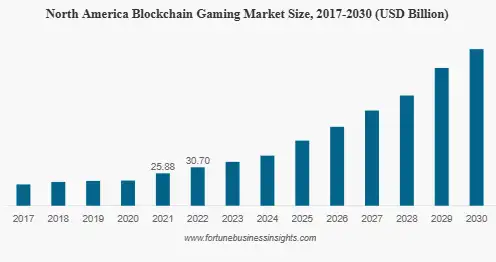
Source: FortuneBusinessInsights
Platforms with on-chain assets change how players engage with games. Instead of locked inventories, players own characters, land, and items that can be sold or reused, creating real economic incentives. Axie Infinity and The Sandbox demonstrate this shift through NFT-based assets and player-driven marketplaces.
Strategic partnerships are accelerating adoption at scale. Ubisoft’s collaboration with Immutable brings tradable blockchain items into established franchises, signaling serious interest from AAA publishers.
The Sandbox has also partnered with brands like Atari, Square Enix, and Snoop Dogg to merge recognizable IP with on-chain economies, showing how gaming platforms are using blockchain to unlock new revenue models and long term player engagement.
Understanding Gaming Platforms with On-Chain Assets
Gaming platforms with on-chain assets change how value and ownership work inside games by moving items onto the blockchain, where players hold direct control. Characters, weapons, skins, or currencies exist as verifiable digital property rather than temporary licenses managed by a publisher. This allows assets to be traded freely, tracked transparently, and in some cases reused across ecosystems.
What Are On-Chain Assets in Gaming?
On-chain assets are digital items, such as characters, skins, weapons, land, or currencies, represented as tokens on a blockchain. Unlike traditional in-game items that remain locked inside a company’s servers, these assets offer players a fundamentally different relationship with what they earn.
- Provably Owned by User: Ownership is recorded on a decentralized ledger and tied directly to the player rather than the game publisher.
- Truly Tradable: Assets can be sold or exchanged peer to peer, often without platform-level restrictions.
- Interoperable in Theory: Assets are designed to potentially work across multiple games or platforms if developers choose to support it.
- Transparent in History: Every transfer, upgrade, or transaction is permanently recorded and verifiable on the chain.
The Shift from “Licensed Content” to “Digital Property”
For decades, games operated on a licensing model in which players paid to use items while publishers retained full control. On-chain assets change this relationship by introducing real digital property rights.
Players are no longer just participants inside a closed ecosystem. They become true owners of in-game value, with the freedom to trade, hold, or transfer assets beyond a single game’s lifespan.
Why Choose Base Blockchain for Developing a Gaming Platform?
Base makes on-chain gaming feel practical rather than experimental. Players can sign in easily and interact with assets without thinking about gas, while studios can run high-frequency economies at predictable cost. It can reliably support real ownership and scale while still delivering a smooth game-like experience.
1. Built for Mass Adoption
Traditional blockchain gaming loses 70-80% of potential players at the connected wallet screen. Base removes this friction through native account abstraction and gas sponsorship.
- Smart Wallets and Passkeys: Players sign in with FaceID, Google, or Apple. There are no seed phrases, no browser extensions, and no learning curve.
- Gasless Onboarding: First-time user acquisition costs drop sharply when wallet setup complexity disappears from the flow.
- Mainstream UX: The experience feels like downloading a mobile game from the App Store rather than configuring a crypto wallet.
For example, FrenPet, a virtual pet game built on Base, demonstrates this clearly. The team uses Paymasters to sponsor all in-game transactions. When players feed pets, breed them, or trade items, there are no gas prompts.
The studio pays roughly 0.0002 dollars per action. This is negligible compared to the forty percent increase in daily active users achieved by removing fee friction entirely.
2. Economic Viability
| Action | Ethereum Cost | Base Cost | Viable for Gaming |
| Mint NFT character | 15 to 50 dollars | 0.05 to 0.15 dollars | Yes |
| Level up asset | 8 to 20 dollars | 0.02 to 0.08 dollars | Yes |
| Trade item | 10 to 30 dollars | 0.03 to 0.10 dollars | Yes |
| Daily login reward | Impossible | 0.0005 dollars | Yes |
Studio Friendly Economics
- Sponsor transactions through Paymasters for a seamless player experience
- Batch thousands of actions into a single transaction
- Maintain predictable scaling costs as the player base grows
Parallel TCG illustrates this shift well. Before Base, trading a rare card cost players between $ 12 and $ 18 in gas alone. After migrating, the same trade costs 0.08 dollars, with the studio optionally covering the fee. Marketplace volume increased eight times in the first month because micro trades finally made economic sense.
3. The Coinbase Ecosystem
Base is tightly integrated with the largest regulated crypto ecosystem rather than operating in isolation.
Instant Liquidity for Players
Earn a rare sword in-game. List it on OpenSea, which runs on Base. Sell for ETH. Cash out through Coinbase. Receive funds via bank transfer within twenty-four hours.
Built-In Audience Reach
- Over 110 million verified Coinbase users
- Direct fiat rails for non-crypto players
- One-click NFT purchases using credit cards
Regulatory Clarity
- Built by a publicly listed and compliant United States company
- Designed to adapt to evolving digital asset regulations
- Trusted by institutions and global brands
Parallel leveraged this distribution by appearing in the Base Ecosystem section of the Coinbase app. This placement drove 15,000 organic installs in the first week from users who had never used a decentralized application but already held Coinbase accounts.
4. Technical Superiority
A. Hybrid Architecture Support
Base supports a clean separation of concerns that fits how modern games are actually built. On-chain components manage asset ownership, marketplaces, and achievements where transparency and permanence matter.
Off-chain systems handle real-time gameplay, physics, and state management, while critical outcomes such as match results, loot distribution, and tournament results are settled on-chain for verifiability and trust.
B. Advanced Asset Standards
- ERC 6551 enables characters to own inventories directly
- ERC 4337 allows session-based gameplay without transaction pop-ups
- ERC 1155 supports efficient batch minting of in-game assets
C. Seamless Oracle Integration
Games built on Base can react to real-world inputs in ways that feel natural and meaningful. External data feeds can influence game logic without breaking balance or performance.
Sports results can alter NFT attributes, market prices can rebalance in-game economies, and weather APIs can dynamically change environments to keep gameplay fresh and responsive.
How Do Gaming Platforms Built on Base Work?
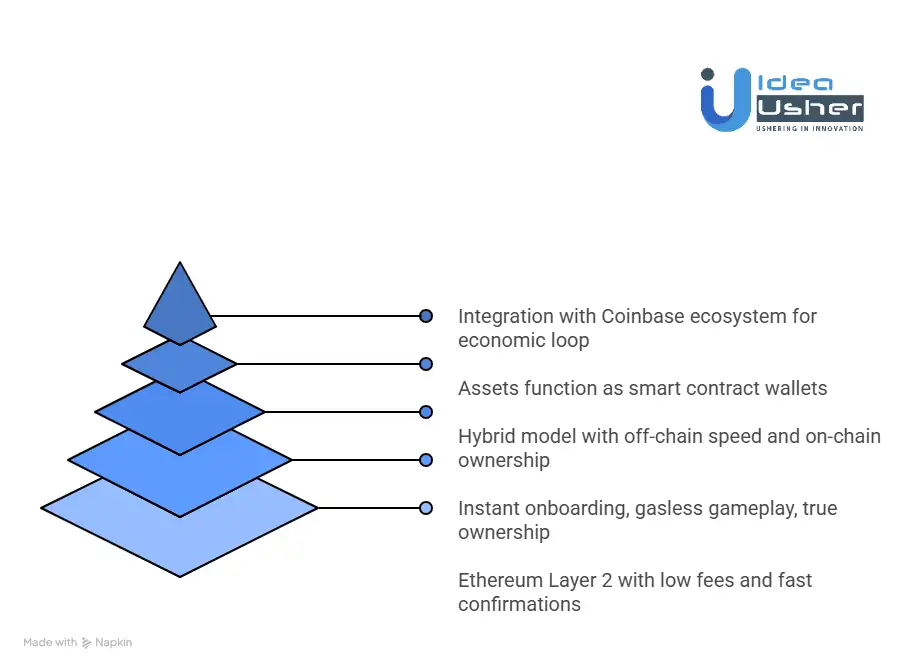
Gaming platforms built on Base work by running gameplay off-chain for speed while anchoring assets and outcomes on-chain for ownership. Players can sign in with familiar accounts and play smoothly while smart wallets quietly handle assets in the background.
Studios should use Base to keep fees low and settlement fast so games feel normal yet ownership stays real.
1. The Foundation
Base is an Ethereum Layer 2 scaling solution built by Coinbase. It can be thought of as a high-speed, low-cost express lane running alongside the main Ethereum network. For gaming platforms, this delivers clear advantages.
- Near-zero transaction fees that are often less than 0.001 dollars
- Lightning-fast confirmations that usually complete in under 2 seconds
- Full Ethereum security operating in the background
The real breakthrough is not just speed. It is an abstraction. Base is designed to remove blockchain friction from the player experience while preserving true asset ownership.
2. The Player Journey
Here is what the experience looks like from a player’s perspective.
Step 1: Instant Onboarding
Instead of asking players to download wallets or save seed phrases, the flow is simplified.
- Click Sign Up with Google or Apple
- Authenticate using FaceID or TouchID
- A smart wallet is created automatically in the background using passkey technology
Result. Conversion rates improve by nearly 70 percent compared to traditional Web3 onboarding flows.
Step 2: Gasless Gameplay
During gameplay, when a player earns a rare item, levels up a character, or completes a quest, the transaction happens silently. There are no payment prompts or wallet confirmations. The game studio sponsors these microtransactions using Paymasters under ERC-4337. Blockchain actions feel similar to standard cloud save mechanics.
Step 3: True Ownership
Every meaningful in-game asset is minted as an on-chain token.
- Characters are issued as ERC 721 NFTs
- Consumables are represented as ERC 1155 tokens
- Game currency is handled using ERC 20 tokens
These assets live inside the player’s smart wallet. They remain visible on public marketplaces such as OpenSea even while in use within the game.
3. The Technical Architecture
Not every action needs to be written on a chain. Production-grade gaming platforms rely on a hybrid model.
Off Chain for Speed
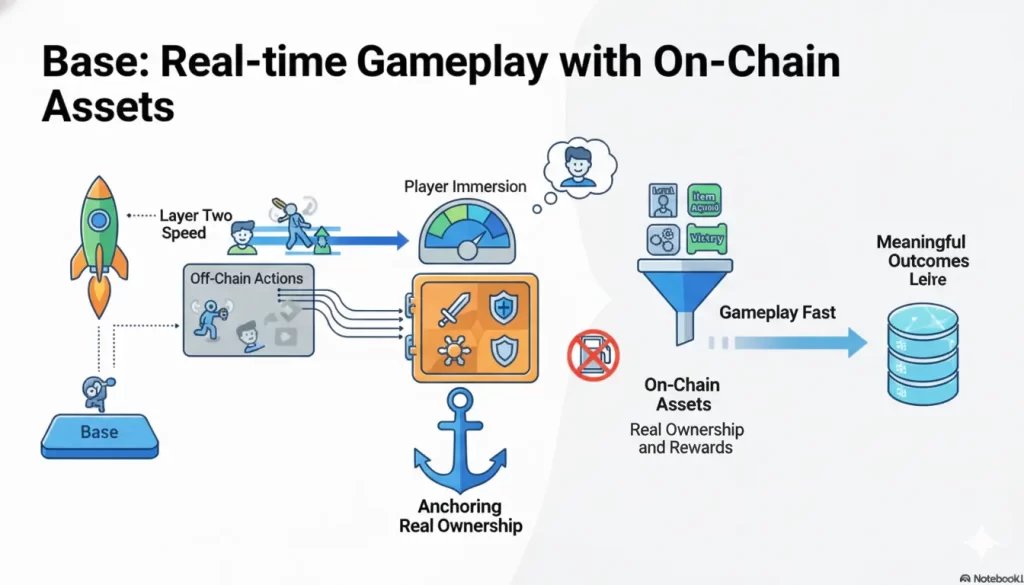
Off-chain systems handle real-time player movement, physics calculations, voice chat, and temporary match states so gameplay stays fast and responsive. This layer can process thousands of actions per second and update instantly without blockchain latency. It keeps the experience smooth while reserving chain logic for actions that truly require ownership and permanence.
On Chain for Ownership
On-chain systems handle asset minting, transfers, final match results, marketplace transactions, and achievement verification to ensure ownership is permanent and verifiable. This layer records outcomes that matter long-term and protects them with blockchain security. It allows players to truly own progress and assets beyond a single game session.
The bridge between the two layers works through periodic state snapshots. These snapshots are committed to Base as cryptographic proofs, ensuring integrity and auditability without reducing gameplay performance.
4. Smart Assets
This is where Base-powered gaming platforms unlock deeper value. By using ERC 6551 Token Bound Accounts, assets become functional entities rather than static collectibles.
Example: A Warrior NFT
The warrior is not just an image. It functions as a smart contract wallet.
Inside, it can hold
- A sword represented by another NFT
- Armor issued as ERC 1155 tokens
- Achievement badges implemented as soulbound tokens
- Experience points tracked using ERC 20 tokens
When the warrior is sold, all associated assets transfer as a single unit. This enables portable player identities, complex economies, and nested asset ownership across games.
5. The Economic Flywheel
Base benefits from deep integration with the Coinbase ecosystem, creating a smooth economic loop.
- Earn → Player wins a rare item in-game
- Trade → Instantly list on built-in marketplace or OpenSea
- Convert → Sell for ETH or USDC
- Cash Out → Withdraw to the Coinbase app in 2 clicks
- Reinvest → Buy better items or enter tournaments
USDC Integration Bonus: In-game currencies can earn approximately 4 percent APY through Base native yield mechanisms. Idle assets remain productive even when players are not actively gaming.
Types of Gaming Platforms You Can Build on Base
Gaming platforms on Base can range from asset-driven games to competitive and skill-based experiences that settle outcomes on the chain. Companies can quietly combine off-chain gameplay with on-chain economies to keep systems fast and verifiable.
1. On-chain Asset Games
These platforms store game items, characters, and progression directly on Base smart contracts. Ownership is verifiable and assets can persist across seasons with open trading.
This model reduces asset duplication risk and supports long-term player economies.
On-chain assets: Character NFTs, upgradeable weapons, skill trees, season badges.
Example: Parallel uses Base to manage high-value game NFTs and economy logic while keeping gameplay performant.
2. Play-and-Earn Gaming Platforms
These games reward players with tokens or tradable assets tied to skill and participation. Base enables low-cost reward settlement and controlled emission mechanics. Reward logic can be tuned to balance inflation and player retention over time.
On-chain assets: Reward tokens, achievement NFTs, staking passes, loot drops.
Example: Onchain Heroes is a Base-native game where characters and progression live fully on-chain.
3. Competitive Multiplayer Games
Multiplayer platforms anchor match outcomes and rewards on Base while gameplay runs off-chain. This ensures fair competition and transparent payouts. On-chain verification reduces disputes and strengthens competitive integrity.
On-chain assets: Ranked badges, match result proofs, prize pools, seasonal trophies.
Example: Degen Arena records wins and rewards on Base to keep competitive results verifiable.
4. Casual and Mobile-First Web3 Games
These games focus on quick sessions and simple onboarding using gas sponsorship and smart wallets. Base keeps interactions fast and inexpensive. This approach lowers drop-off during first-time user experiences.
On-chain assets: Companion NFTs, cosmetic skins, daily reward stamps, boost items.
Example: FrenPet is a casual Base game designed for frequent interactions without wallet friction.
5. User-Generated Content & Creator Games
Players can mint levels, mechanics, or visual assets as on-chain components. Creators earn directly through usage and resale. Smart contracts automate royalties and creator attribution.
On-chain assets: User-created levels, map NFTs, logic modules, creator licenses.
Example: BasePaint lets users collectively create and own on-chain game art using Base transactions.
6. Metaverse and Virtual World Games
These platforms manage land, avatars, and virtual assets on Base while supporting open economies and persistent ownership. Assets remain interoperable across experiences built on the same chain.
On-chain assets: Virtual land plots, avatar identities, wearables, in-world resources.
Example: Parallel’s Colony layer extends toward a virtual world model using Base-managed assets.
7. Skill-Based & Tournament Gaming Platforms
These platforms use smart contracts for entry fees, escrow, and automated payouts. Rules are enforced transparently on-chain. Prize settlement becomes instant and auditable for all participants.
On-chain assets: Entry tickets, escrow contracts, prize NFTs, payout tokens.
Example: Degen Arena tournaments use Base for trustless prize distribution.
How to Build a Gaming Platform on Base with On-chain Assets?
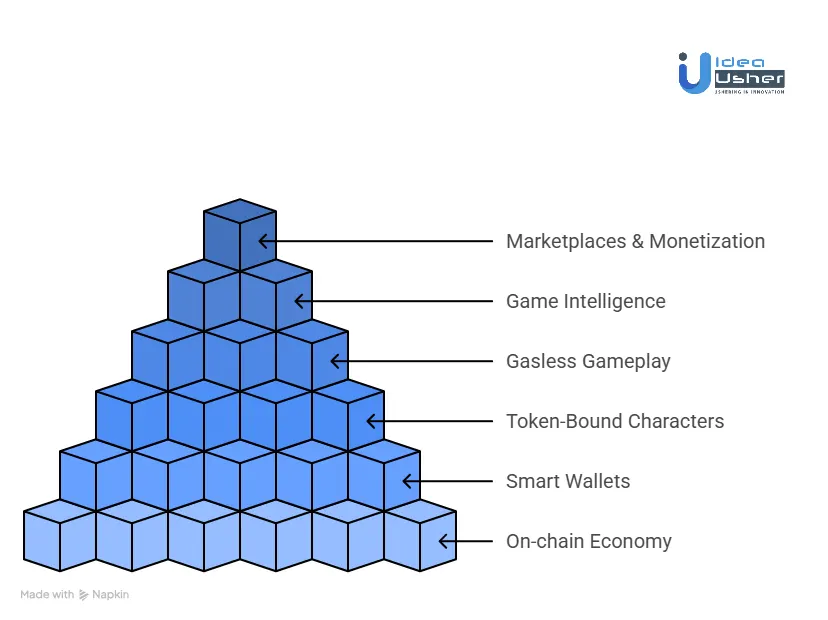
To build a gaming platform on Base with on-chain assets, the process should start by designing a game economy that supports gameplay through ownership. Smart wallets and gasless transactions can then be used so players can onboard smoothly and interact frequently.
We have helped clients build gaming platforms on Base with on-chain assets, and this is how we execute them.
1. On-chain Game Economy
We start by deciding which game assets truly belong on Base, such as characters, progression items, or scarce collectibles. Scarcity rules, progression paths, and liquidity mechanics are designed together to keep the economy balanced. The result is an asset system that rewards play without destabilizing gameplay.
2. Smart Wallet Onboarding
Player entry is designed to be instant and familiar. We integrate passkey-based authentication with smart wallets and abstract all wallet logic from the interface. Players gain real ownership without needing to understand blockchain mechanics.
3. Token-Bound Characters
We implement ERC-6551 token-bound accounts to make characters persistent and composable. Each character can hold inventories, achievements, and progression data directly. This structure allows assets to evolve with the player while remaining fully owned.
4. Gasless Gameplay
To support high-frequency actions, we enable gasless execution using ERC-4337 and Paymasters. Core gameplay transactions are sponsored under defined rules. This keeps interactions smooth while maintaining cost control at scale.
5. Game Intelligence Layer
Dynamic gameplay requires adaptive systems. We integrate Zcode and Oracle-based data feeds to update asset states based on in-game or external outcomes. This adds depth and responsiveness to progression and reward mechanics.
6. Marketplaces and Monetization
Finally, we launch asset marketplaces and monetization layers. Players can trade, rent, or earn royalties from in-game assets, while the platform captures revenue through structured fees. This aligns player incentives with sustainable platform growth.
How does Base Enable Real-time Gameplay with On-Chain Assets?
For years, blockchain gaming faced a fundamental tension between real-time interaction and provable ownership. Games could support fast gameplay off-chain or enforce true asset ownership on-chain, but rarely both at the same time. Base changes this balance by enabling real-time experiences while preserving meaningful assets as verifiable on-chain.
The Core Challenge
Traditional blockchain interactions introduce friction because they require
- Network consensus, which is slow
- Transaction fees, which feel disruptive
- User signatures that interrupt gameplay
In a fast-paced game, waiting several seconds for confirmation just to pick up an item breaks immersion. Base addresses this with a layered technical approach in which the blockchain remains invisible to the player while remaining fully active in the background.
1. Layer-2 Speed
Base operates as an Optimistic Rollup on Ethereum, which means
- Transactions execute instantly on Base
- Final settlement occurs later on the Ethereum mainnet
- Costs remain dramatically lower than mainnet
Real-world impact: A sword transfer that might cost five dollars and take forty-five seconds on Ethereum mainnet can cost a fraction of a cent and complete in seconds on Base. This makes frequent in-game asset actions economically viable.
2. Account Abstraction (ERC-4337)
Account abstraction is what unlocks real-time gameplay. It removes constant wallet prompts and gas management from the player experience.
Session keys for uninterrupted play
| Player action | Traditional Web3 | Base with account abstraction |
| Pick up the item | Sign the transaction and pay the gas | Silent execution |
| Kill enemy | Sign the transaction and pay the gas | Silent execution |
| Complete quest | Sign the transaction and pay the gas | Silent execution |
| Sell a legendary item | Sign the transaction and pay the gas | One click confirms |
When a player starts a session, they sign a single message that creates a temporary session key, defines clear spending limits for in-game actions, sets a fixed time window, such as eight hours, and pre-approves specific action types like minting common items so gameplay can continue smoothly without repeated confirmations.
During gameplay, this session key signs transactions in the background without interrupting the player.
3. State Channels for Micro-Actions
For extremely high-frequency actions such as rapid-fire combat or physics-heavy games, Base platforms rely on state channels.
Game state flow
- The match starts, and a state channel opens on Base
- Thousands of actions occur off-chain
- Players co-sign state updates peer to peer
- Match ends, and the final state settles on Base in one transaction
- Assets are distributed based on the final state
This approach supports real-time twitch gameplay while still producing a verifiable on-chain outcome.
4. Hybrid Architecture in Action
Most successful Base games combine off-chain speed with on-chain trust.
| Time | Player action | Where it processes | Why |
| 0:00–24:59 | Moving shooting looting | Off-chain server | Requires sub 50ms latency |
| 25:00 | Finds legendary weapon | Base L2 | High-value asset creation |
| 25:01–29:59 | Using weapon in combat | Off-chain | Real-time responsiveness |
| 30:00 | Eliminates opponent | Base L2 | Verifiable reward event |
| Post-match | Reward distribution | Base L2 batch | Efficient settlement |
Key insight: Not every action needs immediate on-chain confirmation. Only value transfers and verifiable outcomes do.
5. Real-Time Data with Oracles
Many games depend on live external data. Base’s low latency allows oracle updates to feel instant.
Fantasy sports example
| Time | What happens |
| 13:25 EST | A real quarterback scores in the live game |
| 13:25:02 | The oracle detects and verifies the scoring event |
| 13:25:03 | The Base smart contract updates the NFT player stats |
| 13:25:04 | The player’s fantasy score updates in real time |
This creates living on-chain assets that react to real-world events during active gameplay.
Can Assets Built on Base Be Reused Across Multiple Games?
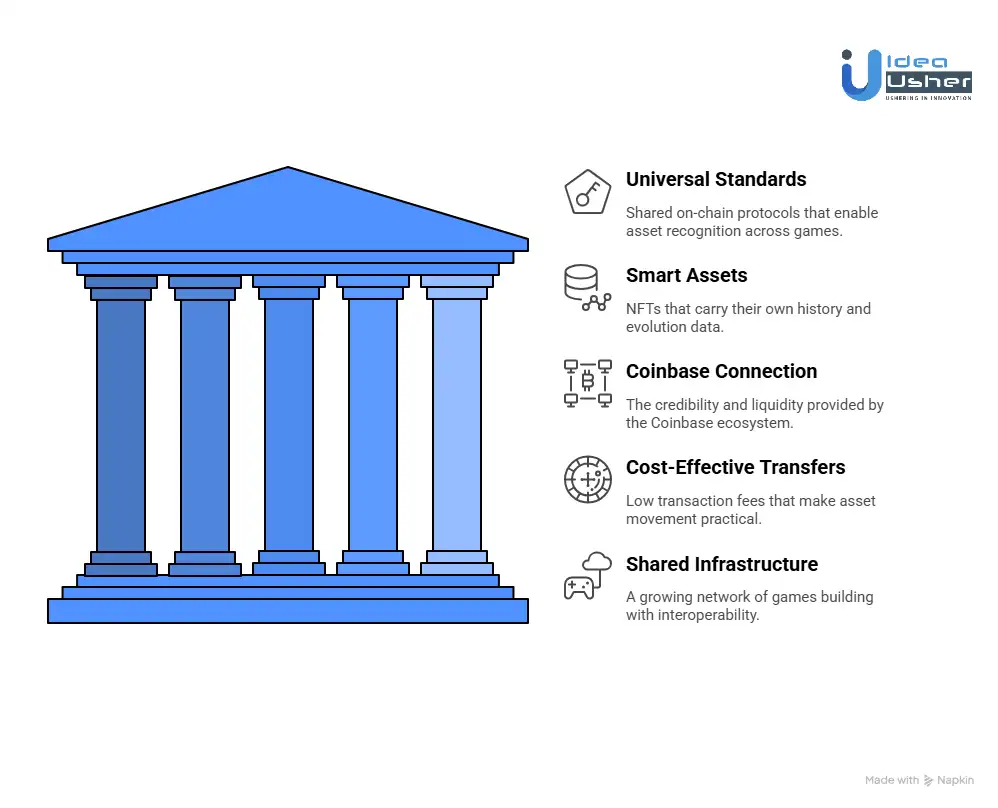
Yes, assets built on Base can be reused across multiple games because they follow shared on-chain standards that different game engines can read and trust. A sword or character earned in one game could technically unlock abilities or identity perks in another game while keeping its history intact.
This usually works smoothly on Base because low fees and fast settlement make cross-game asset movement practical at scale.
The Vision
Let’s take, for example, a player who spends months building a powerful mage in a strategy game. When that game fades or a new title takes over, that progress would normally disappear.
On Base, the same mage can continue as a persistent digital entity that appears in other games as a wise advisor, a spell for hire, or even a trophy in a personal metaverse space.
This creates something unprecedented. True digital ownership that transcends individual game boundaries.
How Cross-Game Asset Portability Works?
1. Universal Standards Speak the Same Language
All games on Base and Ethereum can recognize the same fundamental building blocks.
- Characters as unique digital identities
- Items are transferable objects with properties
- Currency as a measurable value
- Achievements as verifiable credentials
Think of it like a shared technical language rather than a cable. When assets follow common on-chain standards, each game can read the same ownership data rules and attributes without custom work.
This allows different games to interpret the same asset in their own way while still trusting its identity and history on Base.
2. Smart Assets That Carry Their Own History
Thanks to advanced token standards, assets on Base are not just static images. They are containers that hold information about:
- Where they have been, including previous games and achievements
- What they have done, such as battles won or races completed
- Who owned them, enabling clear provenance and prestige
- How they can evolve, including upgrade paths and compatibility
This means a racing helmet NFT is more than a visual collectible because it carries verifiable on-chain data about how it was earned. The asset can reference achievements, such as winning the Solar Cup in Galaxy Racers, and expose those signals to other games.
A different game, such as Arena Champions, can then interpret that history to unlock abilities or status without relying on off-chain databases.
Why Base Makes This Especially Powerful
1. The Coinbase Connection
Assets on Base have immediate credibility and liquidity because they are part of the larger Coinbase ecosystem. A rare item is not only valuable inside one game. It is recognized as valuable by millions of potential traders and collectors across the network.
2. Cost-Effective Transfers
Moving assets between games costs pennies rather than dollars. This makes cross-game experimentation and transfer frictionless. The low cost allows developers to create interconnected experiences without exposing players to high transaction overhead.
3. Shared Infrastructure
Base’s growing gaming ecosystem means more developers are building with interoperability in mind from day one. This creates strong network effects. As more games support cross-asset functionality, it becomes more valuable to players, developers, and entire ecosystems alike.
Top 5 Gaming Platforms Built on Base
We have done some digging and found some solid gaming platforms built on Base that quietly stand out for how they handle speed ownership and player flow. These games may look simple at first, but they can reliably support on-chain assets and frequent interactions.
1. Heroes of Mavia
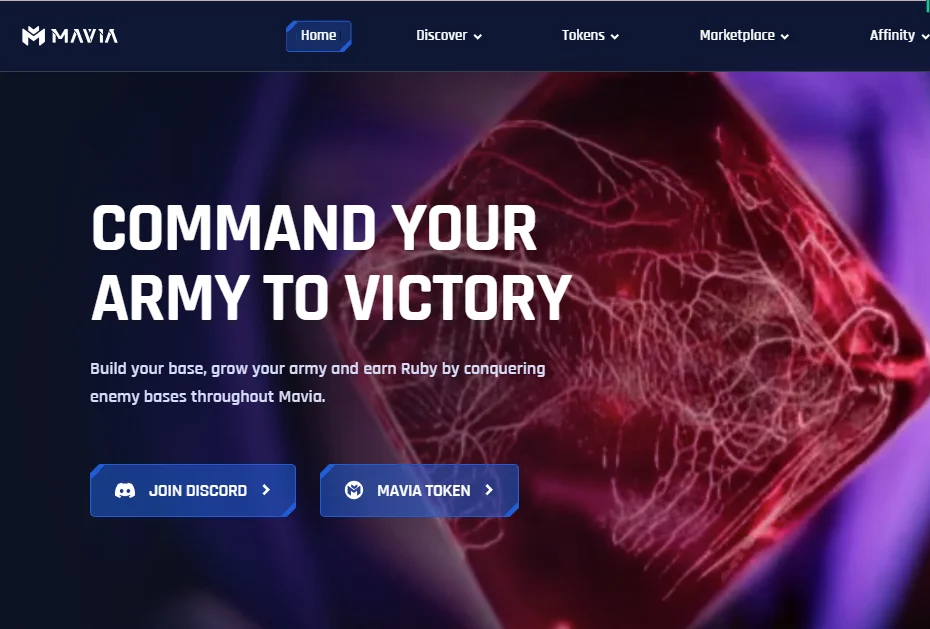
On-chain assets: Land NFTs, hero NFTs, equipment NFTs, resource tokens.
Heroes of Mavia is a strategy MMO on Base where players build fortified bases, train armies, and battle others on a shared island. NFTs represent land, heroes, and items, while Base’s low fees allow frequent in-game actions without breaking gameplay flow.
2. Gems.Town
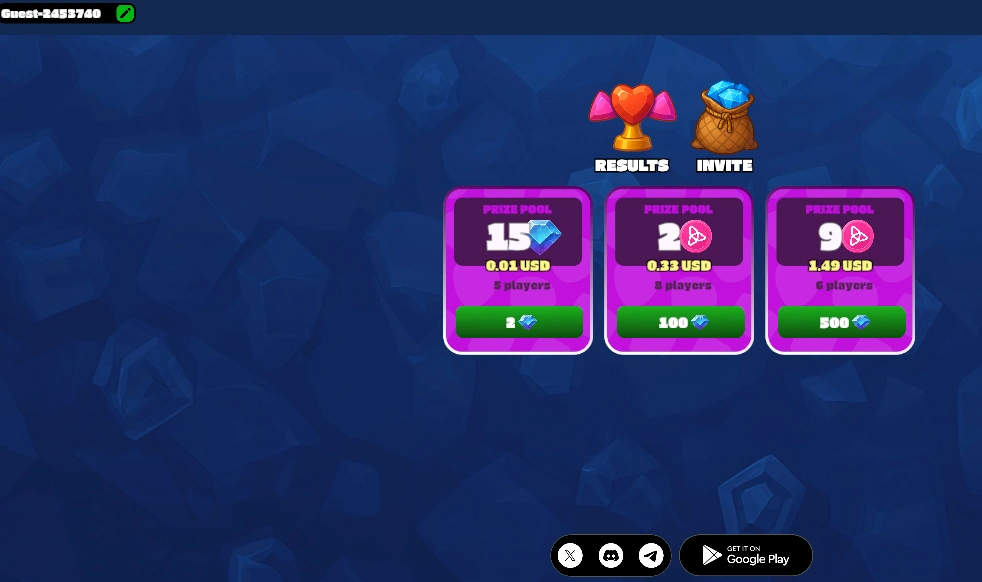
On-chain assets: Reward tokens, collectible NFTs, task-based incentive assets.
Gems.Town is a casual play-to-earn game built on Base that focuses on simple mechanics and daily engagement. Players complete lightweight tasks and earn on-chain rewards, making it accessible for users who are new to blockchain gaming.
3. Football.Fun
On-chain assets: Prediction tokens, outcome-based NFTs, reward distribution tokens.
Football.Fun is a sports-based prediction and gaming platform on Base where users engage with real-world football outcomes. The platform blends gaming mechanics with on-chain rewards, using Base for fast settlement and low-cost interactions.
4. CityVerse Tycoon
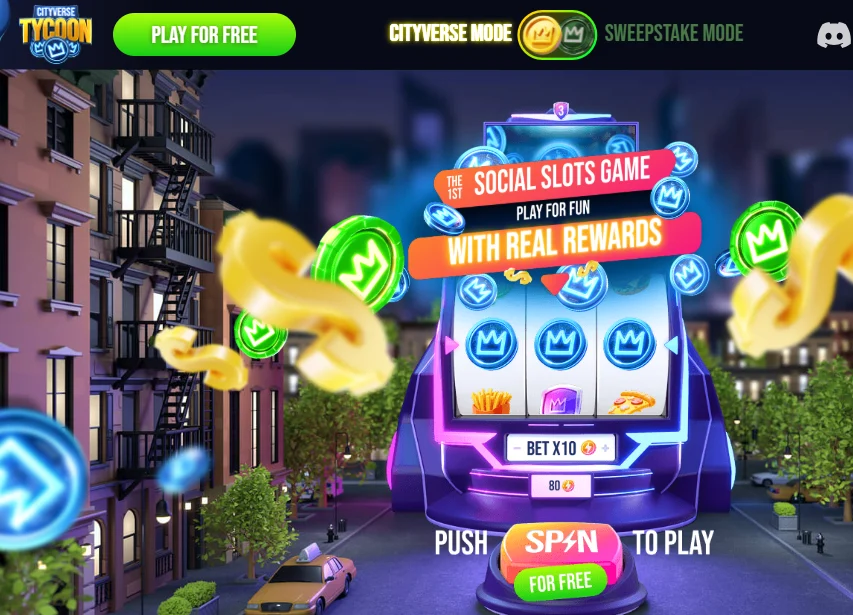
On-chain assets: Land plot NFTs, building NFTs, upgrade tokens, resource assets.
CityVerse Tycoon is a city-building strategy game on Base where players manage resources and expand a virtual city. Blockchain ownership is tied to in-game assets, while Base enables frequent upgrades and interactions without high transaction fees.
5. Snaky Cat
On-chain assets: Competitive reward tokens, cosmetic NFTs, leaderboard-linked assets.
Snaky Cat is a fast-paced arcade-style multiplayer game on Base, inspired by classic snake mechanics. Blockchain elements add competition and ownership, while Base ensures quick confirmations that keep the gameplay responsive.
Conclusion
Gaming platforms on Base with on-chain assets feel like the next natural step because ownership and performance finally work together. As a builder, you can quietly ship games that feel familiar to players while the infrastructure handles scalability, security, and asset intelligence in the background. With the right technical approach and execution partner, this model may realistically support long-term revenue and ecosystem growth without adding user friction.
Looking to Develop a Gaming Platform on Base Blockchain?
IdeaUsher can help you design a gaming platform on Base where on-chain assets feel simple, not heavy. We can architect smart contracts for NFTs and tokens, and handle gas logic, wallet abstraction, and security.
Why we’re the right team:
- 500,000 plus hours of coding experience from ex-MAANG and FAANG developers
- Deep expertise in Base smart contracts and gaming economies
- We make blockchain invisible. Think FaceID, logins, gasless gameplay, and smart, dynamic assets.
- From concept to launch we build platforms that retain players and drive revenue
Let’s turn your vision into a live, engaging platform


FAQs
A1: Development usually starts by defining game logic and asset rules as smart contracts deployed on Base while abstracting blockchain complexity from players. With account abstraction and smart wallets, onboarding can happen through familiar login patterns and the blockchain layer stays quietly in the background.
A2: Costs can vary based on game depth and asset design, but Base typically keeps operational expenses predictable. Over time, stable gas pricing on Base can help teams plan scaling with fewer financial surprises.
A3: The core difference lies in UX abstraction and gasless gameplay that feels closer to a standard game experience. At the same time, chain assets remain liquid, allowing items to be traded or reused across ecosystems.
A4: On-chain gaming assets can be viable when built with compliance and custody considerations from the start. Monetization can then occur through controlled marketplaces and royalty mechanisms that align with commercial and legal expectations