


Key Takeaways
- Enterprise vendor management software centralizes supplier onboarding, contract management, and procurement operations across large organizations.
- AI-driven automation helps businesses reduce manual procurement work through invoice matching, document verification, and supplier analytics.
- Modern enterprises face challenges from fragmented supplier data, cybersecurity threats, compliance regulations, and outdated procurement systems.
- Building a secure vendor management platform requires ERP integrations, workflow automation, AI compliance systems, and scalable infrastructure.
- How Idea Usher can help businesses build vendor management software using pre-vetted developers experienced in AI automation and ERP integrations.
Modern businesses work with more suppliers than ever before, making vendor management much harder to manage with traditional procurement systems. Many companies still rely on manual processes that slow approvals and make it difficult to track contracts, supplier performance, and compliance requirements. As procurement operations grow, businesses need better visibility and more control over how supplier relationships are managed.
Enterprise vendor management software helps businesses organize and manage supplier operations from one place. It simplifies tasks like vendor onboarding, contract handling, and performance tracking while reducing the amount of manual work procurement teams deal with every day. This helps companies improve operational efficiency, reduce procurement risks, and build stronger supplier relationships over time.
We’ve helped businesses build vendor management solutions using cloud-based supplier management systems and automated risk monitoring tools. In this blog, you’ll learn how enterprise vendor management software is developed, the key features businesses need, and how these platforms help companies manage suppliers more efficiently while reducing manual work.
Why Enterprises Are Investing in Vendor Management Platforms?
According to Technavio, the vendor management software market size is forecast to increase by USD 14.28 billion at a CAGR of 18.6% between 2024 and 2029. This explosive growth proves that global corporations are completely overwhelmed trying to manage their massive vendor networks manually. Modern enterprises rely heavily on external partners for critical infrastructure like cloud services and manufacturing components, so their corporate survival now directly hinges on how well they oversee these relationships.
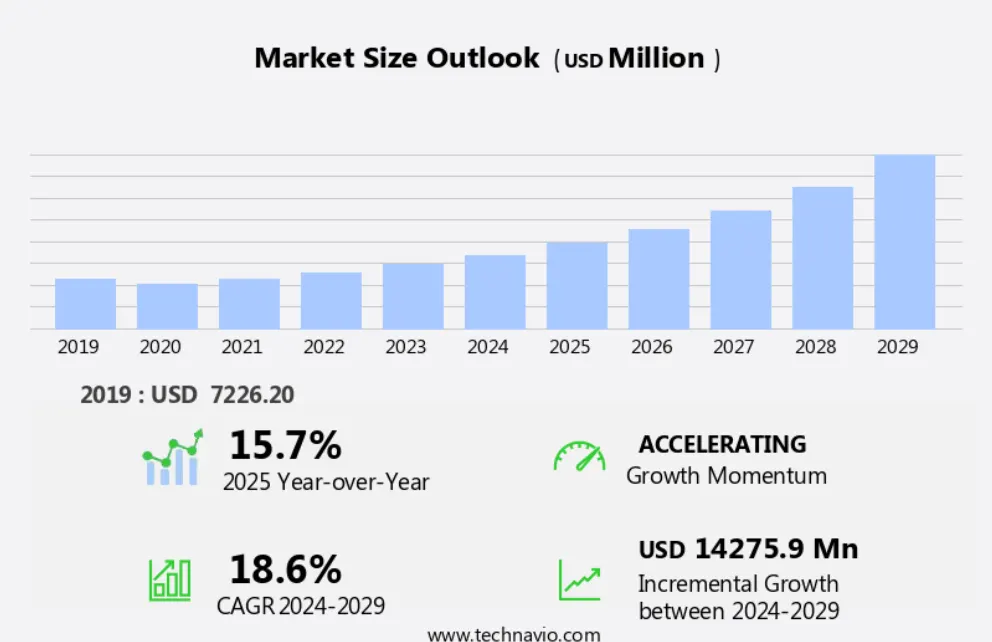
Source: Technavio
For investors looking for a high-yield B2B SaaS play, this category represents an incredible opportunity. Enterprise buyers are actively searching for tools that solve operational chaos and protect their profit margins. Because they are dealing with massive business risks, these companies are ready to spend big budgets on any software that can deliver clear security and intelligent automation.
Mitigating Escalating Supplier Risks
The modern enterprise perimeter has expanded far beyond its own internal networks. Today, a company’s actual security depends heavily on the digital resilience of its vendors. Because a massive portion of data breaches start somewhere in the third-party supply chain, a single weak link can easily freeze operations or trigger severe regulatory penalties. This reality has forced corporate risk teams to entirely abandon manual spreadsheets and outdated annual questionnaires.
Instead, companies are moving toward real-time digital oversight. The platforms winning enterprise contracts right now are those that offer visibility deeper than just the immediate vendor, mapping secondary and tertiary partners as well. By feeding live financial, legal, and cybersecurity data into automated engines, these systems can spot a threat and instantly trigger safety protocols. For an investor, funding a platform with this kind of proactive defense meets an urgent, high-budget enterprise need.
Driving AI Procurement Automation
Manual procurement simply cannot keep pace with fast-moving business operations today. When companies rely on old manual workflows, they lose millions of dollars every year to slow contract approvals and simple human errors during billing. That is why modern procurement leaders are hunting for platforms that use artificial intelligence to handle the administrative heavy lifting.
For anyone looking to invest in this space, building a tool that automates these high-friction tasks is an easy sell because it protects company margins and instantly drops money back down to the bottom line.
- Intelligent Contract Analysis: Machine learning algorithms parse thousands of legacy legal documents to instantly extract liability clauses, auto-renewal dates, and service-level agreements (SLAs), alerting teams to unfavorable commercial terms before they cause financial harm.
- Predictive Performance Modeling: Advanced analytics engines track historical vendor delivery timelines, quality scores, and pricing trends to forecast future supplier performance, allowing enterprises to optimize their sourcing strategy before bottlenecks occur.
- Automated Financial Reconciliation: AI matching engines process invoices against purchase orders and receipt records in real time, catching billing anomalies and preventing duplicate payments without requiring manual audits.
For entrepreneurs looking to build a high-ROI platform, the target is to match or beat the automation efficiencies of market leaders like Coupa. When you create an intelligent engine that slashes onboarding times from weeks to hours, you build an indispensable tool. The real prize for investors is giving lean procurement teams the power to manage billions in corporate spend with absolute precision. That immediate impact on profitability makes your software an incredibly easy sell to enterprise buyers.
Centralizing Data and Compliance
When different departments buy and manage tools independently, large companies end up with costly internal chaos. This fragmentation leads to duplicate software purchases and major regulatory blind spots. Enterprises need a single source of truth, which is why they look for a unified dashboard like SAP Ariba that pulls all vendor data into one place. Without this centralized control, companies face massive legal penalties if they fail an audit under strict rules like GDPR or HIPAA.
For investors, this data mess represents a goldmine because fixing it creates an incredibly sticky product. Once a major corporation integrates a platform into its core ERP networks and loads in its legal compliance data, switching to a competitor is far too painful. Building a system that centralizes this information guarantees highly predictable, long-term recurring revenue.
What is an Enterprise Vendor Management Software?
An enterprise vendor management software is a centralized digital hub built to manage the entire supplier lifecycle from start to finish. It brings procurement teams, finance departments, legal counsel, and supply chain managers into one shared workspace. Instead of scattering vendor details across messy spreadsheets and siloed emails, this software coordinates everything from early onboarding and compliance checks to active contracts, invoices, and performance tracking.
Why Enterprises Abandon Spreadsheets
Relying on traditional manual tracking introduces massive risk and delay into corporate supply chains. What managers actually want to know is how a unified system changes daily operations. Modern networks completely replace fragmented workflows by introducing specialized capabilities designed for heavy organizational scaling:
- Centralized Supplier Databases: Eliminates missing information by housing every vendor profile and banking record in one secure master registry.
- Spend Visibility and Analytics: Gives financial officers instant clarity on corporate capital to negotiate better volume discounts.
- Compliance Tracking: Monitors changing tax filings and insurance updates automatically without requiring constant manual check-ins.
- Multi-Vendor Communication: Provides a secure portal where buyers and external suppliers handle messages and orders directly.
The Operational Shift
When an enterprise manages hundreds of active suppliers manually, a single expired insurance certificate or a misplaced invoice can completely freeze production. Moving to a dedicated system wipes out these tedious administrative friction points. The platform actively monitors vendor risk profiles in the background while using smart workflows to route approvals instantly.
This modern architecture transforms procurement from a slow, reactive chore into a streamlined business strategy.
.
Key Features of Enterprise Vendor Management Softwares
Building high-performing vendor management platforms requires focusing on core features that solve deep operational headaches. To win major corporate clients, your software must handle complex workflows while automating repetitive tasks. These five essential modules define a truly commercial-grade platform.
1. Vendor Onboarding
This module lets suppliers register digitally while uploading compliance documents, tax information, insurance details, and banking data. It completely removes the manual back-and-forth communication that typically slows down corporate procurement teams. Platforms like HICX excel in this specific area by focusing purely on supplier master data management, ensuring that all incoming registration details are standardized across the entire enterprise from day one.
- Self-Service Registration: Vendors fill out their own profiles and manage their data directly.
- Automated Verification: Systems check tax records and corporate IDs instantly.
- Role-Based Access: Controls exactly which team members can view sensitive financial records.
AI Innovation: Instead of making humans read every file, modern systems use OCR-powered document extraction. The AI scans uploaded tax or insurance papers, validates their authenticity, and automatically checks for fraud or duplicate vendor profiles.
For instance, a manufacturing company can easily cut its vendor onboarding time from several weeks to just a few days by using automated document verification pipelines.
2. Risk Management
Tracking supplier risk is a critical enterprise procurement function. Relying on basic seasonal reviews leaves a business vulnerable to sudden supply chain disruptions. Software like Prevalent addresses this issue by specializing in third-party risk management networks, giving businesses a centralized place to automate compliance questionnaires and continually track external vendor vulnerabilities. Modern platforms track a wide variety of risks continuously:
- Financial instability and payment defaults
- Regulatory non-compliance and missing certifications
- Cybersecurity vulnerabilities and third-party data leaks
- ESG compliance and sustainability scores
- Delivery performance history and geographic exposure
The VENDOR-RISK Matrix
Rather than waiting for a periodic audit, intelligent systems use specific detection methods to catch issues early. This proactive approach helps enterprises reduce operational disruptions before they impact procurement workflows or supplier relationships. Real-time monitoring also allows businesses to respond faster to compliance failures, cybersecurity threats, and vendor performance issues across global supply chains.
| Risk Type | Description |
| Financial Risk | Tracks payment defaults and financial instability using predictive analytics models. |
| Compliance Risk | Detects missing certifications and regulatory violations through automated validation systems. |
| Operational Risk | Predicts supplier delays and workflow disruptions using machine learning pattern analysis. |
| Cybersecurity Risk | Identifies third-party vulnerabilities through live threat intelligence and security monitoring APIs. |
| ESG Risk | Evaluates vendor sustainability and ESG performance using NLP-powered global news monitoring. |
3. Contract Lifecycle
This feature enables enterprises to manage vendor contracts from the initial creation straight through to final renewal. It protects companies from missing critical deadlines or falling out of compliance with complex corporate guidelines. Dedicated contract tools like Gatekeeper show how valuable this is by using clean visual pipelines to track active renewals and monitor changing legal clauses.
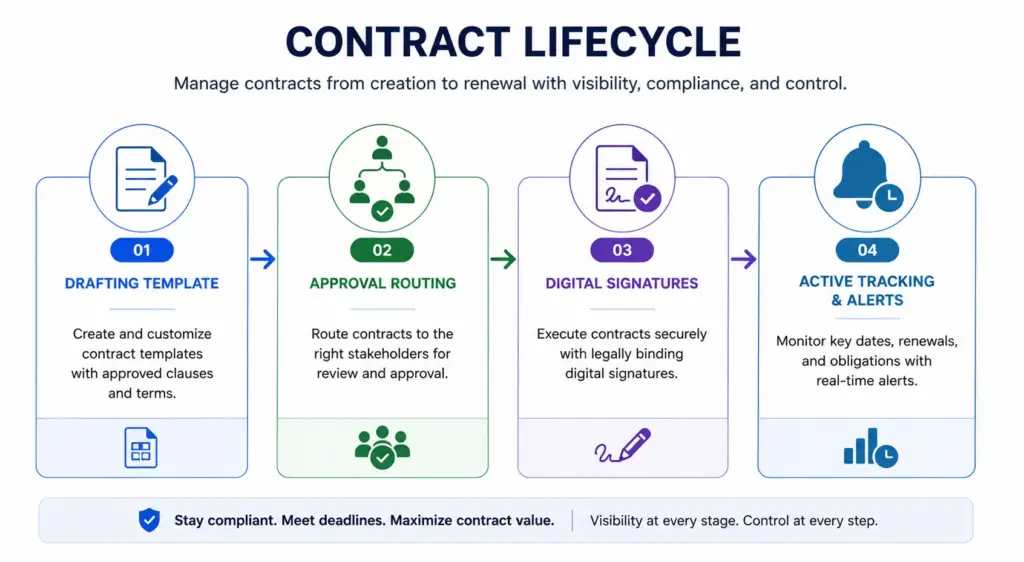
The system stores all agreements in a central repository while offering version control and automated renewal reminders. Legal teams heavily utilize AI-driven contract analytics to automatically pull out key clauses, score contract risks, and flag compliance errors to reduce overall review workloads.
4. Workflow Automation
Procurement automation reduces manual approval bottlenecks while improving day-to-day operational efficiency. It gives businesses much tighter spending controls and keeps the entire organization completely audit-ready. Procurement-focused platforms like Precoro demonstrate this value perfectly by replacing chaotic internal email chains with clear, automated spend-tracking paths that accelerate company-wide approvals.
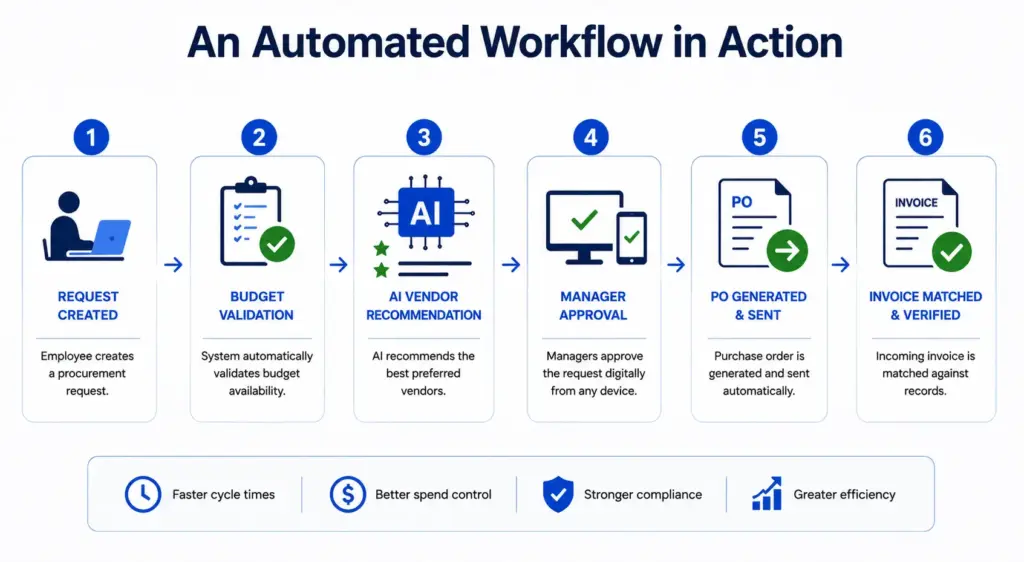
- Requisition Management: Standardizes how employees request new tools or materials.
- Budget Validation: Automatically checks if a department has enough remaining funds before allowing a request to proceed.
- Invoice Matching: Cross-references invoices against purchase orders and receipts to prevent payment errors.
5. Performance Analytics
Analytics dashboards help organizations measure supplier performance using real-time procurement data. These visual tools transform raw operational metrics into clear, actionable business insights. Systems like Jaggaer leverage this analytical angle heavily, offering enterprise-level dashboards that slice data by industry benchmarks to show exactly which partners are driving value.
- On-Time Delivery Rate: Tracks whether a vendor consistently hits its delivery deadlines.
- Quality Scores: Measures the defect or error rate of incoming goods and services.
- Cost Efficiency: Compares actual vendor pricing against historical market averages.
- Supplier Responsiveness: Evaluates how quickly a vendor answers support tickets or inquiries.
By running machine learning models over these core metrics, the software can easily forecast future supply disruptions, identify high-risk partners, and recommend smart supplier optimization strategies before problems impact your bottom line.
The EU AI Act Could Make Legacy Procurement Systems Dangerous
Many American enterprises assume that global artificial intelligence regulations only target major tech developers or public social media tools. This assumption is a massive legal blind spot. If your business uses vendor management platforms that run automated risk-scoring models, screen independent contractors, or process invoice data within the European Union, your legacy systems might actually be a ticking compliance liability.
Legacy Software Risks
The EU Artificial Intelligence Act (Regulation (EU) 2024/1689) establishes a strict risk-based framework that applies to any entity whose AI outputs are used within the EU market. Under Annex III of the regulation, AI systems used for employment, worker management, and access to self-employment are explicitly classified as High-Risk.
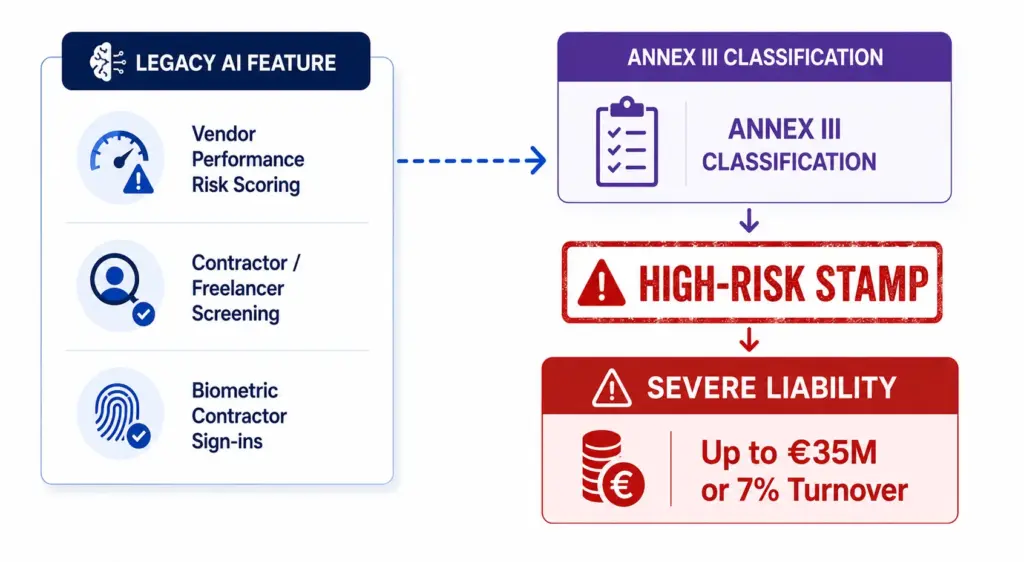
Many older platforms utilize basic machine learning tools to automatically track, grade, and flag independent contractors or professional services vendors. Under the text of the law, these features can instantly push an ordinary corporate workflow tool straight into the highly regulated, high-risk tier.
Gaps Exposed
The core problem with legacy architecture is that older corporate database networks were never engineered for extreme data traceability. The EU framework explicitly demands that high-risk tools satisfy incredibly rigorous data quality and logging criteria. Without immutable audit trails and transparent decision records, enterprises face major compliance exposure under modern AI governance laws.
The Compliance Mandate:
According to Article 10 of the regulation, the datasets used to train and validate high-risk systems must be “relevant, sufficiently representative, and to the best extent possible, free of errors and complete.“ Furthermore, Article 12 mandates that these platforms must automatically maintain detailed, unalterable digital logs of their operations throughout their entire lifecycle.
Most legacy procurement systems simply do not have the architecture required to audit their own internal data sources or prove that their automated supplier risk models are free from bias. If your software makes automated decisions about which vendor gets dropped or which freelance contractor gets prioritized based on unverified algorithms, your organization is directly violating these strict transparency standards.
Rebuilding Workflows
Fixing this problem is rarely as simple as patching a small piece of old code. Because the potential penalties for severe corporate non-compliance reach up to €35 million or 7% of total global annual turnover, businesses are realizing they must strip out unverified AI features entirely.
- Rebuilding Risk Engines: Traditional predictive analytics tools are being replaced by highly transparent, rule-based algorithms or certified, compliant AI models.
- Redesigning Human Oversight: Platforms must be re-engineered so a human operator can easily review, override, or safely shut down an automated vendor decision at any time.
- Mandating Verification Audits: Companies must conduct exhaustive data checks before letting an automated tool process contractor files or supplier profiles.
To protect your business from massive regulatory penalties, enterprise procurement strategies are pivoting away from black-box automated systems. Transitioning to modern, cloud-native vendor networks that build data security and audit logging directly into their core code infrastructure is the only viable path to remaining globally competitive and fully compliant.
How to Develop Enterprise Vendor Management Software?
Building a corporate vendor management software requires a complex enterprise architecture that can securely handle millions of transactions in volume. At IdeaUsher, we deploy pre-vetted developers who specialize in engineering these exact high-stakes systems. We can scale your technical team instantly with proven talent to build a highly secure, market-ready platform that wins lucrative corporate contracts and maximizes your investment.
1. Mapping Procurement Pain Points
Before writing any code, our product teams spend time understanding the actual day-to-day chaos that plagues procurement departments. True product-market fit happens when you identify exactly where manual workflows break down for risk managers and accounts payable teams.
The Big Headache: Enterprises rarely suffer from a lack of data. Instead, they are drowning in fragmented information buried across disconnected spreadsheets, isolated emails, and legacy databases.
To build a truly disruptive platform, we focus our initial product discovery on fixing a few critical operational leaks that enterprise buyers are desperate to solve:
- The Onboarding Bottleneck: Legal and security teams often take weeks to manually clear a new supplier, which stalls major company initiatives.
- Invisible Spend: Departmental managers frequently buy software or services outside of approved corporate channels, costing the company millions in leaked capital.
- Tracking Blind Spots: Executive leadership rarely has a clear, real-time view into whether a vendor is actually meeting their contractually obligated service levels.
2. Designing Custom Workflows
Enterprise organizations are inherently bureaucratic, so your software needs a highly flexible workflow engine. A basic one-size-fits-all approval process will fail immediately during corporate deployment. Our engineers construct these platforms to let corporate administrators build complex and conditional routing paths that match their internal governance rules.
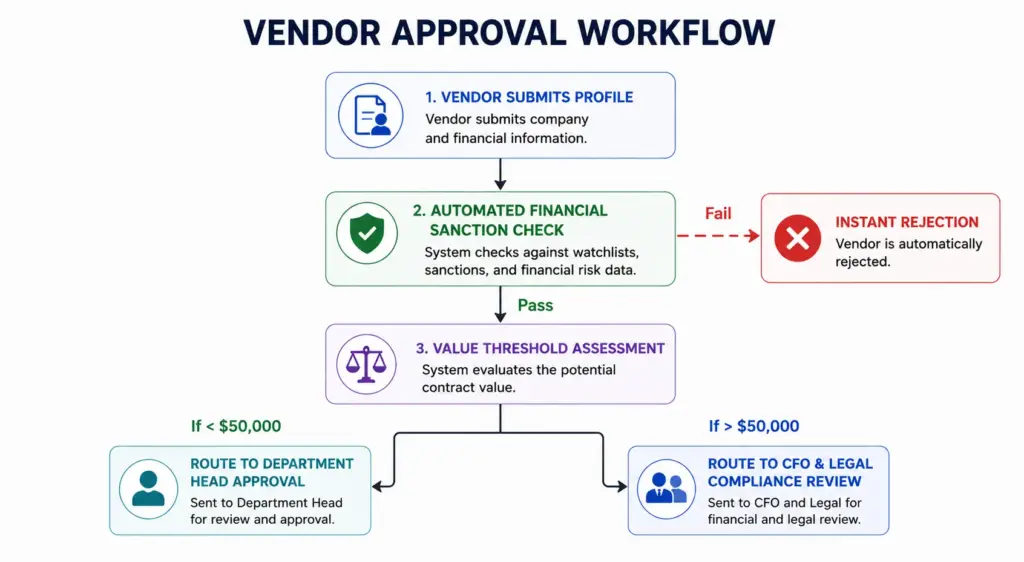
The trick to winning over corporate users is making this backend complexity look effortless on the screen. We design clean interfaces that guide vendors through a simple step-by-step onboarding wizard. While the user sees a clean screen, the system runs background checks, routes approval requests to parallel departments, and logs audit trails automatically.
3. Engineering Secure Infrastructure
When you build a platform that houses proprietary financial records, banking details, and sensitive legal documents, security cannot be an afterthought. Corporate IT departments will subject your software to brutal penetration testing before letting it near their networks. We ensure your data infrastructure is built to the highest defense-grade standards right from the start.
| Security Layer | Technical Requirement | Business Justification |
| Data Encryption | AES-256 at rest and TLS 1.3 in transit | Prevents data interception and satisfies global privacy laws. |
| Access Control | Role-Based Access Control (RBAC) + SAML SSO | Ensures employees only see vendor data relevant to their specific job role. |
| Audit Logging | Immutable, time-stamped ledger | Provides an unalterable history of every contract modification and approval for regulators. |
By treating security as a core product feature rather than a simple compliance checkbox, we help you eliminate sales friction. Investors should recognize that hiring dedicated, specialized developers to build a certified and highly secure data infrastructure creates an immediate competitive moat that generic software startups simply cannot replicate.
4. Implementing AI Compliance
The true differentiator for a modern platform lies in its artificial intelligence layer. Traditional software merely stores files, but intelligent software actually understands them. By embedding machine learning models into your document ingestion pipeline, our development teams transform your platform from a passive storage drive into an active compliance gatekeeper.
Think about the massive time savings of automating document verification. When a supplier uploads a certificate of insurance or a tax document, our AI implementation automatically scans the text using optical character recognition. The system instantly verifies that the insurance coverage limits match corporate policy and automatically flags the profile if the document is expiring soon. This single automation eliminates thousands of hours of manual verification labor for your enterprise clients.
5. Connecting Core ERPs
An isolated vendor management tool is completely useless to a major corporation. To provide real commercial value, your platform must act as an intelligent connective layer that syncs with a company’s existing software stack. This is why we focus heavily on building robust, bi-directional APIs that integrate deeply with major enterprise resource planning ecosystems like SAP, Oracle, and Workday.
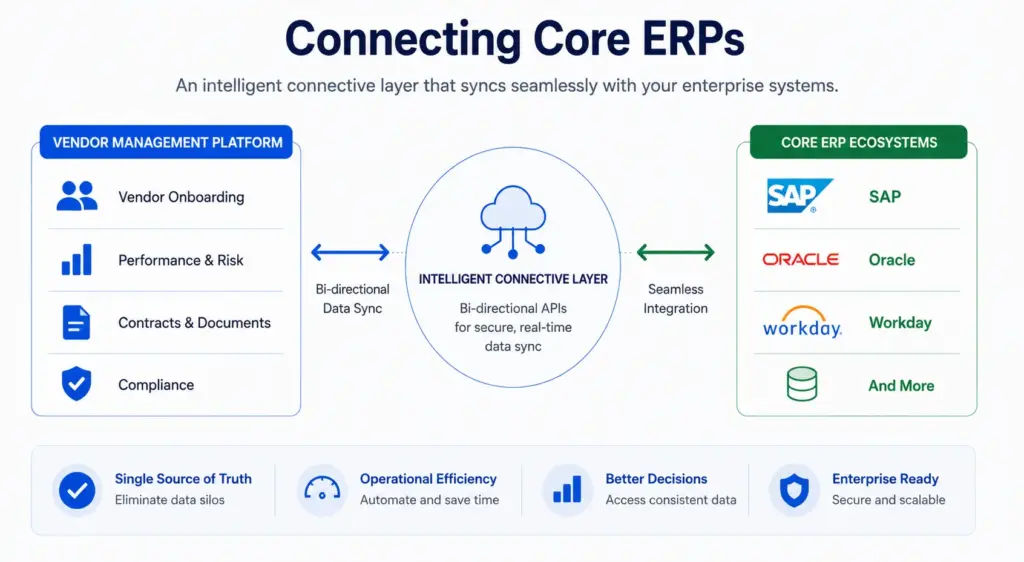
We build these systems so data flows seamlessly in real time. For example, when a vendor’s compliance status changes to “suspended” on your platform, that update instantly alerts the company’s core financial ledger to freeze all pending payouts. Similarly, purchase orders generated in an external procurement system will instantly appear inside your dashboard to trigger automated milestone tracking. Platforms that master these deep integrations become structurally indispensable to the enterprise.
6. Launching and Scaling
Going to market with an enterprise B2B product requires a highly controlled, phased rollout strategy. You do not just launch a major corporate platform to the public overnight. Instead, our recommended strategy is to pilot the software with a single business unit or a select group of trusted vendor partners to stress-test the system infrastructure under real-world conditions.
During this initial pilot phase, our developers closely monitor system performance, API latency, and user drop-off points. We use these early data insights to continuously optimize the user experience and refine the automation algorithms. Once the platform proves it can successfully handle the operational load and drive clear financial returns, you can safely scale the system across the entire enterprise footprint and secure highly predictable recurring revenue streams.
Gartner Warns That AI Without Clean Supplier Data Will Fail
Many business executives believe that deploying artificial intelligence will instantly clean up their messy supply chains and fix bad corporate records. Industry research proves that the exact opposite is true. If an enterprise attempts to run advanced automation over a broken database instead of using optimized vendor management platforms, the AI will simply scale those data errors at an alarming speed.
Why Dirty Data Destroys AI
According to research published by Gartner, generative artificial intelligence in the procurement sector has officially hit a rough patch. The initial excitement has faded as companies confront the difficult reality of connecting smart automation to messy real-world data systems.
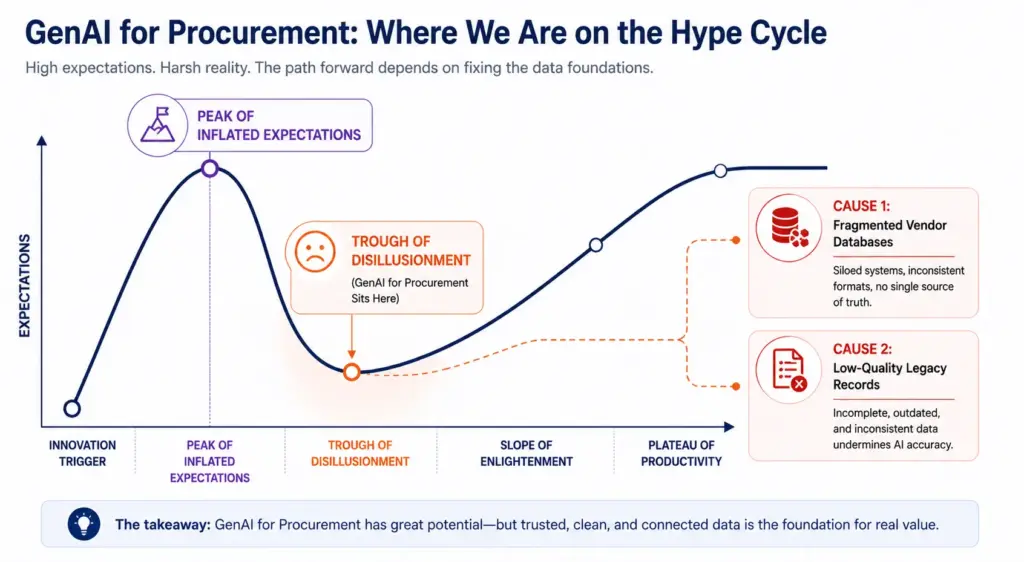
When an enterprise platform relies on fragmented or low-quality records, the AI cannot generate trustworthy insights. If the system feeds the AI conflicting supplier profiles, outdated compliance certificates, or duplicate invoicing data, the automated outputs will be completely flawed.
Why AI Procurement Fails
The primary barrier to successful AI implementation is not the sophistication of the algorithm itself but the underlying health of the data it consumes. Many enterprise IT teams try to launch standalone AI tools without fixing their core data pipelines first. What readers actually need to know is that AI cannot guess the correct information if the input itself is broken.
The Expert Assessment: In an official market analysis, Kaitlynn Sommers, Senior Director Analyst in Gartner’s Supply Chain practice, pointed directly to this data bottleneck:
“GenAI is proving to deliver process efficiency, better data insights, and cost savings for procurement organizations. However, fragmented and low-quality data across procurement systems can hinder accurate outputs, and integrating stand-alone GenAI solutions with existing platforms is often complex, due to differing technical specifications.”
This reality check highlights a major gap between marketing hype and actual operational performance. If your platform cannot establish a single clean master record for every supplier, your AI initiatives will struggle to deliver a meaningful return on investment.
Clean Data Strategies
To avoid wasting capital on failed projects, companies must shift their focus toward basic data governance and tight system integration. Gartner projects that AI for procurement will take roughly five years to reach mature productivity. The businesses that succeed during this window will treat data cleanup as a mandatory prerequisite.
- Consolidate Internal Systems: Clean up old databases and eliminate separate duplicate vendor profiles before introducing AI tools.
- Standardize Intake Formats: Force all incoming supplier registrations, tax documents, and banking details into a single structured pipeline.
- Focus on Specific Use Cases: Deploy AI to handle targeted tasks like contract summary extractions or invoice matching where the data rules are clear and highly defined.
By taking a disciplined data-first approach, enterprises can move safely past the initial hurdles of automation. Cleaning up your core supplier records ensures your platform delivers the exact efficiency, accuracy, and cost savings that modern AI promises.
Enterprise Vendor Management Software Development Cost
When you map out the financials for commercial-grade vendor management platforms, the numbers reflect the heavy engineering required for corporate deployment. Enterprise buyers demand systems that can safely handle massive transaction volumes and survive intense security audits. Understanding these basic development components helps you plan a realistic roadmap that maximizes your return on investment.
Stage-by-Stage Costs
The total investment to bring a robust system to market is distributed across several key technical disciplines. This breakdown shows the estimated capital required for each major phase of construction. The final budget also depends on factors like platform complexity, AI automation requirements, ERP integrations, and enterprise compliance standards.
| Development Component | Estimated Cost Range |
| UI/UX Design | $8,000 – $25,000 |
| Backend Development | $30,000 – $120,000 |
| AI Integrations | $20,000 – $80,000 |
| ERP Integrations | $15,000 – $60,000 |
| Security & Compliance | $10,000 – $40,000 |
| Cloud Infrastructure | $5,000 – $30,000 |
| QA & Testing | $8,000 – $25,000 |
Primary Cost Drivers
Every project has unique requirements that can push your budget toward either end of the spectrum. What readers actually want to know is that the core price shifts based on a few massive structural choices rather than minor design elements. Enterprise platforms with advanced automation, compliance monitoring, and multi-system integrations naturally require larger development investments due to their technical complexity
- The Scope of Modules: A simple onboarding portal is highly cost-effective but adding advanced custom billing setups expands your timeline significantly.
- AI Sophistication: Basic keyword scanning models keep costs low while predictive risk analytics require highly specialized machine learning talent.
- Legacy Integrations: Hooking your software into multiple isolated corporate databases requires deep and complex API architecture.
- Strict Compliance Standards: Meeting heavy global frameworks like SOC 2 or GDPR adds necessary layers of database encryption and intense penetration testing.
The SCALE Framework
To keep your development budget efficient without compromising on product quality, we use a structured methodology designed to minimize technical waste and speed up your launch. This approach helps businesses prioritize high-impact features while avoiding unnecessary development expenses during the early stages of product growth.
| Framework Step | Description |
| S – Start with MVP Architecture | Focus your initial investment on essential vendor management and procurement features before expanding into advanced enterprise modules. |
| C – Centralize Integrations Through APIs | Build reusable API infrastructure early to simplify future ERP, accounting, and third-party software integrations. |
| A – Automate Repetitive Procurement Workflows | Prioritize automation for onboarding, approvals, compliance checks, and reporting to reduce manual operational work. |
| L – Leverage Cloud-Native Infrastructure | Use scalable cloud architecture and flexible databases to support growing enterprise workloads efficiently. |
| E – Expand Features Incrementally | Improve the platform gradually based on enterprise feedback, market demand, and operational performance insights. |
At IdeaUsher, we deploy pre-vetted development teams to help you navigate this framework smoothly. We can scale your technical team instantly with proven talent to build a highly secure and market-ready platform that wins lucrative corporate contracts.
The “Entity Resolution” Death Spiral in Vendor Management
If your vendor management platforms rely on fuzzy string matching for vendor onboarding, you are already drowning in data debt. Most enterprise setups start with a basic vendor table. From there, it only takes a few months to end up with separate entries for “Amazon Web Services,” “AWS Inc.,” “AMZN MKTPLC,” and “Amazon Digital Services.” If your software treats these as four completely different companies, your spend visibility is a total lie.
Why Basic Indexing Fails
Standard database queries and simple text matching cannot handle the chaotic ways vendors enter their information. To fix this, modern systems must ditch rigid text fields and deploy a Probabilistic Entity Resolution Engine. Dedicated data management platforms like Tamr and Profisee demonstrate how critical this is, as they focus heavily on machine learning to automatically clean and unify broken supply chain records across different business units.
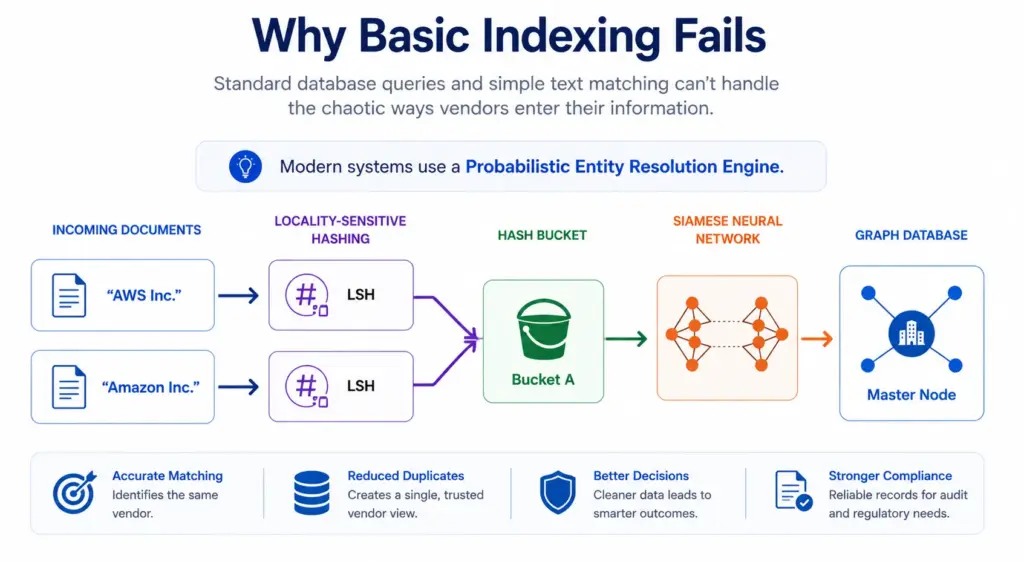
Instead of running slow, resource-heavy searches that compare every single new vendor against thousands of existing database rows, smart systems break the problem down into an intelligent pipeline.
The Engineering Blueprint
Building a truly accurate database requires moving past basic relational tables. Top-tier enterprise systems solve this identity problem by using a specific three-step engineering pattern. This architecture helps enterprises maintain clean supplier records even when millions of transactions and vendor updates flow into the system continuously.
- The Blocking Strategy: Use Locality-Sensitive Hashing ($LSH$) to group high-probability text matches into shared buckets before comparing details. This trick ensures you never waste computing power comparing $N$ vendors against $N$ vendors.
- The Machine Learning Ranker: Feed the results of your $LSH$ buckets into a pairwise-comparison model like a Siamese neural network. The network calculates a dynamic confidence score to determine if the two entries represent the exact same business entity.
- The Graph-Database Golden Record: Store the resolved entity as a centralized master node in a graph database like Neo4j or Memgraph. From there, you map all individual historical transactions directly back to that single point.
The Real Business Outcome
This architecture means you no longer spend countless hours manually cleaning up messy database files. Instead, you build a dynamic source of truth that programmatically reconciles incoming data noise on the fly. When your platform resolves corporate identities accurately at the root level, executive dashboards stay perfectly accurate. Your financial teams can instantly see true total spend across parent companies and subsidiaries without any manual spreadsheet tracking.
Top 5 Enterprise Vendor Management Software in the USA
The American enterprise market demands vendor management platforms that can handle immense transaction volume while managing strict regulatory guidelines. These top platforms represent the gold standard in corporate vendor management across the United States.
1. SAP Ariba
As a massive force in corporate procurement, this platform specializes in end-to-end source-to-pay automation. It acts as a heavy-duty hub for global brands that need a unified database to track billions of dollars in vendor spend. The system shines when managing complex contract lifecycles and integrating into core corporate financial setups.
- Global Supplier Network: Connects enterprise buyers instantly to millions of pre-registered businesses to speed up onboarding.
- Strategic Sourcing: Digitizes the complete bidding and proposal process to ensure competitive pricing.
- Contract Management: Tracks contract terms and auto-renews agreements directly at the point of purchase.
2. Coupa
Known for its clean user interface backed by massive data power, this platform is a favorite among finance executives. It relies heavily on community-driven artificial intelligence to look across billions of data points and give buyers smart insights on how to optimize their spending. It is a great choice for businesses trying to eliminate rogue spending and centralize complex procurement pipelines.
- Community-Powered Analytics: Uses data across all users to suggest better supplier rates and identify savings.
- Three-Way Invoice Matching: Automatically cross-references purchase orders and receipts to prevent payment errors.
- Supplier Portal: Provides a free digital space for vendors to update tax info and track payment status instantly.
3. Medius
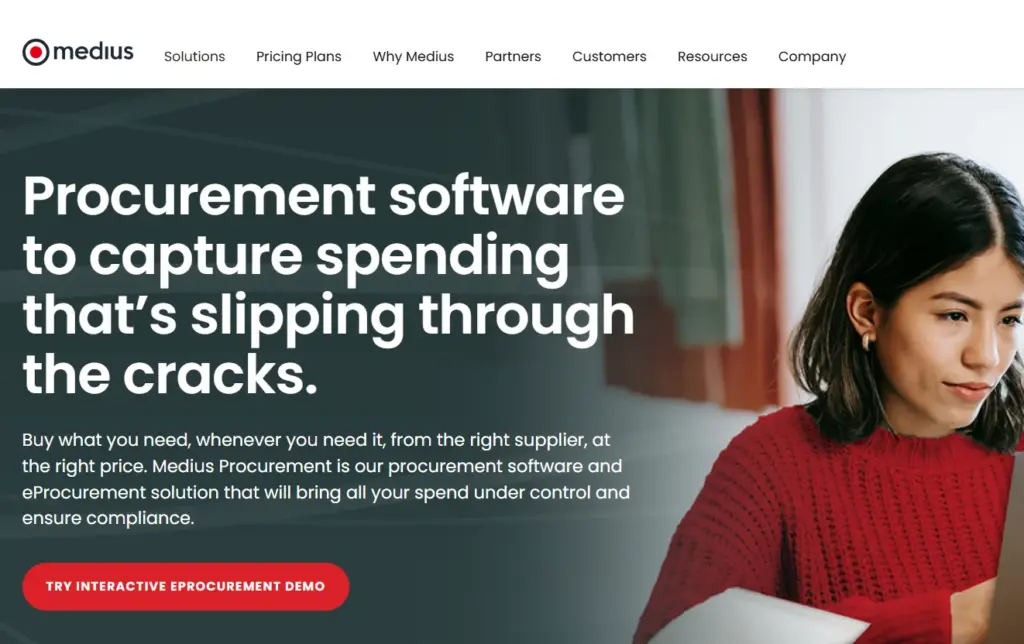
If your enterprise spends too much time chasing down manual accounts payable approvals, this software is the ultimate antidote. Medius focuses heavily on the financial end of vendor management. It uses exceptional automation to read, route, and pay supplier invoices with minimal human intervention.
- Touchless Invoice Processing: Captures and approves standard monthly vendor invoices completely automatically.
- Fraud & Duplication Detection: Scans every incoming bill against your historical database to flag duplicate charges or suspicious banking updates.
- Global Payment Engine: Handles multi-currency cross-border payments smoothly while adhering to international banking protocols.
4. Ivalua
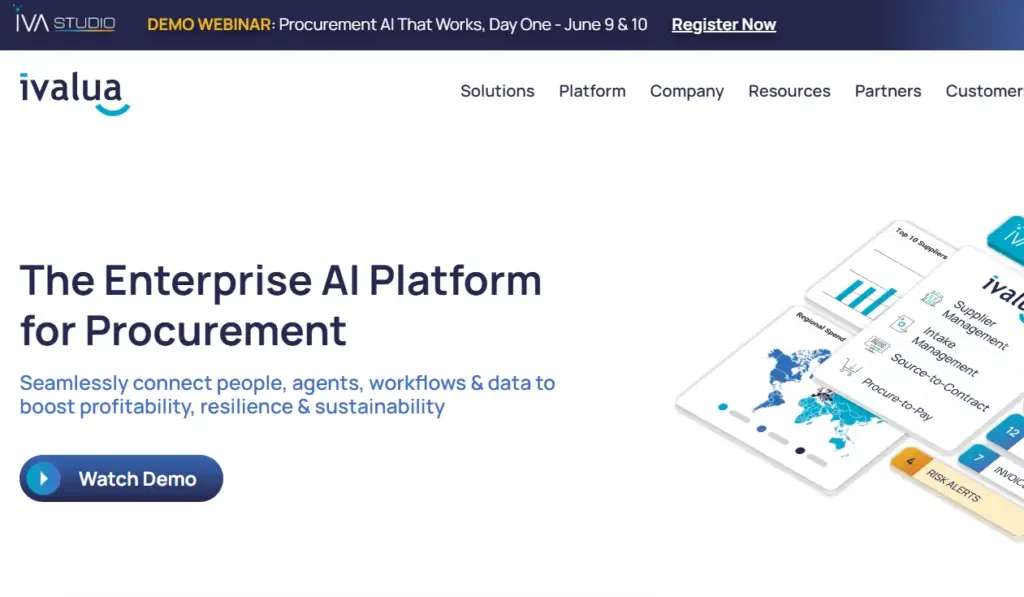
What sets this platform apart is its deep customizability. Many large manufacturing and healthcare enterprises choose it because they can shape the supplier workflows to mirror their unique internal governance rules perfectly. It offers an incredible suite for complete supplier lifecycle management from early qualification to ongoing risk tracking.
- Multi-ERP Synchronization: Integrates across multiple decentralized legacy systems simultaneously without messing up your data.
- Supplier Data Governance: Establishes a clean master record for supplier profiles with built-in validation tools.
- Embedded Risk Monitoring: Provides a centralized dashboard to track real-time supplier financial health and regulatory alignment.
5. Zycus
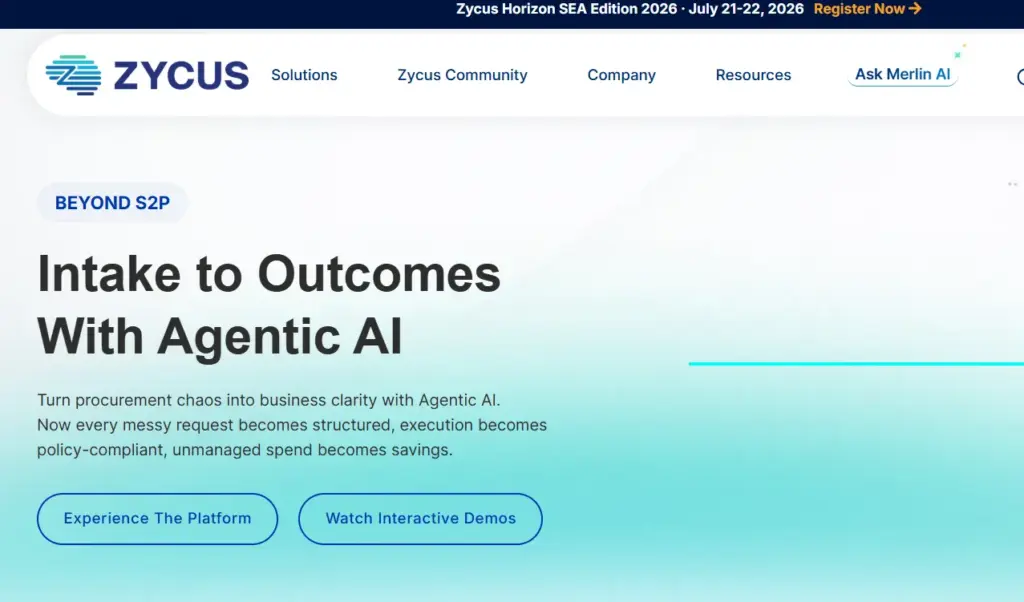
This software stands out as a true trailblazer in bringing native machine learning to the procurement space. Its built-in AI assistant actively reads uploaded supplier documentation and monitors global risk indexes to give companies an early warning before supply chain disruptions happen. It is ideal for tech-forward enterprises that want to use automation to wipe out thousands of hours of manual verification work.
- Merlin AI Platform: Uses autonomous AI agents to guide procurement requests smoothly from intake down to measurable outcomes.
- Autonomous Contract Extraction: Scans uploaded PDF contracts to pull out key dates and legal liabilities automatically.
- AI Invoice Triage: Automatically reads and categorizes random billing formats to eliminate manual accounting entry errors.
Build Vendor Management Software with Idea Usher
Building commercial-grade vendor management platforms requires a shift from basic app design to complex enterprise architecture. Corporate buyers do not want another generic dashboard. They need a highly secure system that can seamlessly handle millions in transaction volume while surviving intense regulatory audits.
At IdeaUsher, we eliminate the guesswork from this development cycle. With over 500,000 hours of coding experience, our team of ex-MAANG/FAANG developers engineers the high-stakes software networks you need to win lucrative contracts.
Custom Workflows
Enterprise organizations are inherently bureaucratic, meaning a basic one-size-fits-all approval process will fail immediately during deployment. Our engineers construct platforms featuring highly flexible workflow engines. This structural design lets corporate administrators build conditional routing paths that match their internal governance rules perfectly.
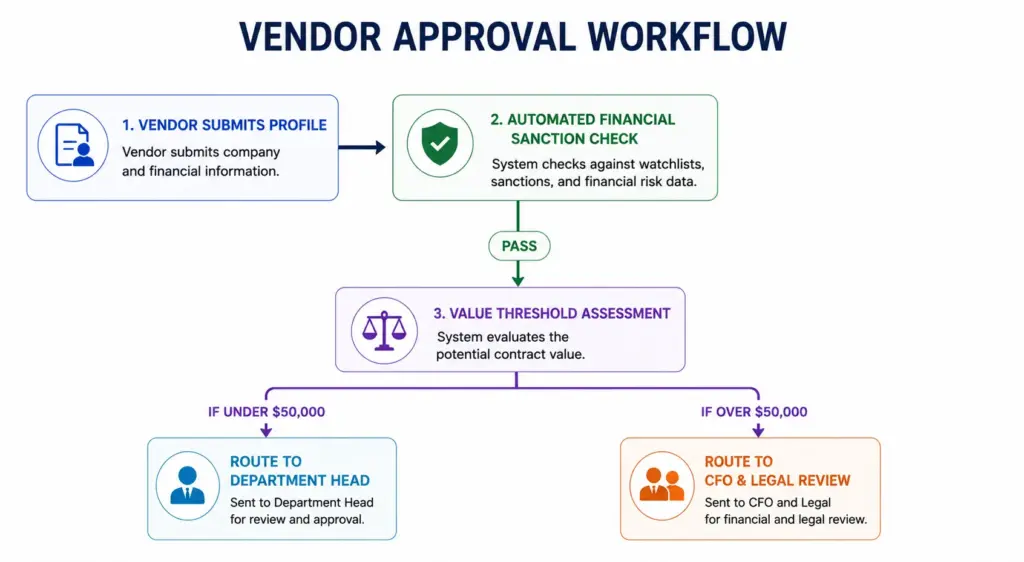
The trick to winning over corporate users is making this backend complexity look effortless on the screen. We design clean interfaces that guide external suppliers through a simple step-by-step onboarding wizard. While the user sees a clean screen, the system runs background checks, routes approval requests to parallel departments, and logs audit trails automatically.
AI Compliance
The true differentiator for a modern platform lies in its artificial intelligence layer. Traditional software merely stores files, but intelligent software actually understands them. By embedding machine learning models into your document ingestion pipeline, our development teams transform your platform from a passive storage drive into an active compliance gatekeeper.
The Power of Intelligent Automation: When a supplier uploads a certificate of insurance or a tax document, our AI engine automatically scans the text using optical character recognition. The system instantly verifies that the coverage limits match corporate policy and flags the profile if the document is expiring soon.
This single automation eliminates thousands of hours of manual verification labor for your clients. By removing the friction from compliance tracking, you give lean procurement teams the power to manage massive supplier networks with absolute precision.
Scaling Securely
When you build a platform that houses proprietary financial records, banking details, and sensitive legal documents, security cannot be an afterthought. Corporate IT departments will subject your software to brutal penetration testing before letting it near their networks. We ensure your data infrastructure is built to the highest defense-grade standards right from the first line of code.
- Top-Tier Engineering Talent: Tap into a dedicated pool of pre-vetted developers who have built massive systems at the world’s leading tech companies.
- Defense-Grade Protection: We implement AES-256 encryption at rest, TLS 1.3 in transit, and robust Role-Based Access Controls to keep data locked down.
- Indispensable ERP Integrations: Our teams build robust, bi-directional APIs that integrate deeply with major enterprise resource planning ecosystems like SAP, Oracle, and Workday.
Hiring dedicated, specialized developers to build a certified and highly secure data infrastructure creates an immediate competitive moat that generic software startups simply cannot replicate. We scale your technical team instantly with proven talent to build a market-ready platform that drives clear financial returns.
Conclusion
Developing a market-ready enterprise vendor platform ultimately comes down to balancing data security with smart automation. What matters most is building reliable API integrations that talk directly to existing corporate accounting systems while using AI to cut out manual compliance checks. Partnering with specialized enterprise developers allows you to deploy these complex architectures smoothly. This proven approach saves months of technical trial and error so you can launch a secure product that wins major corporate contracts.
Things to Know About Vendor Management Softwares
Q1: Can AI improve vendor management systems?
A1: Yes, AI directly transforms these platforms from passive digital filing cabinets into proactive operational tools. It instantly flags potential supplier risks by scanning global financial databases and automates tedious compliance checks by reading uploaded tax or insurance documents. This automation cuts down manual verification labor and uncovers hidden patterns in your corporate spending data that would otherwise take teams weeks to spot.
Q2: Which industries use vendor management software the most?
A2: Heavy-equipment manufacturing, healthcare, and retail rely on these systems the most due to their highly complex supply chains and intense regulatory requirements. Logistics providers, financial institutions, and fast-growing tech companies also depend heavily on vendor software to manage hundreds of global contractors. Any industry where a third-party disruption could instantly freeze operations needs a robust system to track supplier performance.
Q3: What integrations are required for enterprise vendor management platforms?
A3: An enterprise platform must connect directly with core financial tools like SAP, Oracle, or Workday to sync payment records and supplier statuses in real time. It also requires smooth data connections to digital signature platforms like DocuSign for contract execution and secure payment gateways to handle global money transfers. Without these core integrations, your platform becomes an isolated database that forces teams back into manual data entry.
Q4: Is cloud deployment better than on-premise deployment?
A4: Cloud deployment is almost always the better choice for modern businesses because it provides instant scalability and keeps infrastructure overhead incredibly low. It allows global vendors to access their onboarding portals from anywhere in the world without requiring complex corporate VPN setups. Furthermore, cloud setups make rolling out system-wide security updates effortless compared to old-school on-premise installations.