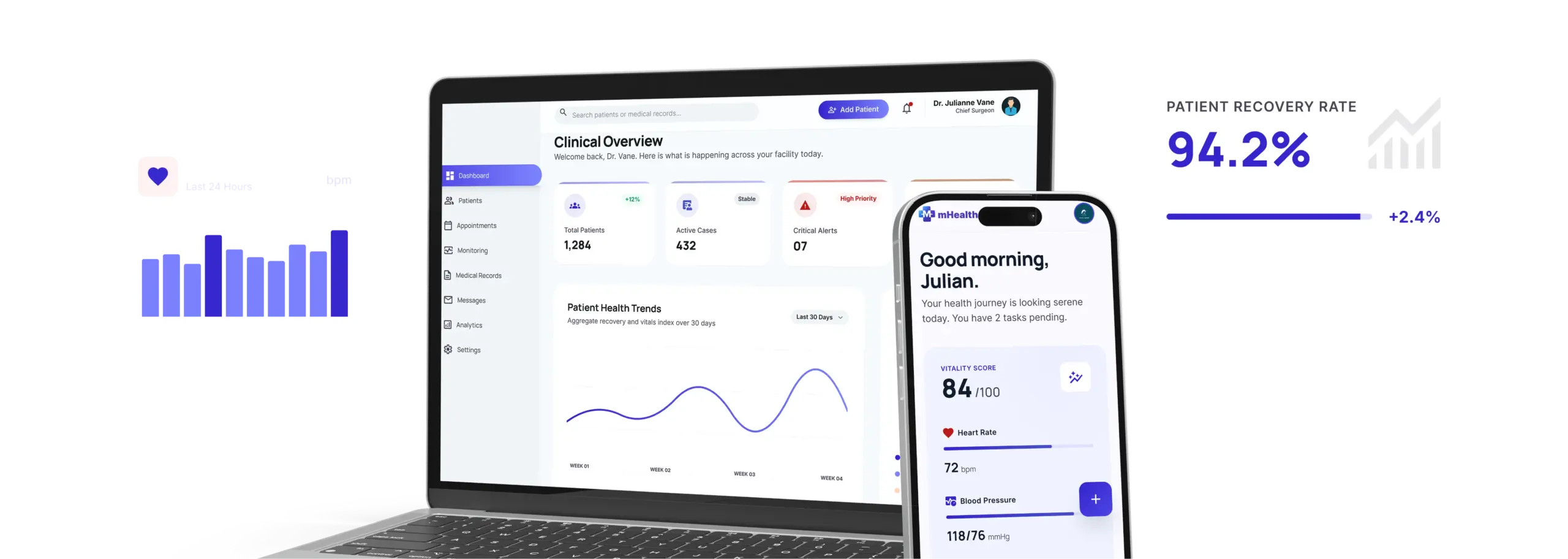
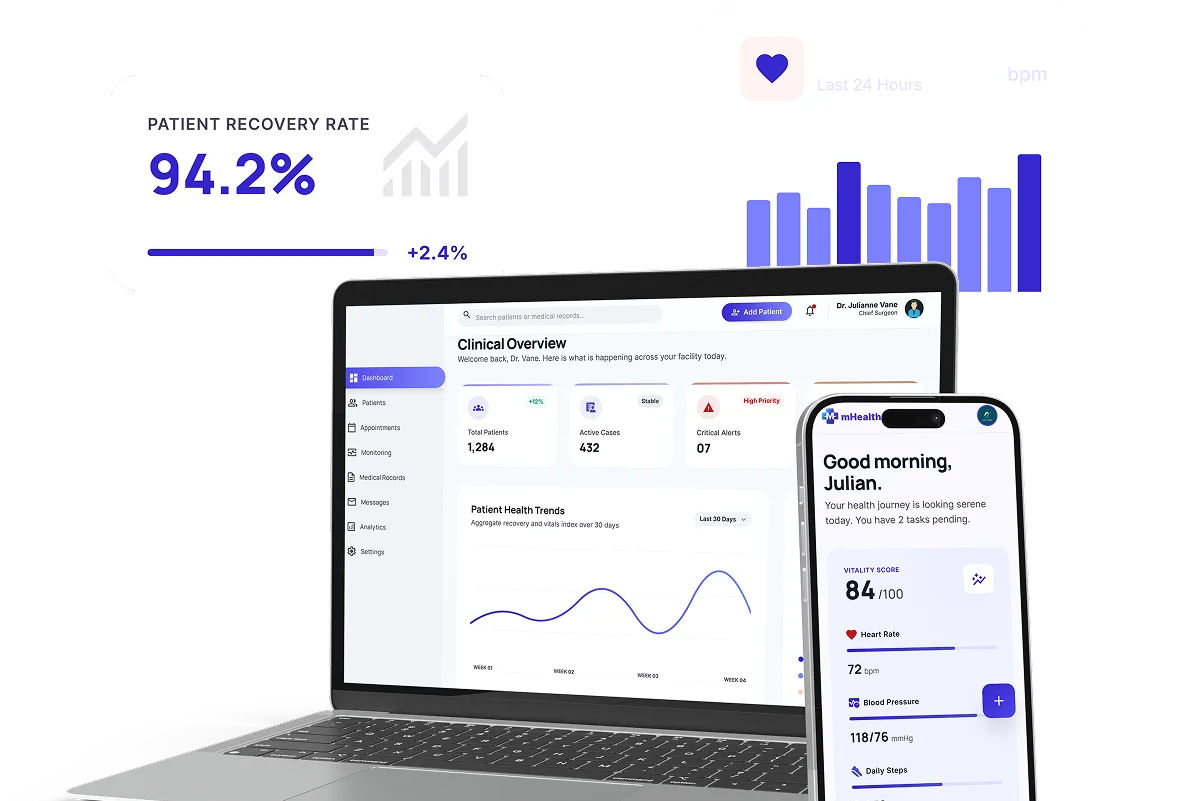
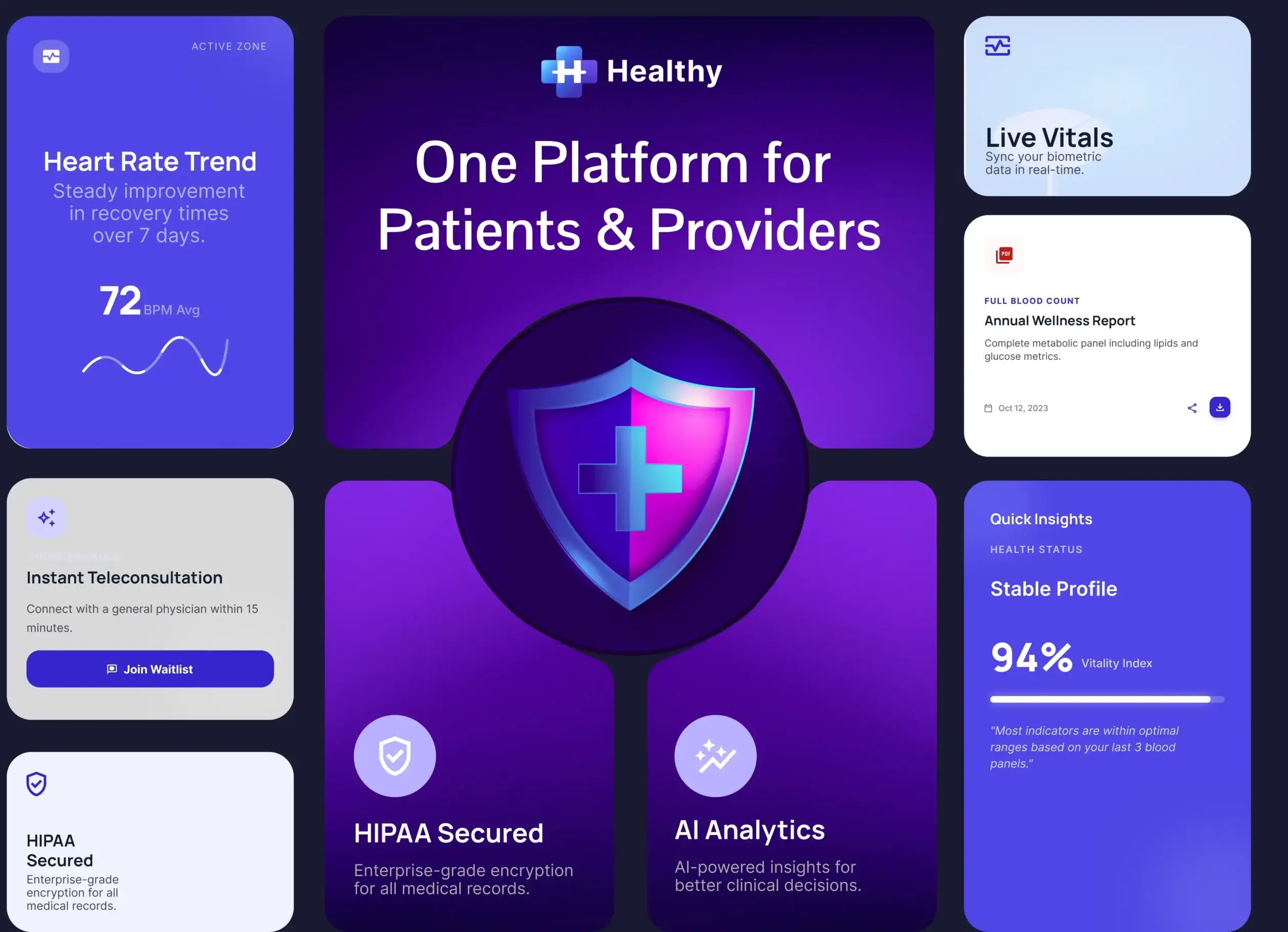
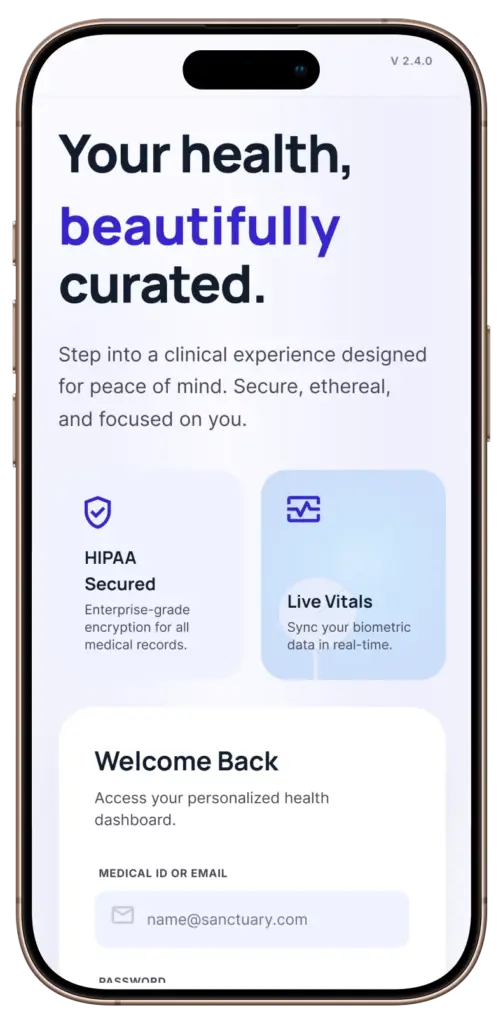
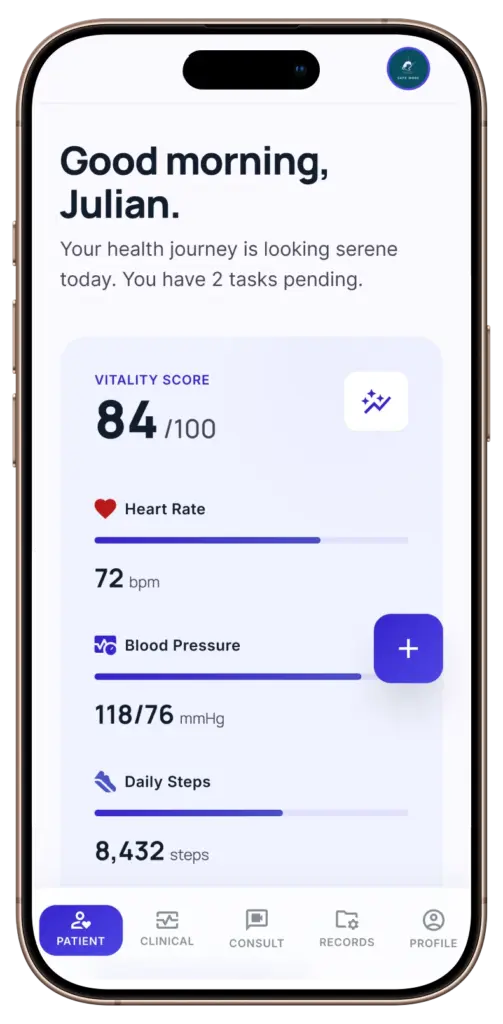
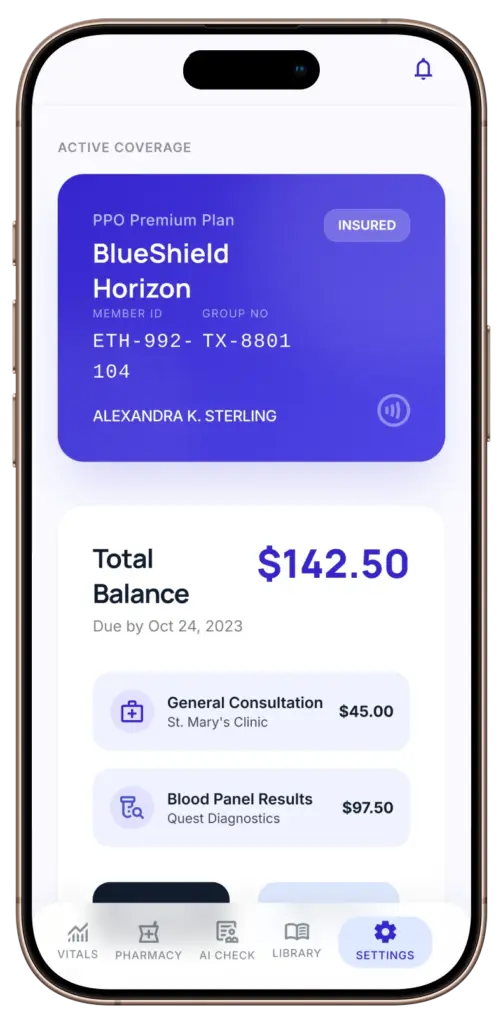
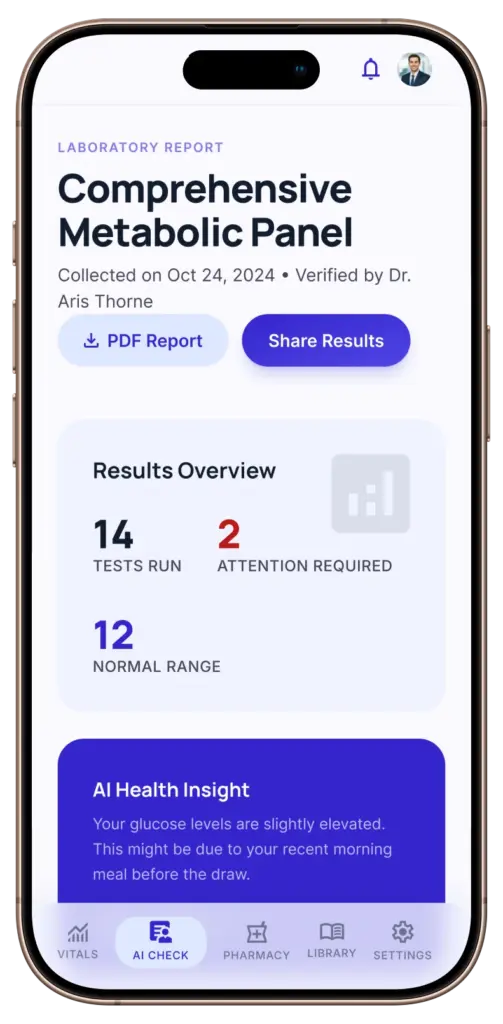
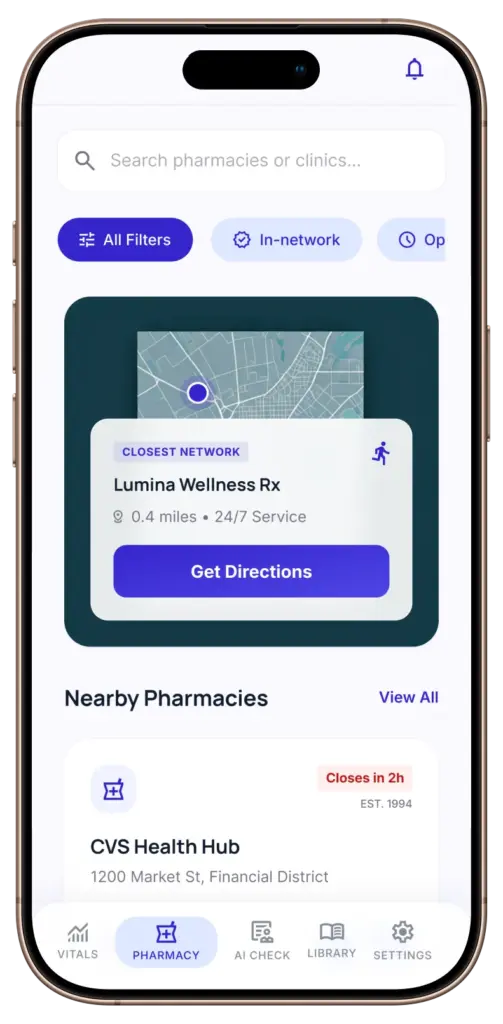
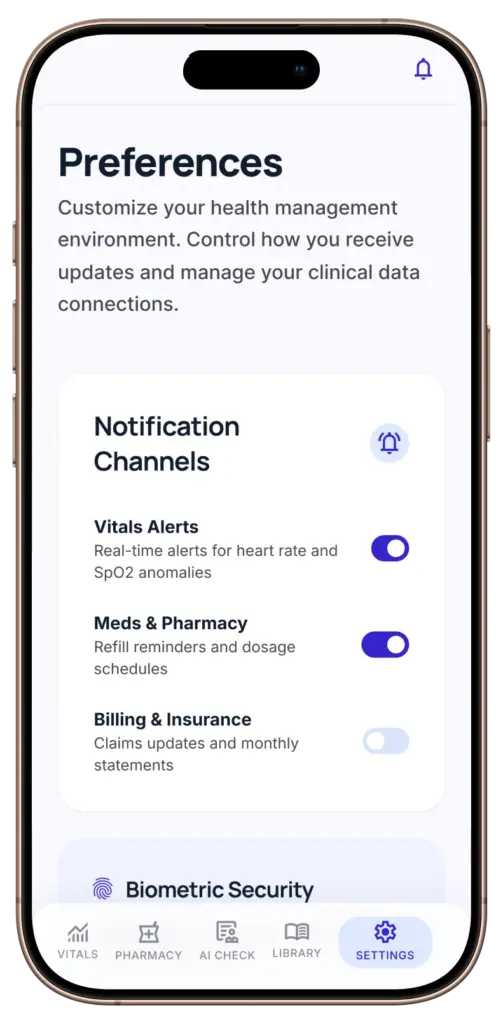
How Idea Usher engineered a full-spectrum, HIPAA-compliant mHealth platform on iOS, Android, and Web that unified patient engagement, remote monitoring, and clinical workflows for a 14-clinic healthcare network.
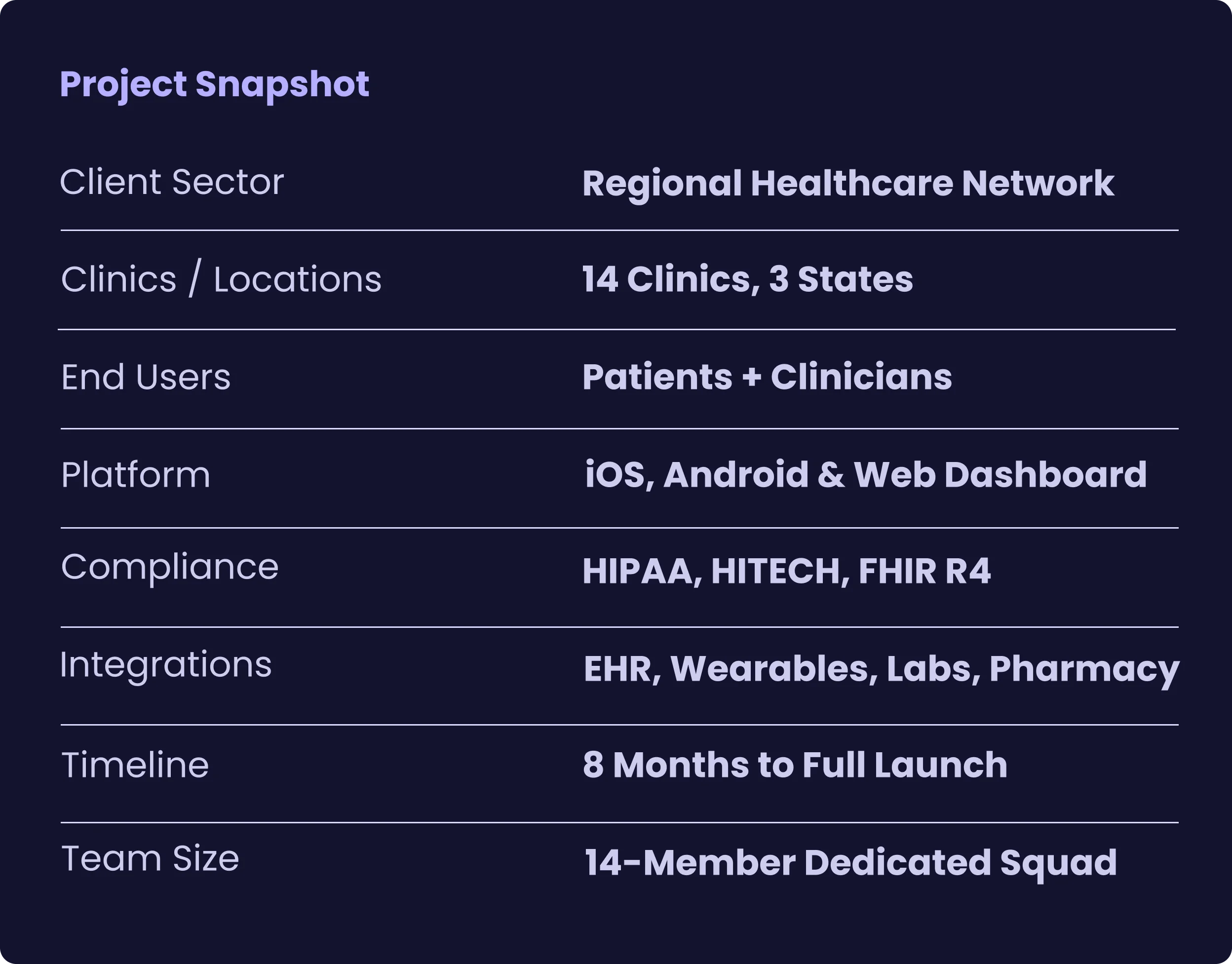
A rapidly growing regional healthcare network needed a single mobile platform to bridge the gap between its clinical teams and a patient population spread across urban and rural areas, many of whom had limited access to in-person care.
Our client operated 14 clinics across three states. Their patients, many managing chronic conditions like diabetes, hypertension, and heart disease, had no reliable digital touchpoint between visits. Follow-up calls were missed. Medication schedules were forgotten. Remote patients drove hours for 15-minute consultations.
Their existing patient-facing tools were a patchwork of outdated portals, third-party SMS reminders, and manual phone-based check-ins. None of these systems spoke to each other. Clinical staff were spending more time coordinating logistics than delivering care.
Idea Usher was brought in to architect and build a custom mHealth application from scratch, one that unified remote monitoring, telehealth, medication management, and care team communication into a single consumer-grade experience available on iOS, Android, and a clinical web dashboard.
Healthy App Development
iOS & Android & Web
Patients + Providers
Remote Patient Monitoring
Telehealth
HIPAA Complian
Wearable Integration
Chronic Care Management
HL7 / FHIR
mHealth App Development
iOS & Android & Web
Patients + Providers
Remote Patient Monitoring
Telehealth
HIPAA Compliant
Wearable Integration
Chronic Care Management
HL7 / FHIR
The Problem —
Key Challenge We Were Asked to Solve
Over three weeks of discovery sessions with clinical leads, patients, and IT staff, we mapped the full scope of what was broken before building a single screen.
No Continuous Patient-Provider
Connection:
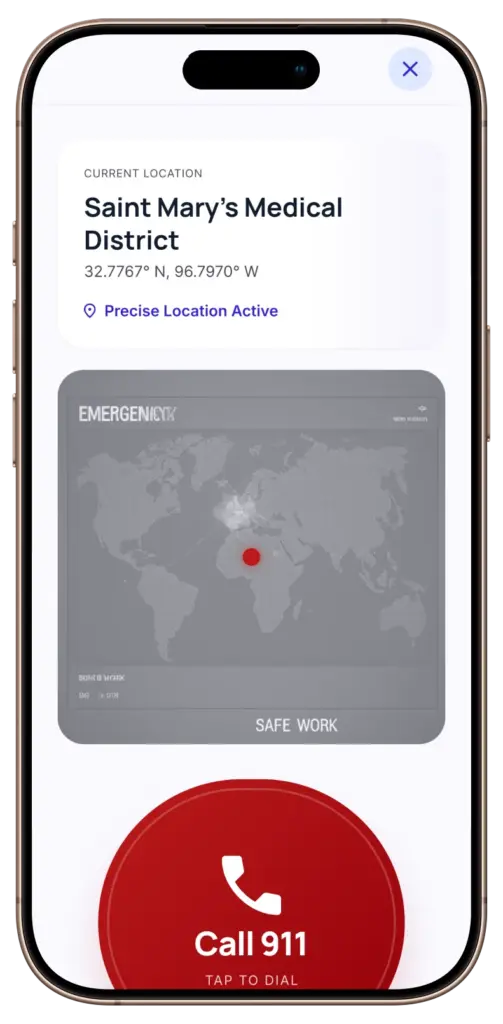
Between appointments, patients had no reliable way to reach their care team. Urgent questions led to ER visits that could have been handled through a simple digital check-in or virtual consultation
Poor Medication Adherence:
Chronic disease patients missed doses at alarming rates. There was no smart reminder system, no refill tracking, and no way for physicians to monitor compliance between visits
Disconnected Health Data from Wearables:
Patients used Fitbits, Apple Watches, and glucose monitors, but none of this data reached their clinical records. Doctors were making decisions without the most current biometric picture.
Fragmented Communication Channels:
Care teams used a combination of personal phones, unencrypted SMS, and email to communicate with patients, which created HIPAA risks and left no auditable conversation trail.
Inaccessible Care for Rural Patients:
Patients in remote areas faced a 2-4 hour round-trips for routine follow-ups. Telehealth wasn’t offered. This resulted in delayed diagnoses and deteriorating outcomes for a significant patient segment.
No Actionable Patient Health Insights:
Clinical leadership had no population-level visibility into patient health trends, at-risk cohorts, or outcome patterns. Strategic decisions were based on incomplete, retrospective data.
Building an mHealth app for patients & providers?
Our team builds full-spectrum mHealth platforms, including iOS patient apps, Android patient apps, and clinical web dashboards, all under one roof with a unified codebase and a consistent compliance posture. Let’s map your requirements at no cost.
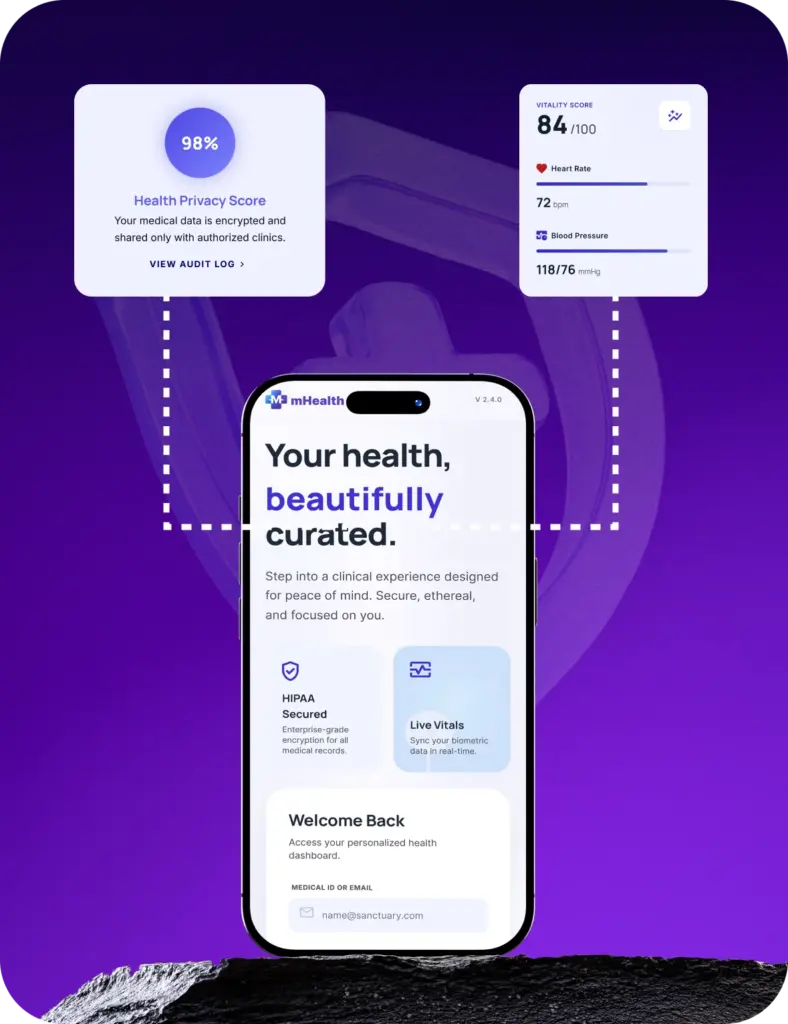
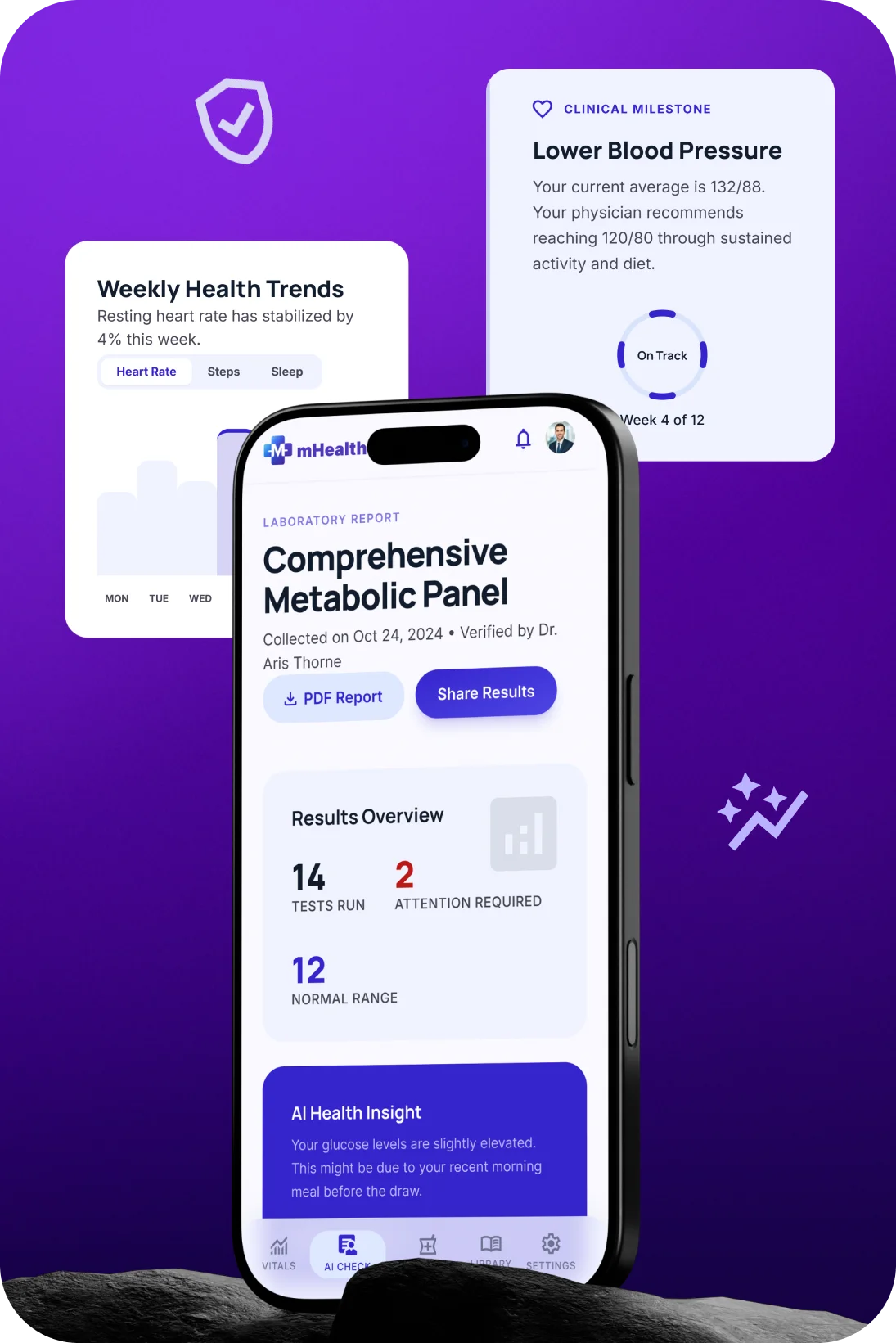
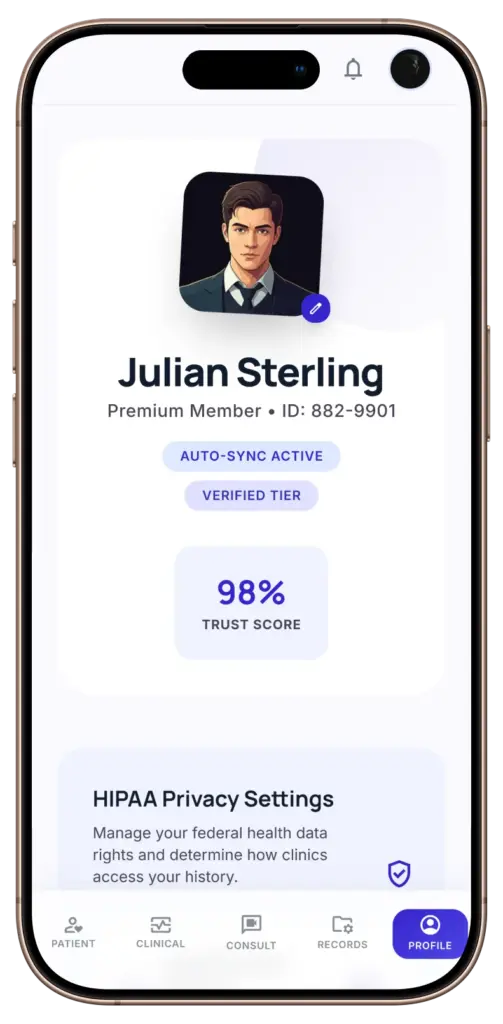
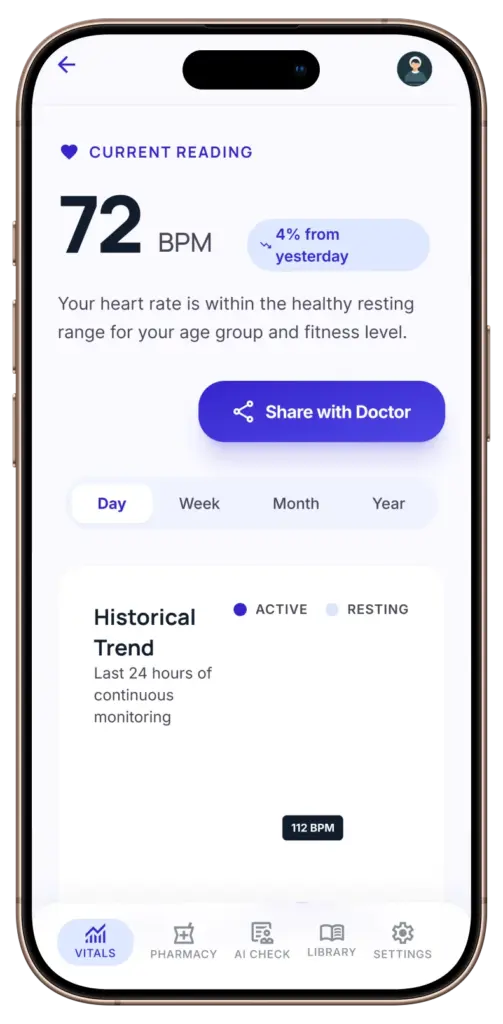
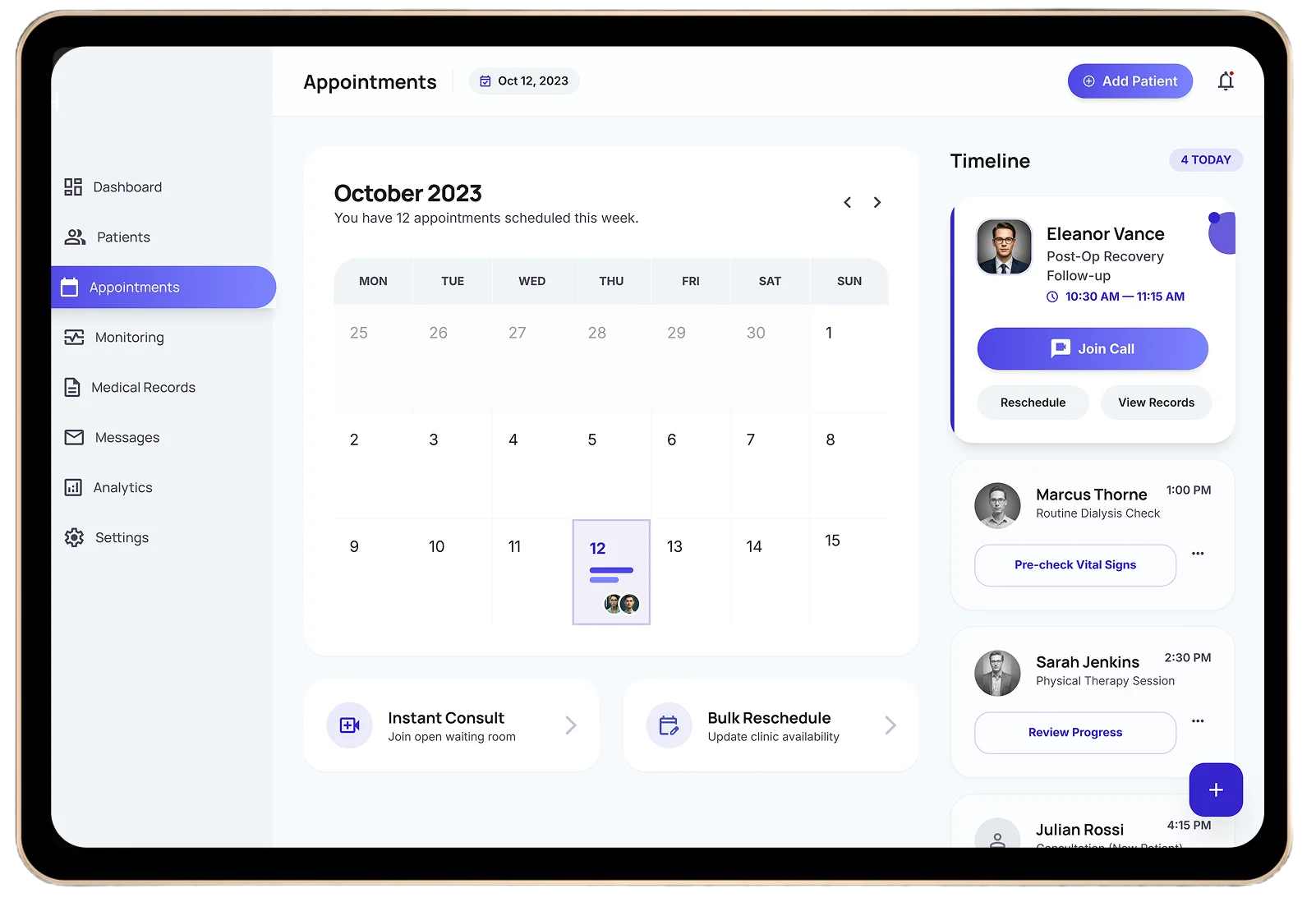
We built three interconnected products in one engagement, including a patient-facing iOS app, a patient-facing Android app, and a clinical web dashboard, all sharing a single secure backend and real-time data layer.
iOS App (Patient-facing)
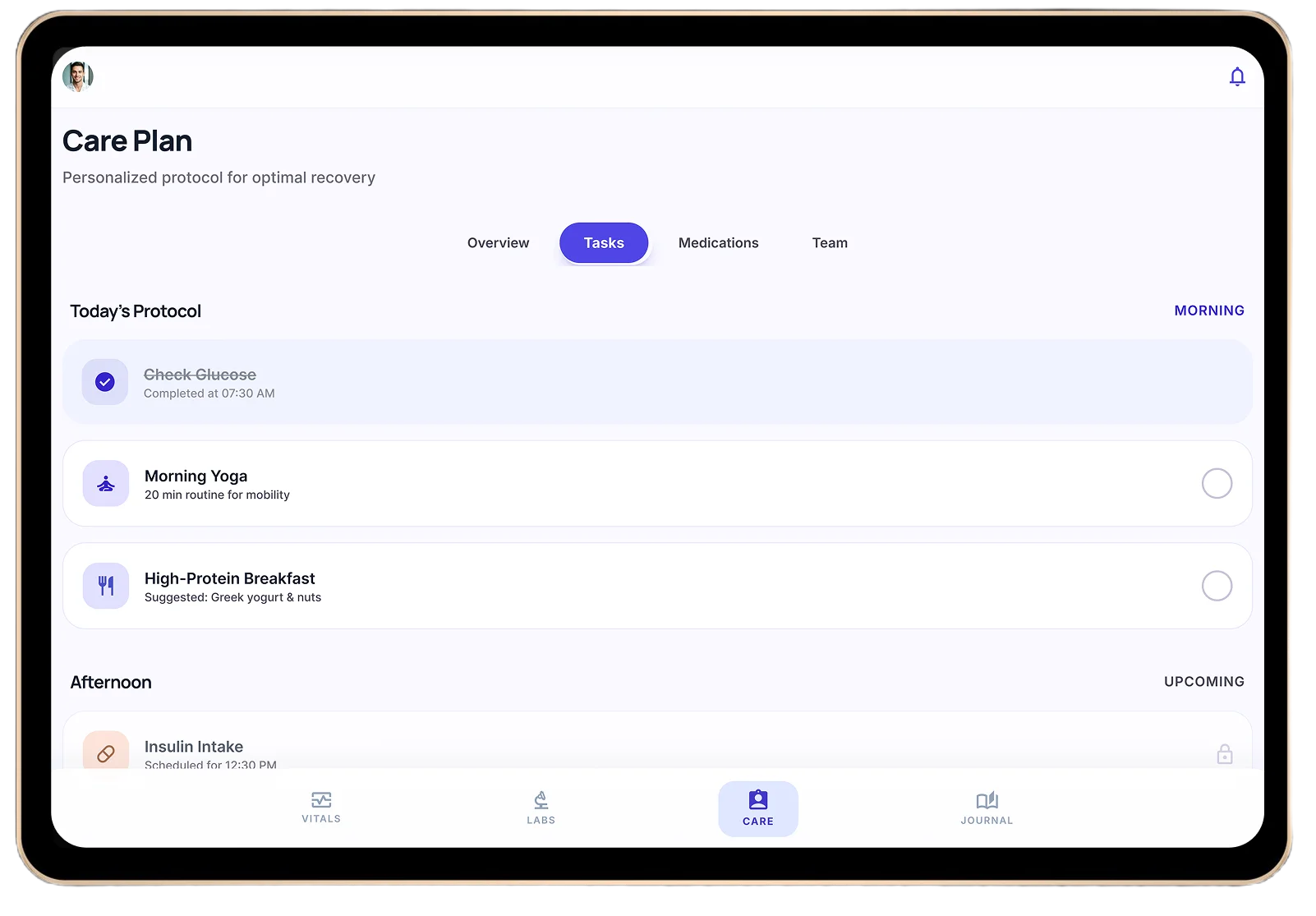
Android App (Patient-facing)
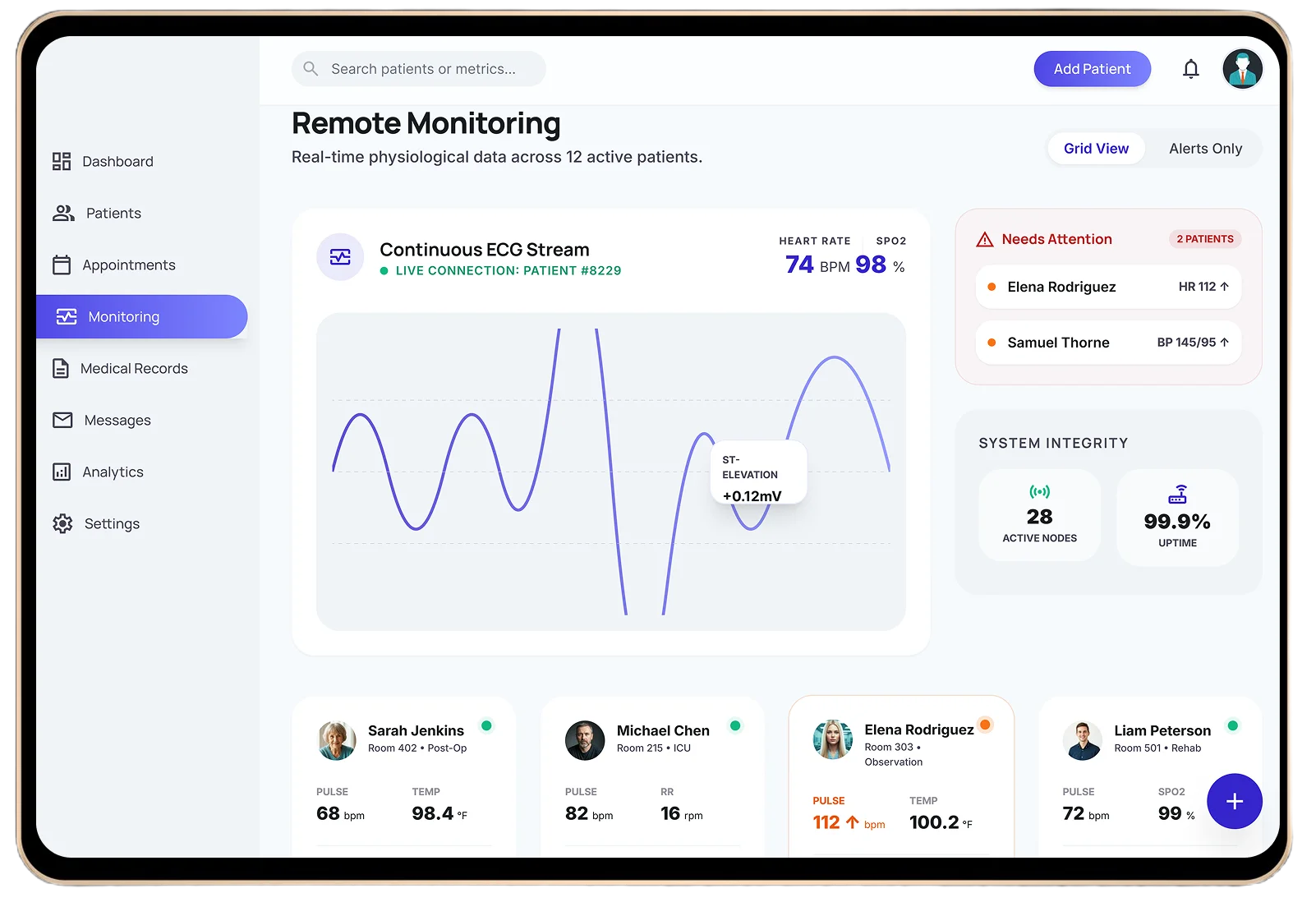
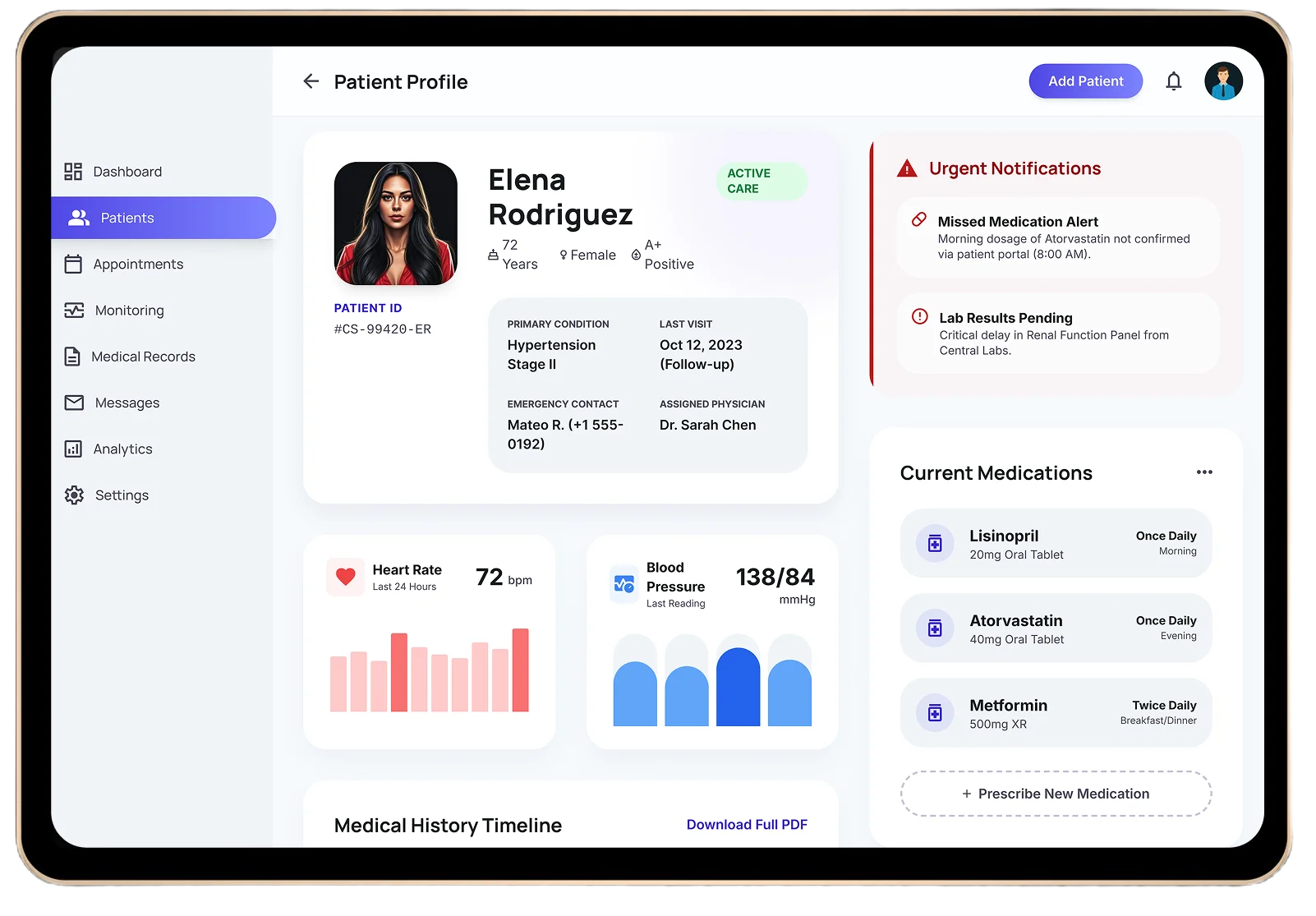
Web Dashboard (Provide-facing)
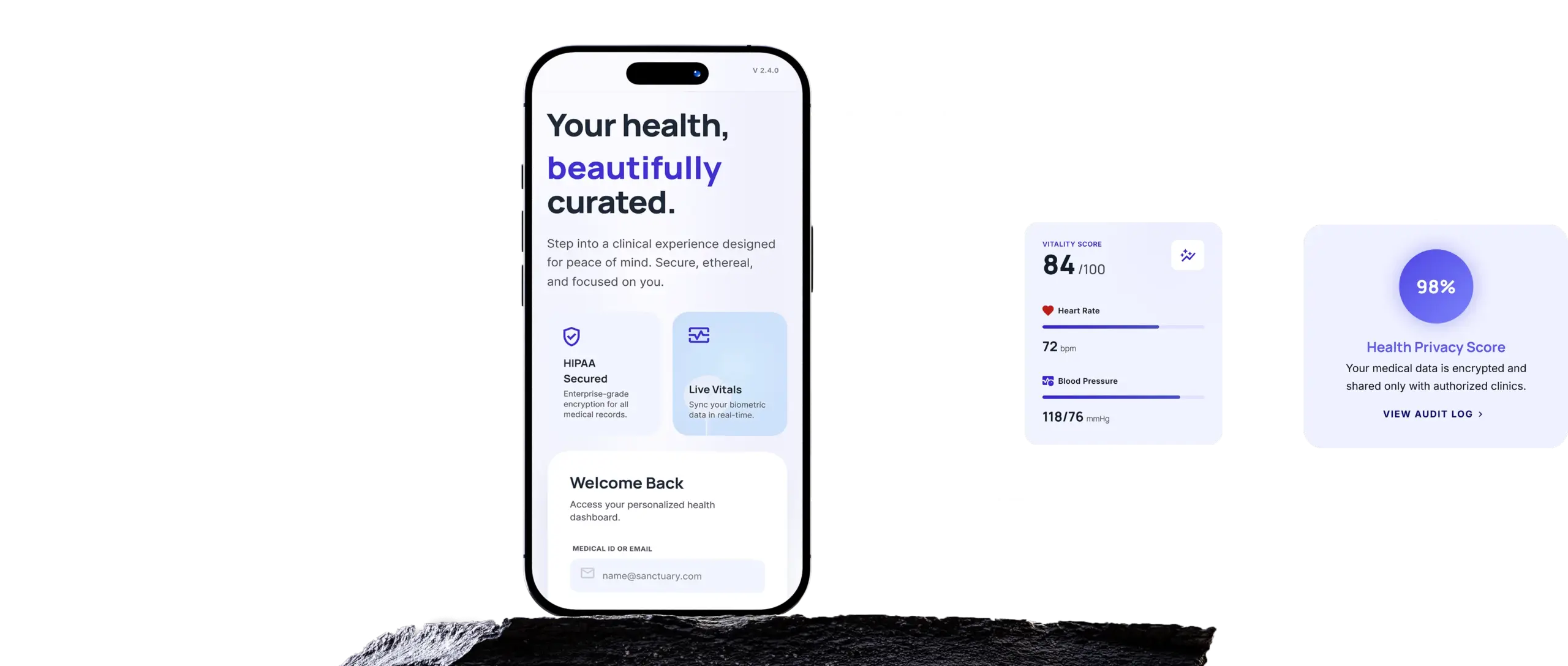
Patient-Facing mHealth App
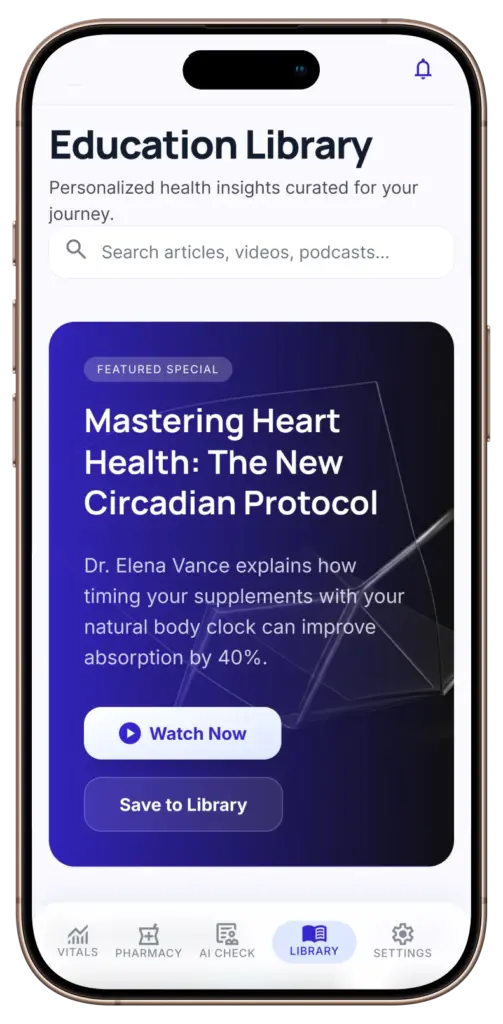
We build consumer-grade mobile health apps that patients actually love using. Intuitive design, smart notifications, and seamless data access drive engagement and adherence across chronic and acute care journeys.
Modules Included:
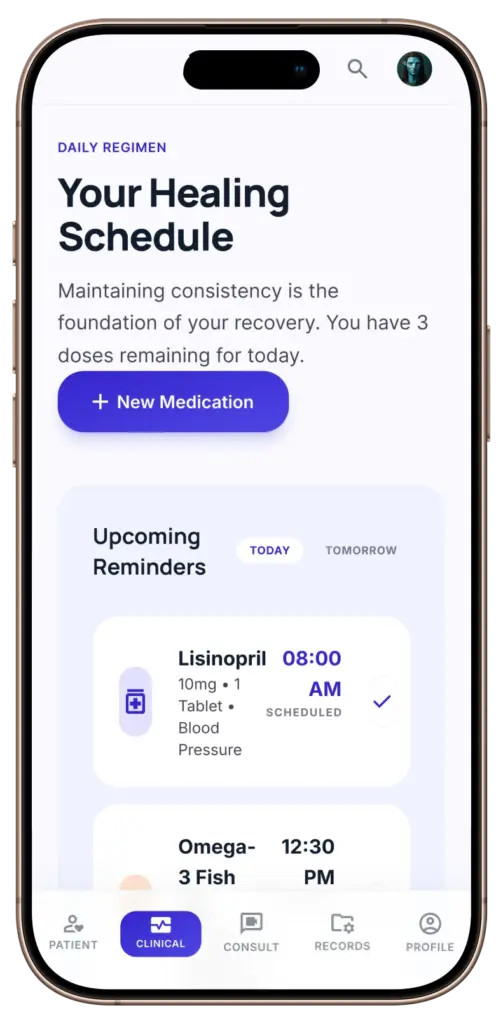
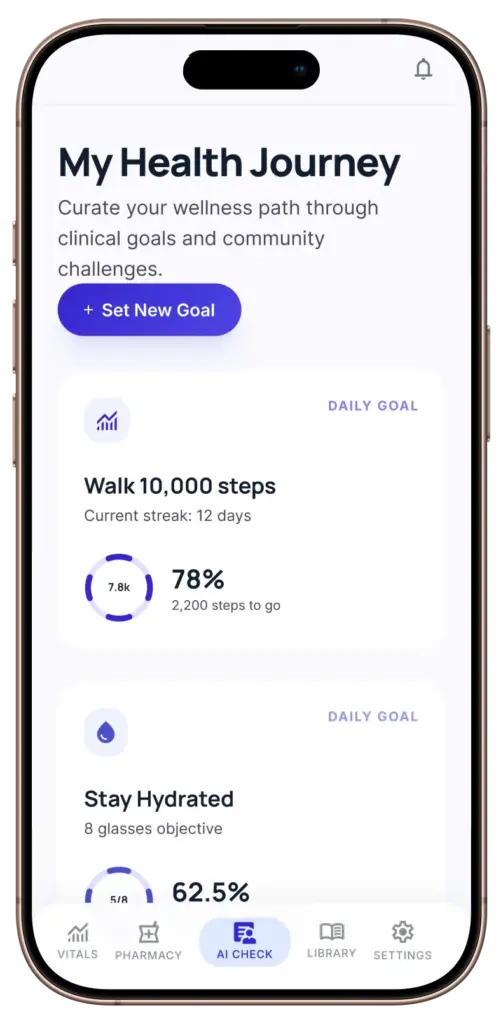
Medication Tracker & Smart Reminders
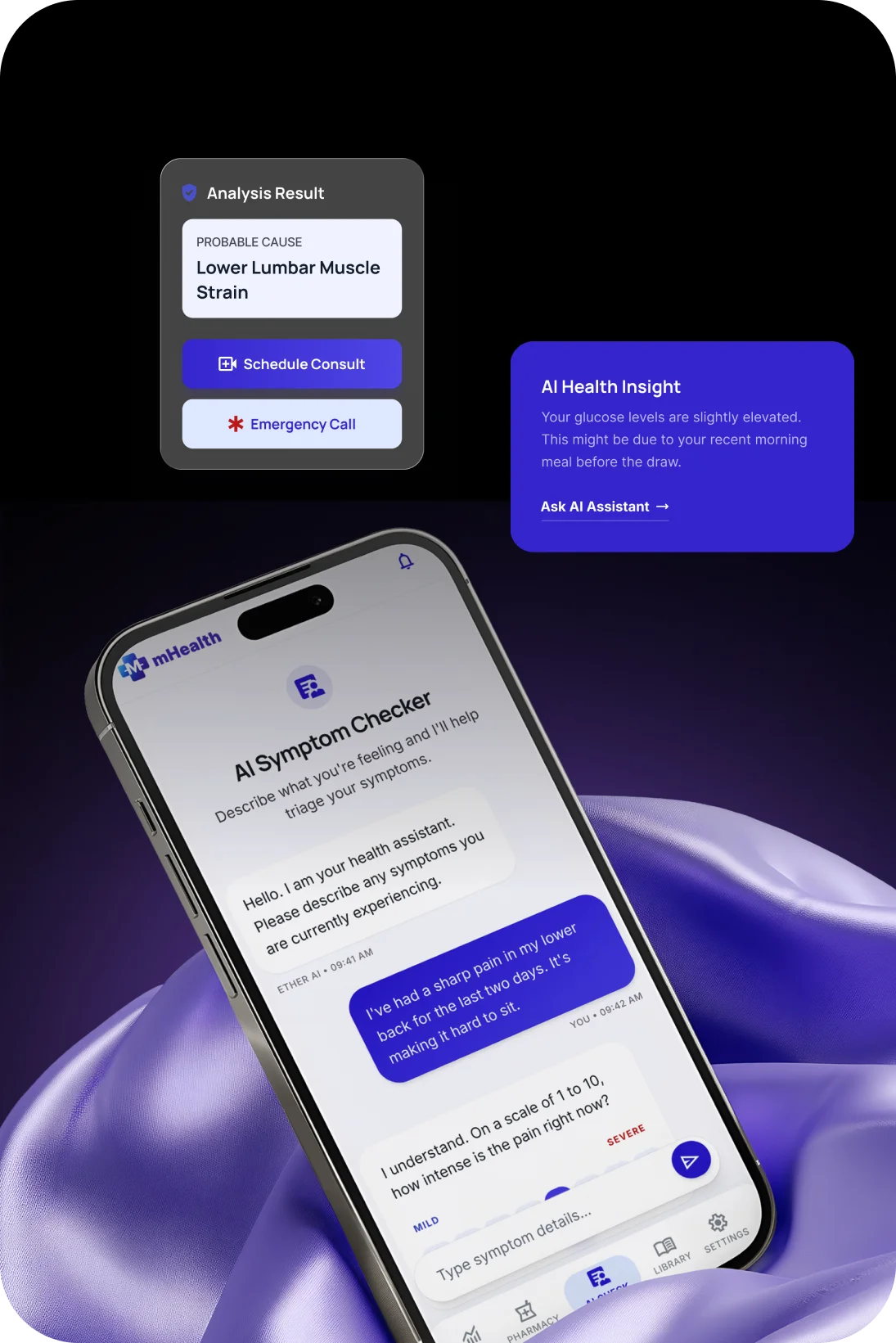
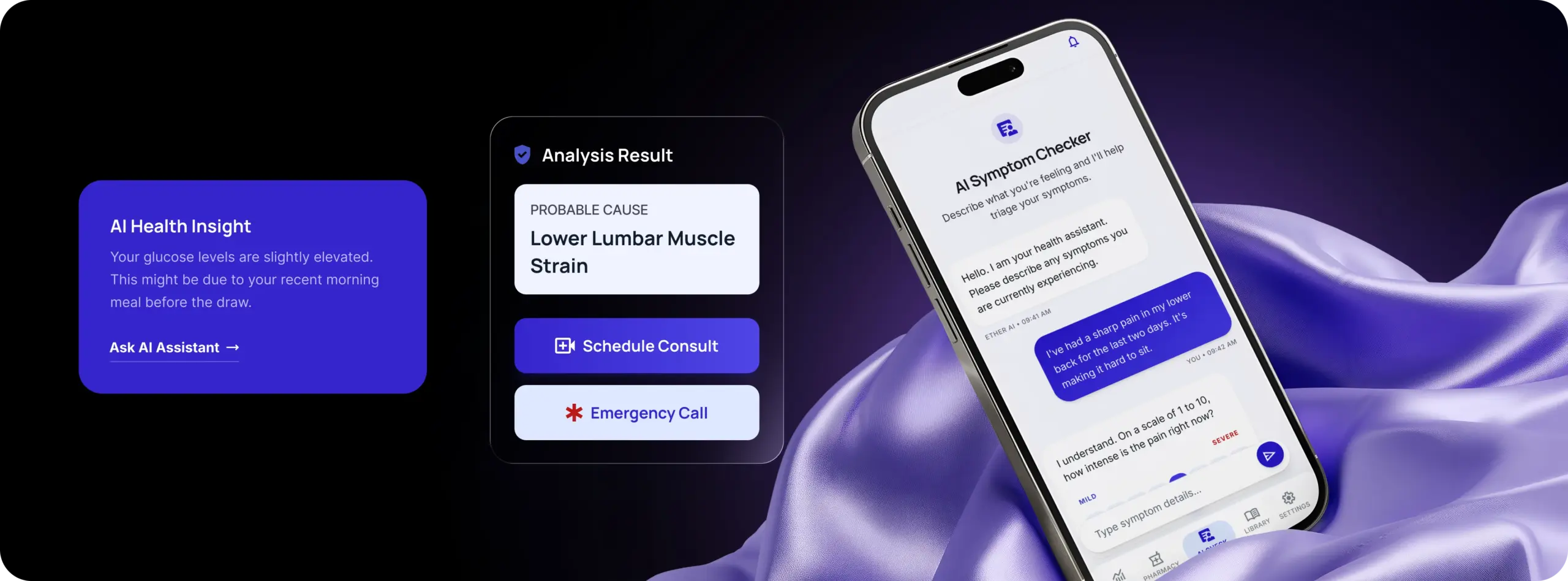
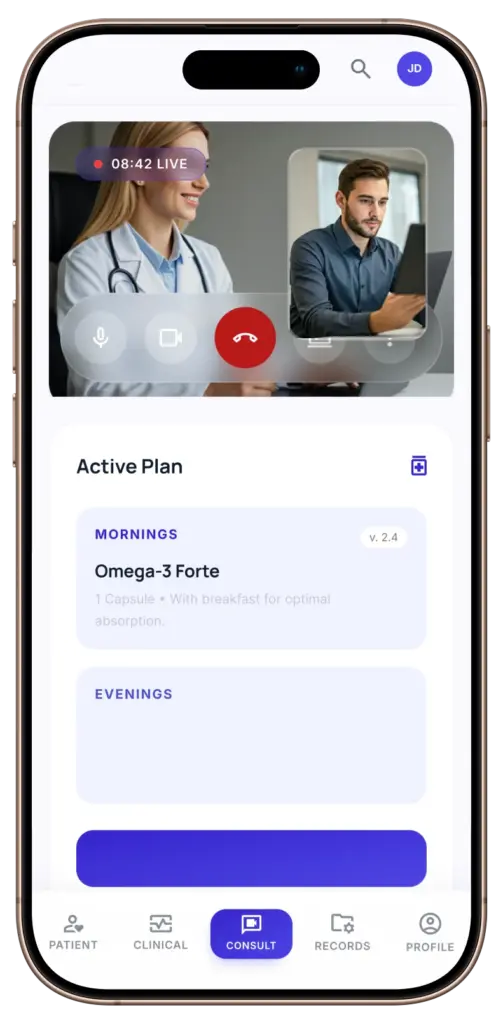
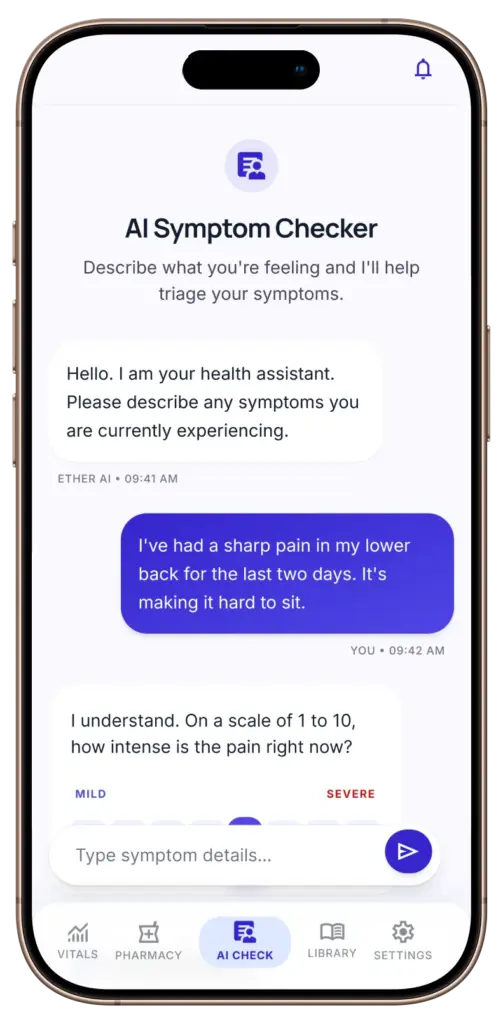
Telehealth & In-App Video Consultations
Symptom Logging & Daily Health Check-ins
Secure Messaging with Care Team
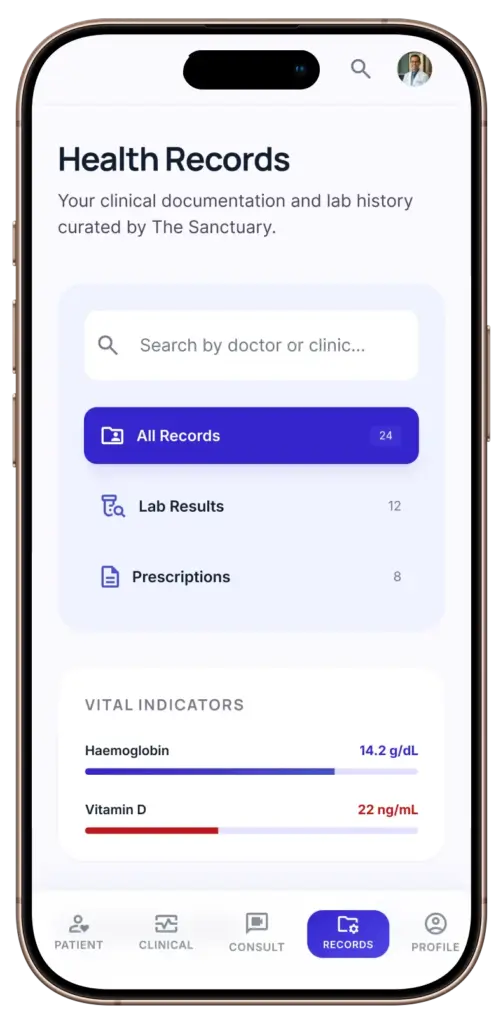
Lab Results & Document Access
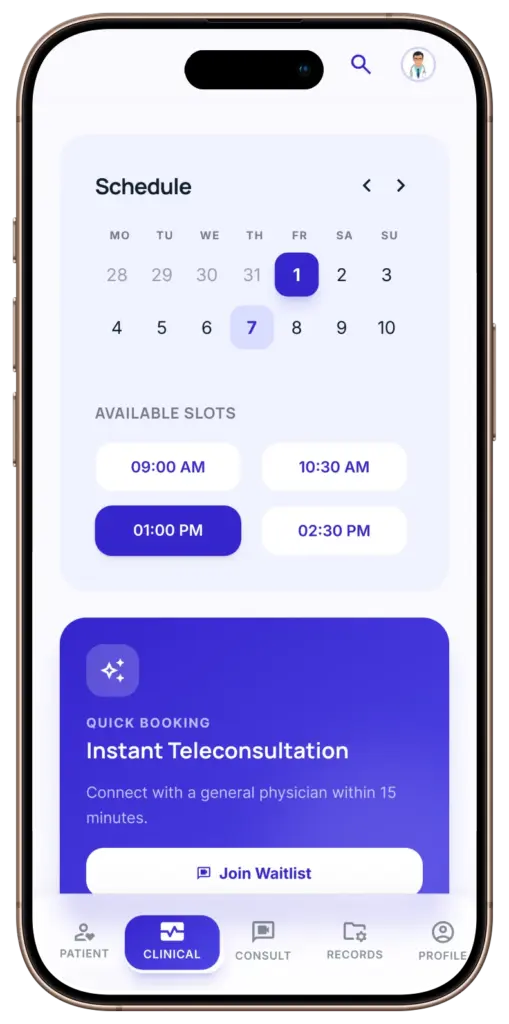
Appointment Booking & Calendar Sync
Wearable & IoT Device Integration
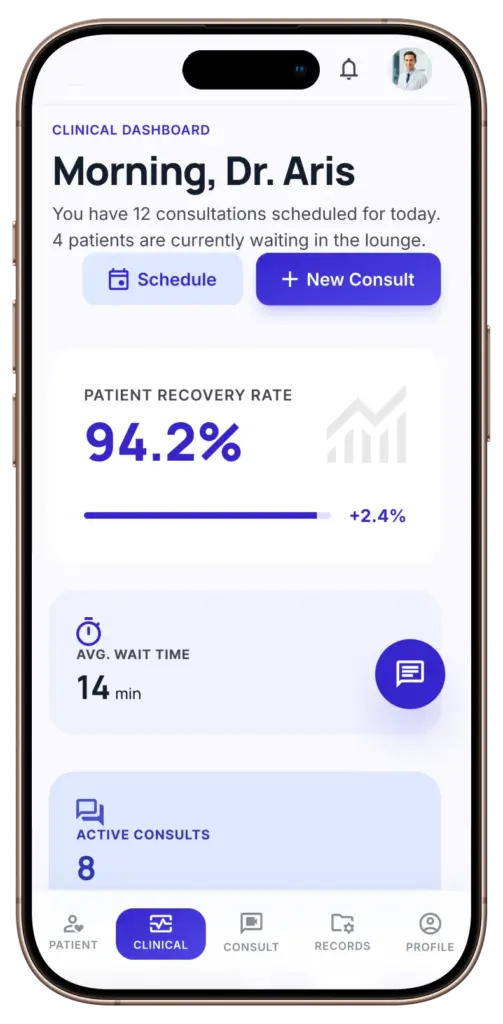
Clinical & Provider Dashboard
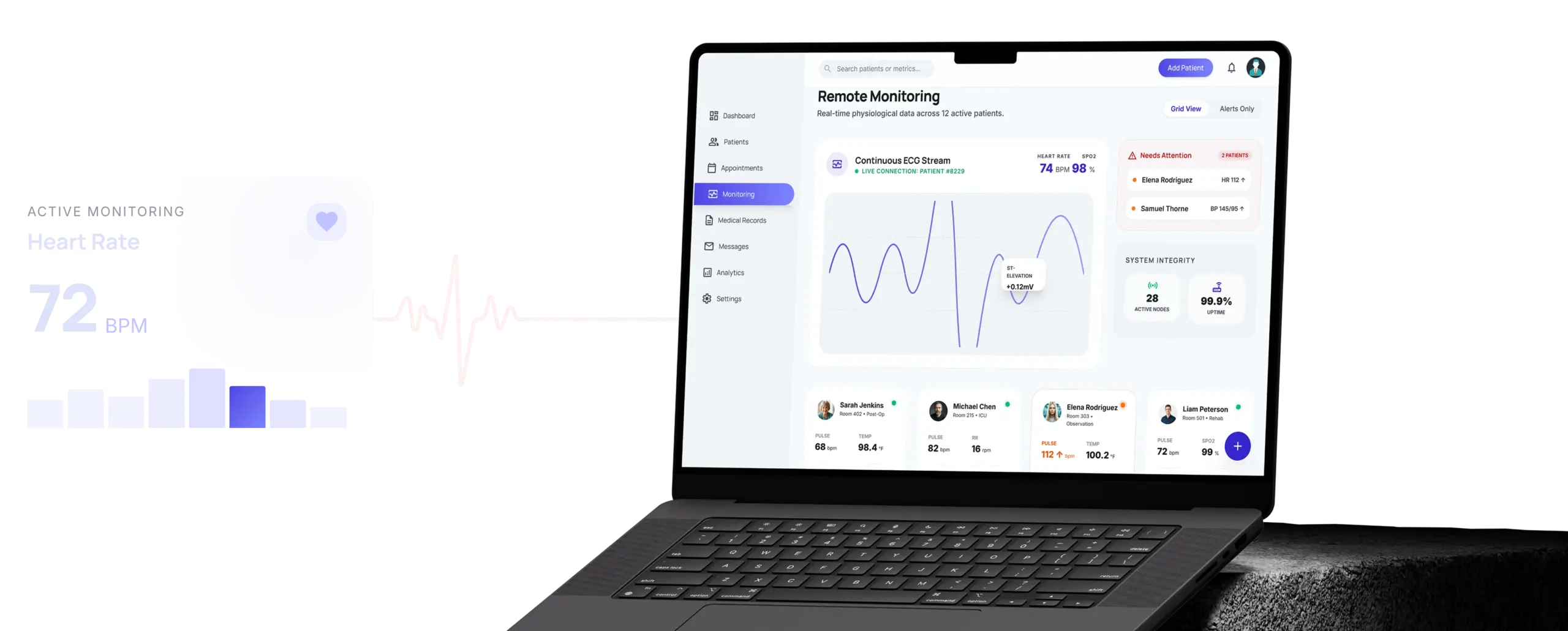
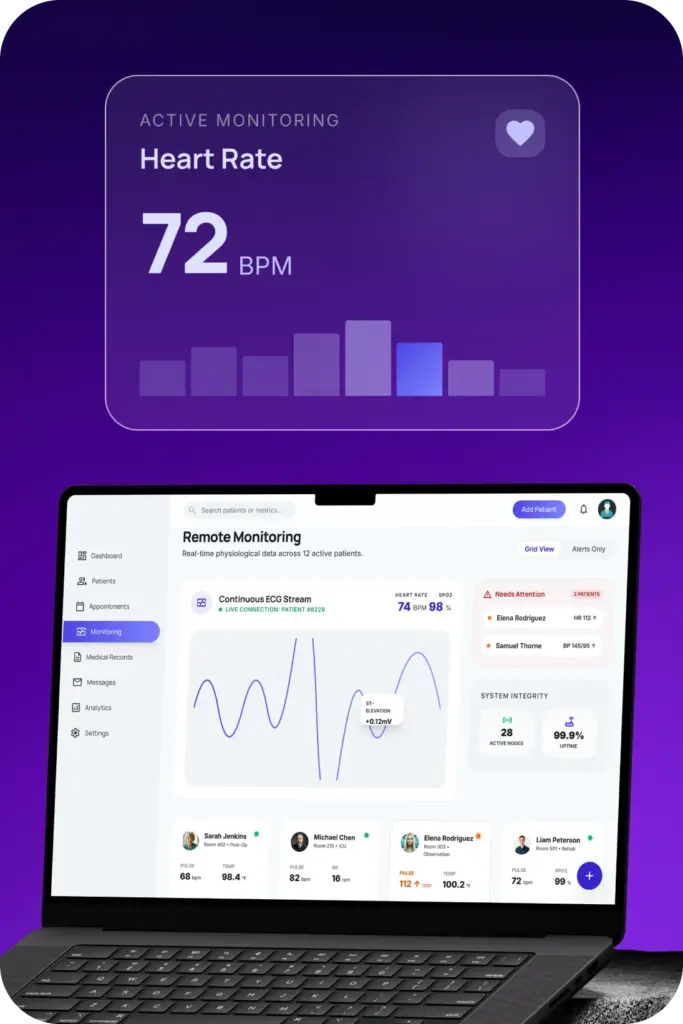
We build a paired web and mobile dashboard for clinical teams, giving doctors, nurses, and care coordinators real-time visibility into patient health data, alerts, and engagement metrics across the full panel.
Modules Included
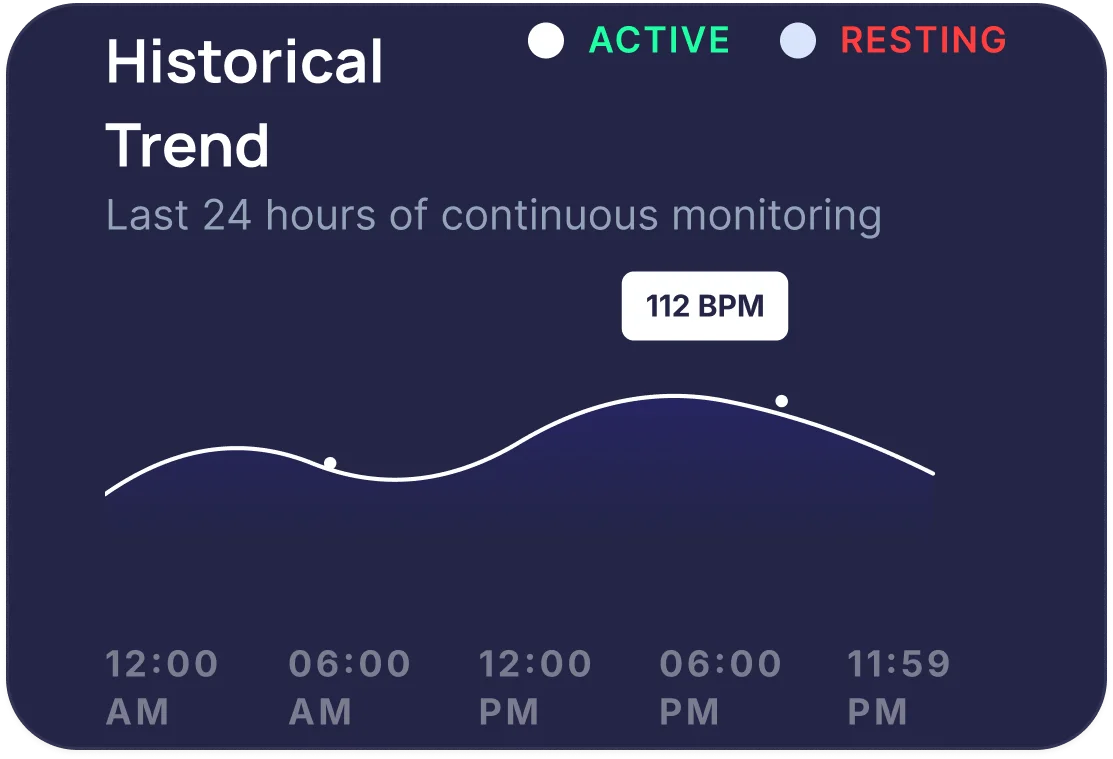
Remote Patient Monitoring (RPM) Dashboard
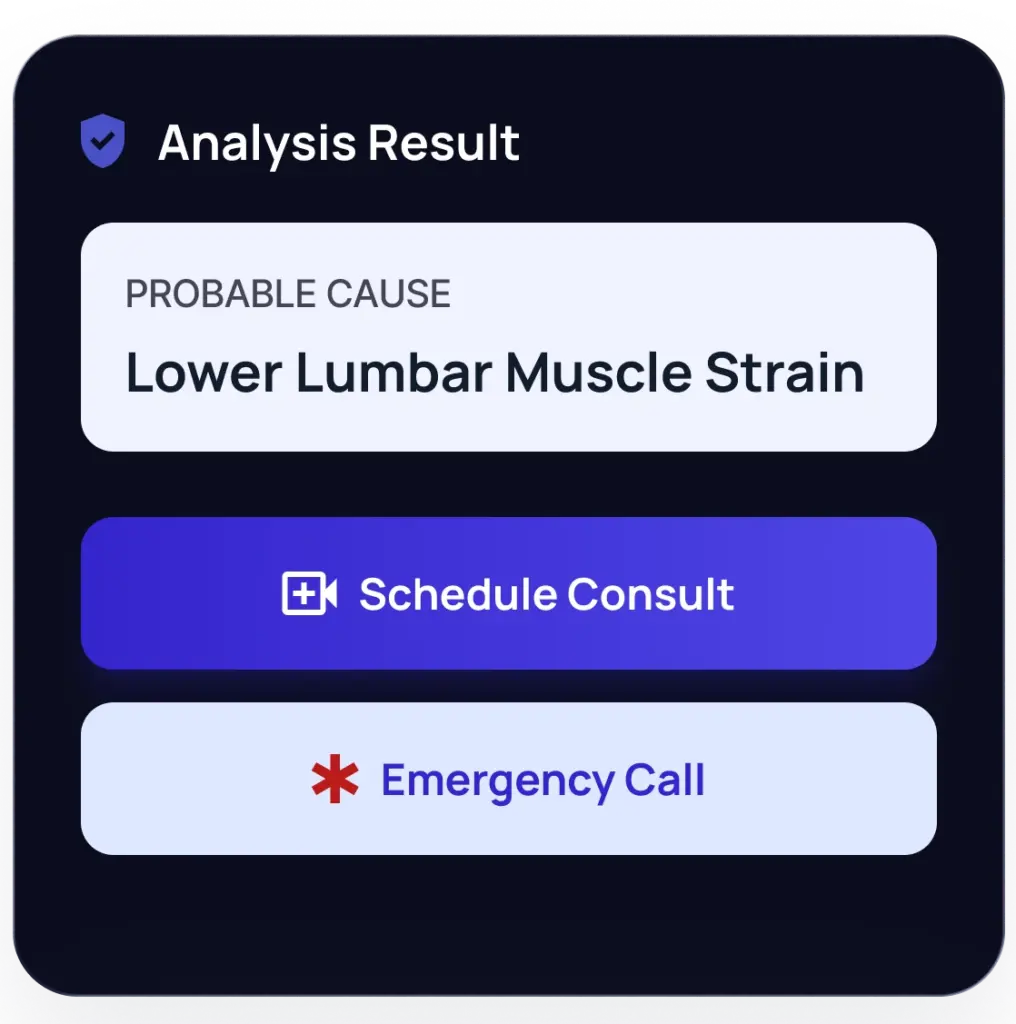
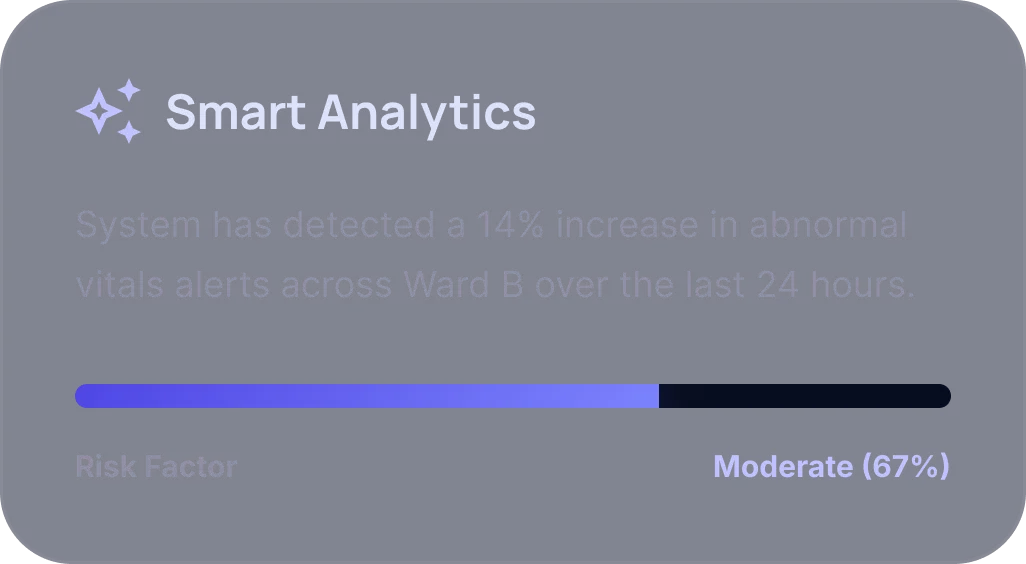
AI-Powered Risk Alerts & Care Gaps
Population Health Analytics
EHR/EMR Sync via FHIR R4
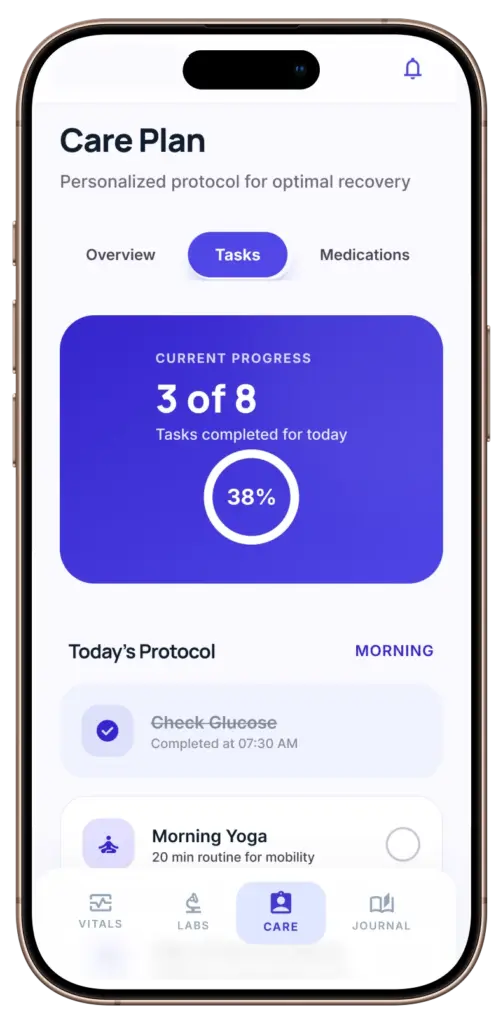
Care Plan Management
Telehealth Session Management
Audit Logs & Compliance Reporting
Core Features of the Custom mHealth Application
Every feature serves two masters simultaneously, with the patient using the iOS or Android app and the provider monitoring their panel from the web dashboard. This dual-experience design is what makes the platform genuinely useful for both sides of care.
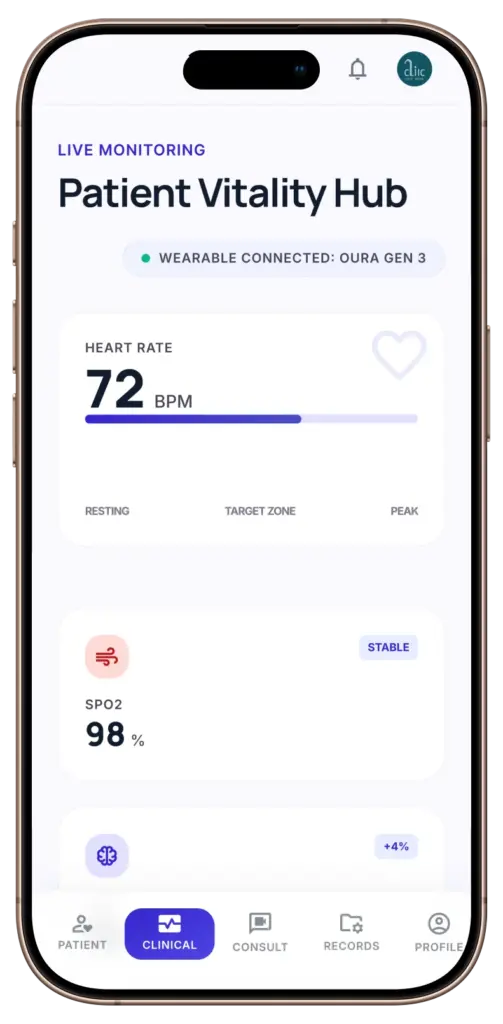
Remote Patient Monitoring (RPM):
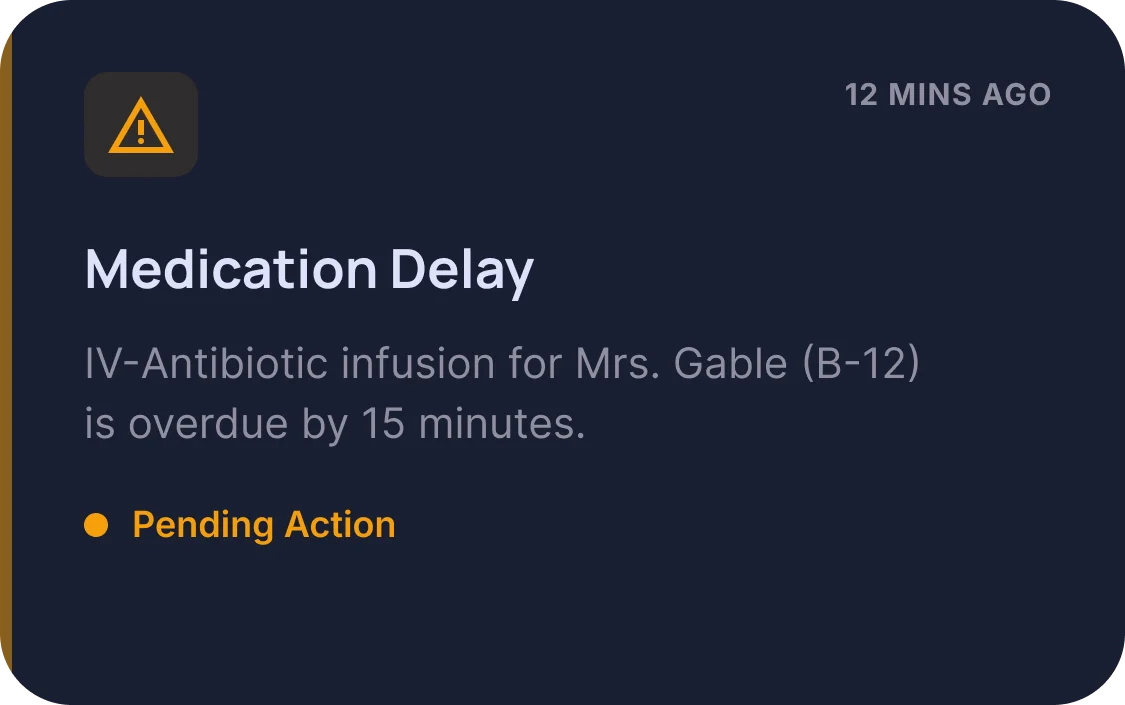
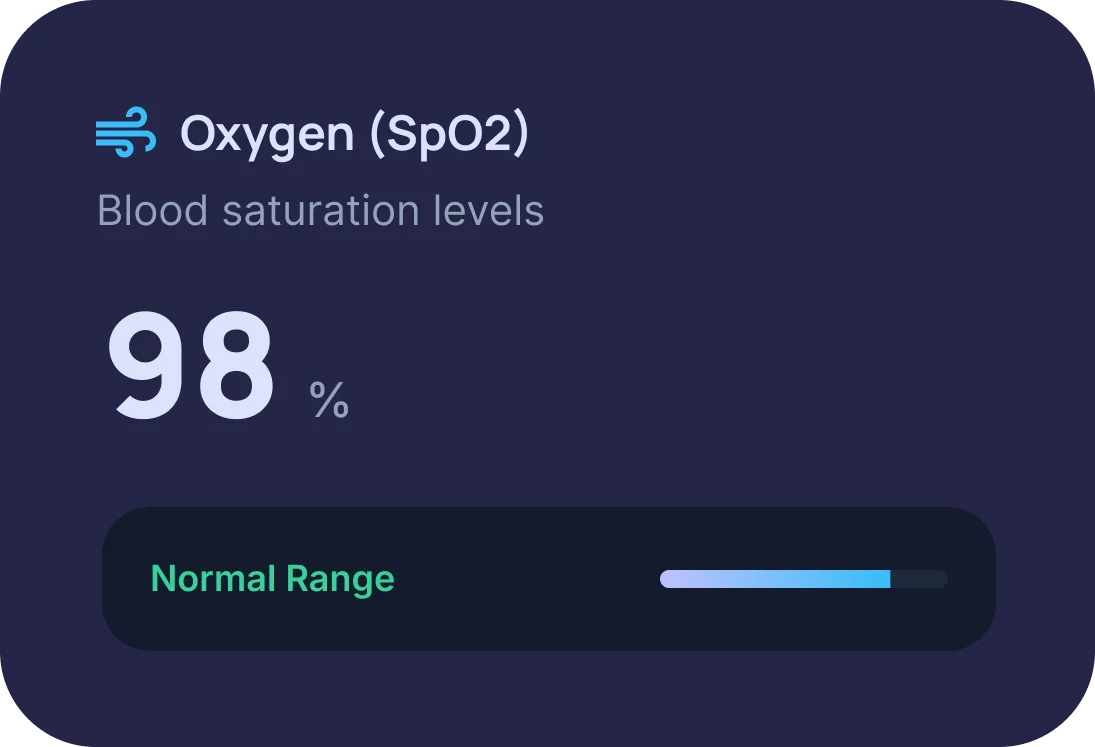
Continuous data streams from wearables, glucose monitors, blood pressure cuffs, and pulse oximeters feed directly into patient records and trigger real-time alerts for clinical staff when values fall outside safe thresholds.
Telehealth & Video Consultations:
End-to-end encrypted video sessions with automated pre-visit intake, consent capture, session notes, and post-consultation follow-up tasks — all linked directly to the patient’s EHR record.
Medication Management & Adherence Tracking:
Smart reminders with adaptive scheduling, refill notifications, drug-interaction warnings, and real-time adherence dashboards for both patients and clinical teams — reducing missed doses by up to 67%.
Secure HIPAA-Compliant Messaging:
Encrypted in-app messaging between patients and care teams replaces insecure SMS and email. Full audit trails, read receipts, and media sharing for wound photos, documents, and lab reports.
AI-Powered Health Analytics:
Predictive risk scoring identifies high-acuity patients before they deteriorate. Population health dashboards surface trends across disease cohorts, enabling proactive intervention and resource allocation.
Smart Appointment Scheduling:
AI-assisted scheduling with no-show prediction, automated reminders via push, SMS, and email, waitlist management, and seamless rescheduling — reducing no-show rates by 48% in the first quarter post-launch.
Wearable & IoT Device Integration:
Native integration with Apple HealthKit, Google Fit, Fitbit, Dexcom, Withings, and 30+ medical-grade IoT devices. Real-time biometric streams appear in both the patient app and the clinician dashboard.
HIPAA & HITECH Compliance Layer:
End-to-end AES-256 encryption, role-based access control, biometric authentication, automatic session timeouts, and complete audit logs for every data access event — built into the architecture from day one.
Personal Health Records (PHR) Access:
Patients access their complete health history — lab results, imaging, immunizations, visit summaries, and care plans — through a secure, easy-to-navigate personal health record module within the app.
Push Notifications & Engagement Engine:
Behaviorally triggered notifications for medication times, upcoming appointments, abnormal readings, and care plan milestones — with smart frequency controls to prevent notification fatigue.
Multi-Role User Management:
Distinct experiences for patients, primary physicians, specialists, nurses, care coordinators, and administrators — each with granular permission controls, custom dashboards, and role-appropriate data access.
Multilingual & Accessibility Support:
The app was built with support for 8 languages, WCAG 2.1 accessibility compliance, large-text modes, and voice-navigation features to serve elderly patients and those with limited digital literacy.
Full Solution Suite —
Everything We Build in the mHealth Space
Beyond the flagship app — our mHealth development capability spans every digital health product category a modern healthcare organization needs.
Chronic Disease Management Apps
Purpose-built apps for diabetes, hypertension, cardiac care, and COPD, with condition-specific monitoring protocols, personalized care plans, and clinical alert thresholds.
Mental Health & Therapy Apps
Secure teletherapy platforms, mood tracking, CBT-based digital interventions, and crisis support integrations, designed with trauma-informed UX principles for sensitive clinical populations.
Hospital & Clinic Companion Apps
In-patient navigation, digital admission, real-time wait time updates, wayfinding, and discharge planning apps that improve patient experience scores and reduce administrative burden.
Women's & Maternal
Health Apps
Pregnancy tracking, postpartum monitoring, fertility management, and lactation support apps, with OB-GYN telehealth integration and automated high-risk pregnancy alerts.
Fitness & Preventive
Wellness Apps
Consumer wellness platforms with AI-powered health coaching, nutritional tracking, sleep analytics, fitness goal management, and gamification features that sustain long-term engagement.
Post-Surgical Recovery Apps
Structured rehabilitation apps with daily exercise protocols, pain logging, surgical wound photo tracking, and direct surgeon communication to reduce readmission rates after major procedures.
Hospital & Clinic Companion Apps
In-patient navigation, digital admission, real-time wait time updates, wayfinding, and discharge planning apps that improve patient experience scores and reduce administrative burden.
Fitness & Preventive
Wellness Apps
Consumer wellness platforms with AI-powered health coaching, nutritional tracking, sleep analytics, fitness goal management, and gamification features that sustain long-term engagement.
Platform Integrations —
mHealth Integrations Delivered
We integrated the app with devices, platforms, and healthcare systems already used by patients and clinical teams:
Apple HealthKit & Google Fit
Real-time health and activity data sync
Fitbit, Garmin & CGM Devices
Continuous biometric and glucose monitoring
Stripe
Secure in-app payments for care services
Epic & AthenaHealth (EHR)
Continuous biometric and glucose monitoring
Twilio & SendGrid
HIPAA-compliant notifications and reminders
Stripe
Secure in-app payments for care services
Withings & Omron
Connected devices for remote patient monitoring
Twilio & SendGrid
HIPAA-compliant notifications and reminders
Why Go Custom —
Benefits of Custom mHealth App Development
Off-the-shelf health apps are designed for general use. In this project, the requirement was to support specific clinical workflows and patient needs, which required a fully custom approach.
01. Designed Around Clinical Workflows
Every user flow, alert threshold, and data field was structured to reflect how the clinical team operates in practice, covering primary care, specialist coordination, and discharge planning.
02. Deep Integration with Existing Systems
The application was integrated directly with EHR systems, billing platforms, lab systems, and insurance workflows, ensuring consistent data flow without reliance on middleware or fragmented pipelines
03. Better Patient Engagement & Retention
The app experience was built around the target patient population, including appropriate language, accessibility support, and condition-specific content. This led to stronger adoption and sustained daily usage compared to generic solutions.
04. Full Compliance Ownership
The system was developed with complete control over HIPAA compliance, including data handling, storage, audit trails, and breach response protocols, removing dependency on third-party compliance structures.
05. New Revenue Streams via RPM & Telehealth
The platform supports RPM and CCM programs, enabling the client to generate recurring revenue through reimbursable clinical services.
06. Scalable for Network Expansion
The architecture was built to support future growth, making it easy to add new clinics, specialties, and patient groups without pricing constraints or platform limitations.
Want to know what a custom mHealth app would cost for your organization?
Every project is unique. Share your requirements, and our mHealth specialists will send you a tailored scope and estimate, usually within 48 hours.
Every technology choice was driven by healthcare-grade security requirements, cross-platform performance, and long-term maintainability
React Native: iOS & Android App
Next.js: Clinician Web Dashboard
Node.js: API & Backend Services
PostgreSQL: Primary Database
AWS (HIPAA BAA): Cloud Infrastructure
FHIR R4 APIs: EHR Interoperability
WebRTC: Telehealth Video
AES-256 Encryption: Data Security
Redis: Real-time & Caching
Apple HealthKit / Google Fit: Wearable Integration
Firebase / FCM: Push Notifications
TensorFlow Lite: On-Device AI Models
Kubernetes: Container Orchestration
Twilio: SMS & Voice Alerts
Stripe: In-App Payments
GraphQL: Flexible Data Queries
React.js
iOS & Android App
Next.js
Clinician Web Dashboard
Node.js
API & Backend Services
PostgreSQL
Primary Database
AWS (HIPAA BAA)
Cloud Infrastructure
FHIR R4
EHR Interoperability
WebRTC
Telehealth Video
AES-256 Encryption
Data Security
Redis
Caching & Real-time
Apple HealthKit /
Google Fit
Wearable Integration
Firebase / FCM
Push Notifications
TensorFlow Lite
On-Device AI Models
Kubernetes
Container Orchestration
Twilio
SMS & Voice Alerts
Stripe
In-App Payments
GraphQL
Flexible Data Queries
Our Development Approach —
How We Build Custom mHealth Application?
The development process was structured around real clinical workflows, compliance requirements, and patient safety. Each phase was executed with a focus on delivering a reliable and clinically aligned solution.
01. Discovery and Patient Journey Mapping
We conducted structured workshops with patients, clinicians, and care coordinators to map the complete care journey. This helped identify key moments where digital intervention could improve outcomes without adding friction.
02. Clinical Requirements and Compliance Architecture
Clinical requirements were translated into detailed technical specifications. HIPAA, HITECH, and FDA mobile health guidelines were incorporated into the system architecture from the initial design stage.
03. UX Research & Prototype Testing with Real Patients
Interactive prototypes were tested with real patients and clinicians before development began. This ensured the experience met accessibility standards, supported different levels of health literacy, and aligned with user expectations.
04. Agile Development in 2-Week Clinical Sprints
The application was developed in two-week sprints, with working features demonstrated regularly to clinical and technical stakeholders. Feedback from care teams was incorporated continuously to keep the product aligned with actual workflows.
05. Security Audits and Compliance Validation
Before production deployment, the system underwent third-party security audits, penetration testing, and comprehensive HIPAA compliance reviews to ensure data protection and system integrity.
06. Phased Launch and Onboarding
The rollout was executed in phases across clinics, supported by onboarding sessions, in-app guidance, and patient education materials. Clinical staff received role-specific training to ensure smooth adoption.
07. Continuous Optimization and Roadmapping
After launch, we tracked user engagement, clinical outcomes, and feedback. These insights were used to define a structured roadmap for ongoing feature enhancements aligned with care delivery goals.
Results —
12 Months Post-Launch — The Numbers
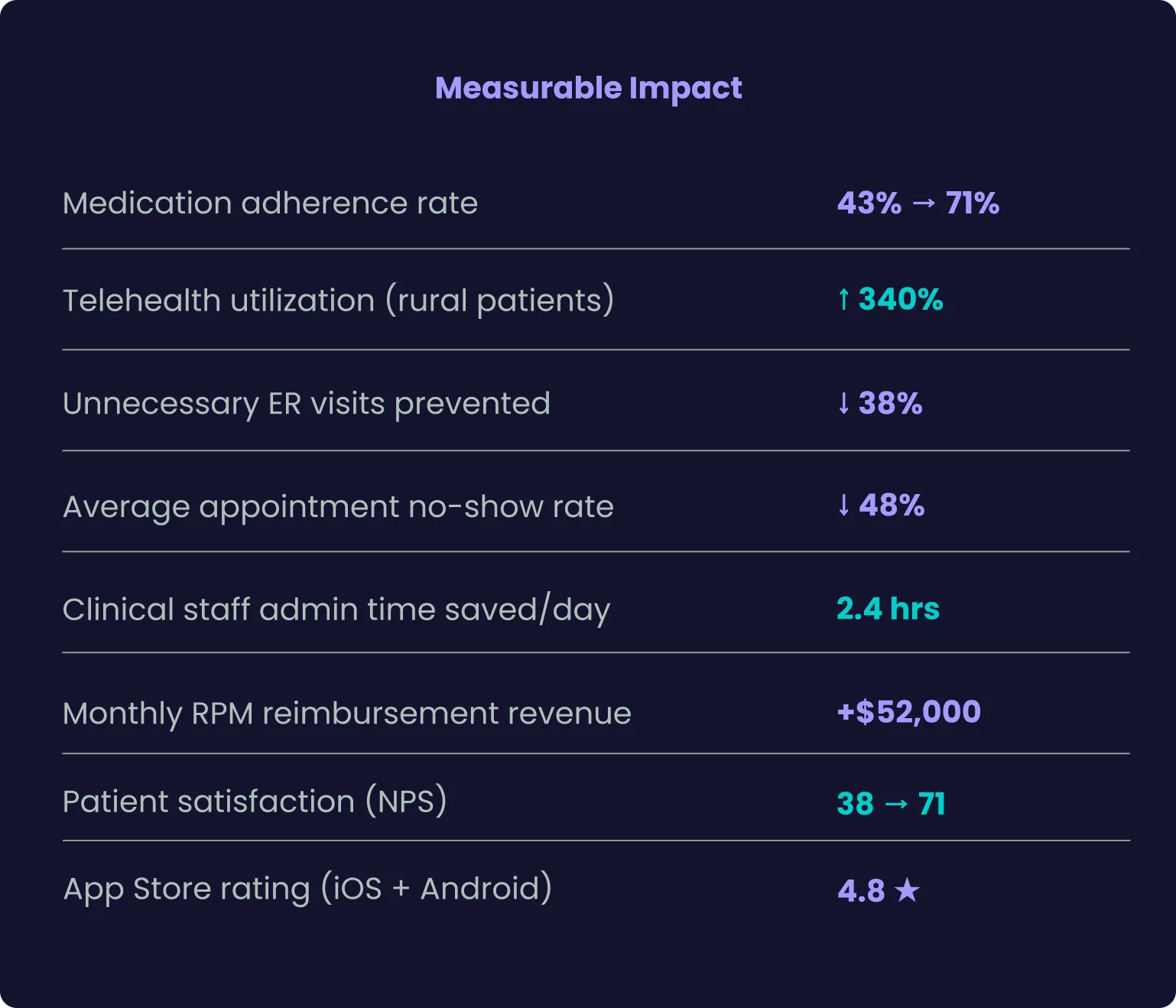
Measured outcomes across all 14 clinic locations and 50,000+ active app users, 12 months after the full network launch.
67%
Improvement in medication adherence across chronic care patients
340%
Increase in telehealth utilization among rural patient segments
38%
Reduction in unnecessary emergency room visits
48%
Drop in patient no-show rate across all 14 clinics
Combined App Store & Play Store rating from 8,400+ reviews
Ready to build a custom mHealth app?
Whether you’re a Health network, telehealth startup, chronic care company, or digital health innovator, Idea Usher has the mHealth engineering and clinical design expertise to build it right.
Frequently Asked Questions About mHealth App Development
1. How long does it take to build a custom mHealth app?
A core mHealth app with key features typically takes 6 to 10 months for a full production launch across iOS, Android, and a web dashboard. We use phased delivery so your team can start testing working features from month 2 onward. Complex RPM or telehealth platforms with deep EHR integration and a full provider web dashboard may take 10 to 14 months for complete deployment.
2. How much does custom mHealth app development cost?
Most custom mHealth projects range between $80,000 and $220,000, depending on platform scope, such as iOS, Android, and web, integration complexity, AI features, and compliance requirements. We provide a detailed, phase-wise estimate after a free discovery call, with full transparency on what drives each cost item.
3. Is a custom mHealth app HIPAA compliant?
Yes. Every mHealth app we build is architected with HIPAA compliance from the ground up, including end-to-end AES-256 encryption, role-based access control, biometric authentication, complete audit logging, secure cloud hosting under a signed BAA, and regular third-party penetration testing.
4. Can the mHealth app integrate with our existing EHR system?
Yes. We build using FHIR R4 and HL7 standards, enabling bidirectional data sync with Epic, AthenaHealth, Cerner, DrChrono, and most major EHR platforms. Patient data captured in the mobile app flows back to the clinical record automatically, with no manual re-entry required.
5. Can the app connect to wearables and medical devices?
Yes. We integrate with Apple HealthKit, Google Fit, Fitbit, Garmin, Dexcom, Withings, Omron, and more than 30 medical-grade IoT devices. Real-time biometric data from these devices can be displayed in the patient app and surfaced in the clinician dashboard with configurable alert thresholds.
6. What makes Idea Usher different from other mHealth app development companies?
We combine clinical domain expertise with product-grade mobile engineering. Unlike generic app studios, we understand healthcare workflows, compliance requirements, and clinical outcome metrics. We conduct real-patient UX testing, build to healthcare interoperability standards, and continue post-launch support to improve engagement and clinical impact, not just code delivery.
Your patients are already on their phones. Meet them there.
Share your requirements with our mHealth team. We’ll respond with a tailored approach, timeline, and team structure within 48 hours.