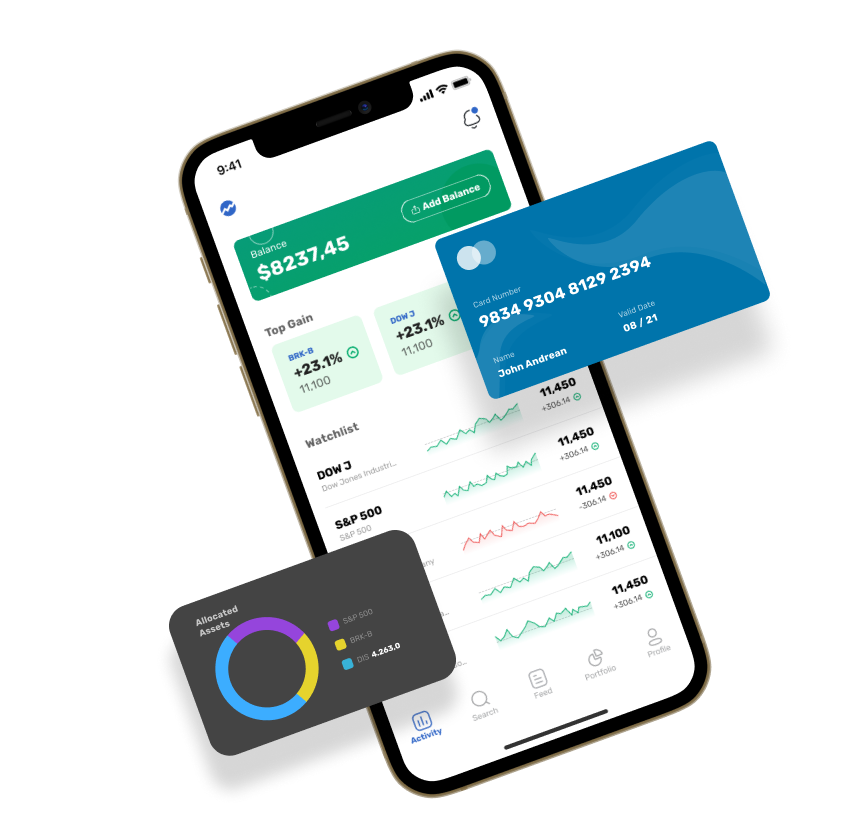



Trading platforms increasingly rely on data to guide decisions, automate strategies, and manage risk in fast-moving markets. Price feeds, historical datasets, analytics tools, and execution systems all contribute to how traders interpret signals and act on them. These requirements shape modern trading platform development, where reliable data pipelines and responsive infrastructure are just as important as the trading interface itself.
Turning market data into usable trading signals requires more than collecting price feeds. Streams of data must be processed, analyzed, and routed through analytics models, order management systems, and monitoring layers that respond in real time. The effectiveness of the platform depends on how well these components stay synchronized under high market activity without introducing delays or inconsistencies.
In this blog, we explain how to develop a data-driven trading platform by breaking down core system components, key features, and practical steps involved in building a scalable and reliable trading infrastructure.

What is a Data-Driven Trading Platform?
A Data-Driven Trading Platform is a financial trading system that uses large volumes of historical and real-time market data, analytics, and computational models to generate insights, support decision-making, and execute trading strategies. These platforms integrate technologies such as data analytics, statistical models, machine learning, and algorithmic tools to analyze patterns, predict market trends, and help traders make informed trading decisions.
The Core Pillars of a Data-Driven Trading Platform
These essential building blocks transform raw information into actionable strategies. By integrating real-time feeds, rigorous backtesting, and sentiment intelligence, the platform ensures every trade is backed by objective statistical evidence.

1. Real-Time Data Feeds (The Input)
Purpose: Serves as the “nervous system” of the platform, providing the raw information needed for immediate decision-making.
Types of Data:
- Market Data: Direct price quotes, order book depth, and trade volumes from exchanges.
- Alternative Data: Non-traditional sources like satellite imagery or credit card transactions.
Requirement: High-speed, low-latency integration is critical for maintaining a competitive edge, especially in algorithmic trading.
2. Backtesting Engines (The Validation)
Purpose: A simulation environment where traders test strategies against historical data to evaluate profitability and risk before using real capital.
Key Functions:
- Performance Metrics: Calculates the Sharpe ratio, maximum drawdown, and win/loss ratios.
- Bias Prevention: Identifies flaws like look-ahead bias (using future data to predict the past) or survivorship bias.
Role: It acts as a safety filter, ensuring a strategy is statistically sound rather than based on a “lucky” streak.
3. Sentiment Analysis (The Intelligence Layer)
Purpose: Uses Natural Language Processing (NLP) to quantify human emotions and opinions from unstructured text data.
Core Sources:
- News & Social Media: Scans headlines, Twitter (X), and Reddit to gauge if the market mood is bullish, bearish, or neutral.
- Corporate Reports: Analyzes the tone of earnings calls or SEC filings.
Value: Provides a “forward-looking” indicator that often reacts to news faster than traditional price charts.
Types of Data Powering Modern Data-Driven Trading Platforms
A high-performance trading platform is defined by its “Data Stack.” To maintain a competitive edge, platforms must process a multi-dimensional array of data that extends far beyond simple price feeds, integrating real-time market signals with alternative and behavioral insights.
| Data Category | Data Sub-Types | Primary Use Case | Strategic Value |
| Market Data | L1/L2 Price Feeds, Order Book Depth, Tick Data. | Real-time execution and liquidity analysis. | Provides the millisecond-level precision required for high-frequency trading (HFT). |
| Alternative Data | Satellite Imagery, Credit Card Trans., Web Scraping. | Identifying non-obvious market correlations. | Offers early alpha by capturing real-world physical activity before it hits the news. |
| Sentiment Data | Social Media Feeds (X/Reddit), News APIs, Glassdoor. | Gauging retail and institutional “market mood.” | Predicts volatility spikes driven by social narratives or breaking global events. |
| On-Chain Data | Wallet Inflows, Whale Activity, Smart Contract Logs. | Tracking asset movement in decentralized ecosystems. | Reveals institutional “HODL” patterns and potential selling pressure from major holders. |
| Fundamental Data | Earnings Reports, SEC Filings, Macro Indicators. | Long-term valuation and risk assessment. | Anchors algorithmic strategies in fiscal reality and regulatory compliance. |
| Historical Data | Past Price OHLC, Backtesting Logs, Event Data. | Strategy validation and AI model training. | Essential for stress-testing new models against historical market crashes and cycles. |
How a Data-Driven Trading Platform Works?
A data-driven trading platform operates as a continuous, automated loop that replaces human guesswork with statistical precision. It transforms raw market signals into executed trades through a multi-stage pipeline designed for speed and accuracy.

1. Data Ingestion and Preprocessing
Raw Data Collection: The platform continuously pulls massive datasets from diverse sources, including real-time exchange feeds (price, volume, order books) and alternative data like social media sentiment or economic news.
Normalization and Cleaning: Raw data is often “noisy” or inconsistently formatted. The system cleans and synchronizes timestamps to ensure the analysis is based on a high-quality, reliable “golden source” of information.
2. Signal Generation and Strategy Analysis
Feature Extraction: The platform identifies key variables such as volatility, momentum, or order flow imbalances that capture the market’s current state.
Alpha Modeling: Using machine learning and statistical models, the system analyzes these features to predict future price movements and generate a “buy” or “sell” signal.
Sentiment Intelligence: Simultaneously, NLP engines decode public mood from news and social feeds to provide a forward-looking layer of intelligence that price charts alone might miss.
3. Validation and Risk Filtering
Automated Backtesting: Before any signal is acted upon, the platform can simulate the strategy against historical data to ensure it remains profitable under various market regimes (bull, bear, or choppy).
Pre-Trade Risk Checks: Every potential trade passes through a risk model that enforces strict position sizing, stop-loss limits, and portfolio diversification rules to prevent overexposure.
4. Execution and Order Management
Algorithmic Routing: Once a trade is cleared for risk, a Smart Order Router (SOR) splits the order and identifies the best exchange or liquidity provider to ensure the fastest execution at the best price.
Low-Latency Execution: Orders are sent via APIs or the FIX protocol in milliseconds, capturing opportunities that human traders would miss due to manual reaction lag.
5. Real-Time Model Attribution & Recalibration
Post-Trade Analysis: The platform instantly compares the predicted “Alpha” against actual execution prices to identify slippage, latency leaks, or model decay.
Adaptive Feedback Loop: Live results are fed back into the machine learning engine, allowing the system to autonomously recalibrate its parameters and adapt to shifting market regimes without manual intervention.
Why Data-Driven Trading Platforms Are Reshaping Markets?
The demand for intelligent trading systems is rapidly growing. According to market research, the global algorithmic trading market was valued at $21.06 billion in 2024 and is expected to reach $42.99 billion by 2030, growing at a CAGR of 12.9%. This growth reflects the increasing reliance on data-driven technologies, AI, and automation in modern trading platforms.

This growth is also changing how trading platforms are built. By 2025, cloud-based trading systems accounted for 63.4% of the global market, as firms increasingly favor the scalability and low latency offered by cloud infrastructure.
At the same time, in 2026 investors managing over $1 trillion allocated more capital to quantitative funds than any other hedge fund category, highlighting the rising importance of data-driven trading platforms.
The growing importance of data is evident across financial markets and businesses alike. A survey of 500 UK companies found that firms using data most effectively were 13% more productive than those with the lowest levels of data adoption.
Meanwhile, trading activity is also accelerating, the London Stock Exchange reported a 15% year-on-year increase in average daily traded value (ADTV), reaching £4.2 billion in 2024, largely driven by strong demand for Exchange Traded Products (ETPs).
How Data-Driven Platforms Are Changing Algorithmic Trading?
The integration of massive datasets and high-speed processing has shifted algorithmic trading from simple rule-based execution to sophisticated, autonomous intelligence engines that redefine market participation and liquidity management.

1. Real-Time Big Data Ingestion
Modern platforms utilize high-velocity ingestion engines to process millions of data points per second. This allows algorithms to react to unstructured data and global news events with millisecond precision.
2. Advanced Backtesting and Simulation
Data-driven environments provide access to petabytes of historical tick data. Traders use these specialized archives to perform high-fidelity simulations, ensuring strategies are statistically sound before risking live capital.
3. AI and Machine Learning Integration
Platforms now embed neural networks and predictive modeling directly into the execution layer. This transition enables self-optimizing algorithms that adapt to changing market regimes and identify hidden alpha opportunities.
4. Enhanced Risk Management
These platforms leverage real-time risk analytics to instantly monitor exposure across asset classes. Automated systems ensure regulatory compliance and prevent flash crashes with strict, data-backed circuit breakers.
Core Features of a Data-Driven Trading Platform
Data-driven trading platform development focuses on transforming raw datasets into actionable intelligence at superhuman speeds. Success requires high-performance automated features that ensure statistical accuracy, low-latency execution, and robust strategy validation for modern quantitative traders.

1. Real-Time Market Data Integration
The platform must ingest high-velocity feeds from multiple global exchanges, utilizing WebSocket-based streaming for sub-second updates. By providing interactive heatmaps and footprint charts, traders can visualize liquidity clusters and order flow imbalances, identifying institutional movements before they manifest in price action.
2. Algorithmic Strategy Builder
A robust builder allows users to codify complex logic using no-code drag-and-drop interfaces or direct script execution. By combining multi-factor technical indicators with quantitative signals, traders can create sophisticated rule-based systems that eliminate emotional bias and maintain strict discipline across volatile market conditions.
3. Automated Backtesting and Strategy Simulation
Before risking capital, the platform runs strategies against years of point-in-time historical data. This engine accounts for survivorship bias and slippage modeling, providing an accurate simulation of a strategy’s win rate, maximum drawdown, and profit factor across diverse historical market cycles.
4. Automated Trade Execution
To maximize capital efficiency, the system utilizes Smart Order Routing (SOR) to hunt for the best liquidity. By bypassing manual entry, the platform drastically reduces latency and slippage, ensuring orders are filled at optimal price points even during high-velocity market breakouts.
5. Portfolio Analytics and Risk Monitoring
Real-time tracking of Alpha, Beta, and the Sharpe Ratio provides a clear view of risk-adjusted performance. The architecture monitors aggregated exposure across all assets, automatically flagging margin levels or correlation spikes to ensure the portfolio remains within defined risk-tolerance boundaries.
6. AI-Powered Sentiment Analysis
The platform generates proprietary sentiment scores by scanning news cycles, social media, and earnings transcripts. Utilizing Natural Language Processing (NLP), the engine identifies shifts in market mood, providing a leading indicator of trend reversals that traditional technical analysis might miss.
7. Dynamic Risk Management
This feature acts as a safety net, using real-time VaR (Value at Risk) calculations and automated exposure rebalancing. Multi-scenario stress testing lets the system instantly adjust position sizes or trigger hedges when volatility exceeds set thresholds, preserving capital in extreme markets.
8. Alerts, Signals, and Notification Systems
Automated monitors scan thousands of symbols for volatility breakouts and unusual volume spikes. Utilizing webhook-driven notifications, the system delivers real-time signals to mobile or desktop interfaces, ensuring traders never miss a critical entry point, regardless of their proximity to the screen.
Step-by-Step Data-Driven Trading Platform Development Process
The data-driven trading platform development requires a meticulous fusion of low-latency infrastructure and high-fidelity data processing. This guide outlines the lifecycle of developing a platform capable of institutional-grade execution and intelligence.

1. Define Trading Strategy and Platform Vision
Consult with our expert developers before writing any code and establish the mathematical and commercial foundation of the system. This includes defining target asset classes such as equities, forex, or derivatives and the specific alpha-generating strategies the platform will support.
- Strategy Archetypes: Determine if the platform will prioritize High-Frequency Trading (HFT), long-term quantitative trend following, or arbitrage. Each requires a vastly different infrastructure footprint.
- Performance Benchmarks: Define the “Definition of Success” through metrics like the Sharpe Ratio, maximum drawdown, and target latency (e.g., sub-millisecond for HFT vs. seconds for retail-focused tools).
- Compliance Framework: Map out the regulatory landscape (SEC, FINRA, or MiFID II) to ensure that “Know Your Customer” (KYC) and Anti-Money Laundering (AML) protocols are baked into the core vision.
2. Design the Platform Data Architecture
The architecture acts as the platform’s nervous system, determining how quickly information moves from market feeds to the execution engine. A robust design balances real-time responsiveness with long-term data durability.
- Message Broker Tier: Decouple data producers from consumers using high-throughput systems like Apache Kafka or RabbitMQ. This prevents spikes in market volatility from bottlenecking execution logic.
- Hot Storage (In-Memory): Manage active order books and live price caches using in-memory databases like Redis or Aerospike. This delivers the microsecond access speeds required for competitive trade placement.
- Cold Storage & Data Lake: Archive years of historical tick data in distributed systems such as Snowflake or AWS S3. This repository is essential for in-depth backtesting and training machine learning models.
- Compute & Logic Layer: Deploy containerized microservices (Kubernetes) to handle specialized tasks like signal generation, risk checking, and connectivity. This allows for independent scaling of the platform’s most resource-intensive components.
3. Build the Data Ingestion Infrastructure
Data ingestion is the process of normalizing disparate, “noisy” market feeds into a unified format. This stage is critical because even a minor delay or a “bad tick” can lead to catastrophic financial losses during live execution.
- Connectivity Protocols: Implement WebSocket or FIX (Financial Information eXchange) protocols to maintain persistent, low-latency connections with liquidity providers and exchanges.
- Normalization & Cleaning: Raw data arrives in various formats; your pipeline must handle timestamp synchronization, outlier detection (filtering out “fat-finger” trades), and handling missing packets.
- Redundancy: Build a multi-region ingestion setup. If a primary data center in New Jersey goes down, a backup in Chicago must take over within milliseconds to prevent a “blind” trading state.
4. Develop Algorithmic Trading Models
This is where data-driven insights are converted into actionable signals. Modern models often utilize a hybrid approach, combining traditional statistical regression with machine learning to identify patterns in non-linear market movements.
- Feature Engineering: Extract meaningful indicators such as Moving Average Convergence Divergence (MACD), Relative Strength Index (RSI), or order book imbalance.
- Model Selection: Deploy models ranging from simple Mean Reversion algorithms to complex LSTM (Long Short-Term Memory) neural networks that process sequential time-series data.
- Signal Generation: The output should be a clear directive (Buy, Sell, or Hold) accompanied by a confidence score that dictates the sizing of the position.
5. Implement Trade Execution and Risk Controls
An excellent strategy is useless if the execution is poor. This phase focuses on the “plumbing” of the trade getting the order to the exchange at the best possible price while protecting the capital.
- Smart Order Routing (SOR): Develop logic that automatically scans multiple liquidity pools to find the best bid-offer spread, minimizing slippage.
- Pre-Trade Risk Management: Implement automated “kill switches” that block orders if they exceed predefined limits on position size, daily loss thresholds, or leverage ratios.
- Concurrency Management: Ensure the system can handle thousands of simultaneous executions without “race conditions” where two different modules attempt to spend the same capital.
6. Develop Trader Interface and Analytics Dashboards
While the backend does the heavy lifting in data-driven trading platform development, the frontend provides the transparency needed for human oversight and strategic adjustment. The interface translates complex datasets into high-velocity visual cues.
- Real-Time Visualization: Use specialized libraries like D3.js or TradingView’s lightweight charts to render live candlesticks and technical indicators without lagging the browser.
- Post-Trade Analytics: Provide a “Performance Attribution” dashboard that breaks down P&L by strategy, time of day, and asset class to identify where the system is most effective.
- Monitoring Alerts: Integrate WebSocket-based notifications for critical events such as margin calls, hardware latency spikes, or significant market volatility.
7. Testing With Historical and Simulated Data
Before risking real capital, the platform must survive the “crucible” of rigorous testing. This is a multi-layered process designed to find the breaking points of both your strategy and your hardware.
- Backtesting: Run your algorithms against years of historical tick data. Beware of “overfitting,” where the model performs perfectly on the past but fails to adapt to new market regimes.
- Walk-Forward Analysis: Optimize the model on one segment of data and test it on a subsequent “out-of-sample” segment to ensure predictive consistency.
- Paper Trading (Sandboxing): Deploy the platform in a live environment using simulated funds. This tests the integration between your data ingestion, model logic, and execution brokers without financial risk.
8. Deployment and Continuous Optimization
The final stage is an ongoing maintenance cycle of data-driven trading platform development. Markets are dynamic; a strategy that works today may become obsolete tomorrow as other participants adapt to your footprint.
- CI/CD Pipelines: Use automated deployment pipelines to push updates to your algorithms without interrupting live market connections.
- Observability: Implement deep logging (using tools like Prometheus or Grafana) to monitor system health, such as CPU utilization during high-volatility events and “slippage drift” over time.
- Alpha Decay Tracking: Continuously monitor the performance of your models. If the realized returns begin to deviate from the backtested expectations, the system must trigger a re-optimization or a temporary halt for auditing.
Data-Driven Trading Platform Development Cost Breakdown
Data-driven trading platform development involves multiple cost components, including data infrastructure, analytics engines, trading APIs, UI development, and security systems. The table outlines the cost ranges by development phase for the MVP & Enterprise levels of the data-driven trading platform.
| Development Phase | MVP (Entry Level) | Enterprise (Pro Level) | Key Deliverables |
| Discovery & Architecture | $3,500 – $8,000 | $15,000 – $35,000 | Technical spec, UI wireframes, and data flow mapping. |
| Trading Engine & FIX | $25,000 – $55,000 | $90,000 – $220,000 | Order management, broker API integration, and execution logic. |
| Data Infrastructure | $8,000 – $20,000 | $40,000 – $90,000 | Real-time streaming (Kafka/NATS), Redis caching, and S3 archiving. |
| Algorithm & ML Layer | $12,000 – $30,000 | $60,000 – $180,000 | Backtesting engine, technical indicators, and signal logic. |
| Risk & Compliance | $7,000 – $15,000 | $30,000 – $75,000 | Automated kill-switches, audit logs, and basic KYC integration. |
| Dashboard & UI | $10,000 – $25,000 | $45,000 – $110,000 | React-based charts, real-time P&L tracking, and admin tools. |
| Testing & DevOps | $6,500 – $15,000 | $25,000 – $65,000 | Stress testing, CI/CD, and cloud environment setup. |
| TOTAL ESTIMATE | $70,000 – $168,000 | $305,000 – $680,000+ | A resilient, production-ready trading ecosystem. |
Key Cost-Affecting Factors
Beyond the initial Data-driven trading platform development phase, several variables can dramatically shift the financial requirements of a trading platform. Understanding these levers allows stakeholders to balance high-performance capabilities with capital efficiency.
- Data Latency and Feed Quality: Lower-latency market data costs more. Direct exchange feeds and co-location provide microsecond speed but are expensive, while API aggregators are more affordable for MVPs where millisecond execution isn’t critical.
- Asset Class Complexity: More complex asset classes like options, crypto-derivatives, or fixed-income require added infrastructure, risk calculations, regulatory reporting, and clearinghouse integration compared to equities.
- Regulatory Jurisdictions: Global operation requires localized compliance, and costs rise quickly with KYC, AML monitoring, and regional tax reporting as the platform expands.
- Execution Velocity and Concurrency: Institutional-scale engines handling thousands of simultaneous trades need advanced load balancing, message queuing, and in-memory database scaling, unlike retail-focused systems.
Key Challenges in Building Data-Driven Trading Platforms
The data-driven trading platform development requires more than just raw speed; it demands a sophisticated architecture capable of maintaining data integrity under extreme load. Our development methodology focuses on mitigating architectural bottlenecks to ensure that data remains an asset rather than a liability.

1. Real-Time Data Processing and Latency
Challenge: Capturing and processing millions of data points per second from global exchanges without introducing lag that degrades trade execution timing.
Solution: Our developers utilize high-throughput stream processing frameworks like Apache Flink and Kafka, implementing zero-copy memory management and low-latency networking protocols to ensure data reaches the engine in microseconds.
2. Data Quality and Cleaning
Challenge: Managing “dirty data,” including price spikes, missing ticks, and inconsistent formatting across disparate liquidity providers that can trigger false signals.
Solution: We build automated data validation layers that use statistical outlier detection and normalization scripts to scrub incoming feeds in real-time, ensuring only high-fidelity data enters the decision-making engine.
3. Scalability and High Availability
Challenge: Ensuring the platform remains fully operational and responsive during black-swan market events when traffic and data volume can quintuple instantly.
Solution: Our engineers deploy auto-scaling Kubernetes clusters across multiple geographic regions, utilizing load balancers and redundant database replicas to eliminate single points of failure and maintain 99.99% uptime.
4. Complex Event Processing (CEP)
Challenge: Identifying and reacting to intricate market patterns across multiple asset classes simultaneously while maintaining a low computational footprint on the server.
Solution: We implement optimized CEP engines that evaluate multi-variable conditions in parallel, allowing the platform to execute complex algorithmic strategies with minimal CPU overhead and maximum precision.
5. Achieving Low Latency in Trade Execution
Challenge: Minimizing the “tick-to-trade” interval where every microsecond lost to network hops or slow code results in significant financial slippage.
Solution: Our developers utilize Kernel Bypass techniques and DPDK to accelerate packet processing, while optimizing execution logic to bypass traditional operating system overhead for near-instant order routing.
Monetization Models of Data-Driven Trading Platforms
Monetizing a data-driven trading platform blends traditional brokerage fees and data-as-a-service models. A sustainable revenue stream should consider a multi-tiered approach that scales with platform complexity and data consumption.

1. Subscription and Tiered Access
Most platforms offer subscription-based models where users pay a monthly or annual fee for access. For example, QuantConnect uses this model, offering different tiers that provide varying levels of compute power for backtesting, advanced coding environments, and access to exclusive institutional-grade trading engines.
2. Data Licensing and Feeds
Data is the core asset of these platforms. You can monetize by licensing high-fidelity data feeds, including real-time market data and historical tick data. TradeStation is a key example, where users often pay for premium data packages or specialized alternative datasets to integrate into their proprietary algorithms.
3. Commission and Transaction Fees
While many retail platforms have moved toward “zero-commission,” data-driven platforms often charge a fee per trade executed or a small percentage-based commission. Interactive Brokers excels here, as professional users value high-speed execution and reliability, ensuring revenue scales directly with high trading volume.
4. Marketplace and Strategy Sharing
You can create a community marketplace where developers sell or lease their successful trading algorithms to other users. MetaTrader 5 thrives on this model, taking a percentage of every sale in their massive “MQL5 Market,” which incentivizes a thriving ecosystem of high-quality, data-backed strategies.
5. Asset Management and Performance Fees
For enterprise-level or institutional platforms, a percentage of Assets Under Management (AUM) is a common model. AlgoTrader often targets this space, where the platform can charge a performance fee based on profits generated, aligning the platform’s financial success with the profitability of the user’s data-driven strategies.
Examples of Data-Driven Trading Platforms in the Market
Harnessing vast datasets and algorithmic precision is essential for modern market participants. These industry-leading platforms empower users to transform raw market information into actionable intelligence through sophisticated data-driven trading strategies and automated execution engines.
1. QuantConnect

QuantConnect is a powerful data-driven trading platform providing cloud-based infrastructure for developers. It supports strategy backtesting using massive historical datasets in Python or C#, allowing institutional and retail traders to refine algorithmic models before deploying them into live markets.
2. TradeStation

TradeStation excels as a data-driven trading platform recognized for its EasyLanguage scripting and deep analytical tools. It offers professional-grade strategy automation and historical data testing, enabling traders to execute precise, evidence-based market entries backed by rigorous statistical analysis.
3. MetaTrader 5

MetaTrader 5 is a globally dominant data-driven trading platform that facilitates algorithmic execution through Expert Advisors (EAs). Its advanced multi-asset backtesting and real-time data feeds allow users to build and optimize automated trading bots across diverse financial markets.
4. NinjaTrader

Widely preferred by futures specialists, NinjaTrader is a data-driven trading platform focused on high-performance analysis. It features customizable indicators and strategy automation tools, helping traders leverage real-time market data and historical simulations to validate complex, rule-based algorithmic strategies.
5. Wyden (Formally AlgoTrader)

Wyden is an enterprise-grade data-driven trading platform designed for banks and hedge funds. It prioritizes multi-asset automation and advanced risk management, utilizing large-scale datasets and quantitative algorithms to handle high-frequency execution and institutional-level portfolio orchestration.
Conclusion
Building a high-performance trading platform development strategy in 2026 centers on transforming raw market data into a distinct competitive advantage. Success requires a robust infrastructure capable of processing high-velocity streams while maintaining millisecond-level execution and ironclad regulatory compliance. By integrating AI-driven analytics, modular microservices, and “governance as code,” you create a scalable ecosystem that empowers traders to make informed, data-backed decisions. Ultimately, a data-driven platform is not just a tool for execution, but a sophisticated engine for systematic alpha generation, ensuring long-term resilience and growth in an increasingly algorithmic global market.
Why Choose IdeaUsher for Data-Driven Trading Platform Development?
Creating a data-driven trading platform requires sophisticated data pipelines, predictive analytics, and robust backtesting infrastructure to transform raw market data into actionable trading intelligence.
We build different types of products and solutions across industries, specializing in performance systems, model integration, and scalable infrastructure. Our expertise helps us develop trading platforms that balance data processing power, analytical accuracy, and user-centric strategy deployment.
Our ex-FAANG and MAANG engineers bring over 500,000+ hours of hands-on development experience, allowing us to architect data-intensive trading platforms aligned with quantitative research workflows, algorithmic strategy testing, and performance optimization.
Why Hire Us:
- Data Engineering & AI Expertise: We engineer high-throughput data ecosystems, deploy machine learning models for market prediction, and ensure seamless integration with multiple data providers, even when processing terabytes of historical and real-time market data.
- Custom Analytics Infrastructure: We specialize in building proprietary backtesting engines, visualization dashboards, and strategy deployment frameworks, delivering platforms with superior analytical depth and a proprietary edge over standard charting solutions.
- Full-Cycle Ownership: We go beyond coding to include infrastructure selection, low-latency data pipelines, compliance with financial regulations, and scalable architectures, ensuring your data-driven trading platform is technologically advanced and commercially ready from launch.


FAQs
A.1. A data-driven architecture uses high-speed ingestion engines and historical data warehouses. The system processes vast streams of unstructured market information, using ETL pipelines to clean and normalize data before sending it to the backtesting environment for strategy validation.
A.2. Integrate machine learning by developing predictive models with frameworks like TensorFlow or PyTorch. These models analyze historical price patterns and sentiment data to identify alpha opportunities, supported by infrastructure for recursive training and real-time inference during live trading.
A.3. A reliable platform combines Level 2 market data, alternative data such as social sentiment, and historical tick data. Partnering with premium providers ensures algorithms use accurate, high-fidelity information, which reduces slippage and improves execution.
A.4. Protect proprietary algorithms with high-level encryption and secure server-side execution environments. Implement strict access controls and code obfuscation to shield sensitive trading logic and preserve the integrity of automated execution.