

Key Takeaways
- Collaborative metaverse platforms are evolving into real-time shared environments where users build, interact, and solve problems together
- Browser-first architecture removes entry barriers, enabling instant access and faster adoption compared to VR-only platforms
- Enterprise demand is rising, driven by platforms like NVIDIA Omniverse and Microsoft Mesh that focus on digital twins and team collaboration
- AI-driven world creation and Gaussian Splatting drastically reduce development time while maintaining high visual quality
- Cross-device compatibility and low-latency sync are essential to ensure seamless interaction across mobile, desktop, and VR
- Success depends on scalable architecture, clear use cases, and solving challenges like latency, user scaling, and content moderation
- Monetization comes from subscriptions, creator economies, enterprise licensing, and AI-powered services rather than ads
Why are most metaverse platforms still built as isolated experiences when users increasingly expect real-time, shared digital spaces?
The shift is already visible. People no longer want static virtual worlds or heavy VR setups. They want instant access, co-creation, and persistent interaction across devices. Browser-first platforms and collaborative tools have reset expectations. Accessibility and participation now matter more than pure immersion.
At the same time, new technologies are changing what’s possible. AI-driven world creation is removing the need for complex design workflows. Real-world 3D capture is making environments faster to build and more realistic. The result is a new model where users don’t just explore worlds, they actively create and shape them in real time.
This is where the opportunity lies. The next generation of platforms will not be defined by visuals alone, but by how easily people can build, collaborate, and stay engaged.
The challenge is no longer building a metaverse. It is building one that people actually use together.
Why Collaborative Metaverse Platforms Are Rising?
According to Dimension Market Research, the Global Metaverse Market is projected to reach USD 153.4 billion in 2025 and is expected to hit USD 3,372.8 billion by 2034, growing at a 41.0% CAGR. This shift signals a move from experimental novelty to industrial utility. Investors are now prioritizing platforms like NVIDIA Omniverse that solve high-friction business problems through digital twins, remote monitoring, and high-fidelity training.
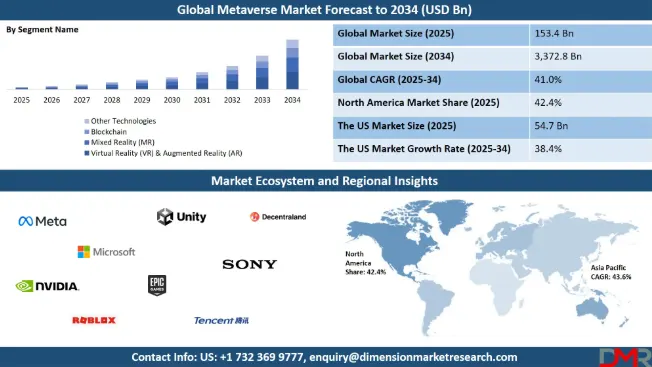
Source: Dimension Market Research
The true value lies in the network effect of persistent, shared environments that facilitate real-time co-presence. Unlike traditional SaaS tools, these collaborative metaverses allow global teams to interact with 3D assets simultaneously. This transition from “talking about work” to “doing work together” in a digital space drastically accelerates decision-making and provides a measurable return on investment.
From Solo VR to Shared Presence
Early metaverse narratives were dominated by the solitary user in a bulky headset. That model proved too restrictive for mass enterprise adoption. The market has pivoted toward a shared digital presence. These environments are persistent and social by design.
- Active Participation: In shared platforms, users are active contributors. They modify the environment and influence the simulation instantly.
- The Persistence Factor: A shared presence implies the world stays active when a user logs out. This creates fertile ground for digital economies and 24/7 virtual showrooms.
- Synchronous Problem Solving: Platforms like Microsoft Mesh exemplify this. They integrate holographic sharing into daily workflows, allowing experts to solve problems together in a shared space.
Why Browser-Based Worlds Win
The barrier to entry for 3D environments was once the heavy client. Large downloads and high-end hardware requirements were bottlenecks for scale. Browser-based metaverses powered by WebGPU and WebXR standards have dismantled these barriers. This shift is critical for investor ROI.
- Zero Friction Onboarding: Browser platforms allow entry via a simple URL. This click-to-play capability makes the platform accessible on any standard laptop.
- Infrastructure Efficiency: Developing for the web allows for easier cross-platform maintenance. A centralized web architecture ensures all users see the same version simultaneously.
- SEO and Discoverability: Browser worlds are indexable. A virtual store can be discovered through a search engine, integrating the 3D world into existing marketing funnels.
Real-Time Cross-Device Interaction
Modern professionals refuse to be tethered to a single device. The demand for real-time interaction means a platform must be device-agnostic. An investor’s capital is best spent on platforms that bridge the gap between VR headsets, desktops, and mobile phones.
- Asymmetric Collaboration: Real utility requires that a field engineer on a phone sees exactly what a specialist in headquarters sees through a VR headset.
- The Role of 5G: Technical feasibility is supported by the maturity of 5G and edge computing. Offloading processing to the cloud maintains the low latency required for real-time presence.
- Business Agility: For entrepreneurs, a device-agnostic platform is a future-proofed investment. It allows for a gradual transition of user behavior without requiring a total infrastructure rebuild.
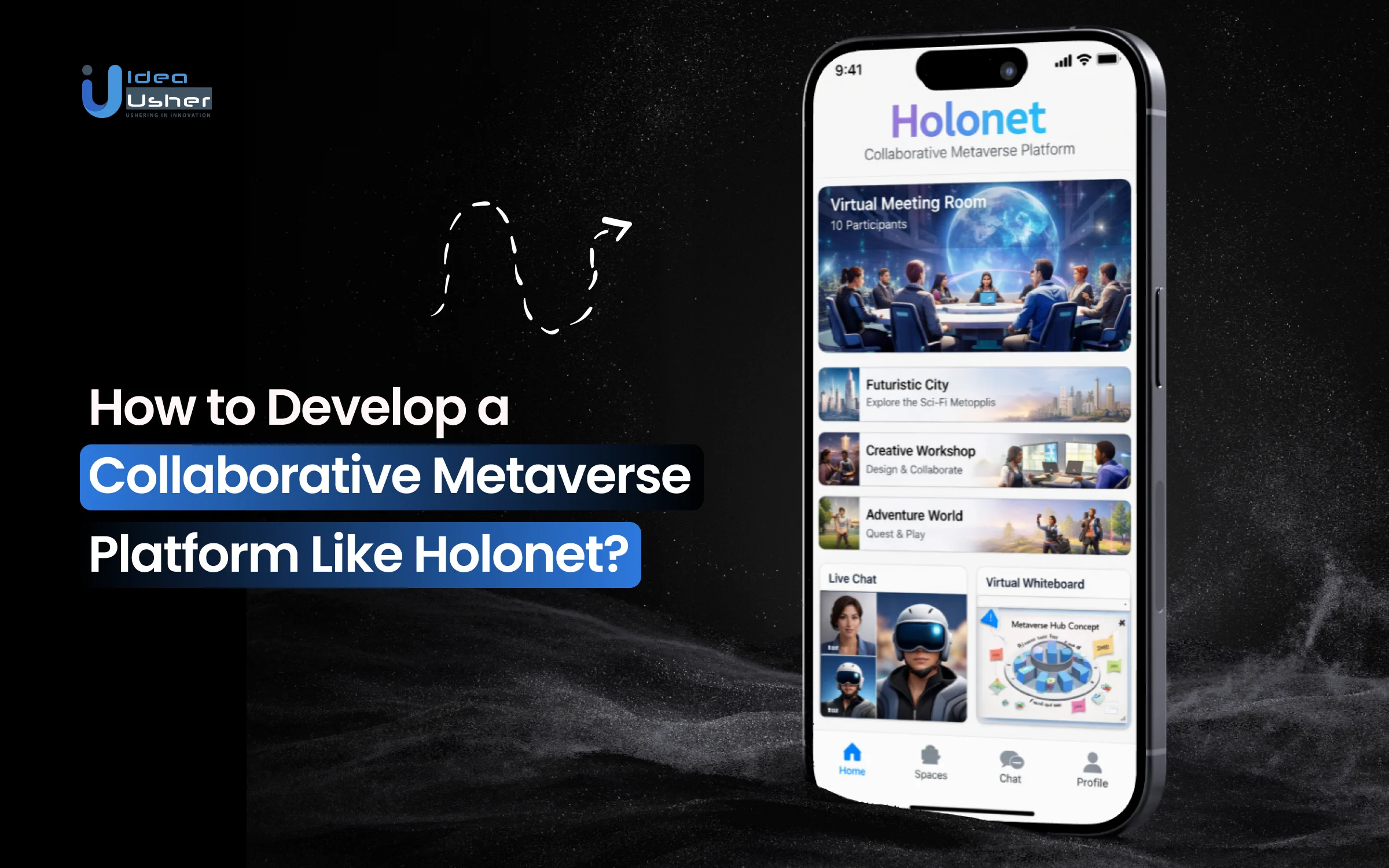
Overview of Holonet Platform
Holonet serves as a high-performance bridge between traditional web browsing and the spatial internet. For entrepreneurs, this platform represents a shift away from closed ecosystems toward open, interoperable architecture. It removes the friction points that historically stalled adoption: hardware dependency, complex asset creation, and isolated user experiences.
By prioritizing a web-first philosophy, Holonet ensures immersive environments are as accessible as a standard landing page. This accessibility transforms the metaverse from a niche concept into a powerful tool for global business operations and digital asset management.
Browser Access to 3D Worlds
The technical bottleneck for 3D worlds has always been the heavy client. Holonet eliminates this by delivering high-fidelity environments directly through the browser using Holonet Creator, a next-generation web platform.
- Instant Deployment: No software downloads are required. A simple URL grants entry to a fully realized 3D space.
- Infrastructure Scalability: The platform bypasses hardware limitations by utilizing web standards and cloud-side optimizations.
- Universal Reach: This broadens the potential user base to anyone with a browser, making it ideal for customer-facing showrooms.
AI-Driven Content Creation
Scaling a digital platform requires a high volume of 3D content, which was once cost-prohibitive. Holonet integrates its GenAI World Builder to democratize the creation process through intuitive inputs.
- Prompt-to-World: Users can generate entire 3D environments simply by describing them.
- Gaussian Splatting: This technology allows for the creation of digital twins by scanning real-world objects and converting them into high-fidelity assets.
Strategic Advantage: Instead of hiring a full-scale 3D modeling team for every update, stakeholders use natural language prompts to generate assets. This reduces Time-to-Market and lowers ongoing maintenance overhead.
Holographic and Avatar Interaction
Engagement is defined by the quality of presence. Holonet provides two distinct pathways for digital representation to meet professional needs:
- Holographic Self-Representation: Using a standard camera and sophisticated neural networks, users project a real-time holographic version of themselves for high-stakes meetings.
- Holo Avatars: These AI-powered digital personas provide a persistent identity for collaborative sessions. They are designed for fluid movement to ensure social cues are preserved.
Cross-Device Collaboration
A platform’s value is tied to its versatility. Holonet is engineered to function across the entire hardware spectrum, ensuring collaboration is never interrupted by a user’s device choice.
| Feature | Desktop/Laptop | VR/MR Headsets | Mobile/Tablet |
| Primary Use | Detailed management | Full spatial immersion | On-the-go monitoring |
| Access | Standard browser | WebXR integration | Touch-optimized UI |
| Interaction | Host and present | Deep collaboration | Quick check-ins |
This framework allows a team lead on a desktop to interact seamlessly with an engineer in a VR headset. For investors, this ensures the platform remains relevant regardless of hardware trends, providing a future-proof foundation for digital infrastructure.
Core Features of Platforms Like Holonet
The technical foundation of collaborative metaverse platforms determines their long-term scalability and market value. For investors, the priority lies in features that automate complex content generation while fostering genuine human connection. These core functionalities transform a simple digital space into a high-utility environment capable of supporting diverse business operations.
1. AI Text-to-World Creation
Text-to-world engines allow users to generate 3D environments via natural language. This lowers the barrier for creators and reduces 3D modeling costs. Meta’s Builder Bot showcases this, using simple commands to populate virtual landscapes and enable rapid, dynamic world-building.
2. Gaussian Splatting Technology
Gaussian Splatting captures real-world objects with photographic realism and high efficiency. Industrial platforms like NVIDIA Omniverse use similar reality-capture workflows to digitize physical assets. This allows entrepreneurs to create high-fidelity virtual twins that bridge the gap between physical and digital spaces.
3. Hologram and Avatar Systems
Platforms use holographic projection and expressive avatars to build digital trust. Real-time holograms beam a user’s actual likeness into a space using camera data. Microsoft Mesh pioneered this “holoportation,” ensuring professionals maintain a high-performance, authentic digital identity during collaborative sessions.
4. Multi-User Sync and Audio
Seamless synchronization ensures every action is reflected instantly for all users. High-performance engines prevent latency during 3D object interaction. Gather demonstrates the power of spatial audio, where sound mimics real-world acoustics to allow natural, directional communication without digital interference.
5. Universal Cross-Platform Access
Success requires a consistent experience across all hardware tiers. Using web-based architectures, these worlds are accessible via browsers, VR headsets, or mobile. Loka exemplifies this device-agnostic approach, maximizing user retention by ensuring global teams can collaborate regardless of their specific hardware setup.
Why Build a Browser-Based Metaverse Platform?
A browser-first architecture prioritizes market liquidity and user retention over closed-system loyalty. The web is the only platform that offers true permanence and decentralization. By bypassing proprietary app stores, developers retain full control over monetization and data ecosystems while users enjoy a frictionless experience.
Building for the browser meets users where they already are. In a landscape where attention is a valuable currency, these worlds minimize the bounce rate that occurs when a user is forced to leave their workflow to engage with a new environment.
1. Eliminate App Installs
The app install is a significant barrier to entry. Every additional click required to access a platform decreases conversion rates. A web-first design eliminates this friction entirely.
- Frictionless Entry: Users enter a 3D world via a standard URL. There are no large downloads, manual updates, or disk space errors.
- Instant Sharing: A link shared on social media or in a professional channel becomes an immediate portal. This turns a passive viewer into an active participant in seconds.
- Lower Acquisition Costs: By removing the download gate, platforms achieve lower acquisition costs compared to standalone VR apps that require multi-stage onboarding.
2. Reach Users Across Devices Instantly
Scalability requires a platform to be accessible across the diverse hardware ecosystem of a modern global workforce. A browser-based approach ensures that digital assets are visible to everyone regardless of their device tier.
The Hardware Bridge: A leader can join a meeting from a high-end VR headset while a manager joins via a desktop browser and a field worker monitors the session on a tablet. The web acts as a universal translator that synchronizes the experience across all screens without needing separate software builds.
3. Faster Adoption Than VR-Only Platforms
VR-only platforms face a hurdle because they require users to own specific hardware. Browser-based platforms solve this by offering immediate value on existing infrastructure.
- Market Saturation: While VR ownership is growing, nearly 100% of the target market already owns a smartphone or laptop.
- Incremental Immersion: Users can start their journey in a 2D browser window and transition to a VR headset when they seek deeper immersion. This low-stakes entry point fosters a faster adoption curve.
- SEO Integration: Unlike closed apps, browser worlds are searchable. A virtual headquarters can appear in search results, providing a direct pipeline from a traditional search query to an immersive experience.
Advanced Capabilities For Collaborative Metaverse Platforms
The technical superiority of collaborative metaverse platforms is defined by friction reduction. To lead, a platform must automate workflows while maintaining total immersion. These advanced capabilities create a dynamic, self-evolving ecosystem that scales with user demand and technical evolution.
1. AI-Powered Content Creation
Automation meets the infinite demand for digital assets. By integrating generative AI, your platform allows users to build environments via natural language or existing data. This removes the need for manual 3D modeling, allowing entrepreneurs to deploy detailed worlds in a fraction of the time.
This approach is similar to Promethean AI, which helps artists build virtual worlds by suggesting and placing assets through simple commands.
2. Real-Time World Sync
Maintaining a single source of truth is critical for professional collaboration. Advanced sync engines ensure that every modification or data update is instantly reflected for all participants. This elimination of latency ensures high-stakes interactions remain precise and reliable across all locations.
Platforms like Virbela use these high-performance engines to synchronize thousands of users across a single virtual campus without performance degradation.
3. Personalized User Environments
Platform retention depends on digital ownership. Providing tools for personalized environments allows brands to customize digital real estate without technical expertise. This fosters a sense of agency, turning the platform into a tailored asset that reflects specific business needs.
Roblox has demonstrated the power of this by giving users a comprehensive suite of creation tools to build and monetize their own unique social spaces.
4. Seamless Cross-Platform Experience
Accessibility determines the total addressable market. A fluid transition between browsers, mobile apps, and VR headsets is essential. By optimizing for diverse hardware, you ensure the platform remains a central hub for collaboration regardless of which devices a team chooses to use.
VRChat exemplifies this by allowing a massive community to interact seamlessly across PC, VR, and mobile devices in a unified social environment.
How to Develop a Collaborative Metaverse Platform Like Holonet?
To develop a collaborative metaverse platform like Holonet, a real-time multi-user architecture should be designed with low-latency networking and interoperable asset systems that can securely manage identity and ownership. Scalable cloud infrastructure and spatial computing engines could then be integrated so users can seamlessly collaborate and persist data across sessions.
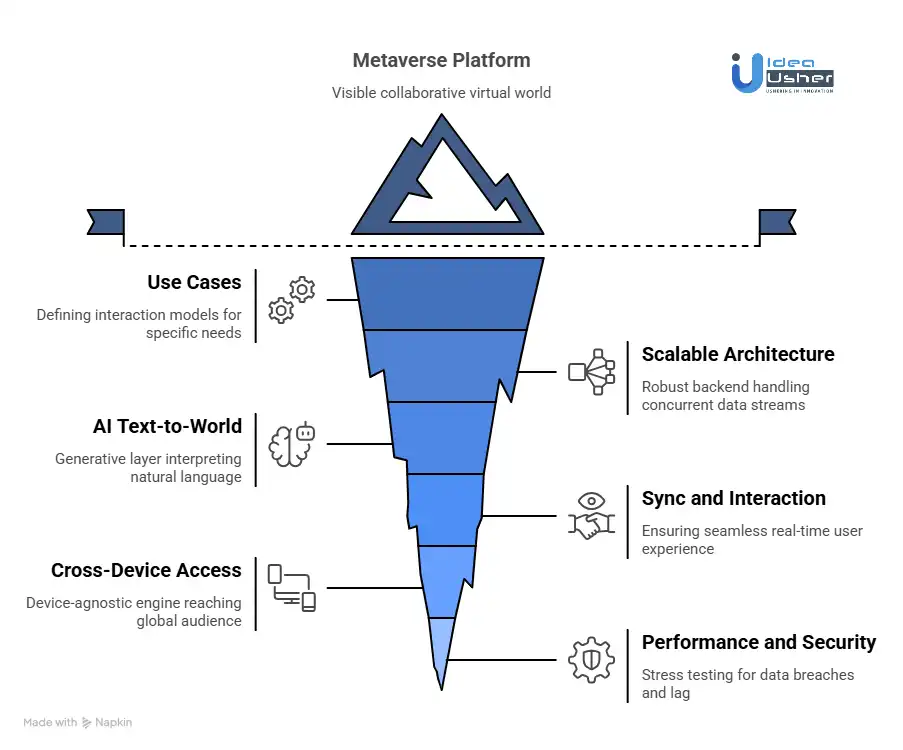
We’ve developed multiple collaborative metaverse platforms like Holonet, and here’s how we do it.
1. Defining Use Cases and Journeys
Before we write code, we map the interaction model. We know a platform built for industrial digital twins requires different physics and precision than one built for social retail.
- Corporate Training: We focus on spatial memory and tool interaction.
- Virtual Events: We prioritize high-occupancy sync and directional audio.
- Creative Studios: We emphasize real-time asset manipulation.
2. Designing Scalable Architecture
A robust architecture is the backbone of any persistent world we build. We implement a backend that can handle thousands of concurrent data streams without bottlenecks.
| Component | Our Responsibility | Technical Focus |
| Edge Servers | Reduce physical distance to user | Low Latency |
| Persistence | Save world states and asset changes | High Availability |
| Compute Engine | Process physics and AI logic | Scalability |
3. Building AI Text-to-World Tools
Manual world-building is slow, so we integrate a generative layer that interprets user intent through natural language.
Our Development Method: We implement transformer-based models that map natural language tokens to 3D asset libraries. Using a prompt-to-scene workflow, we allow non-technical users to generate complex architecture or lighting simply by describing them.
4. Integrating Sync and Interaction
Presence is broken the moment a user sees a glitch. Our sync layer ensures that if one person moves an object, everyone else sees it move in the same millisecond.
- State Sync: We use delta-compression to send only scene changes, saving bandwidth.
- Spatial Audio: We implement algorithms so that sound changes based on 3D orientation.
- Conflict Resolution: We establish authoritative server logic to handle simultaneous interactions.
5. Enabling Cross-Device Web Access
To reach a global audience, we ensure our engine is device-agnostic. We optimize shaders so they look great on VR headsets but run smoothly on mobile browsers. By utilizing WebGPU, we tap into local hardware power directly through the browser, providing near-native performance without an app store download.
6. Testing Performance and Security
A metaverse is a prime target for data breaches and lag. We treat stress testing as an essential step to maintain a professional environment.
- Load Testing: We simulate flash crowds to see how our architecture handles thousands of avatars in one zone.
- Encryption: We ensure private voice conversations and proprietary 3D models are encrypted in transit and at rest.
- Security Audits: We scan the interaction layer for vulnerabilities or unauthorized asset extraction.
How to Build a Low-Latency Collaboration Engine?
The difference between a clunky virtual space and a professional environment is how the engine handles time. The technical superiority of collaborative metaverse platforms is defined by responsiveness, ensuring the digital world feels as immediate as a physical one. To achieve this, the focus remains on minimizing the distance data travels and maximizing the efficiency of every packet sent across the network.
1. Real-Time Lag-Free Sync
Latency is the primary enemy of presence. Predictive algorithms and optimized transport protocols keep every user in perfect lockstep. This high-frequency synchronization is what allows platforms like Gather to maintain seamless spatial audio, where voices fade in and out naturally as avatars move past each other in real time.
- Client-Side Prediction: Local devices are programmed to predict movement before server confirmation, making the interface feel instantaneous.
- Dead Reckoning: Mathematical models estimate user paths, reducing the frequency of necessary updates.
- UDP Protocol: UDP is prioritized for movement data to prevent minor packet loss from snowballing into massive lag spikes.
2. Data Flow
Sending every piece of data to every user causes crashes. Intelligent filtering is implemented to broadcast only what is necessary. This optimization strategy is essential for worlds like The Sandbox, where massive user-generated environments must load efficiently without overwhelming a connection or hardware.
Efficiency Rule: Systems utilize Interest Management logic. If a user is in a virtual boardroom, the engine does not send data from a virtual warehouse across the map. This surgical approach preserves bandwidth for high-fidelity interactions happening in the immediate vicinity.
3 Stability Under High Load
Scaling for a sudden influx of users requires an elastic infrastructure that breathes with demand. A successful model for this is Microsoft Mesh, which manages complex, persistent data and high-fidelity avatars for large teams by leveraging scalable cloud architecture and mixed-reality integration.
| Feature | Implementation | Why It Matters |
| Edge Computing | Regional data centers | Moves processing closer to the user to drop ping times. |
| Delta Compression | Minimal packet sizes | Only sends what changed since the last frame, not the whole scene. |
| Load Balancing | Auto-scaling clusters | Spins up new server instances automatically during peak traffic. |
By building with these three pillars, a world remains stable and fluid, whether ten or ten thousand people are interacting in the same digital space.
Technologies Behind Collaborative Metaverse Platforms
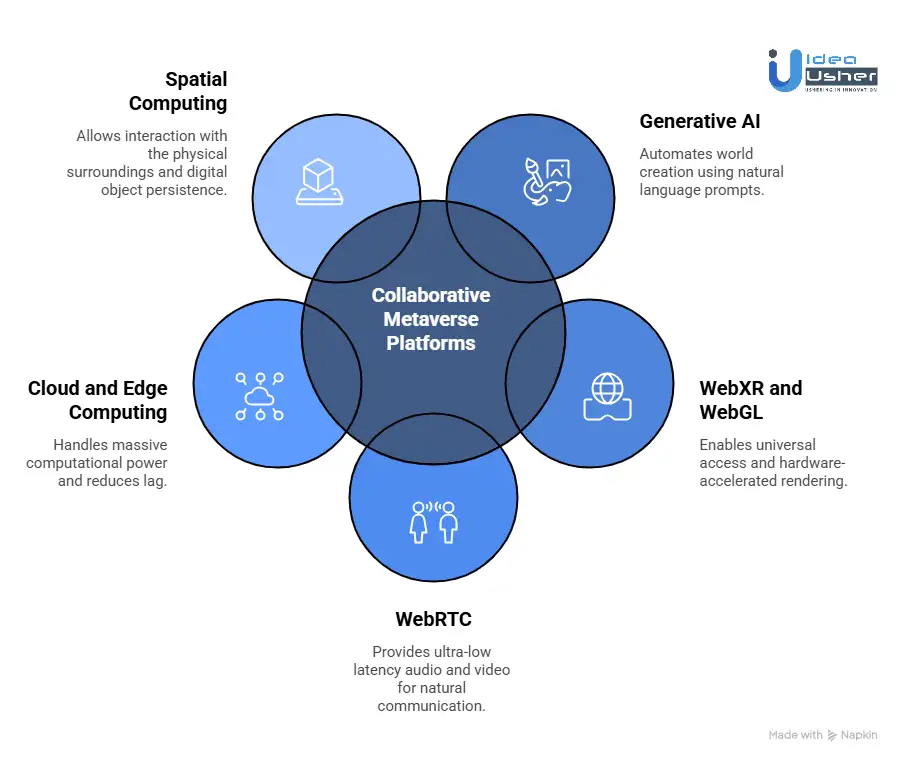
The infrastructure of collaborative metaverse platforms relies on a convergence of real-time networking and spatial intelligence. These technologies ensure digital worlds are functionally reliable for high-stakes professional use. By leveraging this tech stack, developers build scalable environments that bridge the gap between physical and digital reality.
1. Generative AI for World Creation
Traditional 3D modeling is too slow for infinite scale. Generative AI allows users to build environments using natural language prompts. This technology automates asset placement and textures, similar to how Promethean AI enables rapid deployment of customized spaces without a large team of artists.
2. WebXR and WebGL for Rendering
To ensure universal access, platforms utilize WebXR and WebGL. These APIs allow browsers to tap directly into a device GPU for hardware-accelerated rendering.
- WebGL: Handles complex graphics on the screen.
- WebXR: Provides a seamless transition from a 2D monitor to a fully immersive headset experience, a strategy used by Somnium Space to reach users on any device.
3. WebRTC for Communication
Presence is impossible without instant interaction. WebRTC provides the ultra-low latency audio and video streams required for natural conversation. This is the foundation for spatial audio in platforms like Gather, where voices change volume based on your virtual distance from a colleague.
4. Cloud and Edge Computing
Processing a persistent 3D world for thousands of users requires massive computational power.
- Cloud Computing: Handles heavy lifting like persistence and physics.
- Edge Computing: Moves data processing closer to the user to reduce lag. Microsoft Mesh leverages this global cloud infrastructure to ensure high-fidelity avatars remain synced during international meetings.
5. Spatial Computing and 3D Mapping
Spatial computing allows a platform to interact with the user’s physical surroundings. By using vSLAM (Visual Simultaneous Localization and Mapping), these systems create persistent maps.
Technical Note: This ensures Digital Object Persistence. If a virtual blueprint is placed on a physical table, it remains anchored for every participant. This level of environmental awareness is a core feature of platforms like Magic Leap, which blend digital assets into the real world.
How Gaussian Splatting Improves 3D Performance?
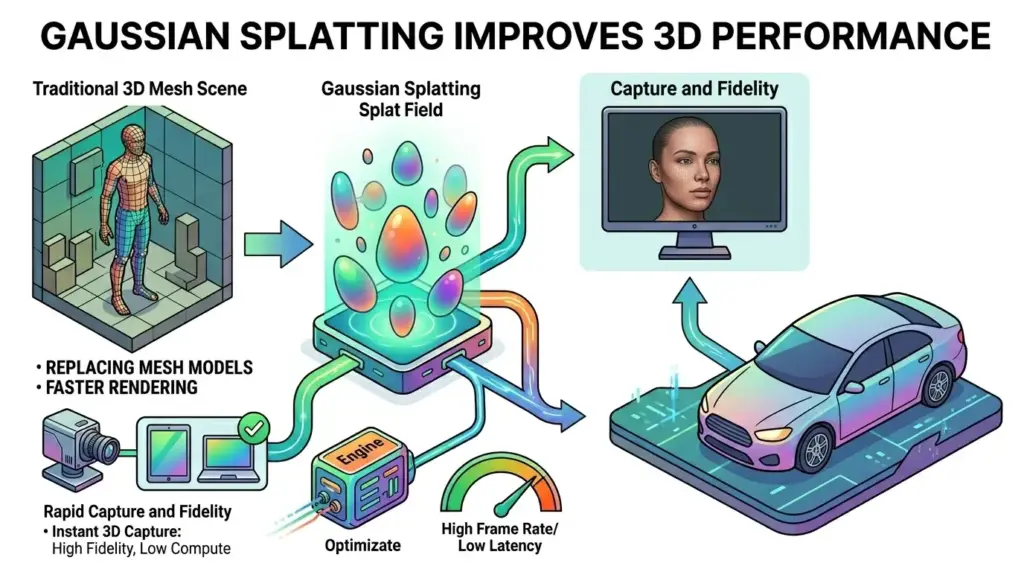
Traditional 3D modeling struggles to balance photographic realism with real-time performance. Collaborative metaverse platforms are increasingly adopting Gaussian Splatting to bypass the limitations of mesh-based geometry.
This technology uses millions of 3D blobs to represent light and color, allowing for cinematic visuals that remain fluid and interactive during multi-user sessions.
1. Convert Real Spaces Into Worlds
Manually rebuilding a physical office or heritage site in 3D can take months. Gaussian Splatting allows for reality capture using simple smartphone video or drone footage.
- Rapid Digitization: Convert a physical boardroom into a 1:1 virtual twin in hours.
- Visual Fidelity: Capture complex reflections and transparent surfaces that traditional photogrammetry often fails to render.
- Dynamic Usage: Platforms like Luma AI demonstrate how these splats create instant, navigable environments that feel indistinguishable from high-definition video.
2. High Fidelity, Low Compute
Unlike older neural rendering methods that require heavy processing for every frame, Gaussian Splatting is optimized for fast rasterization. This allows high-end visuals to run on standard hardware without overheating.
This efficiency is why NVIDIA Omniverse has explored integrating splatting techniques to help industrial teams visualize factory floors with photorealistic accuracy without sacrificing frame rates.
| Feature | Gaussian Splatting | Traditional Mesh |
| Rendering Speed | Ultra-fast GPU rasterization | Slower triangle calculation |
| Surface Detail | Soft, natural light blending | Hard edges and texture seams |
| Processing Time | Near-instant optimization | Lengthy manual retopology |
3. Optimize for Web and Mobile
Accessibility is the lifeblood of any social or professional platform. Gaussian Splatting can be compressed into small, streamable data formats that load instantly in a browser. This mirrors the approach taken by Sketchfab, which has revolutionized how complex 3D data is previewed and shared across mobile and desktop browsers through highly optimized web viewers.
Technical Advantage: By utilizing advanced compression, these 3D environments are delivered as lightweight packets. This enables users on mobile devices to explore photorealistic virtual twins without high-end gaming rigs.
Platforms such as PlayCanvas are already integrating these viewers to ensure a seamless click-to-enter experience for global teams.
Cost to Develop a Collaborative Metaverse Platform Like Holonet
Developing a professional digital ecosystem is a significant investment that scales based on visual fidelity, concurrent user capacity, and the complexity of real-time interactions. Budgeting for collaborative metaverse platforms requires a balance between initial build costs and the recurring infrastructure expenses needed to keep a persistent world alive.
1. Cost Breakdown by Features
The primary drivers of the budget are the interaction layer and asset complexity. Unlike standard apps, every feature in a metaverse environment must be synchronized across all users in real time.
| Feature Category | Estimated Cost Range | Key Variables |
| 3D Environment Design | $30,000 – $150,000 | Number of assets, texture quality, and lighting. |
| Avatar Systems | $15,000 – $80,000 | Customization depth and skeletal animation complexity. |
| Real-Time Netcode | $25,000 – $100,000 | Latency optimization and spatial audio integration. |
| Blockchain/Economy | $20,000 – $150,000 | Smart contracts, NFT minting, and wallet security. |
2. AI and Infrastructure Costs
Modern platforms rely heavily on AI for world generation and moderation, which introduces both development and high recurring compute costs.
- Generative AI Integration: Developing custom tools for text-to-world creation or automated NPC behaviors typically ranges from $40,000 to $200,000.
- Cloud Hosting: Sustaining a high-occupancy world requires robust server clusters. Expect monthly cloud bills between $5,000 and $50,000, depending on active user traffic.
- Moderation Systems: Automated AI guardians that scan 3D content for safety add an average of $20,000 to the initial development budget.
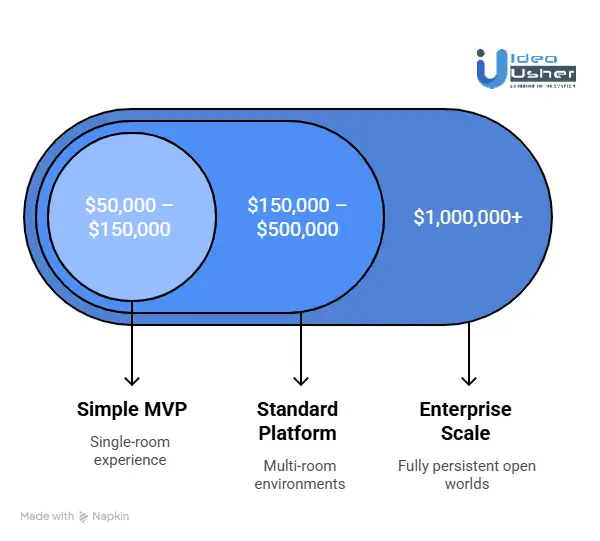
3. MVP vs Full Platform Estimates
A Minimum Viable Product (MVP) focuses on validating a single use case, such as a virtual showroom or one meeting space, while a full platform offers a persistent, multi-zone world.
- Simple MVP ($50,000 – $150,000): A single-room experience with basic avatars, limited interaction, and standard web-based 3D rendering.
- Standard Platform ($150,000 – $500,000): Multi-room environments, cross-device support (Mobile/VR), and integrated social features like spatial voice.
- Enterprise Scale ($1M+): Fully persistent open worlds with custom physics, advanced AI integration, and the capacity for thousands of concurrent users.
4. Factors Impacting Final Cost
Several variables can swing a budget significantly during the development lifecycle.
Project Tip: The platform choice is the biggest cost multiplier. Building a web-only experience using WebGL can be 30% to 50% cheaper than a native VR application that requires optimization for specific hardware like the Meta Quest or Vision Pro.
- Device Compatibility: Supporting multiple headsets and mobile browsers simultaneously increases testing and optimization hours.
- Visual Style: Stylized, low-poly graphics are far more cost-effective than photorealistic environments that require high-end texture work and complex shaders.
- Maintenance: A realistic budget should allocate 15% to 20% of the initial build cost annually for bug fixes, security updates, and server management.
Key Challenges in Building a Collaborative Metaverse Platform
Developing a persistent digital world requires solving problems that traditional web apps never encountered. Technical success in collaborative metaverse platforms depends on treating these spaces as living digital ecosystems.
The engineering must account for hardware diversity and the unpredictability of human interaction to deliver a social environment that is both stable and immersive.
1. Managing Latency in Interaction
Even a tiny delay breaks the feeling of being present. For platforms requiring 3D design collaboration or virtual events, custom netcode is essential to eliminate lag.
- Jitter Buffering: Stuttering is prevented by smoothing out inconsistent packet delivery.
- Predictive Movement: Client-side interpolation ensures actions feel instant regardless of ping.
- Spatial Audio Sync: Voices must align perfectly with visual cues so conversations feel natural.
Platforms like Virbela utilize optimized netcode to prioritize movement data during high-traffic sessions, a strategy that maintains fluidity during large gatherings.
2. Scaling Concurrent Users
Most servers struggle when hundreds of people gather in one virtual spot. Success depends on overcoming the scaling paradox where data processing needs grow exponentially with each new user.
Scaling Strategy: Spatial partitioning breaks the world into manageable zones. This ensures the server only processes interactions relevant to a user’s immediate surroundings. While platforms like Decentraland use distributed approaches, the focus remains on balancing that decentralization with high-speed real-time responsiveness.
3. Balancing Performance and Quality
The goal is a world that looks like a movie but runs on a mobile device. Smart optimization layers prevent crashed apps and overheated hardware.
| Focus Area | Technical Solution | User Benefit |
| Graphics | Dynamic Level of Detail | Smooth performance for mobile and VR |
| Lighting | Hybrid light baking | Beautiful visuals without draining battery |
| Physics | Simplified collision meshes | Lag-free interaction with 3D objects |
Taking inspiration from VRChat, providing tools for asset optimization ensures that unoptimized content does not degrade the shared experience for others in the space.
4. Moderation in Open Worlds
When AI allows users to generate content instantly, keeping the environment safe is a massive task. Automated safety layers are built to monitor AI-generated assets in real time.
Because content creation is so rapid, AI-driven guardians scan 3D geometry and text prompts. Following the lead of Roblox, which uses machine learning to filter millions of daily interactions, ensures these platforms remain safe for all users without slowing down the creative process.
Use Cases Driving Demand for Collaborative Metaverse Platforms
The demand for persistent digital spaces is driven by functional utility across various industries. Collaborative metaverse platforms provide a layer of presence that traditional 2D conferencing lacks, enabling teams to interact with data and environments in three dimensions.
From corporate operations to creative economies, these use cases demonstrate the practical value of spatial computing.
1. Virtual Offices
Beyond standard video calls, virtual offices restore the organic networking found in physical workplaces. Platforms like Gather and Horizon Workrooms allow employees to move freely between desks and meeting halls.
- Spatial Presence: Coworkers walk up to avatars to start casual conversations, mimicking office watercooler moments.
- Shared Workspaces: Teams use virtual whiteboards and persistent 3D models for brainstorming.
- Global Hubs: Decentralized companies use these spaces as primary headquarters to maintain community across time zones.
2. Learning and Training
Immersive environments allow for high-stakes training without real-world risk. This is particularly valuable in sectors where physical errors are costly or dangerous.
- Simulated Hazards: Industrial workers practice emergency shutdowns or hazardous material handling in a safe setting.
- Medical Training: Surgeons use high-fidelity replicas of biological systems for surgical planning and anatomy study.
- Skill Retention: Learners often retain information longer when using immersive 3D modules compared to standard e-learning. Microsoft Mesh has become a leading tool for these large-scale corporate onboarding programs.
4. Digital Twins
Digital twins act as virtual replicas of physical systems, allowing for predictive analysis and operational testing.
- Industrial Monitoring: Factory managers use digital twins to simulate production lines and predict equipment failures.
- Smart Cities: Urban planners test traffic flow and energy consumption by creating virtual versions of city grids.
- Energy Utilities: Large grid operators use these platforms to anticipate faults and improve storm response. NVIDIA Omniverse provides the simulation power necessary to sync these massive datasets in real time.
5. Social and Creator Worlds
The metaverse also serves as a canvas for the creator economy, where users build and monetize their own experiences.
- User-Generated Content: Platforms like The Sandbox and Roblox empower non-technical users to build games and social hubs.
- Virtual Events: From fashion weeks to live music, creators host large-scale events that break geographical barriers.
Economic Impact: In these worlds, digital real estate and voxel-based assets have created a new digital economy. Creators monetize designs through marketplaces, turning virtual architecture and wearable fashion into viable revenue streams.
Monetization Strategies for Collaborative Metaverse Platforms
Generating sustainable revenue in a digital ecosystem requires a shift from traditional advertising to value-based transactions. Collaborative metaverse platforms leverage a mix of recurring service fees and economy-driven microtransactions to fund high-performance infrastructure.
By diversifying income streams, these platforms maintain free access for casual users while offering scalable solutions for professional and creative power users.
1. Subscription Plans
A tiered subscription model provides predictable revenue while offering specialized tools for different user personas.
- Pro Tier: Includes high-fidelity avatar customization, increased storage for 3D assets, and private room hosting.
- Collaboration Suite: Designed for teams, this tier adds advanced project management tools, whiteboarding, and integrated file sharing.
- Ad-Free Experience: Allows users to bypass sponsored content or virtual billboards, a model successfully tested by Meta and Snapchat+ to reach millions of paying subscribers.
Platform Example: AltspaceVR evolved its model to cater to large-scale corporate organizers. Recent trends show that platforms in this niche can generate significant revenue from specialized event tiers, with the broader VR market seeing global spend reach over $70 billion.
2. Creator Economy and Marketplaces
The most vibrant worlds are built by the community. Facilitating a marketplace where creators can sell digital goods creates a self-sustaining financial cycle.
- Direct Sales: Designers sell 3D furniture, wearable fashion, or custom textures to other users.
- Secondary Market Royalties: Through blockchain-verified smart contracts, the platform and the original creator can take a small percentage of every subsequent resale.
- Platform Example: Decentraland maintains a massive marketplace where users trade LAND and wearables. In the final quarter of the previous year, secondary market sales for LAND parcels reached $4.2 million, reflecting a 31% increase quarter-over-quarter.
Platform Example: Roblox has set the gold standard for creator payouts. The top 1,000 creators on the platform earned an average of $1.3 million last year, while total platform bookings rose to $2.22 billion in the final quarter alone.
3. Enterprise Licensing
Large organizations require a level of security and control that public worlds cannot provide. Enterprise licensing focuses on Metaverse-as-a-Service (MaaS).
- Private Instances: Companies pay for dedicated, firewalled servers to host sensitive internal meetings or training sessions.
- Custom Integration: Licensing fees cover the cost of syncing the virtual world with existing enterprise tools like CRM systems or digital twins.
Platform Example: Virbela provides white-label virtual campuses for major corporations. While navigating challenging market shifts, the platform successfully doubled its free cash flow recently through strict cost management and a focus on high-value enterprise competitiveness in Latin America and Europe.
4. Pay-Per-Use AI World Creation
As generative AI makes world-building faster, platforms are monetizing the compute required to build these spaces.
- On-Demand Generation: Users pay a one-time fee to have an AI engine instantly generate a 1:1 digital twin of a physical office or a custom event space based on a text prompt.
- Compute Credits: High-fidelity AI video generation or complex physics simulations are metered, where users purchase credits to perform heavy-duty creative tasks.
Platform Example: Hadean utilizes its high-performance spatial computing power for developers. The company recently closed a bridge funding round of approximately $15 million, with its valuation estimated between $100 million and $200 million as it prepares for a larger $100 million Series B round to support its AI-driven simulation scaling.
Why Choose Idea Usher for Collaborative Metaverse Platform?
Building a digital world requires deep expertise in networking, AI, and scalable systems. We transform complex visions into high-fidelity collaborative metaverse platforms that are architecturally sound and visually stunning.
AI and 3D Expertise
We bridge the gap between static and reactive worlds by integrating advanced AI with high-frequency rendering.
- Dynamic Generation: We use AI to create environments that respond to user actions in real time.
- Intelligent Avatars: Our team builds NPCs that offer natural interaction through Large Language Models.
- Optimized Rendering: Whether using WebGL or Gaussian Splatting, we optimize every frame for performance.
Proven Scalability
With over 500,000 hours of coding experience, our team of ex-MAANG/FAANG developers understands how to support millions of concurrent connections. We apply rigorous standards including stress testing and low-latency netcode to every project.
End-to-End Development
We serve as a full-cycle partner, guiding you from initial sketches to post-launch growth.
- Strategy: We help define your creator economy and target niche.
- Prototyping: We build functional MVPs to validate core mechanics early.
- Launch: Our deployment strategy includes deep quality assurance for a bug-free release.
- Maintenance: We provide ongoing updates to keep your community engaged.
Conclusion
Developing a professional digital world requires a strategic blend of high-fidelity 3D rendering, scalable server architecture, and intuitive user design. By prioritizing low-latency networking and robust security frameworks, creators can build collaborative metaverse platforms that offer truly immersive and persistent social experiences. Success in this space lies in creating an adaptable ecosystem that balances visual quality with cross-device accessibility, ensuring a seamless environment for both creators and enterprise users to thrive.
FAQs
A1: Development begins by selecting a 3D engine like Unity or Unreal and integrating a spatial networking layer for real-time synchronization. You must build a scalable server architecture to manage concurrent users while optimizing 3D assets for cross-platform performance. The process concludes with implementing secure identity systems and moderation tools to ensure a stable and safe environment.
A2: Core features include spatial audio and customizable 3D avatars that facilitate natural interaction in immersive environments. Essential utility tools like interactive whiteboards and persistent file storage enable seamless professional collaboration. Many platforms also include user-generated content tools and integrated marketplaces that allow creators to build and monetize their own virtual spaces.
A3: These platforms work by using high-speed data synchronization to mirror user actions across all connected devices instantly. Backend servers use spatial partitioning to process only the data relevant to a user’s immediate surroundings, which minimizes lag and saves bandwidth. This framework allows thousands of individuals to inhabit a shared digital space where interactions with objects and others are persistent.
A4: Building a basic minimum viable product typically ranges from $50,000 to $150,000, focusing on essential social features and a single environment. For an enterprise-grade platform with complex AI and massive concurrency support, budgets often exceed $500,000 to $1M+. Final costs depend on visual detail, the number of supported devices, and the recurring expenses of high-performance cloud hosting.