

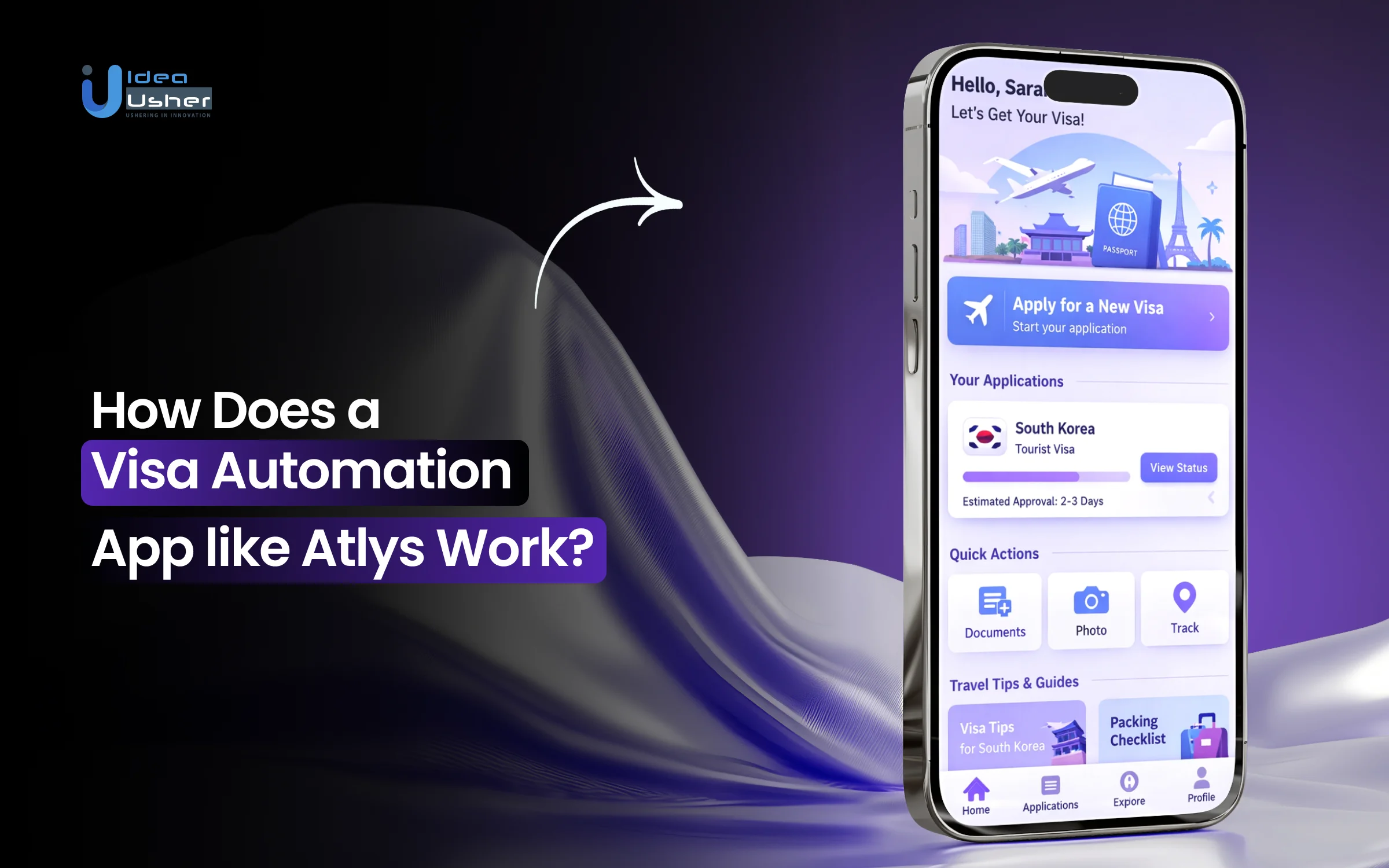
Planning a trip should feel simple, yet visa approvals often slow everything down. The process can seem unclear, and timelines may shift without warning. Many travelers hesitate because they cannot fully trust the outcome.
The popularity of visa automation apps has started increasing because they can guide each step and validate inputs early. They also allow document scanning and photo capture directly within the app for faster submissions. Real-time tracking and automated checks can further reduce the risk of rejection.
Over the years, we’ve built numerous visa automation solutions powered by AI-driven document intelligence and workflow orchestration systems. Since IdeaUsher has this expertise, we’re sharing this blog to discuss how a visa-automation app like Atlys works.
Why Visa Automation Apps Are Surging Globally?
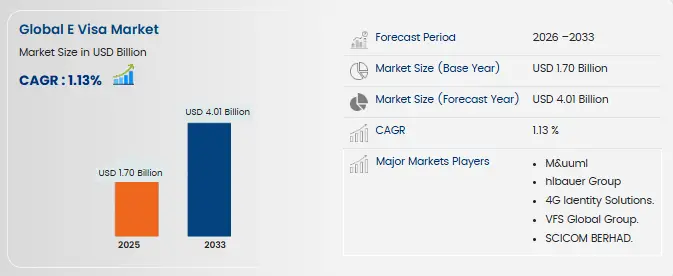
Source: Databridge Market Research
Modern visa automation is driven by geopolitical competition. Governments now use digital entry systems to attract high-net-worth individuals and global talent. By replacing manual consular hurdles with algorithmic processing, nations improve their “ease of entry” scores, directly boosting tourism and foreign investment.
For investors, the value lies in the “middleware” layer. This technology bridges fragmented government portals, delivering a seamless user experience. Platforms like Atlys have already validated this model, using mobile-first optimization and direct government integrations to reduce application times from days to minutes.
The Hidden Friction in Traditional Visa Workflows
Legacy visa systems are defined by systemic inefficiencies that create professional risk for high-stakes travelers:
- Manual Error Rates: Non-standardized requirements lead to high rejection rates over minor clerical mistakes.
- The Black Box: Traditional channels offer zero visibility, creating uncertainty for business itineraries.
- Physical Barriers: Courier-based passport handling is incompatible with a decentralized, global workforce.
- Data Redundancy: Users are forced to resubmit the same sensitive data for every trip, increasing security risks.
Rise of Mobile-first Travel Infrastructure
In 2026, the smartphone is a portable compliance hub. Mobile-first infrastructure wins by leveraging native hardware. For example, OCR allows for instant document scanning to eliminate manual entry errors.
Strategic capital is moving toward “ecosystem” platforms like iVisa. These systems centralize visas, health permits, and insurance into a single interface. This approach eliminates the need for travelers to navigate dozens of government websites, many of which are unreliable.
Why Founders are Betting on Visa Tech Now
The investment thesis for “Visa Tech” is built on four pillars of scalability:
- Government APIs: Nations are opening secure gateways, allowing for programmatic, end-to-end automation rather than simple form-filling.
- Digital Nomad Growth: Over 50 countries now offer remote-work visas, creating a high-value market for complex residency permits.
- B2B Demand: Corporations need centralized tools to manage employee mobility while ensuring 100% compliance with local labor laws.
- High Retention: Once a user’s documents are securely vaulted on a platform, switching costs are high, driving significant lifetime value.
The goal for today’s entrepreneurs is to become the “Stripe for Borders,” the invisible, trusted layer making global movement instantaneous.
What Is the Atlys App?
Atlys is an AI-native mobility platform designed to digitize the entire visa lifecycle. Founded by former Pinterest engineers, it has evolved into a full-stack visa engine. In March 2026, the company secured $36 million in Series C funding, led by Susquehanna Asia VC and featuring MakeMyTrip as a strategic investor.
For the strategic investor, Atlys represents a high-growth asset. It operates as a bridge between archaic sovereign systems and the high expectations of digital consumers. By processing over 700,000 visas annually with an 11x growth rate, it has proven that automation can solve travel’s most persistent friction point.
Scalable Mobile Automation
The platform’s technical moat lies in its ability to handle massive volume without manual intervention. Unlike traditional agencies that scale by hiring, Atlys scales through Agentic AI. These autonomous software agents monitor embassy portals and identify rule changes in real time.
This allows the app to maintain a high on-time success rate across 150+ countries while keeping operational overhead lean. For a business owner, this means higher margins and lower human-resource risk.
Replacing Embassy Workflows
Atlys replaces fragmented embassy workflows with a three-minute digital experience. It eliminates the need to navigate broken government portals or visit physical photo booths. Using OCR and smartphone biometrics, the app handles:
- Auto-Filling: 90% of forms are pre-filled by scanning the passport.
- Biometric Compliance: AI tools adjust selfies to meet specific embassy lighting and background requirements.
- Smart Booking: For high-demand visas, it tracks and secures appointment slots automatically.
Solving Modern Traveler Pain
For the professional traveler, the app eliminates the black box of immigration. Traditional applications offer zero visibility; Atlys provides a real-time tracker that shows the status of both the platform and government servers.
This transparency removes the anxiety of silent delays. Maintaining a Smart Document Vault, it also ends the cycle of re-uploading the same IDs for every new trip. This creates an “easy-apply” loop that drives high user retention.
Standing Out in Visa Tech
Atlys stands out by building a Global Travel Identity layer. While many competitors focus solely on the transaction, Atlys builds a data layer around traveler eligibility and identity.
Its integration into major travel ecosystems like MakeMyTrip makes it more than just an app. It is becoming the plumbing for international movement, significantly lowering the barrier for outbound travelers in emerging markets.
How Does the Atlys App Work?
The Atlys workflow is a masterclass in reducing time-to-value. While traditional portals bury users in legalese, the app uses a front-loaded data capture model. This ensures that by the time a user reaches the final submit button, the application has undergone multiple layers of automated scrutiny, virtually eliminating human-led rejection.
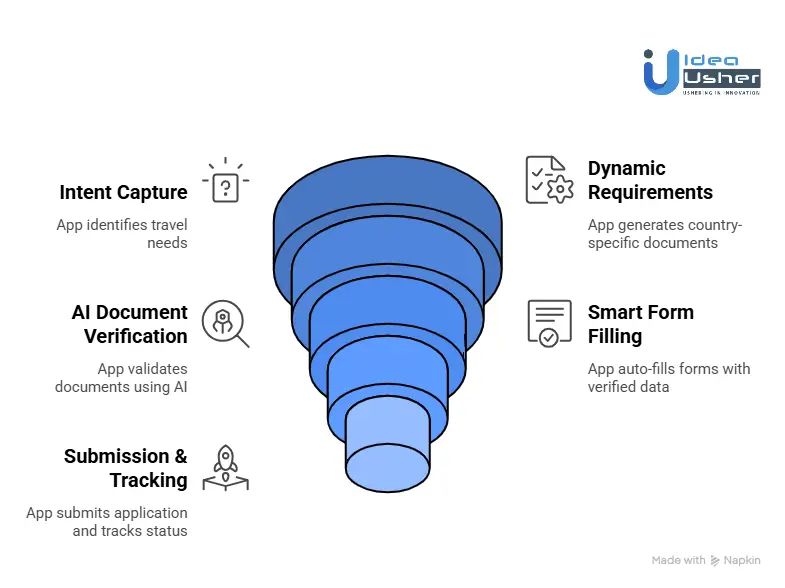
By automating 90% of the entry process, Atlys shifts the operational burden from the user to a proprietary AI stack, drastically increasing the LTV of high-frequency travelers.
Early Intent Capture
The journey begins not with a form, but with a destination. By entering travel dates, the app immediately triggers its intent-engine. This early capture allows the platform to run eligibility checks against passport strength and travel history.
Instead of asking “What visa do you need?”, the app algorithmically determines the most efficient path, whether it is an e-visa, visa-on-arrival, or a sticker visa. This proactive routing prevents users from starting the wrong application, a common and costly mistake in traditional agency workflows.
Dynamic Requirements
One of the most significant friction points in travel is the document guessing game. Atlys solves this by dynamically generating a lean, country-specific checklist.
- Dynamic Logic: If a country requires a bank statement only for certain nationalities, the logic tree hides that requirement for everyone else.
- Contextual Guidance: It provides instructions for each document, explaining why it matters for that specific embassy.
- Concierge Services: For complex sticker visas, the app uses its Schengen Cover Letter Generator and Hotel/Flight Itinerary tools to auto-generate customized packets, removing the need for third-party services.
AI Document Verification
The app’s proprietary BoltOCR technology is the engine behind its speed. When a user scans their passport, the system doesn’t just see an image; it validates the Machine Readable Zone and cross-references it with visual data.
The Photo Model tool is particularly disruptive. It uses AI to transform a home selfie into a government-approved biometric photo, handling background removal and lighting according to ICAO standards. If a scan is blurry, the AI-Enhanced Passport Scanning layer flags it immediately, preventing substandard documents from reaching the embassy.
Smart Form Filling
The manual Form DS-160 can take hours; on Atlys, it takes minutes. The platform uses a smart-fill system that pulls verified data from the Smart Document Vault, a secure, reusable repository where users upload once and reuse for all future trips.
- Hallucination Prevention: Unlike general AI, BoltOCR is trained specifically for passports to ensure names and dates are never swapped.
- Field Validation: The app runs real-time checks to ensure return dates are not before arrival dates.
- Pre-Check Out Bot: This AI-driven assistant draws directly from official government sources to answer nuanced questions about required documents based on the user’s unique profile.
Submission & Tracking
Once the fee is paid, the application enters the submission phase. For e-visas, this is handled by autonomous agents. For high-demand sticker visas, the Schengen Appointment Checker tracks slots 24/7 to secure the earliest possible opening.
The post-submission experience is defined by radical transparency. Users receive updates through BOLO, an AI-driven post-checkout assistant that provides real-time support and status notifications. This visibility reduces customer support overhead by 38%, allowing the business to scale without a proportional increase in headcount.
Key Features That Make Apps Like Atlys Stand Out
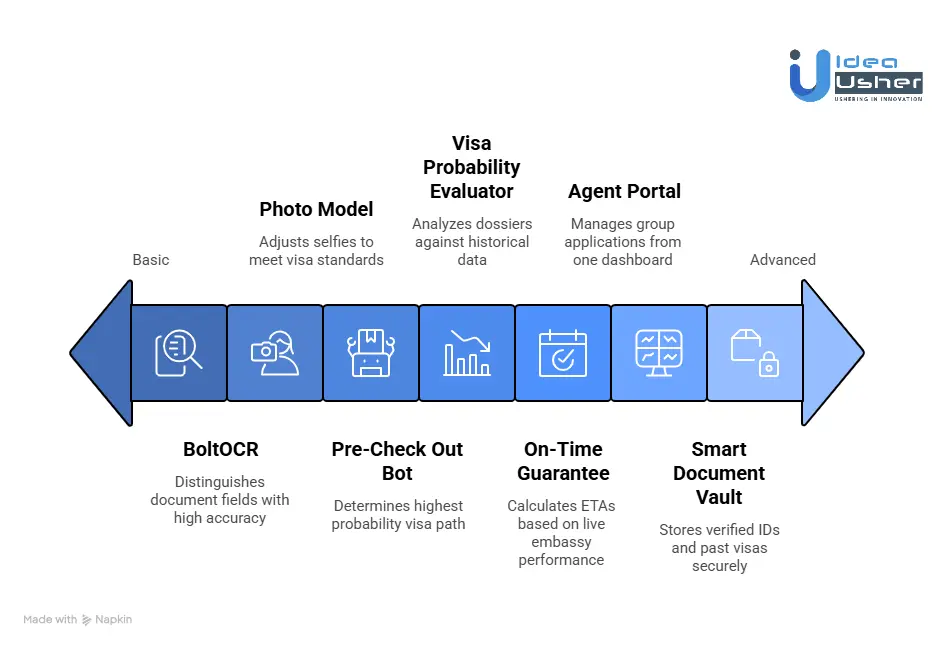
Atlys uses a proprietary tech stack to treat visa logistics as a high-precision data exercise. While others act as digital couriers, Atlys functions as an automated compliance engine. It targets high-value travelers who prioritize speed and success over the lowest cost.
1. AI-Powered Document Scanning
BoltOCR is the platform’s core vision-language model built for travel documents. Unlike general tools, it distinguishes between similar fields like Place of Birth and Place of Issue with 99.08% accuracy.
This AI-Enhanced Passport Scanning layer acts as a gatekeeper. It identifies unusable inputs like glare or blurred zones before the user finishes uploading, reducing re-work costs and ensuring only clean data enters the pipeline.
2. Dynamic Visa Eligibility Engine
Visa eligibility is a moving target. Atlys utilizes a Pre-Check Out Bot drawing from official sources for real-time guidance. It assesses a user’s nationality, travel history, and location to determine the highest probability visa path. This ensures users do not waste capital on applications likely to be rejected.
3. Built-In Photo Compliance
The Photo Model tool eliminates the need for professional studios. It uses AI to adjust selfies to meet ICAO and embassy standards.
- Auto-Correction: Manages background removal and lighting.
- Instant Validation: Checks for neutral expressions in real-time.
- Minor Support: Tuned for the high-difficulty task of infant visa photos.
4. Predictive Rejection Risk Alerts
Rather than waiting for an embassy denial, the Visa Probability Evaluator analyzes dossiers against historical data. If it detects a high-risk profile, it triggers a risk alert. This allows users to strengthen their application with more documents before submission.
5. Timeline Prediction And Guarantees
Transparency is the platform’s emotional currency. The On-Time Guarantee is supported by an engine calculating ETAs based on live embassy performance.
- System Tracker: Shows live status of government portals to identify delays.
- Refund Policy: Issues a 100% service fee refund if deadlines are missed.
- Forex Fairness: Automatically refunds currency exchange differences if rates improve after payment.
6. Multi-Country Management
For the corporate sector, the Agent Portal allows management of group applications from one dashboard. Users can track multiple open applications across different destinations, making it essential for tour operators and project managers.
7. Secure Document Vault
The Smart Document Vault drives retention by storing verified IDs and past visas in an encrypted repository. Because data is already AI-verified, repeat applications often become a three-click process. This creates a significant barrier to entry for competitors as users’ compliance data is already centralized.
How AI Reduces Visa Rejection Rates In Apps like Atlys?
Apps like Atlys and iVisa act as a pre-screening layer that replicates the scrutiny of a consular officer. By identifying flaws before the application reaches the embassy, these platforms maintain success rates that far exceed traditional manual methods.
1. Rejection Patterns
Most visa rejections stem from technical non-compliance rather than security threats. Common patterns include:
- Data Mismatches: Slight differences between the name on a passport and the visa form.
- Photo Failure: Incorrect head tilt, shadows on the face, or non-compliant backgrounds.
- Incomplete Documentation: Missing travel itineraries or outdated bank statements.
- Expired Logic: Applying for a visa type that was recently modified by the sovereign state.
2. Real-Time Validation
Visa automation apps use check-stop logic to handle document uploads. When a user scans an ID, the AI-Enhanced Passport Scanning layer instantly validates the Machine Readable Zone.
If the scanner detects a passport is within six months of expiry, the app stops the workflow and alerts the user. This real-time validation ensures no application moves forward with flawed data, protecting the user’s fee and the platform’s reputation.
3. Pre-Submission Checks
Before the final payment, the platform runs a comprehensive sanity check on the entire dossier.
- Cross-Field Verification: The AI ensures the arrival date in the flight itinerary matches the entry date on the visa form.
- Visual Quality Layer: The Photo Model tool analyzes selfies for biometric compliance, flagging eyes closed or poor lighting before the photo is locked.
- Contextual Accuracy: The system checks if an uploaded document is actually the correct file type using image classification models.
4. Learning From Outcomes
The most advanced feature of these platforms is the ability to learn from previous outcomes. Every approval or rejection is fed back into the Visa Probability Evaluator.
If an embassy begins rejecting applications due to a new requirement, the AI identifies this trend across hundreds of users. The app then updates its dynamic checklist for all future applicants in real time. This creates herd immunity against new rejection trends that no individual travel agent could replicate.
What Makes Users Trust A Visa Automation App Instantly?
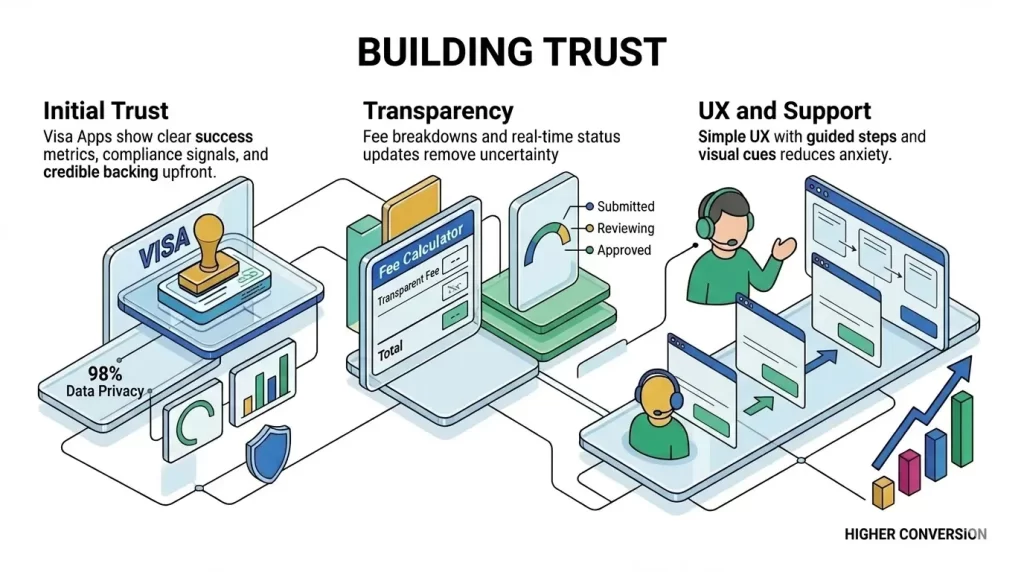
The trust bridge in visa automation apps is built by removing the black box of government processing. When a platform provides more clarity than official government websites, the psychological shift from skepticism to reliance happens almost immediately.
1. Rejection Patterns
To convert a hesitant user, an app must broadcast authority through specific technical markers.
Verified Success Metrics:
Displaying live counters of successful deliveries provides statistical reassurance. Atlys uses this strategy on its home screen to validate its scale, showing over 500,000 visas processed to new users.
Government Aligned Compliance:
Stating that document scanning technology aligns with ICAO standards makes the app feel like a direct extension of the embassy. iVisa leverages similar compliance language to reassure users that digital uploads meet strict legal criteria.
Tier One Backing:
Showcasing logos from prominent venture capital firms acts as a corporate handshake for legitimacy. This is a primary signal for Atlys, which highlights backing from firms like Peak XV to differentiate itself from small-scale agencies.
Authorized Agent Status:
Displaying official authorization links for specific jurisdictions creates sovereign trust. VisaHQ stands out by maintaining a physical presence and registered status with numerous embassies globally to prove its official standing.
2. How Transparency Impacts Conversion Rates
Transparency is the most effective tool for increasing checkout rates. In high stakes environments, unknowns cause immediate cart abandonment.
Fee Breakdown:
Atlys shows exactly where every cent goes among Processing, Platform Maintenance, and Government Fees. This prevents the hidden fee shock common on traditional travel portals.
Live System Tracker:
By showing the live status of government servers, a platform shifts blame away from itself during official downtimes. Sherpa utilizes this data-driven transparency to help travelers understand border closures and server health in real time.
Forex Fairness Refund:
Automatically refunding small currency exchange differences sends a fair-play signal. Atlys uses this to prove it is not skimming money off the top of the government fee by returning amounts as small as ₹17.
3. Designing For High-Stakes User Decisions
Designing for visas requires a philosophy focused on reducing anxiety during intense decision-making.
Step by Step Onboarding:
Instead of a 50-field form, the app breaks tasks into bite-sized screens. Entriva uses this modular approach to guide travelers through complex requirements without overwhelming them.
Visual Reassurance:
Using green checkmarks immediately after a document upload signals that the application is not under stress. Most modern apps, including Offvisa, use these visual cues to confirm that the software has successfully read a passport or selfie.
The Human In The Loop Signal:
Access to 24/7 support or an AI assistant provides a necessary safety net. Knowing a human can step in if the technology fails is often the final nudge a user needs to pay, a strategy Atlys employs through its dedicated concierge team.
The Psychology Behind Fast Visa Approvals
The psychological barrier to an international visa is often higher than the financial one. For a traveler, a visa is not just a document; it is a permission slip for their life plans. When visa automation apps speed up this process, they are not just saving time. They are managing human anxiety by transforming a bureaucratic hurdle into a predictable digital flow.
Why Users Abandon Mid-Application
Application abandonment is rarely about the price. It is usually a reaction to cognitive overload or document friction.
- The Passport Trap: If an app asks for a scan and the user does not have their passport on hand, the session ends.
- The Jargon Wall: Terms like Consular Jurisdiction or VFS Reference Number trigger a fear of making a mistake.
- Infinite Scrolling: Traditional government portals display 50+ fields on a single page, leading to form fatigue.
Founder’s Insight: If a user spends more than 120 seconds on a single screen without a success signal, the probability of them closing the tab increases by 40%. Atlys combats this by requesting only one piece of information per screen to maintain momentum.
Reducing Anxiety Through Ux Design
Successful apps use calm design to keep users grounded. This involves moving from a system-centric view of what the embassy wants to a user-centric view of what the traveler actually knows.
Progress Anchoring: By showing a clear 1-2-3-4 step counter, apps like Offvisa provide a sense of an end in sight. This prevents the feeling of being trapped in a bureaucratic loop.
Contextual Validation: Instead of an error message popping up after hitting submit, Atlys uses real-time validation. If a passport scan is blurry, the app tells the user immediately. This prevents the late-stage regret of realizing a mistake was made 20 minutes ago.
The Safety Net: Displaying 24/7 chat support icons prominently reduces the fear of being stuck in an automated void. Even if the user never clicks it, the presence of a human-outward signal provides necessary comfort.
Micro-Interactions That Boost Completion Rates
Small design choices act as the grease for the application gears. They provide the positive reinforcement needed to cross the finish line.
| Feature | Psychological Trigger | Impact |
| The Haptic Buzz | Confirmation | A small vibration when a photo is approved by the AI gives the user physical certainty. |
| The Auto-Fill Pop | Effort Reduction | Seeing 10 fields vanish because the software read the passport creates a magic moment. |
| The Green Check | Dopamine | Instant visual feedback after each document upload rewards the user for completing a chore. |
| Real-Time Tracking | Agency | Showing a live government server status bar makes the user feel like an insider with superior information. |
Revenue Models for Visa Automation Apps
The financial engine of visa automation apps transforms a one-time government fee into a diversified revenue stream. By adding a digital service layer over sovereign requirements, these platforms capture value from high-stakes travel logistics.
Successful apps move beyond simple arbitrage. They monetize through precision, speed, and corporate integration, ensuring that every traveler profile represents multiple revenue touchpoints.
1. Per-Application Service Fees
The primary revenue driver is a transparent service charge added to the official government visa fee.
- Standard Fees: Platforms typically charge between $15 and $100 per application. iVisa uses this as its core model, often adding a standardized processing fee on top of the embassy cost to cover their digital coordination.
- The No-Risk Model: To build trust, some apps only collect their service fee upon the successful issuance of the visa.
- Forex Arbitrage Protection: While traditional agents profit from inflated exchange rates, modern apps often charge a fixed service fee and refund any favorable currency differences to the user.
2. Premium Fast-Track Processing Tiers
For travelers on a tight schedule, speed is a high-value commodity. Apps monetize this urgency through tiered processing speeds.
Pricing Tiers Example:
- Standard: $20 service fee (4-6 days)
- Rush: $45 service fee (2-3 days)
- Super Rush: $80+ service fee (under 24 hours)
Visa2Fly effectively uses this tiered approach, allowing users to pay a premium for expedited document verification and submission when travel dates are imminent. This additional margin is almost entirely pure profit for the platform.
3. Subscription Plans For Frequent Travelers
To increase Lifetime Value, apps are moving toward “Travel-as-a-Service” subscriptions. Instead of paying per trip, frequent flyers pay an annual fee for unlimited visa concierge services.
| Plan Type | Estimated Cost | Example App |
| Individual Nomad | $99 / Year | Atlys — Offers a “Black” or premium tier that waives service fees for frequent applicants. |
| Family Bundle | $249 / Year | Entriva — Focuses on managing the complexity of group and family travel under a single managed profile. |
| Business Pro | $499 / Year | VisaHQ — Provides corporate subscriptions that include multi-entry management and tax residency tracking. |
3. B2B Partnerships With Travel Agencies
A significant portion of revenue comes from wholesale visa processing. By providing an API or an agent portal, apps allow travel agencies to outsource their back-office work.
- Commission Model: The app provides the tech for free but shares a portion of the service fee with the partner.
- SaaS Integration: Sherpa utilizes this model by embedding its visa requirement engine directly into the checkout flows of major airlines like American Airlines and British Airways.
- Bulk Discounts: Corporate travel departments pay a flat per-seat fee to ensure all employees have their documentation managed automatically.
4. Affiliate Revenue From Travel Services
The visa application is a high-intent moment where travelers are most likely to buy ancillary products. Apps capitalize on this through integrated affiliate loops.
Travel Insurance: Mandatory for many visas, apps like Offvisa often embed one-click insurance policies into the application flow, earning a commission from the insurance provider.
eSIMs and Connectivity: After a visa is approved, the app offers local data plans. These high-margin digital products provide recurring revenue from repeat travelers.
Hotel and Flight Proof: For users who have not finalized plans, platforms provide “Verified Itineraries” for a small fee (around $10 to $15), satisfying embassy requirements without a full upfront booking.
Must-Have Integrations for Visa Automation Apps
The technical backbone of visa automation apps is not a single piece of software but a web of third-party connections. To provide a seamless experience, these platforms must act as a central hub, orchestrating data between government databases, financial institutions, and communication layers. For an entrepreneur, these integrations are the difference between a high utility tool and a simple digital form.
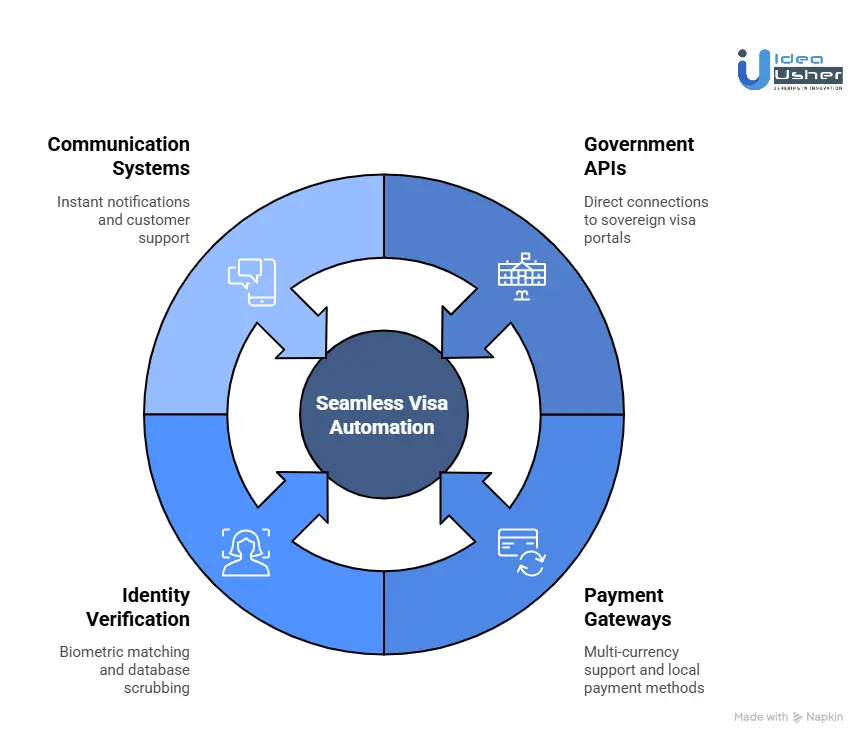
1. Government And Embassy APIs
The most critical and often most difficult integration is the direct link to sovereign visa portals. While many governments still lack modern APIs, leading apps use a mix of direct connections and automated browser agents to sync data.
- Real Time Data Sync: Integrating with government databases allows Sherpa to provide up-to-the-minute information on border closures and entry requirements.
- Application Submission: Direct links enable apps like Atlys to submit data directly to official portals, bypassing the slow and manual save and continue loops found on government sites.
- Official Status Tracking: By hooking into embassy tracking systems, Visa2Fly can pull live updates without requiring the user to manually enter a reference number on external websites.
2. Payment Gateways And Forex Services
Visa fees are usually denominated in the destination country’s currency, creating a complex problem for international travelers.
- Multi-Currency Support: Integrations with gateways like Stripe or Adyen allow users to pay in their local currency while the embassy receives the exact amount in USD, EUR, or AED.
- Forex Logic: Atlys utilizes a specialized forex integration to monitor exchange rate fluctuations. If the rate improves between the time the user pays and the app submits the fee, the platform automatically triggers a refund of the difference.
- Local Payment Methods: To scale globally, apps like Offvisa must integrate with regional systems like UPI in India or Pix in Brazil to reduce checkout friction.
3. Identity Verification Tools
Security is paramount when handling biometric data. Visa automation apps rely on sophisticated identity verification tools to ensure the person applying is actually the passport holder.
- Biometric Matching: By integrating tools like Onfido, apps like iVisa can perform a liveness check where a user’s selfie is compared against their passport photo to prevent identity fraud.
- Database Scrubbing: These integrations check passport numbers against global watchlists to flag potential issues before the embassy does.
- Encryption Standards: Apps like Atlys use secure document vaults built on top of cloud key management services to ensure that sensitive data is never stored in plain text.
4. Notification And Communication Systems
The black box of visa processing is solved through constant, proactive updates. Integrating with a robust communication stack ensures the traveler never feels forgotten.
| Channel | Integration Example | Purpose |
| WhatsApp Business | Twilio | Sending instant visa-approved notifications directly to the user’s primary chat app. |
| Push Notifications | Firebase | Providing real-time government server status alerts and deadline reminders in Atlys. |
| Transactional Email | SendGrid | Delivering the final E-Visa PDF in a secure, downloadable format for Entriva users. |
| Customer Support | Intercom | Powering the support assistants who answer nuanced questions about required documents. |
What Founders Miss About Visa Compliance?
For founders, treating a visa like a simple e-commerce transaction is a critical error. A visa is a sovereign legal instrument, and mismanaging its data or requirements can lead to traveler blacklisting or severe corporate liability.
Modern visa automation apps must move beyond being digital forms to becoming elastic compliance engines. Because immigration laws change with diplomatic shifts, the software must be designed to adapt without constant manual redeployment.
1. Legal Risks In Handling User Documents
Founders often underestimate the legal risks associated with storing sensitive biometric data. The intersection of global privacy laws creates a complex web of liability.
Global Privacy Standards:
Handling international passports requires compliance with regional data residency laws. Platforms must ensure protocols that allow users to fully delete their biometric history.
Liability of Advice:
If a platform recommends an incorrect visa class, it faces significant liability. Founders must clearly distinguish between automated filing and legal representation in their terms.
Chain of Custody:
For sticker visas that require physical passports, firms must manage the physical risk of document loss, which can drive up insurance premiums that many startups overlook.
2. Country-Specific Compliance Challenges
Visa rules are political and rarely follow a universal logic. Founders often fail to account for the localized infrastructure needed to support global claims.
Local Entity Rules:
Many nations require a local sponsor or an authorized agency to submit documents. Navigating this often necessitates establishing local subsidiaries in key regions.
Data Residency:
Some nations mandate that citizen data remain on domestic servers. This forces developers to move away from centralized cloud models to region-specific hosting.
Reciprocity Spikes:
Diplomatic disputes can change entry rules overnight. Successful platforms manage this by using automated monitors to track official government gazettes for sudden policy shifts.
3. Designing For Evolving Regulations
The most successful apps are built with a modular requirement engine rather than a fixed code base. If your logic is hard-coded for today, it will be broken tomorrow.
Technical Guardrail:
Use an isolated compliance layer that updates fields, such as a new health QR code or a digital nomad tax ID, without requiring a full app store update.
AI Compliance Buffers:
Systems can use machine learning to scan official news. When a change in passport validity requirements is detected, the system automatically flags the update for the engineering team.
Dossier Versioning:
As rules evolve, a stored document in a digital vault may become obsolete. Systems must be designed to re-verify every stored asset against the latest regulations before every new submission.
Future Trends in Visa Automation Apps
The future of visa automation apps is moving toward a frictionless, invisible layer of travel. As global mobility shifts from physical paper to digital credentials, these platforms will evolve from simple filing tools into comprehensive identity and planning engines.
The next phase of growth depends on eliminating “the border” as a physical checkpoint. Technological convergence will allow travelers to move through jurisdictions with the same ease as switching between digital apps.
1. Digital Visas And Borderless Travel
The industry is shifting toward Electronic Travel Authorizations (ETA) and digital-only visas. This removes the need for physical stickers and embassy appointments.
- Biometric Entry: Future systems will link digital visas directly to facial and iris scans. This allows travelers to walk through “Smart Gates” without presenting a physical passport.
- Instant Issuance: As governments modernize their backend infrastructure, the gap between application and approval will shrink from days to seconds.
- Interoperable Standards: Universal digital standards will allow a visa issued by one country to be instantly recognized and verified by airline systems and hotel check-ins.
2. AI Travel Assistants
Artificial intelligence will move from reactive document scanning to proactive travel management. Instead of users asking for a visa, the app will anticipate the need.
- Smart Triggering: By syncing with a user’s calendar or flight search history, the software can automatically start a visa draft before the user even books a ticket.
- Probability Modeling: Advanced algorithms will provide a “Success Score” for various destinations, suggesting countries where a traveler is statistically most likely to receive an immediate approval.
- Real-Time Regulation Monitoring: Large language models will continuously monitor diplomatic cables and official gazettes to update entry requirements in real time, alerting travelers to sudden policy shifts.
3. Blockchain For Identity Verification
Distributed ledger technology offers a solution to the “trust” problem in international document sharing. By using blockchain, travelers can maintain a “Self-Sovereign Identity.”
- Immutable Records: Once a passport or birth certificate is verified on the blockchain, it becomes a permanent, tamper-proof record. This eliminates the need for repeated “KYC” checks for every new country.
- Zero-Knowledge Proofs: This technology allows an app to prove a user is “over 18” or “holds a valid passport” without actually sharing the raw, sensitive document data with a third party.
- Secure Sharing: Users can grant temporary, encrypted access to their digital dossier to an embassy, then revoke that access once the visa is issued.
4. Expansion Into Full Travel Ecosystems
The ultimate goal for visa automation apps is to capture the entire traveler lifecycle. Moving beyond the “visa-only” model allows for higher lifetime value per user.
| Sector | Integration | Value Added |
| Insurance | Instant Policies | Automatically attaching mandatory travel insurance to every visa application. |
| Fintech | Travel Wallets | Providing virtual cards that are pre-loaded with local currency for the destination country. |
| Logistics | Luggage Tracking | Managing baggage forwarding services that sync with the traveler’s visa dates and hotel bookings. |
| Compliance | Tax Monitoring | Tracking “days stayed” in a country to alert digital nomads when they are close to triggering local tax residency. |
Build Your Visa Automation App With IdeaUsher
IdeaUsher can help you build visa automation apps using high-performance frameworks designed for the travel tech sector. With over 500,000 hours of coding experience, our team of ex-MAANG/FAANG developers creates secure, scalable architectures that transform complex government processes into simple digital workflows.
From Idea Validation To Launch
We guide you through the entire lifecycle, from analyzing regional regulations to rapid prototyping and full market launch. Our process ensures your platform is functional and aligned with the specific trust signals that drive user conversion.
Custom Solutions Tailored To Your Market
We build bespoke systems rather than using generic templates. Whether you need biometric verification, multi-currency gateways, or automated browser agents, our elastic solutions adapt to shifting diplomatic regulations without requiring a complete overhaul.
Talk To Our Experts Today
Ready to disrupt the global mobility space? Partner with a team that understands the intersection of travel logistics and technical security. Contact our engineering experts today to accelerate your time to market and build the next generation of travel technology.
Conclusion
Visa automation apps like Atlys simplify international travel by replacing manual paperwork with high-speed, AI-driven automation. The process begins when a user scans their passport; the app instantly extracts data and verifies it against embassy requirements. By utilizing automated browser agents and direct government APIs, the platform submits applications in minutes and provides real-time status tracking, effectively turning a complex bureaucratic task into a predictable, digital-first experience.
FAQs
A1: These high-performance platforms essentially act as sophisticated middleware between the traveler and rigid government databases. They utilize intelligent scanning technology to reliably parse passport details and automatically populate complex official forms. This digital infrastructure effectively removes the typical manual friction that usually slows down international mobility.
A2: The system will first verify your digital identity by comparing biometric data against your uploaded credentials. It then transmits this encrypted package through secure gateways directly to the relevant sovereign portal for immediate review. You can then conveniently track the entire lifecycle of the application through real-time status updates.
A3: Building a scalable architecture typically requires an investment between $60,000 and $150,000, depending on the total number of API integrations. Costs might significantly increase if you decide to include custom biometric verification or complex multi-currency payment systems. You should definitely budget for ongoing maintenance to keep up with the constantly changing embassy regulations.
A4: The framework fundamentally relies on data ingestion and workflow orchestration to manage the primary logic. It also requires robust automated validation and seamless integration with external endpoints to maintain full operational integrity. These technical pillars collectively ensure that the software can accurately execute high-stakes tasks without any manual intervention.