


The creator economy has transitioned from a niche digital movement into a robust, multi-billion-dollar industrial sector. For entrepreneurs and investors, the opportunity no longer lies merely in content consumption but in the infrastructure that powers it.
Investing in this sector means betting on the decentralization of influence. Unlike traditional media, where power was concentrated in a few gatekeepers, the creator economy thrives on niche communities and direct-to-consumer relationships. As capital flows into this market, the winning platforms will be those that offer sophisticated tools for financial management, community ownership, and cross-platform resilience.
This guide serves as a strategic roadmap for those looking to deploy capital and talent into building the next generation of creator-centric technology.
Why Creator Platforms Are a $B Opportunity
The valuation of the creator economy is no longer speculative it is a structural shift in how global commerce operates. As of 2026, the market has surpassed the $300 billion mark, with projections aiming for a staggering $1.3 trillion to $2 trillion by 2035. For the astute investor, the “B” in this billion-dollar opportunity does not just represent capital it represents the Business of Infrastructure. We have moved past the era where “creator” was synonymous with “influencer.” Today, creators are effectively micro-conglomerates, operating with the reach of traditional media houses but with the agility of a lean startup.
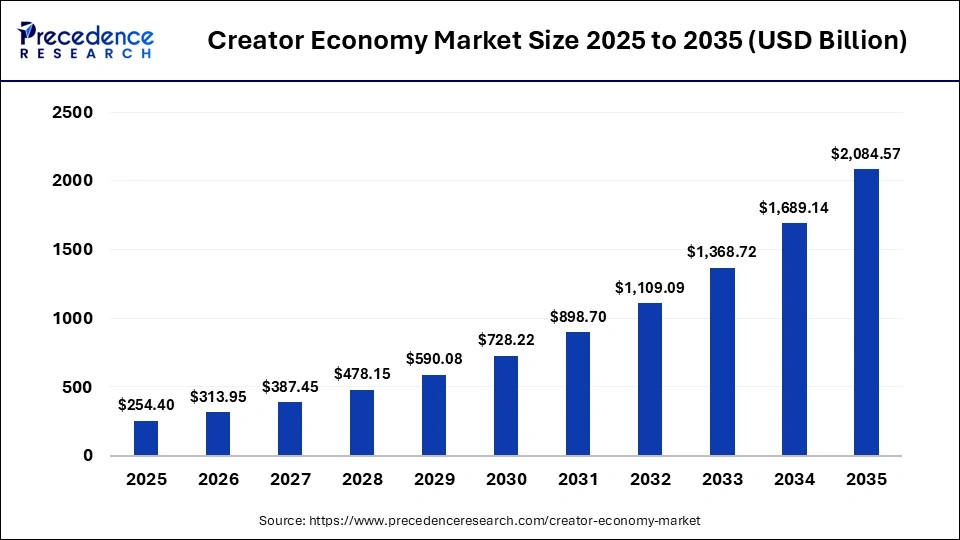
The real opportunity for platform builders lies in the transition from attention-based models to utility-based ecosystems. Early-mover advantage on social networks has peaked; the current gold rush is in the “picks and shovels” of the industry. This includes sophisticated fintech layers, AI-driven operational tools, and decentralized distribution networks that allow creators to mitigate “platform risk.” Investors who recognize that creators are the new SMEs (Small to Medium Enterprises) are positioning themselves to capture the fees associated with their entire operational lifecycle from content production and audience management to multi-channel revenue settlement.
Growth of creator-led businesses in 2025+
The “Creator CEO” is the defining entrepreneurial profile of the mid-2020s. We are witnessing a professionalization of the sector where the primary goal is no longer “virality,” but “viability.” Modern creators are diversifying their portfolios far beyond ad-revenue splits. In 2025 and 2026, we have seen a surge in creator-led brands that compete directly with legacy incumbents in beauty, fitness, and financial services.
- Vertical Integration: Creators are increasingly launching their own physical products and SaaS tools. For example, a fitness creator is no longer just selling a PDF guide; they are building proprietary app-based ecosystems that offer real-time biometric tracking and community-driven accountability.
- Diversification of Revenue: Recent data indicates that nearly 25% of full-time creators have launched their own merchandise or digital products, and 28% are aggressively expanding into new, owned platforms. This shift toward “content as infrastructure” means creators are seeking tools that help them manage complex supply chains, subscription tiers, and intellectual property.
- AI-Enhanced Operations: The barrier to scaling a media empire has collapsed. Creators are using “Agentic AI” to handle everything from SEO optimization and customer support to financial forecasting. A platform that seamlessly integrates these agentic workflows into a single dashboard becomes an indispensable operating system for these high-growth micro-enterprises.
Why brands are shifting to creator ecosystems
Traditional advertising is facing an efficacy crisis. In an era of declining third-party cookie reliability and widespread consumer skepticism of “polished” corporate messaging, enterprise brands are reallocating billions toward creator partnerships. Industry reports for 2026 show that enterprise organizations are now spending an average of $5.6 million to $8.1 million annually on creator-led initiatives. This isn’t just about “reach” it’s about trust-as-a-service.
Brands are no longer looking for one-off shoutouts; they are seeking long-term “alliances” that integrate their products into a creator’s lifestyle and narrative. This shift is driven by the fact that a creator with 150,000 deeply engaged followers often delivers a higher ROI than a multi-million-dollar traditional TV campaign. For investors, this creates a demand for Creator-Brand Marketplaces that offer more than just a matching service. The market needs platforms that provide robust attribution modeling, automated compliance, and real-time performance analytics that speak the language of corporate CFOs.
Gaps founders can still capture early
Despite the rapid growth, the “back office” of the creator economy remains surprisingly fragmented. This fragmentation is where the highest-margin opportunities for new platforms reside.
- Financial & Settlement Infrastructure: In many emerging markets, and even within niche domestic sectors, creator payments are still handled through informal or delayed systems. A platform that offers instant liquidity, transparent tax reconciliation, and automated split-payments for collaborative projects solves a massive pain point.
- Platform De-Risking (Owned Channels): The greatest fear for a creator is “algorithmic de-prioritization” or account suspension. There is a critical gap for platforms that facilitate a seamless transition from “rented” audiences (Instagram, TikTok) to “owned” audiences (newsletters, private communities, and SMS lists). Founders who build the “exit ramp” from social media to direct-to-consumer ownership will capture the most loyal segment of the market.
- B2B Creator Tools: While the B2C (Business-to-Consumer) space is crowded, the B2B creator economy is wide open. Decision-makers in SaaS, procurement, and industrial sectors now follow “expert creators” for vendor selection. Building a platform tailored to the professional, high-compliance needs of B2B creators who require white-labeling, sophisticated CRM integrations, and secure data handling is a prime territory for early-stage investment.
What Is a Creator Economy Platform?
At its core, a creator economy platform is the digital infrastructure that facilitates the exchange of value between a creator and their audience or brand partners. For an investor, it is helpful to view these platforms not as social networks, but as specialized operating systems designed to solve specific friction points in the creative lifecycle. These platforms provide the technical scaffolding ranging from content hosting and DRM (Digital Rights Management) to complex financial clearinghouses—that allows a solo entrepreneur to function with the efficiency of a scaled enterprise.
The sophistication of these platforms has evolved significantly. In the early 2010s, platforms were primarily “aggregators” that monetized attention via advertising. Today’s platforms are “facilitators” that prioritize direct-to-consumer (DTC) transactions. From a strategic standpoint, a successful platform in this space must offer a “sticky” utility that becomes central to the creator’s daily workflow. Whether it is managing a subscription base, processing micro-payments across borders, or providing AI-driven audience insights, the platform acts as the bedrock upon which the creator builds their personal equity.
Platform types: content, commerce, community
The creator economy is broadly divided into three functional categories, each offering distinct investment profiles and technical requirements. Understanding these distinctions is critical for determining where to allocate capital based on desired risk and scalability.
- Content Platforms: These are the primary engines of discovery and consumption. They focus on hosting, streaming, and distributing media whether video, audio, or text. The technical moat here is often built on recommendation algorithms and low-latency delivery. For entrepreneurs, the challenge is no longer just hosting content, but providing creators with “algorithm insurance” tools that ensure their content reaches their most loyal followers regardless of feed fluctuations.
- Commerce Platforms: These facilitate the sale of physical or digital goods, services, and intellectual property. This includes everything from white-label e-commerce stores for merchandise to platforms for selling “cohort-based” courses or digital assets (NFTs, templates, presets). The value proposition here is conversion optimization and seamless integration with global logistics or digital delivery systems.
- Community Platforms: These focus on “depth over breadth.” Unlike mass-market social media, community platforms provide gated environments for high-affinity interaction. Features often include private forums, direct messaging, live “town halls,” and tiered access. For a business owner, these are high-retention plays because they own the “social graph” of the creator’s most valuable fans, making the switching costs for the creator incredibly high.
Marketplace vs SaaS vs hybrid models
Deciding on a business model is the most consequential strategic choice for a founder in this space, as it dictates the platform’s unit economics and long-term defensibility.
- The Marketplace Model: Platforms like these focus on discovery. They bring a built-in audience to the creator. The value is “demand generation.” These models typically command higher take rates (often 20% to 50%) because they provide the hardest thing to find: new customers. However, they face the constant risk of “platform leakage,” where creators attempt to move their biggest spenders off-platform to avoid high fees.
- The SaaS (Software as a Service) Model: These platforms provide the tools but not the audience. They usually charge a flat monthly fee or a very low transaction percentage (2% to 5%). This model is highly attractive to established creators who already have a following and want to maximize their margins. The risk here is lower “stickiness” if a competitor offers a better feature set at a lower price point.
- The Hybrid Model: This is often considered the “Holy Grail” of creator tech. A hybrid platform provides high-utility SaaS tools for management and production while simultaneously offering a marketplace or discovery layer to help creators grow. By solving both the operational and growth problems, hybrid platforms create a virtuous cycle that justifies a premium take rate while maintaining high retention.
Examples: Patreon, OnlyFans, Substack
Analyzing the “Big Three” provides a masterclass in how different strategic flywheels operate within the creator economy.
- Patreon (Community/SaaS-ish): Patreon revolutionized the “patronage” model by allowing creators to gate content behind monthly tiers. Strategically, it leans toward a SaaS model with a focus on membership management. Its moat is not discovery most creators bring their audience from YouTube or X (formerly Twitter) but rather its financial trust. Fans feel secure entering credit card details into Patreon, and creators rely on its robust billing engine to handle recurring global payments and VAT compliance.
- OnlyFans (Marketplace/Content): Despite its niche associations, OnlyFans is a powerhouse of marketplace dynamics and “pay-per-view” (PPV) monetization. It succeeded by providing a high-friction industry with a low-friction payment and distribution layer. Its strategic brilliance lies in its monetization velocity; it prioritized direct, high-frequency transactions over ad-supported views, proving that a dedicated audience is willing to pay a premium for exclusivity and direct access.
- Substack (Content/Newsletter SaaS): Substack disrupted the traditional media landscape by simplifying the “newsletter-to-paid-subscription” pipeline. It acts as a hybrid: it provides the simple writing and billing tools (SaaS), but its “Recommendations” engine and “Notes” feature have increasingly turned it into a discovery ecosystem (Marketplace). For an investor, Substack is a case study in bundling it takes the fragmented world of independent journalism and gives it a unified, professional front.
How to Build a Platform for the Creator Economy
To execute this at an enterprise level, decision-makers must prioritize architecture that scales and tools that drive user retention. Relying on out-of-the-box SaaS solutions will inevitably lead to limitations in user experience and crippling technical debt. Investors must view the platform as a custom digital product, requiring a dedicated development strategy. Successfully bringing a creator-focused platform to market involves five critical steps:
How to Build a Platform for the Creator Economy
Entering the creator economy as a platform owner requires a fundamental shift in perspective. For years, the market was dominated by massive aggregators where creators built rented audiences and relied on volatile ad-revenue splits. Today, the most lucrative opportunities for investors and entrepreneurs lie in developing specialized, decentralized, and monetization-first infrastructures. Building a successful platform in this space is no longer just about content hosting; it is about engineering a robust financial and operational ecosystem that empowers creators to run standalone businesses.
To execute this at an enterprise level, decision-makers must prioritize architecture that scales and tools that drive user retention. Relying on out-of-the-box SaaS solutions will inevitably lead to limitations in user experience and crippling technical debt. Investors must view the platform as a custom digital product, requiring a dedicated development strategy. Successfully bringing a creator-focused platform to market involves five critical phases of execution.
Define a High-Friction Niche and Value Proposition
Attempting to build a broad, catch-all platform to compete with legacy giants like YouTube or Patreon is a fast track to capital drain. For an investor, the highest probability of a strong return lies in targeting specific, high-friction areas of the creator lifecycle that incumbents ignore. To establish a highly defensible market position, platform architects must build specialized tooling for distinct user bases:
- Technical Educators: Require complex, integrated code-rendering environments and sandbox testing directly within their course modules.
- High-Ticket Community Leaders: Demand enterprise-grade CRM integrations, advanced cohort tracking, and automated onboarding workflows.
- Independent Financial Analysts: Need secure, encrypted data sharing, dynamic charting tools, and compliance-ready subscription models.
By monopolizing a specific niche through superior, purpose-built infrastructure, platforms drastically reduce customer acquisition costs and increase the lifetime value of every creator onboarded.
Architect a Scalable, Cloud-Native Infrastructure
Consumer-facing media platforms demand intense backend resilience. From day one, the technical foundation must be built on a microservices architecture rather than a monolithic codebase. This structural decision ensures that resource-heavy processes operate independently, safeguarding the platform against catastrophic failures. Key architectural pillars include:
- Decoupled Microservices: Isolating 4K video transcoding, real-time WebSocket messaging, and complex payment routing ensures that one failing component does not crash the entire ecosystem.
- Dynamic Scaling Capabilities: When a creator experiences a viral event bringing a massive influx of concurrent traffic, auto-scaling protocols must immediately allocate server resources to handle the load seamlessly.
- Robust Cloud Partnerships: Building on top-tier enterprise environments is non-negotiable for delivering the guaranteed uptime that professional creators rely on for their livelihoods.
Engineer Multi-Tiered Monetization and Financial Rails
The ultimate competitive advantage of any modern creator platform is how efficiently, securely, and transparently it helps users get paid. Moving beyond simple monthly subscriptions, the architecture must support a diverse, frictionless digital economy. Executing this requires complex, multi-tiered financial infrastructure:
- Enterprise Payment Gateways: Integrating solutions like Stripe Connect facilitates instant payouts, automated split routing between the platform and the creator, and strict international tax compliance.
- Diversified Revenue Streams: Creators must be able to seamlessly sell one-off digital products, host ticketed live streams, or implement usage-based billing without ever forcing their audience to leave the ecosystem.
- Smart Asset Ownership: For forward-looking platforms, integrating decentralized ledgers or blockchain infrastructure can enable transparent royalty splits and verifiable digital asset ownership, creating a highly attractive proposition for top-tier talent.
Implement High-Fidelity Content Delivery Networks (CDNs)
Content is the lifeblood of the creator economy, and the delivery mechanism must be technically flawless. Whether the platform is hosting high-resolution VOD (Video on Demand), ultra-low-latency audio, or massive digital downloads, user experience dictates retention. A premium delivery system relies on:
- Globally Distributed Networks: A sophisticated CDN ensures that end-users experience zero buffering and rapid load times regardless of their geographic location.
- Edge Computing Integration: Pushing processing power closer to the user reduces latency for interactive, real-time features like live Q&As, co-streaming, or virtual whiteboarding.
- Adaptive Bitrate Streaming: Utilizing advanced APIs to dynamically optimize media for every specific device and connection speed, maintaining the premium feel necessary to justify a paid ecosystem.
Integrate First-Party Data Ownership and Advanced Analytics
Top-tier creators are actively abandoning platforms that obfuscate their audience data. A critical strategic move for new platforms is to return data ownership to the creator, transforming the software from a simple hosting site into an indispensable business intelligence tool. This requires building comprehensive, transparent dashboards featuring:
Programmatic SEO Architecture: Structuring platform-generated content (like creator profiles and public posts) with dynamic schema markup, ensuring creators benefit from organic search visibility and scalable, automated search engine indexing.
Unrestricted Audience Access: Engineering systems that allow users to legally and securely export their raw subscriber lists and integrate directly with external marketing APIs.
Predictive Machine Learning Models: Leveraging AI to provide creators with actionable forecasting on subscriber churn probability, content fatigue, and lifetime value (LTV) metrics.
High-Intent Use Cases Founders Are Building
The current investment landscape has shifted away from “generalist” platforms that attempt to be everything to everyone. Smart capital is now flowing into high-intent architectures that solve specific, high-value problems for defined creator segments. Founders are no longer competing with the scale of YouTube or Instagram; instead, they are carving out highly profitable territories by providing deep utility that these giants cannot replicate due to their broad focus.
Success in 2026 is defined by the ability to capture “Total Addressable Revenue” rather than just “Total Addressable Users.” This means building platforms that facilitate high-ticket transactions, recurring revenue streams, and specialized workflows. For the entrepreneur, this requires a surgical focus on where value is actually exchanged and where the most significant friction currently exists in the creator-to-consumer pipeline.
Paid content subscription platforms
The subscription model remains the gold standard for predictable revenue, but the market has evolved beyond simple monthly recurring revenue (MRR). Modern founders are building platforms that address “subscription fatigue” by offering more granular control and higher perceived value. This includes “hybrid” access models where users might pay a base subscription fee but have the option for “bolt-on” purchases for premium deep-dives or live event access.
Strategically, these platforms are now incorporating advanced retention engines. Instead of passive hosting, they use predictive analytics to identify “at-risk” subscribers before they churn, offering automated incentives or personalized content recommendations. From a technical standpoint, the moat for these platforms is no longer the video player or the text editor; it is the sophisticated billing logic and the ability to manage global tax compliance (such as Nexus in the US or VAT in the EU) seamlessly for the creator.
Creator-fan engagement apps
The shift from “broadcasting” to “interaction” has birthed a new generation of engagement-first platforms. These apps move beyond the vanity metrics of likes and shares to focus on “Superfan” monetization. Founders are building environments where creators can offer high-frequency, low-latency access to their inner circle. This often takes the form of private mobile-first communities that prioritize voice notes, live “office hours,” and collaborative content creation.
For an investor, the value here lies in the data. These engagement apps capture deep insights into fan behavior and sentiment that social media platforms obscure. By owning the communication channel, creators can bypass algorithmic filters. The most successful versions of these apps are currently integrating “gamified” loyalty programs where fans earn status, badges, or early access based on their historical support, effectively turning a passive audience into an active, self-sustaining ecosystem.
Niche creator marketplaces (fitness, finance)
The “unbundling” of massive social networks is most visible in the rise of vertical-specific marketplaces. Generalist platforms lack the specialized tools required for professional-grade workflows in sectors like fitness or finance. A fitness creator needs more than a video uploader; they need integrated calorie tracking, workout builders, and progress-sharing modules. Similarly, a finance creator requires high-security environments, disclaimer management, and perhaps integration with real-time market data feeds.
Building for a niche allows founders to charge a premium because the platform solves a industry-specific problem. In the finance sector, for example, a platform that automates regulatory compliance for investment-focused creators is infinitely more valuable than a generic newsletter tool. This “Vertical SaaS” approach leads to much higher Average Revenue Per User (ARPU) and creates a significant barrier to entry for competitors who lack the domain expertise to build specialized features.
AI-powered creator monetization tools
Artificial Intelligence has moved from a novelty to a core operational requirement. Founders are currently building “Agentic” tools that act as a virtual business manager for the creator. These platforms use AI to analyze a creator’s existing content library and automatically identify opportunities for monetization, such as identifying a segment of a video that would make a perfect high-converting ad or a paid digital product.
Beyond content creation, AI is being deployed to optimize the “Business of Being a Creator.” This includes AI-driven negotiation tools that help creators price their brand deals based on real-time market data, or automated “Content-to-Commerce” engines that tag products in videos and facilitate instant purchases without the creator needing to manually manage links. For a platform builder, the strategic advantage here is efficiency. By reducing the administrative burden on the creator, the platform becomes the “brain” of the operation, making it nearly impossible for the creator to switch to a less sophisticated alternative.
Must-Have Features for Creator Platforms
The difference between a successful platform and a failed digital experiment lies in the technical execution of its core feature set. For an entrepreneur, the goal is to build a frictionless environment. If a creator spends more time troubleshooting their dashboard than creating content, they will migrate to a competitor. A high-performance platform must act as an invisible partner, handling the complexities of global digital commerce while providing a premium experience for the end consumer.
To achieve institutional-grade reliability, the architecture must be modular. Each feature should not only serve a functional purpose but also contribute to the platform’s data moat. For instance, a payment system is not just about moving money; it is a data engine that informs retention strategies and tier pricing. Investors should look for platforms that prioritize deep integration over a wide but shallow feature list, ensuring that every tool provided is essential to the creator’s daily revenue generation.
Creator onboarding and profile systems
The Time to First Dollar is the most critical metric for any creator platform. A sophisticated onboarding flow must balance rigorous KYC (Know Your Customer) compliance with a streamlined user experience. For a high-intent platform, this means providing an automated migration tool that allows creators to import their existing audience data, content archives, and even billing history from legacy platforms with minimal effort.
The profile system itself must evolve beyond a static link in bio. Modern creator profiles function as dynamic storefronts and media kits. Features should include customizable landing pages that adapt based on the visitor’s history. For example, the system could show different content to a first-time visitor versus a long-term subscriber. From a business perspective, the profile is the creator’s digital identity. Providing high levels of aesthetic customization ensures the platform feels like an extension of the creator’s personal brand rather than a generic template.
Subscription, tipping, and paywall models
Monetization flexibility is the primary driver of creator retention. A robust platform must support a multi-modal revenue engine. This includes:
- Tiered Subscriptions: These allow for varying levels of access, from basic support tiers to high-value inner circle memberships.
- Dynamic Paywalls: This is the ability to gate specific pieces of content, such as a single high-value report or a premium video, outside of a standard subscription.
- Micro-transactions and Tipping: Low-friction buttons utilize one-click payment processing to capture emotional, impulse-driven support during live events or high-impact posts.
For the investor, the focus should be on the settlement layer. A platform that can handle split payments, automatically distributing percentages to collaborators, managers, or charity, offers a massive strategic advantage in an increasingly collaborative creator landscape.
Content hosting and delivery infra
In 2026, user expectations for performance are non-negotiable. Whether it is 4K video streaming, high-fidelity audio, or instant-load long-form articles, the infrastructure must be world-class. This requires a robust Content Delivery Network (CDN) strategy that ensures low-latency access globally. For platforms hosting video, adaptive bitrate streaming is essential to accommodate fans in regions with varying internet speeds.
Beyond delivery, the platform must offer content security and Digital Rights Management (DRM). Protecting intellectual property is a top priority for creators who sell high-value educational or exclusive entertainment content. Features like dynamic watermarking, which embeds the subscriber’s ID into the content, and advanced anti-piracy measures are no longer optional. They are a core part of the value proposition for serious professional creators.
Real-time engagement (chat, live, DMs)
The move toward Community-as-a-Service necessitates high-quality real-time communication tools. This is not just about a comment section; it is about creating a sense of presence. Features like low-latency live streaming with integrated chat, stage style audio rooms, and threaded direct messaging allow creators to build the deep relationships that drive high-LTV (Lifetime Value) subscriptions.
From a strategic standpoint, these engagement tools should be integrated with the monetization layer. Examples include allowing creators to shout out new subscribers in real-time or enabling paid DMs where fans can pay for a prioritized response. This creates a feedback loop where engagement directly fuels revenue, making the platform indispensable to the creator’s business model.
Analytics for creator earnings and growth
Professional creators operate like data-driven CEOs. They require a command center that goes beyond vanity metrics like view counts. A high-tier platform must provide:
- Cohort Analysis: This helps in understanding when and why subscribers churn.
- Revenue Attribution: This identifies exactly which post or campaign drove the most conversions.
- Predictive Forecasting: This uses AI to estimate future earnings based on current growth trends.
For the platform owner, these analytics are a retention tool. When a creator can clearly see their ROI and growth trajectory on your platform, they are far less likely to churn. Providing benchmarking data, showing how a creator’s metrics compare to their industry average, adds another layer of consultative value.
Moderation and trust systems
As a platform scales, Safety-as-a-Service becomes a primary concern for both creators and investors. Creators need to protect their brand from toxic behavior, while investors need to mitigate the legal and reputational risks associated with hosting user-generated content. A modern moderation system must utilize AI-driven sentiment analysis to flag harassment or spam in real-time across text, image, and video.
Furthermore, trust systems include transparent dispute resolution for payments and robust account security, such as mandatory two-factor authentication and hardware key support. For platforms in sensitive niches, such as finance or health, automated compliance flagging ensures creators are not making unsubstantiated claims. This is vital for maintaining the platform’s long-term viability and avoiding regulatory scrutiny.
To ensure this content resonates with high-level investors and busy entrepreneurs, we will shift the structure toward high-density, scannable insights. This approach maintains the authoritative, experience-driven tone while ensuring the strategic “gold” is immediately visible.
Advanced Features That Drive Revenue Growth
For the sophisticated investor, the transition from a functional platform to a market leader depends on features that move beyond basic utility. These are designed to increase the Lifetime Value (LTV) of both the creator and the fan. By implementing sophisticated technology layers, a platform transitions from a simple tool to a strategic business partner.
The objective is to create an ecosystem where growth is compounded by data and proprietary algorithms. Revenue growth in 2026 is driven by intelligence. Platforms that proactively suggest new revenue streams or automate existing ones will command the highest market share. This requires a shift toward proactive infrastructure that anticipates the needs of a scaling media empire.
AI content recommendations and feeds
Legacy discovery relied on basic chronological feeds or simple keyword matching. Modern platforms utilize deep learning models to create hyper-personalized experiences. These AI engines analyze hundreds of signals including watch time, engagement depth, and past purchase behavior to ensure the right content reaches the right user at the optimal time.
- Direct Revenue Driver: By increasing content relevance, the platform extends session times and reduces churn.
- Conversion Optimization: Algorithms can be tuned to prioritize high-conversion content, such as videos that lead to higher newsletter signups or product purchases.
- Autonomous Growth: This creates an efficient sales funnel that operates independently, allowing creators to focus on production while the platform optimizes distribution.
Creator CRM and audience segmentation
Generic mass messaging is no longer effective. Professional creators require a Customer Relationship Management (CRM) system to segment their audience based on behavior and value. A high-tier platform must enable creators to categorize followers into specific groups:
- High-Value Segments: Identifying “Whale Spenders” or “Inner Circle” members for exclusive offers.
- Retention Targets: Flagging “Lapsed Subscribers” for automated win-back campaigns.
- Lifecycle Marketing: Sending personalized discount codes to long-term supporters or “welcome” sequences to new leads.
This granular control empowers creators to maximize their Revenue Per User (RPU) through sophisticated lifecycle management, treating their audience as a valuable database rather than a vanity metric.
Multi-platform monetization tools
Modern creators operate across an omnichannel landscape: YouTube, TikTok, newsletters, and private communities. A platform that offers multi-platform tools acts as a centralized clearinghouse for all revenue streams.
Strategically, this positions the platform as the Single Source of Truth for the creator’s finances. When a platform aggregates data from various sources to provide a unified view of total earnings and audience growth, it becomes an indispensable asset. This centralization is a powerful moat against competitors who only solve for a single channel.
NFT/Web3 integrations for ownership
While initial hype has matured, Web3 offers significant value for community ownership and “Token-Gated” access. Founders are integrating blockchain to allow creators to issue digital memberships representing a permanent stake in their community.
- Verifiable Access: Fans gain provable ownership of exclusive content, early access to physical products, or voting rights.
- Secondary Markets: This introduces a new revenue layer through royalty splits on secondary sales.
- Stakeholder Loyalty: The audience shifts from passive consumers to a collective of stakeholders financially and emotionally invested in the creator’s long-term success.
Brand sponsorship and deal marketplaces
Direct-to-consumer revenue is vital, but brand partnerships remain a primary income source for top-tier creators. Integrating an internal marketplace for sponsorships allows the platform to capture a percentage of these high-ticket deals.
A sophisticated marketplace removes middleman friction by automating the contract phase, the content approval process, and final payment settlement. By offering transparent, data-backed reporting to brands, the platform provides a level of accountability that traditional agencies struggle to match. This adds a significant revenue stream for the platform while providing creators with steady, pre-vetted business opportunities.
Choosing the Right Business Model Early
The architectural integrity of a platform is defined as much by its fiscal structure as its code. For an entrepreneur or investor, the business model selected at the seed stage dictates the long-term scalability and the type of creator the platform will attract. A misaligned model can lead to high churn or, conversely, a “success tax” that drives top-tier talent toward self-hosted solutions. The goal is to build a value-capture mechanism that grows in lockstep with the creator’s empire.
Strategic decision-makers must evaluate the trade-off between immediate liquidity and long-term ecosystem stability. In 2026, the most resilient platforms are those that move away from extractive pricing toward value-aligned participation. Whether you prioritize transaction volume or recurring software fees, the model must remain transparent and predictable to earn the trust of professional creators who are increasingly wary of hidden costs.
Platform commission vs SaaS subscription
This is the fundamental fork in the road for any creator-centric startup. Each path offers a distinct set of advantages and risks that impact the platform’s valuation and market positioning.
- The Commission Model (Take Rate): This is a performance-based approach where the platform takes a percentage (typically 5% to 15%) of all transactions.
- Pros: It lowers the barrier to entry for new creators, as there are no upfront costs. The platform’s interests are perfectly aligned with the creator’s growth.
- Cons: High-earning creators may eventually find a 10% take rate punitive as they scale into the millions. This often leads to “platform leakage” where they move their largest fans to a cheaper, private tool.
- The SaaS Subscription Model: Here, the platform charges a flat monthly or annual fee for access to its suite of tools.
- Pros: Predictable revenue for the platform and high margins for successful creators. This model attracts professional, high-volume businesses that prefer fixed costs.
- Cons: It can be a deterrent for emerging creators who are not yet profitable. It places the burden of discovery and sales entirely on the creator.
Hybrid monetization models explained
The most sophisticated platforms in the current market are moving toward a Hybrid Framework. This model combines the stability of SaaS with the upside of transaction fees, creating a balanced revenue stream that services both the “Long Tail” of new creators and the “Head” of elite superstars.
A common implementation involves a multi-tiered approach:
- Free/Entry Tier: No monthly fee but a higher transaction commission (e.g., 10%). This serves as a low-friction “incubator” for new talent.
- Professional Tier: A modest monthly subscription fee (e.g., $50) paired with a significantly lower transaction fee (e.g., 2% to 3%).
- Enterprise Tier: A high-ticket flat fee for custom white-labeling, API access, and dedicated support, with zero or near-zero commission.
This structure ensures that the platform remains the most cost-effective option at every stage of the creator’s lifecycle, effectively eliminating the incentive for them to migrate to a competitor as they grow.
When to introduce ads and brand deals
Introducing advertising is a delicate strategic pivot. If done too early, it can degrade the user experience and dilute the creator’s brand. If done too late, the platform misses out on high-margin revenue from enterprise marketing budgets.
- The Critical Mass Threshold: Ads should generally only be introduced once the platform has achieved sufficient “Attention Density.” For investors, this is usually defined by high daily active usage and a deep understanding of audience segments.
- Native vs. Intrusive: Successful 2026 platforms avoid traditional “interruptive” ads. Instead, they focus on Native Brand Integrations, such as sponsored community challenges, branded digital assets, or featured “Creator-Brand” matching in an internal marketplace.
- The Brand Deal Layer: This should be introduced as a premium utility. By providing the legal, escrow, and reporting infrastructure for brand deals, the platform can take a service fee (often 10% to 20%) for facilitating the connection. This is high-value revenue that creators often find acceptable because the platform is actively bringing them new business rather than just taxing their existing audience.
Tech Stack to Build a Creator Platform
For an investor or founder, the tech stack is not just a list of programming languages; it is the capital efficiency engine of the business. A poorly architected platform will collapse under the weight of high technical debt and scaling costs as the user base grows. In 2026, building a creator platform requires a “Modular Monolith” or “Microservices” approach that allows for rapid feature iteration without compromising system stability.
The goal is to select a stack that balances developer velocity with infrastructure performance. High-growth platforms must be able to handle “flash crowds”—thousands of users hitting the system simultaneously when a major creator goes live or drops a new product. Selecting industry-standard, well-supported technologies ensures that you can recruit top-tier engineering talent and maintain a resilient service-level agreement (SLA) for your creators.
Frontend frameworks for scalability
The frontend is the primary touchpoint for both creators and fans. It must be highly responsive, SEO-friendly, and capable of handling complex state management (such as real-time dashboards and video players).
- React and Next.js: This remains the industry standard for 2026. Next.js provides Server-Side Rendering (SSR) and Static Site Generation (SSG), which are critical for fast page loads and high search engine rankings.
- Tailwind CSS: For rapid UI development and maintaining a consistent design system across mobile and desktop.
- State Management: Using tools like Zustand or Redux Toolkit to manage real-time data flows, ensuring that notifications, earnings updates, and chat messages reflect instantly without refreshing the page.
Backend systems for high-volume content
The backend must be an “Event-Driven” architecture capable of processing massive amounts of data in parallel.
- Node.js or Go (Golang): Node.js is excellent for I/O-intensive tasks like real-time chat, while Go is preferred for high-performance computational tasks and microservices due to its superior concurrency model.
- PostgreSQL: The reliable choice for structured data, particularly financial transactions and user relationships where data integrity is non-negotiable.
- Redis: A high-speed, in-memory data store used for caching and managing real-time leaderboards or session data to reduce the load on the primary database.
Payment integrations and global payouts
The financial layer is the most complex part of the build due to regulatory requirements and the need for global reach.
- Stripe Connect: The gold standard for creator platforms. It handles the “split-payment” logic, allowing the platform to take a fee while automatically routing the remainder to the creator. It also manages 1099/VAT tax reporting.
- Adyen or PayPal Hyperwallet: These are essential for creators in regions where Stripe’s footprint is smaller, ensuring that the platform can offer Localized Payouts in hundreds of currencies.
- Escrow Services: For high-ticket brand deals, integrating an escrow layer ensures that funds are secured before work begins and released only upon milestone approval.
Cloud, CDN, and storage architecture
In the creator economy, “Media is the Product.” If video buffering occurs or images fail to load, the platform loses credibility.
- AWS (Amazon Web Services) or Google Cloud: These provide the foundational “Elastic” scaling required to expand server capacity during peak traffic hours.
- Cloudflare or Akamai: A robust Content Delivery Network (CDN) is mandatory. It caches content at “Edge” locations close to the user, drastically reducing latency for global audiences.
- AWS S3 with CloudFront: For secure, scalable storage of high-resolution video and images, paired with signed URLs to ensure that only authorized, paying subscribers can access premium content.
AI stack for personalization
To compete in 2026, a platform must have an integrated AI layer that goes beyond simple automation.
- OpenAI or Anthropic APIs: For generative tasks like automated captioning, content summaries, or AI-powered moderation bots.
- Pinecone or Weaviate: These are Vector Databases used to power “Semantic Search” and hyper-personalized recommendation engines. They allow the platform to “understand” the context of content rather than just matching keywords.
- Python (FastAPI): Usually the language of choice for the AI/Machine Learning microservices within the stack, allowing for seamless integration of custom-trained models for audience sentiment analysis or revenue forecasting.
How to Build an MVP Without Overbuilding
The most common failure point for tech entrepreneurs is “feature creep” the tendency to build a comprehensive solution for a problem the market hasn’t validated yet. For an investor, the Minimum Viable Product (MVP) is not about launching a stripped-down version of a platform; it is about launching the most efficient version of your core value proposition. In the creator economy, where trends shift quarterly, speed to market is your greatest competitive advantage.
A strategic MVP focuses on “The One Thing.” If your platform’s unique hook is specialized fitness tracking for influencers, do not spend six months building a generic newsletter tool. Overbuilding consumes capital and, more importantly, obscures the data you need to find Product-Market Fit. By staying lean, you preserve the agility required to pivot based on actual creator feedback rather than boardroom assumptions.
Validating your creator niche fast
Before a single line of code is written, you must confirm that your target niche has a “bleeding neck” problem they are willing to pay to solve. High-intent validation involves moving beyond surveys and into Letter of Intent (LOI) territory.
- The Concierge Test: Manually perform the service your platform intends to automate. If you are building a brand deal marketplace, manually broker three deals for creators in your niche. If you cannot do it manually, software will not fix the underlying lack of demand.
- Shadow Button Testing: Build a high-fidelity landing page detailing your unique features and a “Sign Up for Pro” button. Tracking the click-through rate on a paid tier even if the product isn’t ready provides a concrete metric of “Will-to-Pay” that free signups cannot match.
- Founder-Led Sales: In 2026, the best validation is direct access. Successful founders spend the first 30 days in the DMs and Discord servers of their target creators, identifying the specific friction points that legacy platforms like Patreon or YouTube are ignoring.
MVP feature set for quick launch
The MVP for a creator platform should prioritize the “Transaction Loop.” If a creator can sign up, post content, and receive a payment, you have a platform. Everything else is an optimization for later.
- Core Content Engine: A clean, reliable way to upload and gate media (Video, PDF, or Audio). Do not build a custom player yet; use high-quality embedded third-party APIs.
- Basic Stripe Integration: One-click checkout and a simple dashboard for creators to see their balance. Automated tax forms and complex split-payments can wait for Version 2.0.
- Identity and Access Management: A secure login and a professional-looking public profile page. Custom domains and deep aesthetic theme builders are secondary to functionality.
- Manual Moderation: At the start, use simple keyword filters and manual oversight rather than investing $50k in a custom AI moderation model.
Timeline and cost expectations
For a serious entrepreneur, the “Build-to-Launch” phase for an MVP should ideally span 12 to 16 weeks. This timeline is sufficient to build a robust, secure foundation without getting lost in non-essential polish.
- Development Costs: Depending on the geography of your engineering team, a high-quality, scalable MVP in 2026 typically requires an investment of $75,000 to $150,000. This covers senior-level architecture, secure payment logic, and a premium UI/UX design.
- Infrastructure Costs: Initially, these will be low. Using “Pay-as-you-go” cloud services (AWS/GCP), expect to spend $500 to $2,000 per month during the first few months of user onboarding.
- The “First 100” Strategy: Allocate 20% of your initial budget to “Creator Incentives” or high-touch support for your first 100 users. These early adopters are your research and development team; their feedback is more valuable than any marketing campaign at this stage.
Cost to Build a Creator Platform in 2026
Budgeting for a creator platform in 2026 requires a shift from viewing software as a one-time purchase to seeing it as a dynamic, evolving asset. For entrepreneurs and investors, capital allocation is less about the “code” and more about the integrity of the ecosystem. High-performance platforms demand significant investment in security, financial compliance, and real-time data processing. While the cost of entry has lowered due to advanced AI-assisted development, the cost of competitive excellence remains high.
Strategic financial planning must account for the “Scaling Tax.” As your platform gains traction, infrastructure costs do not just grow linearly; they often spike due to increased demands on bandwidth and database concurrency. Investors should look for a “Milestone-Based Budget” that aligns capital infusion with user acquisition and revenue stability, ensuring the platform remains solvent while chasing market share.
Cost breakdown by feature complexity
The price of a feature is determined by its “Criticality” and “Real-time Requirements.” A simple blog-style post is inexpensive, but a low-latency live streaming engine with integrated tipping is a high-ticket engineering feat.
- Core Authentication and Profile Logic ($15k – $25k): This includes secure social logins, multi-factor authentication, and customizable creator storefronts.
- Payment and Payout Engine ($25k – $40k): Building a reliable “Split-Payment” system that handles global currencies, automated tax withholding (1099/VAT), and instant payouts via Stripe or Adyen.
- Video and Media Infrastructure ($20k – $35k): Implementation of adaptive bitrate streaming, Content Delivery Network (CDN) integration, and Digital Rights Management (DRM) to prevent piracy.
- Engagement and Community Tools ($15k – $30k): Real-time chat, threaded comments, and “Stage” style audio rooms requiring high-concurrency backend support.
Cost comparison: MVP vs full-scale platform
The delta between an MVP and a full-scale platform is often found in automation and edge-case handling. An MVP is built to prove the concept; a full-scale platform is built to protect the brand and maximize efficiency.
| Phase | Estimated Cost | Focus Area |
| MVP (Seed Stage) | $80k – $150k | Core transaction loop, basic media hosting, and manual moderation. |
| Growth Stage Platform | $250k – $600k | AI recommendations, advanced CRM, automated compliance, and native mobile apps. |
| Enterprise/Scale | $1M+ | Global infrastructure, custom white-labeling, in-house ad-tech, and 24/7 security Ops. |
Hidden costs founders often miss
Beyond the initial development invoice, several “invisible” costs can drain a startup’s runway if not forecasted correctly.
- Compliance and Legal ($10k – $30k annually): As a financial intermediary for creators, you must invest in Terms of Service (ToS) that protect against IP theft and ensure GDPR/CCPA data privacy compliance.
- Cloud Egress Fees: While storing data is cheap, moving video content from your servers to the user’s screen (Egress) can become a massive monthly expense as your audience grows.
- Customer Support and Dispute Management: Managing “Chargebacks” and payment disputes requires either dedicated staff or automated software tools to prevent your merchant account from being flagged for high risk.
2026 Creator Platform Investment Sheet
The following breakdown outlines the expected capital requirements for building a professional-grade platform tailored for investors seeking a high-ROI entry into the creator economy.
| Expense Category | Detailed Component | MVP Cost (USD) | Scale Cost (USD) |
| Engineering | Architecture, Backend, Frontend, QA | $60,000 | $250,000 |
| Fintech Layer | KYC, Global Payouts, Tax Automation | $15,000 | $50,000 |
| Media Infra | CDN Setup, Transcoding, Storage | $10,000 | $45,000 |
| AI & Data | Recommendation Engine, Sentiment Analysis | $8,000 | $75,000 |
| Design/UX | Mobile-First UI, Branding, Creator Kits | $12,000 | $40,000 |
| Security | DDoS Protection, Encryption, Audits | $5,000 | $35,000 |
| TOTAL | $110,000 | $495,000 |
Scaling Challenges Most Founders Ignore
Scaling a creator platform involves more than just adding server capacity; it requires managing a complex, global ecosystem where financial, social, and technical risks collide. In 2026, the primary threat to a growing platform is not a lack of features, but the operational drag caused by regulatory friction and the increasing sophistication of digital fraud. Founders who fail to build for these “invisible” hurdles often find their margins eroded by compliance penalties or their reputation damaged by unmoderated content.
To build a resilient scale-up, you must move from “Growth at all costs” to “Sustainable Infrastructure.” This means automating the high-friction parts of the business such as identity verification and multi-currency payouts so that your team can focus on creator success rather than administrative firefighting.
Handling creator payouts globally
As of 2026, the regulatory environment for global payments has become significantly more complex. In the US, the IRS now enforces a $2,000 threshold for 1099-NEC reporting, while the EU has implemented mandatory e-invoicing across several member states. For a platform with thousands of international creators, manual tracking is no longer an option.
- The KYC/AML Hurdle: Fraudsters are increasingly using AI-generated deepfakes to bypass traditional identity checks. Modern platforms must use multi-layered “Liveness” checks and real-time risk scoring to prevent synthetic identity fraud.
- The “Fragmentation Tax”: Payouts are often delayed by “FX leakage” and regional tax laws (like China’s 2026 VAT Law). To scale, your system must utilize a Multi-Wallet Architecture that automatically calculates regional tax nuances and offers creators a choice of real-time payout rails (bank, card, or digital wallet).
Content moderation at scale
Scaling content moderation is no longer just about “deleting bad posts”; it is about Explainable Governance. Regulations like the EU’s Digital Services Act (DSA) and India’s “3-hour removal” mandate for unlawful content have turned moderation into a high-stakes race against the clock.
- Hybrid AI-Human Workflows: While AI now handles roughly 88% of initial flagging, human oversight is still critical for context-heavy issues like satire or cultural nuance.
- Multimodal Detection: In 2026, moderation must happen across text, image, and live video simultaneously. This requires an “Always-On” AI stack that can detect Deepfakes and non-consensual synthetic media before they go viral.
- Transparency Reporting: Platforms are now legally required to provide auditable trails of why a piece of content was removed, including an easy appeals process for the creator.
Retaining top creators on your platform
The biggest risk to a mature platform is “Platform Leakage.” In 2026, creators are increasingly wary of “renting” their audience. They are looking to diversify their income and move their “Superfans” into channels they own (newsletters, private Discord groups, or SMS lists).
- Value-Add vs. Extraction: If your platform only provides a payment button, you are a commodity. To retain top talent, you must offer Creator Equity or specialized tools (like advanced CRM and brand deal marketplaces) that the creator cannot replicate on their own.
- VIP Treatment: Implementing a structured loyalty program for your top 10% of earners offering them early access to new features, lower take rates, or dedicated account managers is essential to prevent them from migrating to a self-hosted solution.
Infrastructure scaling for viral growth
Virality is a double-edged sword. A sudden spike in traffic from a viral post can crash a platform that isn’t built for High Concurrency.
- The “Flash Crowd” Problem: When a creator with 5 million followers drops an exclusive product, your database must be able to handle thousands of “write” requests per second. Using Event-Driven Architecture and “Edge Computing” ensures that the site remains responsive under extreme pressure.
- Auto-Scaling & CDN: Your infrastructure should automatically spin up new server instances during traffic surges and utilize a global CDN to serve media from the location closest to the fan, minimizing latency and “buffer rage.”
2026 Scaling Readiness Checklist
| Scaling Challenge | Essential Action for 2026 | Risk Level |
| Global Payouts | Implement automated 1099/VAT tracking & Multi-Wallet API. | High (Legal) |
| KYC Verification | Upgrade to AI-driven liveness checks to block deepfake IDs. | High (Fraud) |
| Moderation | Deploy multimodal AI to meet “3-hour” removal mandates. | Medium (Compliance) |
| Retention | Launch an “Owned Audience” tool (e.g., integrated newsletter). | High (Churn) |
| Infra/Cloud | Set up automated “Auto-Scaling” groups and Edge Caching. | Medium (Stability) |
Why Founders Choose Idea Usher for Development
Selecting a development partner is the most critical decision an entrepreneur will make, as the technical foundation of a platform often dictates its ultimate valuation. Idea Usher has positioned itself as a premier architect in the creator economy space by moving beyond simple “feature building” to provide strategic engineering. For investors, partnering with a firm that understands the intersection of high-scale media and complex fintech is a significant de-risking move.
In 2026, a platform’s success is measured by its ability to handle billions of data points while maintaining a seamless, human-centric user experience. Idea Usher combines deep technical proficiency with a product-first mindset, ensuring that every line of code serves a business objective. We don’t just build apps; we build scalable ecosystems that empower creators to own their financial future.
Experience building creator economy apps
Idea Usher brings a specialized portfolio of successful launches within the creator sector. We understand the unique “pacing” of this industry—the need for rapid deployment followed by the ability to scale for millions of users overnight. Our experience spans across various niches, from high-fidelity video streaming platforms to specialized subscription-based communities for professional educators and artists.
- Domain Expertise: We are intimately familiar with the “Creator Workflow,” from content ingestion and DRM protection to audience analytics and fan engagement loops.
- Proven Track Record: Our team has navigated the technical hurdles of high-concurrency environments, ensuring that when a creator’s post goes viral, the platform remains stable and responsive.
- Market Insight: Because we have built multiple platforms in this vertical, we provide founders with “Benchmarking Intelligence,” helping them avoid common UI/UX pitfalls that lead to creator churn.
Custom AI and monetization expertise
In an era where generic AI wrappers are common, Idea Usher distinguishes itself by building proprietary AI architectures. We specialize in creating custom recommendation engines and agentic tools that drive meaningful revenue for both the platform and the creator.
- Algorithmic Moats: We develop sophisticated “Discovery Algorithms” that utilize vector databases to match fans with the content they are most likely to pay for, increasing the platform’s overall conversion rate.
- Fintech Innovation: Our monetization expertise includes building multi-modal revenue engines integrating everything from tiered subscriptions and micro-tipping to complex brand sponsorship marketplaces with automated escrow and settlement.
- AI-Driven Operations: We implement AI for automated content tagging, sentiment-based moderation, and predictive churn analysis, allowing founders to run lean operations while maintaining institutional-grade quality.
End-to-end product development approach
Idea Usher operates as a comprehensive “Product Office” rather than a mere outsourcing agency. We take a holistic view of the project, starting from the initial market validation and moving through high-fidelity prototyping to full-scale deployment.
- Strategic Consulting: We work with founders to refine their business models, helping them choose between commission-based, SaaS, or hybrid structures based on their target niche.
- Rapid Prototyping (MVP): Our agile methodology allows us to deliver a functional, high-intent MVP within the 12-to-16-week window, enabling founders to begin user acquisition and investor pitches as quickly as possible.
- Full-Stack Excellence: From designing intuitive “Creator Dashboards” to architecting robust, event-driven backends, we handle every layer of the technical stack with a focus on security and performance.
Post-launch scaling and support
The launch of a platform is only the beginning of the journey. Idea Usher provides a dedicated “Growth and Maintenance” framework designed to support founders as they transition from 1,000 to 1,000,000 users.
- Infrastructure Optimization: As traffic grows, we proactively optimize cloud costs and server performance, preventing the “Scaling Tax” from eroding profit margins.
- Continuous Feature Iteration: We help founders analyze user data to identify the next set of high-impact features, ensuring the platform stays ahead of market trends and creator demands.
- 24/7 Technical Support: Our support teams ensure that the platform’s “Critical Path” especially the payment and content delivery systems remains operational around the clock, protecting the creator’s livelihood and the platform’s reputation.
How Idea Usher Builds Creator Platforms
Building a platform for the creator economy is a high-stakes engineering challenge that requires more than just technical proficiency; it requires a deep alignment with the business objectives of both the founder and the end-user. At Idea Usher, we treat every project as a strategic partnership. Our methodology is designed to minimize capital waste while maximizing market impact. We focus on building “Revenue-First” architectures that allow creators to monetize their influence from day one, ensuring the platform provides immediate value to its most important stakeholders.
Our process is rooted in the “Modular Monolith” philosophy. This allows us to build quickly addressing the immediate needs of an MVP while ensuring the underlying infrastructure can be easily transitioned into a microservices architecture as the platform scales to millions of concurrent users. By prioritizing security, financial compliance, and high-performance content delivery, we provide founders with a “Battle-Tested” foundation that is ready for the rigors of the modern digital economy.
Discovery and product strategy phase
Every successful platform begins with a “Strategic Blueprint.” We do not start coding until we have a comprehensive understanding of the specific niche, the competitive landscape, and the primary monetization hooks.
- Market Alignment: We analyze the “Gaps” in existing platforms like Patreon or OnlyFans to identify features that will give your platform a competitive edge.
- User Persona Mapping: We define the specific workflows of your target creators—whether they are fitness influencers needing workout builders or financial experts requiring secure data rooms.
- Monetization Architecture: We help you select the optimal business model (SaaS, Commission, or Hybrid) and map out the “Transaction Lifecycle” to ensure maximum revenue retention.
UI/UX tailored for creators and fans
In the creator economy, the interface is the brand. A cluttered or unintuitive dashboard will lead to immediate creator churn. Idea Usher employs a “Dual-Interface” design philosophy:
- The Creator Studio: A high-utility, data-dense command center that allows creators to manage content, analyze audience segments, and track earnings with zero friction.
- The Fan Experience: A lean, mobile-first interface designed for “One-Tap” consumption and “One-Click” payments. We focus on reducing the cognitive load for fans, ensuring that the path from “Discovery” to “Purchase” is as short as possible.
- Aesthetic Customization: We provide white-labeling capabilities that allow creators to skin their profiles to match their personal brand, making your platform feel like their own proprietary site.
Agile development and rapid iteration
We utilize an “Agile-Scrum” framework that prioritizes transparency and speed. Our development cycles are broken down into two-week sprints, providing founders with constant visibility into the project’s progress.
- Rapid Prototyping: We build “Functional Wireframes” early in the process, allowing you to test the user flow and gather feedback before the heavy lifting of backend development begins.
- Continuous Integration (CI/CD): Our automated testing and deployment pipelines ensure that new features are integrated seamlessly without disrupting the existing environment.
- Feedback Loops: We incorporate real-world feedback from your “Beta” creators into the development cycle, ensuring the final product is perfectly tuned to the needs of the market.
Launch, scaling, and optimization
Launching the platform is just the beginning of the “Value Creation” phase. Idea Usher provides a comprehensive Go-To-Market technical support package to ensure a flawless debut.
- Stress Testing: Before launch, we simulate “Viral Loads” to ensure the database and CDN can handle massive traffic spikes without latency.
- Post-Launch Analytics: We implement deep-event tracking to see exactly how users are interacting with the platform, identifying “Friction Points” that can be optimized for better conversion.
- Scaling Roadmap: As your user base grows, we proactively manage server costs and database optimization. We ensure that your “Infrastructure Spend” stays aligned with your “Revenue Growth,” protecting your margins as you move toward market leadership.
Legal and Compliance Considerations
When scaling a platform designed to process millions of dollars in creator revenue and host petabytes of user-generated media, legal compliance is not an afterthought; it is foundational to the platform’s valuation. For investors and decision-makers, regulatory exposure is the single largest threat to a platform’s survival. The creator economy has rapidly matured from a fragmented, unregulated frontier into a heavily scrutinized digital sector subject to global financial, intellectual property, and data protection laws.
Treating compliance purely as a defensive measure is a strategic mistake. Enterprise-grade legal frameworks actually function as a competitive advantage. Top-tier creators those generating significant revenue run sophisticated businesses and will not migrate their operations to a platform lacking rigorous legal protections. They require absolute certainty regarding their asset ownership, liability protection, and tax compliance. Consequently, architectural decisions made during the initial development phases must be deeply integrated with legal realities, ensuring the platform is structurally designed to handle regulatory shifts without requiring massive, expensive code rewrites.
Executing this correctly means addressing three distinct pillars of risk: intellectual property management, financial regulation, and global data privacy.
Content ownership and licensing rules
The most critical contract a platform establishes with a creator revolves around intellectual property (IP). Legacy platforms often obfuscated content rights, utilizing broad Terms of Service (ToS) that effectively stripped creators of their exclusive ownership. Modern platforms seeking to attract premium talent must adopt a creator-first IP architecture. The legal framework must clearly stipulate that the creator retains 100% ownership of their original works, granting the platform only a limited, non-exclusive license strictly necessary to host, format, and distribute the content.
Beyond basic licensing, the platform must proactively manage secondary liability. If a user uploads copyrighted material they do not own, the platform can be held legally responsible unless it strictly adheres to safe harbor provisions, such as those outlined in the Digital Millennium Copyright Act (DMCA). This requires engineering automated, scalable compliance mechanisms:
- Automated Takedown Systems: Developing streamlined, API-driven workflows for processing copyright claims and counter-notices swiftly to maintain safe harbor status.
- Immutable Provenance: For platforms dealing with high-value digital assets or premium course material, integrating blockchain-based ledger systems can provide immutable proof of authorship and establish clear, verifiable chains of ownership, drastically reducing IP disputes.
- Algorithmic Fingerprinting: Implementing robust content ID systems that scan uploads against databases of copyrighted material to prevent infringement before the content is publicly indexed.
Payment regulations and taxes
Transforming a software platform into a transactional marketplace effectively turns the company into a financial technology entity. The moment a platform facilitates payments between creators and consumers across international borders, it falls under the purview of strict global financial regulations. Ignoring these complexities introduces the risk of frozen assets, massive regulatory fines, and immediate platform collapse.
Investors must understand the distinction between operating as a simple payment facilitator and acting as the Merchant of Record (MoR). If the platform acts as the MoR, it assumes total legal liability for every transaction. This necessitates a highly sophisticated financial backend capable of navigating:
- Global Tax Remittance: The automated calculation, collection, and remittance of distinct tax liabilities, including VAT in the European Union, digital sales taxes across varying US states, and specific withholding taxes in international jurisdictions.
- KYC and AML Compliance: Integrating rigorous “Know Your Customer” and “Anti-Money Laundering” protocols. Before a creator can withdraw funds, the system must automatically verify their legal identity and cross-reference them against international sanction lists.
- Chargeback and Fraud Mitigation: Implementing predictive machine learning models to identify fraudulent transactions in real-time, protecting both the platform’s banking relationships and the creator’s expected revenue.
Privacy and data protection (GDPR, etc.)
Data sovereignty is no longer a localized issue. If a platform is accessible globally, it is immediately subject to a complex web of stringent data protection frameworks, most notably the General Data Protection Regulation (GDPR) in Europe and the California Consumer Privacy Act (CCPA). Compliance in this arena extends far beyond deploying a generic cookie banner; it requires “privacy by design” engineered deeply into the database architecture.
High-net-worth investors scrutinize data architecture because non-compliance carries penalties that can decimate a company’s balance sheet—GDPR fines can reach up to 4% of global annual turnover. To mitigate this, the platform’s infrastructure must inherently support the following operational standards:
- The Right to be Forgotten: Engineering the database schema so that when a user or creator requests account deletion, their personally identifiable information (PII) is permanently and provably purged across all primary servers, backups, and connected microservices, leaving only anonymized, aggregate data for analytical integrity.
- Granular Consent Architecture: Moving away from blanket data collection. The platform must utilize modular consent systems, requiring explicit, opt-in permission for specific tracking activities, particularly when utilizing that data for programmatic SEO or algorithmic recommendation models.
- Data Localization Capabilities: Structuring cloud infrastructure to allow for regional data localization. As geopolitical tensions rise, certain jurisdictions require that data generated by their citizens be stored on physical servers within their borders. Architecting the platform to route and store data regionally from day one prevents crippling compliance bottlenecks as the user base scales internationally.
Ready to Build Your Creator Platform?
The difference between a failed project and a successful market entry lies entirely in the execution phase. It requires assembling a team capable of handling cloud-native deployments, complex payment routing, and stringent data security protocols. As a decision-maker, your primary focus should be on resource allocation and strategic positioning, rather than getting bogged down in the minutiae of codebase management. This final phase of your journey is about recognizing the exact moment to pull the trigger on development and ensuring your core technical assumptions are stress-tested by industry veterans before significant capital is deployed.
Ready to Build Your Creator Platform?
Developing a platform for the creator economy is a monumental undertaking that requires more than just capital; it demands a precise alignment of technical architecture, legal compliance, and market strategy. Transitioning from a conceptual blueprint to a deployed, revenue-generating digital asset is where most ventures stall.
The difference between a failed project and a successful market entry lies entirely in the execution phase. As a decision-maker, your primary focus should be on resource allocation and strategic positioning. This final phase of your journey is about recognizing the exact moment to pull the trigger on development and ensuring your core technical assumptions are rigorously stress-tested by industry veterans before significant capital is deployed.
When to start development
The most common mistake investors make in the software space is initiating the coding process prematurely. Development should never commence until you have definitively mapped out your technical architecture. Writing code before finalizing your database schema or defining your core monetization logic inevitably leads to catastrophic technical debt.
Conversely, waiting for perfect market conditions will result in lost momentum. The ideal time to start aggressive development is immediately after satisfying these core prerequisites:
- Finalized MVP Specification: Your Minimum Viable Product must focus exclusively on your core value proposition. If your competitive edge is seamless cohort-based learning, defer peripheral features like native email marketing to post-launch updates.
- Locked Architectural Roadmap: You must have a clear blueprint for your cloud-native infrastructure, confirming whether you are utilizing AWS, Google Cloud, or Azure, and how your microservices will interact under peak load.
- Defined Financial Routing: The exact mechanisms for payment processing, tax remittance, and creator payouts (such as Stripe Connect integration) must be contractually and technically mapped out before the first line of code is written.
How to validate your idea with experts
Capital allocation requires certainty, and certainty is born from aggressive validation. While pitching your concept to potential end-users is necessary to confirm market demand, validating the underlying technology requires consulting with seasoned software architects and strategic product managers.
Effective validation involves exposing your business plan to development teams who have successfully deployed custom software at scale. You need technical partners who will rigorously stress-test your assumptions across several critical vectors:
- Infrastructure Feasibility: An experienced technical lead can immediately identify if your proposed server architecture will buckle under the load of concurrent live streams or massive data rendering.
- Regulatory Compliance: Experts will audit your proposed data storage models and payment gateways to ensure they do not violate international privacy laws like GDPR or complex financial regulations.
- Unit Economics: Validation requires a hard look at your projected customer acquisition costs (CAC) against the lifetime value (LTV) of a creator, factoring in the ongoing expenses of cloud hosting, CDN usage, and API calls.
Get a free consultation with Idea Usher
Transitioning your vision into a highly scalable, market-ready platform requires a development partner who understands both deep technical execution and the commercial realities of the creator economy. From architecting cloud-native microservices and integrating advanced AI capabilities to ensuring the platform’s foundational code is inherently optimized for programmatic SEO and rapid market penetration, we build digital products designed for commercial dominance.
Partnering with Idea Usher provides you with end-to-end technical leadership, replacing the friction of managing fragmented agencies with a unified, high-performance development strategy. We invite serious investors and decision-makers to sit down with our senior architects to map out the future of your platform. During this consultation, we will deliver:
Go-To-Market Technical Alignment: Ensuring your platform is structurally designed from day one to capture organic search traffic and scale efficiently.
Architecture Assessment: A deep dive into the server infrastructure and microservices required to support your specific niche without latency or downtime.
Monetization Strategy: A clear roadmap for integrating complex, multi-tiered financial rails, whether through traditional fiat gateways or blockchain-based ledgers.
FAQ’s
Developing an enterprise-grade creator platform requires substantial upfront capital to engineer scalable, cloud-native architecture. Investors should anticipate initial technical investments ranging between $150,000 and $500,000 for a robust, market-ready Minimum Viable Product. This budget strictly accounts for complex microservices, globally distributed content delivery networks, and enterprise financial compliance integrations. Ultimately, funding proprietary infrastructure is a direct investment into the platform’s long-term valuation, market defensibility, and eventual acquisition appeal.
Relying on white-label SaaS severely caps your platform’s valuation and introduces rigid limitations on the end-user experience. High-revenue creators demand bespoke operational tools like custom code-rendering or advanced CRM integrations that generic software simply cannot accommodate. Building a custom backend ensures complete first-party data ownership and eliminates risky dependencies on third-party product roadmaps. Proprietary infrastructure allows you to engineer highly specific, frictionless monetization rails that directly solve the unique bottlenecks of your target niche.
The most critical failure point for scaling media platforms is concurrent traffic overload during live, high-demand creator events. When monolithic databases attempt to process massive, simultaneous spikes in video consumption and transactional volume, system-wide crashes are inevitable. Mitigating this requires a decoupled microservices architecture where resource-heavy operations like transcoding and payment routing are strictly isolated. This structure enables dynamic auto-scaling protocols to instantaneously allocate cloud computing resources exactly where needed without destabilizing the broader ecosystem.
Facilitating global digital transactions immediately subjects your platform to strict international financial regulations and complex tax liabilities. If the platform acts as the Merchant of Record, it assumes total legal responsibility for automated global tax remittance, including EU VAT and state-specific sales taxes. Development teams must seamlessly integrate enterprise-grade financial APIs to handle these calculations dynamically at the point of sale. Furthermore, rigorous automated KYC and AML protocols must be engineered into the payout routing system to verify creator identities before any funds are legally dispersed.