



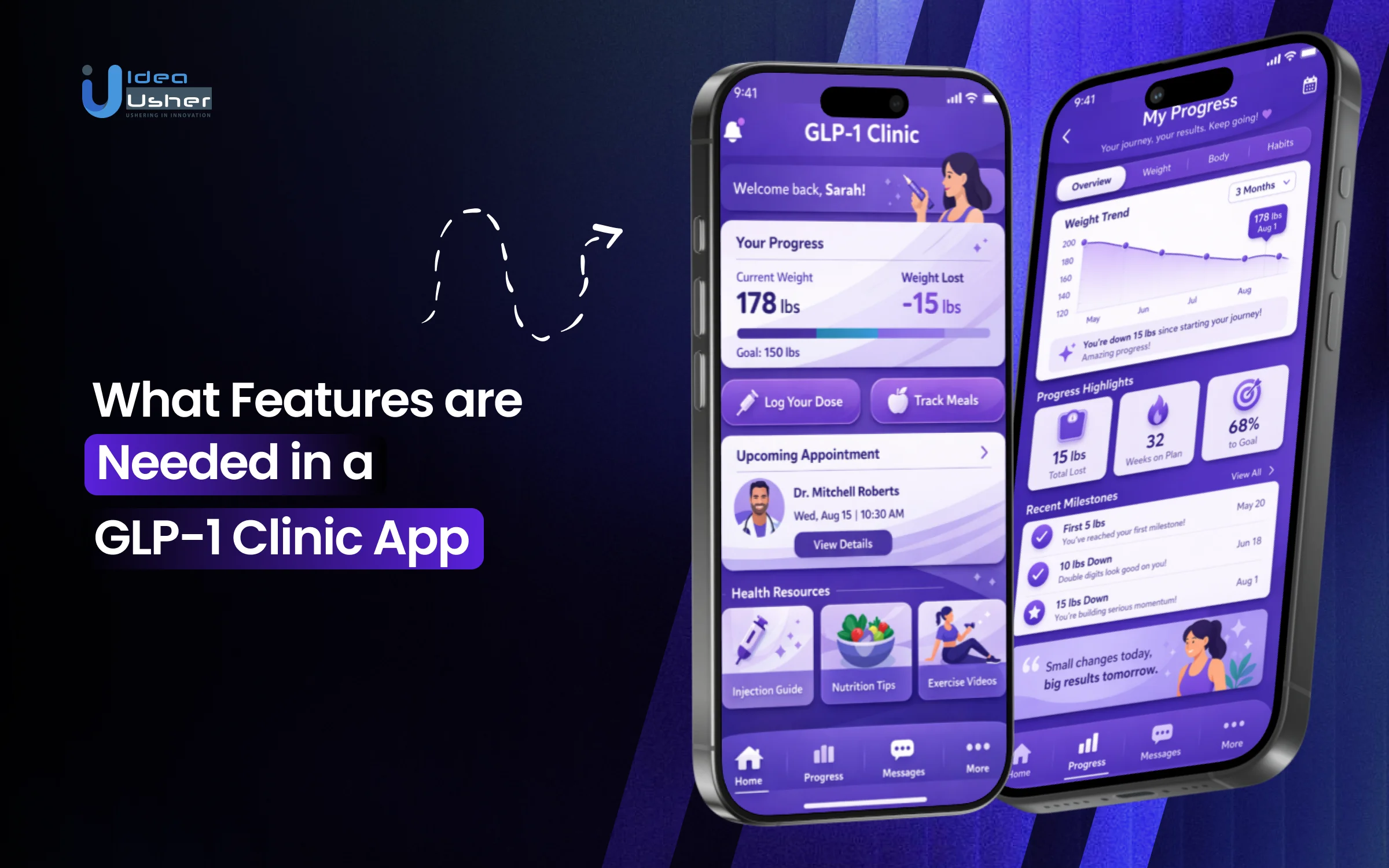
GLP-1 treatment programs combine medical evaluation, prescription management, and ongoing patient monitoring, all of which need to be coordinated within a single digital experience. The expectations of patients for guided onboarding, progress tracking, and consistent provider communication directly shape GLP-1 app features, requiring a platform that seamlessly supports both clinical workflows and long-term engagement.
The seamless integration of eligibility assessments, consultation scheduling, prescription workflows, medication tracking, progress monitoring, and support systems ensures that the platform delivers more than a basic telehealth interface. The effectiveness of the app depends on how well these features align with clinical protocols while maintaining usability, compliance, and continuity of care.
In this blog, we break down what features are needed in a GLP-1 clinic app by examining core functional components, user experience considerations, and system capabilities required to build a scalable and patient-centric platform.
Why GLP-1 Clinic Apps Are Growing Fast?
The rapid expansion of the GLP-1 market, valued at USD 13.84 billion in 2024 and projected to reach USD 48.84 billion by 2030 at a CAGR of 18.54%, represents a fundamental shift in how chronic metabolic conditions are managed.

For a modern clinic, the transition from traditional office visits to comprehensive GLP-1 digital health ecosystems is no longer optional but a requirement for survival and growth. Telehealth cohorts show significantly higher adherence rates at 92% compared to 84% for traditional in-person patients.
A. Shift Toward Digital Weight Loss Platforms
The traditional healthcare model is often reactive but effective weight management requires proactive, continuous care. Digital platforms solve the friction of daily consistency, offering patients a consolidated interface for medical advice, prescription refills, and progress tracking in one seamless experience.
| Feature | Impact on Growth |
| Accessibility | Provides 24/7 access to care resources, reducing the need for physical office visits. |
| Engagement | Increases patient retention through daily touchpoints and progress visualization. |
| Data Continuity | Consolidates disparate health metrics into a single, actionable dashboard. |
B. Rise of GLP-1 Medications in Metabolic Care
GLP-1 receptor agonists have redefined metabolic health, yet their complex titration and monitoring create a demand that traditional systems struggle to meet. Integrating specific glp1 app features ensures a specialized digital approach that supports both clinical protocols and patient safety.
- Biological Pivot: The narrative has shifted toward biology, increasing the demand for medical-grade digital solutions.
- Clinical Rigor: A dedicated app ensures that the complexity of these treatments is maintained through guided protocols.
- Market Demand: A specialized interface helps clinics manage the influx of new patients looking for professional oversight rather than basic fitness tracking.
C. Why Clinics Need Scalable Digital Systems
Clinics must replace manual spreadsheets with automated, scalable systems. Utilizing specific glp1 app features allows providers to manage hundreds of patients efficiently, maintaining high standards of care while significantly reducing administrative costs and fragmented communication.
- Standardized Protocols: Every patient receives the same high-quality titration schedule and educational content regardless of clinic size.
- Centralized Data Management: Aggregating patient metrics allows for macro-level insights to identify successful treatment cohorts.
- Risk Mitigation: Automated side-effect logging and alerts ensure that clinicians can intervene the moment a patient experiences complications.
- Infrastructure Value: Investing in these glp1 app features transforms a localized service into a valuable digital asset with proprietary data and protocols.
What Is a GLP-1 Clinic App in Practice?
A GLP-1 clinic app functions as a specialized medical command center that bridges the gap between a doctor’s prescription and the patient’s daily life. Unlike general fitness apps, these platforms are clinical-grade tools designed to manage the specific physiological and behavioral nuances of metabolic hormone therapy.

A. From Telehealth Tool to Treatment Ecosystem
The evolution of digital health has transformed platforms from simple video conferencing tools into comprehensive treatment ecosystems. This shift moves the GLP-1 app beyond mere communication utility, making it a core, functional component of the medical intervention itself.
- Integrated Care Modules: The platform combines synchronous video visits with asynchronous messaging, ensuring patients have a direct line to their care team without needing a scheduled appointment for every question.
- Pharmacy and Lab Integration: Advanced glp1 app features now include direct links to compounding pharmacies and diagnostic labs, allowing for seamless prescription fulfillment and bloodwork result syncing.
- Intelligent Logic Layers: The software does more than store data; it interprets it. For example, if a patient logs a specific side effect, the system can automatically provide clinical guidance or escalate the issue to a provider based on pre-set medical protocols.
B. How These Apps Support Long-Term Adherence
Adherence is the biggest challenge in weight management. Because GLP-1 medications require a long-term commitment and gradual dosage increases, the app acts as a digital anchor to keep patients on track.
| Adherence Factor | Digital Solution |
| Dosing Consistency | Smart push notifications and injection trackers that record the date, time, and site of the last dose. |
| Side Effect Management | Structured logging that helps patients identify triggers and provides immediate dietary tips to mitigate nausea or fatigue. |
| Psychological Momentum | Progress dashboards that visualize non-scale victories like waist circumference changes or improved metabolic markers. |
C. Patient Journey Inside a GLP-1 Platform
The user experience is designed to mirror a professional clinical pathway. Every step of the journey is documented and guided, ensuring the patient never feels lost during the months-long treatment process.
- Onboarding and Medical Screening: Patients complete comprehensive digital intake forms and upload lab results to determine eligibility.
- Initial Consultation: A telehealth visit occurs within the app where a clinician reviews the medical history and sets a personalized treatment plan.
- Medication Delivery and Titration: Once the prescription is active, the app guides the patient through the first injection and tracks the titration schedule as doses increase over several weeks.
- Continuous Monitoring: The patient enters daily or weekly data regarding weight, nutrition, and symptoms.
- Data-Driven Adjustments: Based on the logged data, the clinician uses the platform’s provider dashboard to adjust dosages or suggest lifestyle modifications in real time.

Core Patient Features That Drive Engagement
The integration of essential glp1 app features creates a frictionless interface that transforms complex medical protocols into manageable daily habits. By prioritizing intuitive design, these platforms ensure patients remain active, directly impacting the clinical success and retention rates of the program.

1. Easy Onboarding With Health Assessments
Digital intake processes replace cumbersome paperwork with dynamic, logic-based health surveys. This initial phase captures vital medical history and metabolic data, ensuring every patient is safely qualified for medication therapy.
Strategic onboarding builds immediate trust through professional clinical rigor. Seamlessly integrating diagnostic lab uploads and insurance verification creates a sophisticated first impression that differentiates a medical-grade platform from generic fitness applications.
2. Smart Injection and Dose Tracking
Precision is critical when managing complex titration schedules. This feature allows patients to log the exact timing, dosage amount, and anatomical site of each injection, ensuring a clear clinical record of medication administration.
Clear visualization of the titration path helps patients understand their progress toward maintenance doses. Integrating these specific glp1 app features reduces user anxiety and provides clinicians with an accurate data stream to evaluate treatment efficacy.
3. Weight, BMI and Progress Monitoring
Automated tracking of weight and BMI provides the primary metric of success for most users. These glp1 app features allow for the visualization of long-term trends and metabolic shifts over several months of treatment.
Advanced platforms go beyond simple weight to track body composition changes and non-scale victories. Integrating with smart scales via Bluetooth ensures data accuracy while maintaining high user engagement through interactive, motivational progress charts.
4. Side Effect and Symptom Logging
Managing gastrointestinal side effects is the most vital factor in preventing patient dropout. Real-time logging allows users to document nausea or fatigue, triggering immediate protocol-based advice for symptom relief and patient comfort.
This feature serves as a proactive early warning system for providers. By analyzing these glp1 app features and symptom patterns, clinicians can make informed decisions about slowing titration to ensure a safer patient experience.
5. AI-Based Nutrition and Lifestyle Guidance
GLP-1 medications work best alongside specific nutritional adjustments. AI-driven modules provide personalized meal recommendations focused on high protein intake and fiber, which are essential for maintaining lean muscle during weight loss.
These intelligent systems adapt to user preferences and metabolic responses. By offering real-time suggestions and behavioral prompts, the platform reinforces the lifestyle changes necessary for sustaining results after the medication.
6. Medication Reminders and Adherence Alerts
Consistency is the foundation of metabolic health. Automated push notifications and SMS alerts ensure that patients never miss a weekly dose, which is crucial for maintaining steady hormone levels in the blood.
Adherence alerts also notify the care team if a patient misses multiple entries. This proactive communication loop allows for timely intervention, significantly reducing the likelihood of treatment discontinuation or sub-optimal results.
Must-Have Telehealth and Consultation Features
The integration of high-fidelity communication tools is the cornerstone of clinical safety and patient satisfaction. By embedding professional medical consultation features directly into the interface, the platform eliminates the fragmentation of care and ensures that every medical interaction is documented, secure, and actionable.

1. Video Consultations With Specialists
High-definition video functionality allows for meaningful face-to-face clinical assessments regardless of the patient’s location. This feature is essential for initial medical screenings and the periodic reviews required to adjust medication dosages safely.
- Virtual Clinical Presence: Enables providers to observe physical progress and discuss sensitive health concerns in a private, HIPAA-compliant environment.
- In-Call Documentation: Allows clinicians to update treatment plans or take notes in real time without navigating away from the video interface.
- Reduced Barriers to Care: Increases patient attendance by removing the logistical hurdles of physical travel, directly improving long-term program retention.
2. Secure Messaging Between Patient and Doctor
Asynchronous communication provides a vital safety net for patients navigating the nuances of hormonal therapy. A secure messaging channel allows for quick clarifications regarding administration or minor side effects without the need for a full appointment.
| Feature Component | Clinical Utility |
| Encrypted Data Transfer | Ensures all shared medical data and photos remain fully protected and compliant. |
| Message Triaging | Allows administrative staff to filter non-clinical queries, preserving the doctor’s time for critical care. |
| Multimedia Support | Patients can share photos of injection sites or lab reports for immediate clinical review. |
3. Automated Appointment Scheduling System
Operational efficiency depends on a frictionless scheduling engine that manages provider availability without manual intervention. Automated systems reduce administrative “no-shows” and ensure that follow-up consultations occur at the precise intervals required for titration.
- Smart Calendar Syncing: Automatically aligns patient requests with the real-time availability of licensed medical professionals.
- Automated Follow-up Triggers: The system can prompt patients to book their next visit based on their glp1 app features and current medication supply.
- Time-Zone Intelligence: Seamlessly manages appointments across different regions, allowing the clinic to scale operations nationally without scheduling errors.
4. EHR Integration for Medical History Access
A siloed app is a clinical risk; therefore, seamless integration with Electronic Health Records (EHR) is mandatory. This connection ensures that the care team has a 360-degree view of the patient’s medical history, including co-morbidities and contraindications.
- Unified Patient Profiles: Consolidates data from the app with historical medical records for a more comprehensive clinical assessment.
- Automated Lab Syncing: Pulls bloodwork results directly into the platform to monitor metabolic markers and kidney function during treatment.
- Interoperability: Facilitates the secure exchange of information between the platform and external healthcare providers or pharmacies.
Prescription and Medication Workflow Features
Efficient medication management is the operational heartbeat of a successful metabolic clinic. By digitizing the entire prescription lifecycle, platforms can eliminate manual errors, reduce administrative friction and ensure that patients receive their life-changing treatments without unnecessary delays.
1. Digital Prescription Management System
A centralized digital system allows clinicians to issue, update and manage prescriptions with precision. This feature replaces traditional paper-based methods with a high-security digital ledger that tracks every dosage change throughout the patient’s journey.
- Audit-Ready Records: Maintains a complete historical log of every prescription issued, ensuring full regulatory compliance and clinical accountability.
- Titration Logic: Built-in tools help doctors calculate the next dosage increment based on the patient’s specific progress and tolerance levels.
- Instant Updates: Clinicians can modify a prescription in real time, with changes reflected immediately in the patient’s glp1 app features and pharmacy notifications.
2. Pharmacy Integration and Fulfillment Flow
Seamless connectivity between the clinic app and fulfillment partners is essential for a premium user experience. This integration ensures that once a doctor hits “send,” the medication moves through the supply chain toward the patient’s doorstep.
- Order Routing: Automatically sends prescriptions to partner compounding or retail pharmacies based on patient location and insurance.
- Status Transparency: Provides real-time shipping and delivery tracking within the app interface to manage patient expectations.
- Cost Transparency: Displays estimated co-pays or out-of-pocket costs before the patient confirms the order.
3. Automated Refill and Renewal Tracking
GLP-1 therapies are long-term commitments, making refill management a critical retention factor. Automated tracking systems monitor the remaining supply and prompt both the patient and the provider before a gap in treatment occurs.
- Proactive Alerts: Sends automated push notifications to patients when they have seven days of medication remaining.
- One-Click Renewals: Simplifies the request process for patients, allowing them to trigger a renewal request that is instantly queued for clinician review.
- Inventory Intelligence: Helps clinics forecast demand by aggregating glp1 app features related to active prescriptions across the entire patient population.
4. Medication Eligibility and Safety Checks
Patient safety is the primary concern when prescribing powerful hormonal medications. Automated safety checks act as a digital safeguard, cross-referencing patient data against known contraindications before a prescription can be finalized.
- Contraindication Screening: The system flags potential adverse drug interactions or pre-existing conditions like medullary thyroid carcinoma or pancreatitis.
- BMI Verification: Ensures that the patient meets the clinical criteria for treatment as defined by FDA guidelines or specific clinic protocols.
- Lab-Gatekeeping: Prevents the issuance of a new prescription until required bloodwork results have been uploaded and reviewed within the platform.
Clinician Dashboard Features for Remote Care
The clinician dashboard serves as the nerve center for medical operations, transforming raw patient data into actionable clinical insights. By centralizing remote monitoring, the platform empowers providers to manage large patient populations with a level of precision and oversight that traditional office visits cannot match.

1. Real-Time Patient Monitoring Dashboard
A high-performance dashboard provides an immediate, high-level overview of the entire patient census. This interface allows clinicians to toggle between individual progress and aggregate health metrics, ensuring no patient falls through the intellectual cracks of the program.
- Live Data Syncing: Displays the latest weight logs, glucose levels, and injection timestamps as they are entered into the glp1 app features by the user.
- Activity Heatmaps: Visualizes patient engagement levels, highlighting those who are consistently tracking versus those who may be disengaging from the protocol.
- Centralized Communication: Integrates messaging and video call triggers directly into the patient profile for immediate clinical intervention.
2. Risk Alerts Based on Patient Data Trends
Proactive care is defined by the ability to intervene before a minor issue becomes a clinical complication. Automated risk alerts use algorithmic triggers to flag patient data that deviates from expected recovery or titration patterns.
- Severe Side Effects: Flags frequent reports of high-grade nausea or vomiting for urgent medical review.
- Non-Adherence: Alerts the provider if a patient misses two consecutive medication doses or weight logs.
- Stalled Progress: Identifies patients whose weight loss has plateaued for more than three weeks to evaluate dosage adjustments.
3. Custom Treatment Plan Adjustments
Every metabolic journey is unique, and the platform must allow for granular customization of care protocols. This feature gives clinicians the digital tools to pivot strategies based on real-time physiological responses.
- Dynamic Titration Schedules: Allows doctors to manually override standard dosage increases if a patient requires a longer stabilization period.
- Nutritional Prescription: Clinicians can push specific dietary goals or macronutrient targets directly to the patient’s mobile interface.
- Behavioral Task Assignment: Enables the care team to set custom goals, such as daily step counts or hydration targets, tailored to the individual patient’s lifestyle.
4. Cohort Analysis and Outcome Tracking
The platform must aggregate data across the entire practice to demonstrate clinical efficacy and operational success. Cohort analysis allows providers to see which demographics or treatment paths are yielding the highest success rates.
- Efficacy Reporting: Generates automated reports on average weight loss percentages and metabolic marker improvements across the clinic.
- Retention Analytics: Tracks how long patients stay active in the program, helping to identify the optimal touchpoints for engagement.
- Protocol Optimization: Uses longitudinal data to refine the clinic’s proprietary treatment models, ensuring continuous improvement in patient outcomes.
AI Features That Make GLP-1 Apps Stand Out
Artificial Intelligence transforms a static tracking tool into an adaptive medical companion that anticipates patient needs. By leveraging machine learning, platforms can move beyond generic protocols to provide a level of personalization and proactive care that was previously impossible at scale.

1. Personalized Treatment Recommendations
Generic weight loss advice often fails because metabolic responses are highly individual. AI engines analyze a patient’s specific glp1 app features including blood glucose levels, caloric intake, and activity data, to suggest precise adjustments to their daily routine.
- Dynamic Calorie Partitioning: Automatically adjusts protein and fiber targets based on the patient’s current muscle mass and weight loss velocity.
- Optimal Dosing Windows: Recommends the best time of day for injections based on recorded side-effect patterns to maximize comfort and efficacy.
- Contextual Meal Planning: Suggests specific recipes or food choices that mitigate nausea or fatigue during the critical titration phases.
2. Predictive Analytics for Patient Outcomes
Predictive modeling allows clinics to see the future of a patient’s journey before it unfolds. By comparing individual data against thousands of similar profiles, the AI can forecast weight loss trajectories and identify potential hurdles early.
| Predictive Metric | Clinical Application |
| Plateau Forecasting | Identifies when a patient is likely to hit a weight stall, allowing for pre-emptive dosage or lifestyle shifts. |
| Dropout Probability | Flags users with declining engagement patterns so the care team can initiate a retention-focused check-in. |
| Health Milestone Estimation | Provides patients with realistic timelines for reaching target BMI or metabolic markers. |
3. AI Chat Assistants for Patient Queries
The first few weeks of GLP-1 therapy are often filled with patient anxiety and repetitive questions. AI-powered assistants provide instant, medically-vetted responses to common concerns, ensuring the patient feels supported 24/7.
- Symptom Triage: Uses natural language processing to categorize patient concerns and provide immediate, protocol-based relief strategies.
- Medication Education: Answers technical questions about storage, travel with pens, or missed dose protocols without requiring a human provider.
- Administrative Support: Handles routine tasks like rescheduling appointments or checking refill status, freeing up the clinical team for complex cases.
4. Behavioral Nudges for Habit Formation
Long-term success with GLP-1s requires fundamental lifestyle changes that persist after the medication. AI-driven nudges use behavioral science to encourage these habits through perfectly timed, personalized notifications.
- Variable Reward Systems: Delivers motivational feedback and digital badges when patients reach consistency milestones in their glp1 app features.
- Environmental Cues: Sends reminders to hydrate or consume protein based on the patient’s historical data and typical daily schedule.
- Micro-Learning Modules: Serves bite-sized educational content about metabolic health and muscle preservation at the exact moment the patient is most likely to engage.
Data and Analytics Features for Better Decisions
Data is the most valuable asset in a modern metabolic clinic, transforming subjective patient feedback into objective clinical evidence. By leveraging sophisticated analytics, platforms can optimize treatment protocols, improve patient safety, and provide the transparency required for regulatory and financial reporting.
1. Real-Time Health Data Visualization
Complex medical data becomes actionable only when it is presented clearly. High-quality visualization tools translate thousands of individual data points such as glucose levels, caloric intake, and activity into intuitive charts that allow clinicians to spot trends in seconds.
- Interactive Dashboards: Provides a holistic view of the patient’s journey, allowing providers to overlay medication dosage against weight loss velocity to find the optimal therapeutic window.
- Outlier Detection: Visualizations highlight data points that deviate from the norm, such as a sudden spike in side-effect intensity, enabling immediate clinical triage.
- Patient-Facing Graphs: Empowering users with visual proof of their progress, including non-scale victories like waist circumference reduction, which is vital for maintaining motivation during weight plateaus.
2. Weight Loss and Adherence Reports
Consistency is the primary driver of success in GLP-1 therapy. Comprehensive adherence reports aggregate tracking data to show exactly how closely a patient is following their prescribed regimen, from injection timing to nutritional goals.
- Dose Persistence Report: Identifies if a patient has missed injections, which is a leading indicator for potential treatment failure.
- Nutritional Compliance: Tracks protein and fiber intake to ensure the patient is preserving lean muscle mass during rapid weight loss.
- Long-Term Progress Summary: Generates a professional PDF of the patient’s entire journey, useful for coordinating care with primary care physicians.
3. Population Health Insights for Clinics
For a clinic to scale, it must understand how its entire patient base is performing. Population health analytics surface macro-trends that help administrators allocate resources effectively and refine their proprietary treatment models.
- Risk Stratification: Predictive algorithms identify “at-risk” cohorts who are most likely to drop out, allowing for proactive retention campaigns.
- Efficacy Benchmarking: Compares the success rates of different GLP-1 medications across various demographics to determine the most cost-effective protocols.
- Operational Flow Analysis: Identifies bottlenecks in the patient journey, such as long gaps between initial inquiry and the first telehealth consultation.
4. Data Export for Compliance and Reporting
In a highly regulated medical environment, the ability to produce defensible, accurate records is mandatory. Robust data export features ensure that the clinic remains compliant with HIPAA, GDPR, or other regional health data standards.
- Audit-Ready Logs: Generates detailed reports of every data access point and prescription change, ensuring full transparency for regulatory audits.
- Simplified Insurance Filing: Enables the quick export of the “glp1 app features” and clinical notes required to justify prior authorization requests to insurance carriers.
- Research-Ready Datasets: Allows for the export of anonymized, aggregated data for clinical research or to demonstrate proven patient outcomes to potential stakeholders.
Compliance and Security Features You Cannot Ignore
Security is the foundation of patient trust and regulatory standing in the digital health landscape. For any platform handling sensitive metabolic and hormonal data, robust protections are not merely technical additions but core requirements that safeguard the clinic against massive legal and financial liabilities.

1. HIPAA and GDPR Compliance Framework
The HIPAA and GDPR Compliance Framework requires strict adherence to privacy laws. These frameworks ensure every platform interaction, including weight logs and video consultations, is handled with the highest confidentiality.
- Legal Safeguards: Implementing these standards protects the organization from the severe financial penalties associated with data breaches or privacy violations.
- Trust Architecture: Demonstrating clear compliance with HIPAA or GDPR serves as a professional seal of approval that reassures patients their most intimate health data is protected.
- Standardized Procedures: These frameworks provide a clear roadmap for data handling and breach notification, ensuring the clinic remains prepared for any regulatory scrutiny.
2. Secure Data Storage and Encryption
Data in transit and at rest must be shielded by military-grade encryption protocols. This ensures that even if a data packet is intercepted, the information remains unreadable and useless to unauthorized parties.
| Encryption Layer | Security Benefit |
| End-to-End Encryption | Protects all video calls and chat messages between the provider and the patient from external interception. |
| At-Rest Encryption | Ensures that all archived medical records and glp1 app features stored on servers are fully encrypted. |
| Multi-Factor Authentication | Adds a vital second layer of defense, preventing unauthorized account access even if a password is compromised. |
3. Role-Based Access Control Systems
Not every user within a clinic needs access to every piece of patient data. Role-based access control (RBAC) ensures that staff members only see the information necessary for their specific job functions.
- Granular Permissions: Administrators can restrict access so that billing staff see only financial data, while medical records remain exclusive to licensed providers.
- Reduced Insider Risk: By limiting the “blast radius” of any single user account, the platform significantly lowers the risk of accidental or intentional data exposure.
- Clinical Integrity: Ensures that only authorized medical professionals can modify prescriptions or titration schedules within the patient’s digital profile.
4. Audit Logs and Activity Tracking
Transparency is a critical component of medical accountability. Comprehensive audit logs record every single action taken within the system, creating a permanent, unalterable trail of who accessed what data and when.
- Forensic Accountability: In the event of a clinical discrepancy, the audit log provides a detailed timeline of events to determine exactly how a treatment plan was altered.
- Regulatory Readiness: Automated logging ensures the clinic is always prepared for an audit, with readily exportable reports that prove adherence to security protocols.
- Behavioral Oversight: Monitoring system activity helps identify unusual patterns of data access, allowing the security team to intervene before a potential breach occurs.
Advanced Features for Competitive Differentiation
In a rapidly crowding market, differentiation is achieved by extending the digital ecosystem beyond basic clinical management. By integrating lifestyle data and social psychology, platforms can offer a superior patient experience that transcends the medication itself, fostering long-term loyalty and measurable health improvements.
1. Wearable Device Integration
The most successful metabolic outcomes are driven by the synergy between pharmaceutical intervention and physical activity. By syncing with major wearable ecosystems, the platform captures objective biometric data without requiring manual entry from the patient.
- Continuous Biometric Feedback: Automatically imports resting heart rate, sleep patterns, and active minutes to provide a comprehensive metabolic profile.
- Accuracy in Reporting: Eliminates the “recall bias” of self-reported exercise, giving clinicians an honest view of patient lifestyle adjustments.
- Holistic Health Correlation: Allows providers to see how glp1 app features like dose titration correlate with changes in physical activity levels and cardiovascular health.
2. Gamification for Patient Engagement
Weight loss is a marathon that requires sustained motivation over many months. Gamification applies the mechanics of game design such as milestones, streaks, and digital rewards to the clinical process of habit formation.
| Gamified Element | Behavioral Impact |
| Consistency Streaks | Encourages daily logging of nutrition and hydration to maintain a visual winning streak. |
| Milestone Badges | Rewards non-scale victories like “First 5% Weight Loss” to boost psychological momentum. |
| Level-Based Content | Unlocks advanced educational modules as patients progress, keeping the learning experience fresh. |
3. Community and Peer Support Modules
The psychological journey of weight loss can be isolating, often leading to higher dropout rates. Integrated community features allow patients to connect with others on the same treatment path, providing a layer of social accountability and shared experience.
- Moderated Support Groups: Provides a safe, clinical environment for patients to discuss common side-effect management and lifestyle tips.
- Peer Motivation: Facilitates anonymous group challenges that drive engagement through friendly competition and social validation.
- Expert-Led Forums: Allows clinicians to address the entire community at once, scaling educational outreach and medical guidance efficiently.
4. Multi-Clinic and Multi-Location Support
For enterprises aiming to scale, the platform must support complex organizational structures. This feature allows a single software instance to manage multiple physical branches or distinct digital brands while maintaining centralized oversight.
- Distributed Resource Management: Enables administrators to assign specific providers and medical staff to individual clinic locations seamlessly.
- Localized Compliance: Adapts the digital interface and reporting to meet regional medical regulations or insurance requirements across different states.
- Aggregated Business Intelligence: Provides a “birds-eye view” of performance metrics across all locations, helping to identify top-performing clinic models.
Monetization Features for Clinic Revenue Growth
A well-designed GLP-1 platform does more than facilitate care; it serves as a robust engine for sustainable business growth. By integrating diverse revenue streams directly into the digital workflow, clinics can create predictable income while offering patients flexible options that align with their financial and clinical needs.

1. Subscription-Based Treatment Plans
The chronic nature of metabolic treatment makes the subscription model an ideal fit for both clinics and patients. This approach converts a one-time medical service into a recurring relationship, ensuring that patients have continuous access to the clinical oversight necessary for safe GLP-1 therapy.
- Predictable Recurring Revenue: Stabilizes the clinic’s cash flow by providing a reliable monthly income stream from the active patient base.
- Automatic Billing Cycles: Reduces administrative overhead by utilizing integrated payment gateways that handle renewals, failed payments, and invoice generation.
- Continuous Care Retention: Encourages long-term adherence to glp1 app features by bundling medication, consultations, and monitoring into a single, cohesive monthly fee.
2. Tiered Pricing for Different Care Levels
Not every patient requires the same intensity of support. Tiered pricing allows clinics to broaden their market reach by offering various service levels, from “medication-only” essentials to “white-glove” concierge programs.
| Tier Level | Included Services |
| Standard Tier | Includes basic clinical oversight, digital prescriptions, and access to automated tracking tools. |
| Premium Tier | Adds 1:1 monthly video consultations, personalized AI meal planning, and priority chat support. |
| Concierge Tier | Offers 24/7 direct provider access, metabolic lab reviews, and integrated wearable device monitoring. |
3. Insurance and Reimbursement Integration
Navigating the complexities of insurance is a major pain point for patients seeking GLP-1 medications. Integrating automated insurance verification and prior authorization tools into the app can significantly increase conversion rates and patient satisfaction.
- Automated Prior Authorizations: Uses the glp1 app features to instantly compile the clinical data required by insurers, speeding up the approval process.
- Real-Time Benefit Checks: Provides patients with immediate clarity on their out-of-pocket costs and co-pays based on their specific insurance plan.
- Reimbursement Documentation: Allows clinics to easily export the HIPAA-compliant logs needed to justify claims for telehealth consultations and remote monitoring.
4. In-App Purchases for Add-On Services
Beyond the core treatment plan, a dedicated platform provides numerous opportunities for incremental revenue. These “add-on” services allow patients to customize their journey with additional clinical or wellness resources as needed.
- Specialized Coaching Sessions: Patients can purchase one-off sessions with registered dietitians or fitness specialists directly through the app interface.
- Diagnostic Lab Kits: Facilitates the sale and coordination of at-home blood testing kits for monitoring metabolic markers throughout the treatment.
- Premium Content Modules: Offers access to exclusive, expert-led masterclasses on muscle preservation and metabolic health for a one-time digital fee.
MVP vs Full Feature GLP-1 App Strategy
The development of a GLP-1 platform requires balancing speed with clinical depth. Choosing between a Lean MVP and a full-featured ecosystem depends on whether you aim to validate patient acquisition or immediately establish a high-authority brand using comprehensive glp1 app features.
A. What to Include in a Lean MVP Version
A Lean MVP focuses exclusively on the critical path of the patient journey: moving from an initial lead to a safe, medical-grade prescription. The goal is to strip away non-essential features while maintaining the HIPAA-compliant infrastructure necessary for legal operation.
- Essential Clinical Intake: Dynamic web or mobile forms to capture medical history, BMI, and lab results for initial safety screening.
- Asynchronous Consultation: A secure portal for doctors to review patient files and issue prescriptions without the immediate need for real-time video infrastructure.
- Basic Medication Tracking: A simple interface for patients to log their weekly injections and current weight to ensure treatment adherence.
- Manual Pharmacy Routing: Using standardized digital workflows to send prescriptions to partners rather than building custom API integrations in the first phase.
B. Features to Add in the Scaling Phase
Once the core model is validated and generating revenue, the focus shifts to operational efficiency and patient retention. The scaling phase introduces automation and glp1 app features that allow a clinic to manage thousands of patients without a linear increase in headcount.
- Integrated Telehealth Suites: Embedding high-definition video calls and real-time chat to deepen the provider-patient relationship and improve clinical oversight.
- Automated Pharmacy APIs: Direct digital links to fulfillment centers that provide patients with real-time shipping updates and automated refill triggers.
- Advanced Provider Dashboards: Tools for clinicians to manage patient cohorts, utilizing red-flag alerts to prioritize high-risk patients who report severe side effects.
- Wearable Syncing: Integrating data from Apple Health or Fitbit to correlate physical activity and heart rate with medication efficacy.
C. Cost vs Feature Trade-Off Decisions
Every feature added to a digital health platform increases the complexity of the security audit and the cost of ongoing maintenance. Decision-makers must evaluate each addition based on its impact on Patient Lifetime Value (LTV) versus the initial capital expenditure.
| Development Level | Estimated Investment | Primary Focus |
| Lean MVP | $50,000 – $90,000 | Market validation, core compliance, and patient onboarding. |
| Mid-Level Platform | $120,000 – $250,000 | Scaling operations, telehealth integration, and automated refills. |
| Enterprise Ecosystem | $250,000 – $500,000+ | AI-driven personalization, full EHR integration, and population health analytics. |
Choosing to defer complex features like AI nutrition coaching or peer communities can reduce the initial time-to-market by several months. However, investing early in a scalable backend architecture prevents the need for a costly “re-platforming” when the clinic expands from hundreds to tens of thousands of users.
Real-World GLP-1 App Examples to Learn From
These platforms demonstrate how combining clinical rigor with high-quality user experiences can drive patient retention and superior health outcomes in the competitive metabolic care landscape.
1. Noom Med

Noom Med succeeds by layering medical intervention over its famous psychology-based habit-change framework. This combination ensures that medication is supported by the permanent behavioral shifts required to maintain long-term results.
- Psychology-Based Lessons: Uses cognitive behavioral therapy to help users reimagine their relationship with food and hunger.
- Color-Coded Nutrition: Simplifies complex dietary choices into an intuitive system that prioritizes nutrient density and satiety.
- Integrated Clinical Care: Seamlessly connects users with medical professionals for glp1 app features like eligibility screening and prescription management.
2. Calibrate

Calibrate positions itself as a comprehensive “Metabolic Reset,” focusing on the underlying biology of weight rather than just caloric restriction. Their success stems from a strictly structured, year-long clinical curriculum.
- 1:1 Video Coaching: Pairs every patient with a dedicated accountability coach to navigate lifestyle changes and titration schedules.
- Four Pillars Curriculum: Focuses on sleep, food, exercise, and emotional health as the foundation of physiological change.
- Verified Data Syncing: Requires use of a connected smart scale to provide the medical team with accurate, real-time weight data.
3. Ro Body Program

Ro has mastered the “telehealth-first” model, providing a frictionless entry point for patients seeking medical weight loss. Their platform excels in operational efficiency and high-speed clinical delivery through a membership-based structure.
- Insurance Concierge: Includes a built-in “Insurance Checker” to help patients navigate coverage for high-cost GLP-1 medications.
- End-to-End Fulfillment: Integrates pharmacy logistics directly into the app for seamless medication delivery and tracking.
- On-Demand Messaging: Offers 24/7 access to the care team, ensuring all patient queries are addressed without scheduling delays.
4. Found

Found differentiates itself by offering a wider spectrum of pharmacological options tailored to the individual’s unique “weight loss personality.” Their platform focuses on biology-first, non-judgmental medical support.
- Biological Typing: Uses comprehensive health assessments to determine which medication and lifestyle path best fits the patient’s metabolism.
- Private Community Access: Features moderated peer groups that provide a safe space for sharing experiences and advice.
- Scalable Provider Dashboard: Utilizes sophisticated internal tools to help clinicians monitor thousands of patients via glp1 app features and risk-alert triggers.
Common Mistakes to Avoid in GLP-1 App Design
Strategic digital design requires a balance between clinical complexity and user simplicity. Avoiding these common pitfalls ensures the platform remains a reliable medical tool rather than a source of frustration for both the healthcare providers and the patients they serve.

1. Overloading Features Without Clear UX
Challenge: Excessive buttons, complex navigation, and data-heavy screens can overwhelm patients, leading to app abandonment and poor treatment engagement.
Solution: Our developers utilize a progressive disclosure design strategy, hiding advanced features until needed. This ensures the interface remains clean, focusing the user exclusively on their core daily health actions.
2. Ignoring Patient Adherence Challenges
Challenge: Standard notifications often fail to drive the long-term behavioral consistency required for successful metabolic hormone therapy and titration schedules.
Solution: We implement smart behavioral triggers and personalized nudge logic. Our team builds adaptive alert systems that analyze user patterns to deliver reminders at the most effective psychological moments.
3. Poor Integration With Clinical Workflows
Challenge: Apps that function in isolation force clinicians to manually transfer data, creating administrative bottlenecks and increasing the risk of errors.
Solution: We build seamless EHR and API integrations that sync patient data directly into the provider’s existing workflow. This automation allows doctors to focus on high-value clinical decision-making.
4. Lack of Data Privacy Planning
Challenge: Treating security as an afterthought can lead to catastrophic data breaches and non-compliance with strict healthcare regulations like HIPAA.
Solution: Our developers bake security into the source code using end-to-end encryption and zero-trust architecture. We ensure every glp1 app features component meets the highest global standards for protected health information.
How IdeaUsher Builds GLP-1 Clinic Apps?
IdeaUsher combines clinical precision with advanced engineering to deliver medical-grade platforms. Our approach ensures your digital health ecosystem is secure, user-centric, and ready for rapid market scaling.
A. Experience in Healthcare and AI Solutions
We leverage deep domain expertise to integrate predictive AI models and automated clinical logic. This ensures your glp1 app features provide personalized patient insights while reducing manual provider oversight.
B. End-to-End Development From MVP to Scale
Our team manages the entire lifecycle, from rapid prototyping to full-scale enterprise deployment. We focus on building a robust core that evolves seamlessly as your patient census grows nationally.
C. Compliance-Ready and Scalable Architecture
Security is baked into every layer of our code. We utilize HIPAA-compliant cloud infrastructure and zero-trust security models to protect sensitive metabolic data against evolving global cyber threats.
D. Custom Feature Development for Clinics
We develop bespoke tools tailored to your unique clinical protocols. Whether integrating specialized titration logic or custom pharmacy APIs, we ensure the software adapts perfectly to your specific operational needs.
E. Seamless Third-Party API Integrations
Our developers specialize in connecting your platform with essential external services. We ensure flawless data flow between EHR systems, diagnostic labs, and compounding pharmacies for a truly unified treatment experience.
Cost Factors Based on Features and Complexity
The capital requirement for a GLP-1 platform is directly proportional to the depth of clinical automation and the complexity of the security infrastructure. Investors must balance the initial development cost against the long-term operational savings provided by high-level glp1 app features.
A. Feature Scope vs Development Cost
The primary cost driver is the breadth of the user journey being digitized. A platform limited to basic intake and messaging requires significantly less engineering time than an integrated ecosystem.
| Development Scope | Feature Focus | Investment Impact |
| Minimum Viable Product | Patient onboarding, basic medical history, and manual prescribing tools. | Lower Initial CAPEX with faster time-to-market. |
| Growth-Ready Platform | Automated titration, telehealth video, and glp1 app features for tracking. | Balanced Scaling with moderate operational automation. |
| Enterprise Ecosystem | AI-driven insights, multi-clinic support, and full clinical automation. | High ROI through massive administrative efficiency. |
B. AI and Analytics Cost Considerations
Integrating artificial intelligence transforms a standard app into a predictive medical tool, but it requires specialized data science and machine learning engineering.
- Model Training: Costs are associated with developing and refining proprietary algorithms that predict weight loss plateaus or patient dropout risks.
- Data Processing: Robust analytics engines that provide real-time population health insights require high-performance cloud computing resources.
- Natural Language Processing: Implementing AI chat assistants for 24/7 patient triage involves integrating and fine-tuning advanced LLM frameworks.
C. Integration and Compliance Cost Impact
The “invisible” architecture required to connect with the broader healthcare system often represents a significant portion of the development budget. These costs are driven by the rigorous testing and security standards required to handle protected health information.
- EHR and EMR Interoperability: Building bridges to systems like Epic or Cerner involves complex data mapping and HL7/FHIR standard compliance, increasing development hours.
- Pharmacy and Lab API Logic: Creating automated fulfillment workflows requires custom integrations with compounding pharmacies and diagnostic centers to ensure real-time status updates.
- Mandatory Security Certifications: Budgeting must account for third-party penetration testing and the implementation of audit logs required for HIPAA and GDPR regulatory standing.
- Regulatory Maintenance: Ongoing costs include updating the platform to meet evolving data privacy laws and maintaining the security patches of the underlying infrastructure.
Tech Stack Needed for GLP-1 App Development
Selecting the right technology stack is a strategic decision that affects the platform’s security, scalability, and long-term maintenance costs. In 2026, the standard for clinical applications has shifted toward cloud-native, AI-integrated, and interoperable architectures that prioritize patient data protection above all else.
| Component | Recommended Stack | Strategic Business Impact |
| Frontend Technologies | React Native or Flutter for cross-platform mobile; React.js or Next.js for the clinician dashboard. | Ensures a seamless, high-performance experience across iOS and Android with a single codebase. |
| Backend Technologies | Node.js (TypeScript) or Python (Django/FastAPI); PostgreSQL with encryption for relational data. | Provides a type-safe, scalable environment capable of handling complex medical logic and high user concurrency. |
| AI & Data Infrastructure | TensorFlow or PyTorch for custom models; Vector Databases (Pinecone/Milvus) for RAG-based AI assistants. | Enables predictive health insights and personalized treatment recommendations based on longitudinal patient data. |
| Cloud & Security | AWS (HealthLake), Azure (Health Data Services), or Google Cloud (Healthcare API). | Guarantees a HIPAA/GDPR-compliant environment with automated encryption, audit logs, and disaster recovery. |
| APIs & Integrations | Twilio/Agora for Video; Stripe for payments; Surescripts for e-prescriptions; Redox for lab syncing. | Facilitates end-to-end clinical workflows, from secure telehealth consultations to automated medication fulfillment. |
| Data Interoperability | HL7 FHIR (Fast Healthcare Interoperability Resources) and SMART on FHIR protocols. | Ensures the platform can securely exchange data with major hospital EHRs like Epic, Cerner, and Athenahealth. |
| Scalability Architecture | Microservices via Docker & Kubernetes; Serverless functions for event-driven tasks (e.g., alerts). | Allows the platform to scale individual features independently (like the AI engine) without affecting the core system. |
Development Timeline Based on Feature Scope
The time required to launch a medical-grade application depends heavily on the complexity of its integration and the depth of its regulatory requirements. Balancing a rapid market entry with a stable, secure infrastructure is critical for early patient trust.
A. MVP & Full-Scale Platform Development Timeline
| Phase | Lean MVP (3–5 Months) | Full-Scale Platform (8–12+ Months) |
| Discovery & Design | 3–4 Weeks: Core user flows and clinical intake design. | 6–8 Weeks: Comprehensive UX for multi-clinic and AI modules. |
| Core Development | 8–12 Weeks: Essential HIPAA backend and manual prescribing tools. | 20–28 Weeks: Microservices architecture and complex titration logic. |
| Integrations | 2–4 Weeks: Basic payment and simple notification systems. | 8–12 Weeks: EHR/EMR interoperability and full pharmacy APIs. |
| AI & Analytics | Minimal: Basic data logging and manual reporting. | 10–14 Weeks: Custom predictive models and AI chat assistants. |
| QA & Compliance | 3–4 Weeks: Security audits and HIPAA validation testing. | 6–8 Weeks: Penetration testing and global data privacy audits. |
B. Factors That Can Delay Development
Launching a sophisticated clinical ecosystem often involves external variables that can impact the initial roadmap. Understanding these bottlenecks early allows for better resource allocation and more realistic stakeholder expectations.
- Third-Party API Approval: Integrating with pharmacies or electronic prescription networks often requires lengthy vetting processes and credentialing that are outside the developer’s direct control.
- Regulatory and Compliance Audits: Achieving HIPAA or GDPR certification involves rigorous documentation and third-party security audits that can add weeks to the final “Go-Live” phase.
- EHR Data Mapping Complexity: Connecting to legacy hospital systems frequently uncovers data silos or non-standard formats, requiring custom HL7/FHIR middleware to ensure interoperability.
- Clinical Protocol Refinement: Changes to medical logic such as updating titration schedules or safety alerts require significant backend adjustments and thorough re-testing to ensure patient safety.
- Content and Asset Readiness: Delays often occur when medical educational content, video assets, or legal terms are not finalized in parallel with the technical development.
Future Trends in GLP-1 Digital Health Platforms
The next generation of metabolic care will be defined by deep personalization and proactive intervention. As AI matures, these platforms will evolve from tracking tools into autonomous clinical partners.

1. AI Clinical Copilots for Weight Management
Advanced AI assistants will soon handle complex clinical triage and titration suggestions, allowing providers to focus on high-level medical decision-making. These copilots reduce administrative burdens while ensuring 24/7 patient support.
Real-World Example: Noom Med uses AI-driven clinical support to flag side effects and plateaus, allowing doctors to provide timely, data-backed interventions between scheduled appointments.
2. Hyper-Personalized Treatment Plans
Future platforms will utilize genomic data and real-time metabolic feedback to adjust dosages and nutrition instantly. This level of precision ensures maximum efficacy while significantly reducing the risk of side effects.
Real-World Example: Calibrate syncs wearable data with metabolic testing to create a “Metabolic Health Score,”dynamically adjusting medication and nutrition plans based on the patient’s unique biology.
3. Integration With Preventive Healthcare
GLP-1 platforms are expanding beyond weight loss to address the root causes of chronic disease. By integrating with broader health systems, they facilitate a holistic approach to long-term metabolic wellness.
Real-World Example: Ro Body integrates weight management with broader telehealth services, treating metabolic health as a foundation for preventing long-term conditions like heart disease and hypertension.
4. Decentralized Clinical Trials and Data Research
Apps are becoming primary hubs for gathering real-world evidence. This decentralized approach allows for faster clinical trials and a deeper understanding of how GLP-1 medications perform across diverse, global populations.
Real-World Example: Found leverages its massive, anonymized patient dataset to conduct real-world research, identifying which GLP-1 dosagesyield the best results for specific demographics.
5. Predictive Patient Retention Modeling
Platforms can predict when a patient is likely to disengage using machine learning to analyze behavioral patterns. This allows for proactive interventions, such as automated nudges or clinician outreach, to boost adherence.
Real-World Example: WeightWatchers uses behavioral science to predict when a patient might disengage, triggering automated “nudges”and support prompts to maintain long-term medication adherence.
Build Your GLP-1 Clinic App With IdeaUsher!
Transform your vision into a market-leading digital health powerhouse with IdeaUsher. Our team of ex-FAANG/MAANG developers brings unparalleled technical precision to every project, leveraging over 500,000+ hours of development experience. We specialize in building secure, high-performance glp1 app features that drive clinical success, ensuring your platform is high-performing, HIPAA-compliant, and engineered for rapid global scalability.
Why Hire Us:
- Deep Healthcare Domain Expertise: We understand the nuances of metabolic care, from complex titration logic to the strict data privacy requirements of the medical industry.
- Rapid Deployment of Scalable MVPs: Our modular architecture allows you to launch a compliant MVP quickly while ensuring the backend is ready for enterprise-level growth.
- AI-First Engineering Culture: We integrate predictive analytics and AI copilots that turn raw patient data into actionable clinical insights and superior health outcomes.
- End-to-End Strategic Partnership: From initial discovery to post-launch security audits, we provide the technical leadership required to dominate the digital weight loss market.
Conclusion
The rapid expansion of the GLP-1 market offers a transformative opportunity for clinics to modernize metabolic care. Building a high-performing platform requires a strategic focus on glp1 app features that balance clinical rigor with user-centric design. By prioritizing seamless onboarding, automated titration tracking, and robust security frameworks, providers can transition from reactive care to proactive, scalable treatment ecosystems. Ultimately, the right digital infrastructure ensures long-term patient adherence and operational efficiency, positioning your clinic for sustainable growth in an increasingly competitive digital health landscape.
FAQs
A.1. A successful MVP must prioritize secure patient onboarding, automated dose tracking, and HIPAA-compliant messaging. These core features validate your delivery model while ensuring clinical safety and foundational regulatory compliance.
A.2. Retention is driven by behavioral nudges, visual progress tracking, and side-effect logging. These tools transform complex medical protocols into manageable daily habits, keeping patients engaged throughout their metabolic journey.
A.3. EHR integration eliminates manual data entry by syncing patient history and lab results directly. This connectivity allows providers to manage larger patient cohorts efficiently while maintaining a high standard of care.
A.4. Platforms must adhere to HIPAA and GDPR frameworks, utilizing end-to-end encryption and role-based access controls. Protecting sensitive metabolic data is vital for maintaining patient trust and meeting international legal requirements.


