


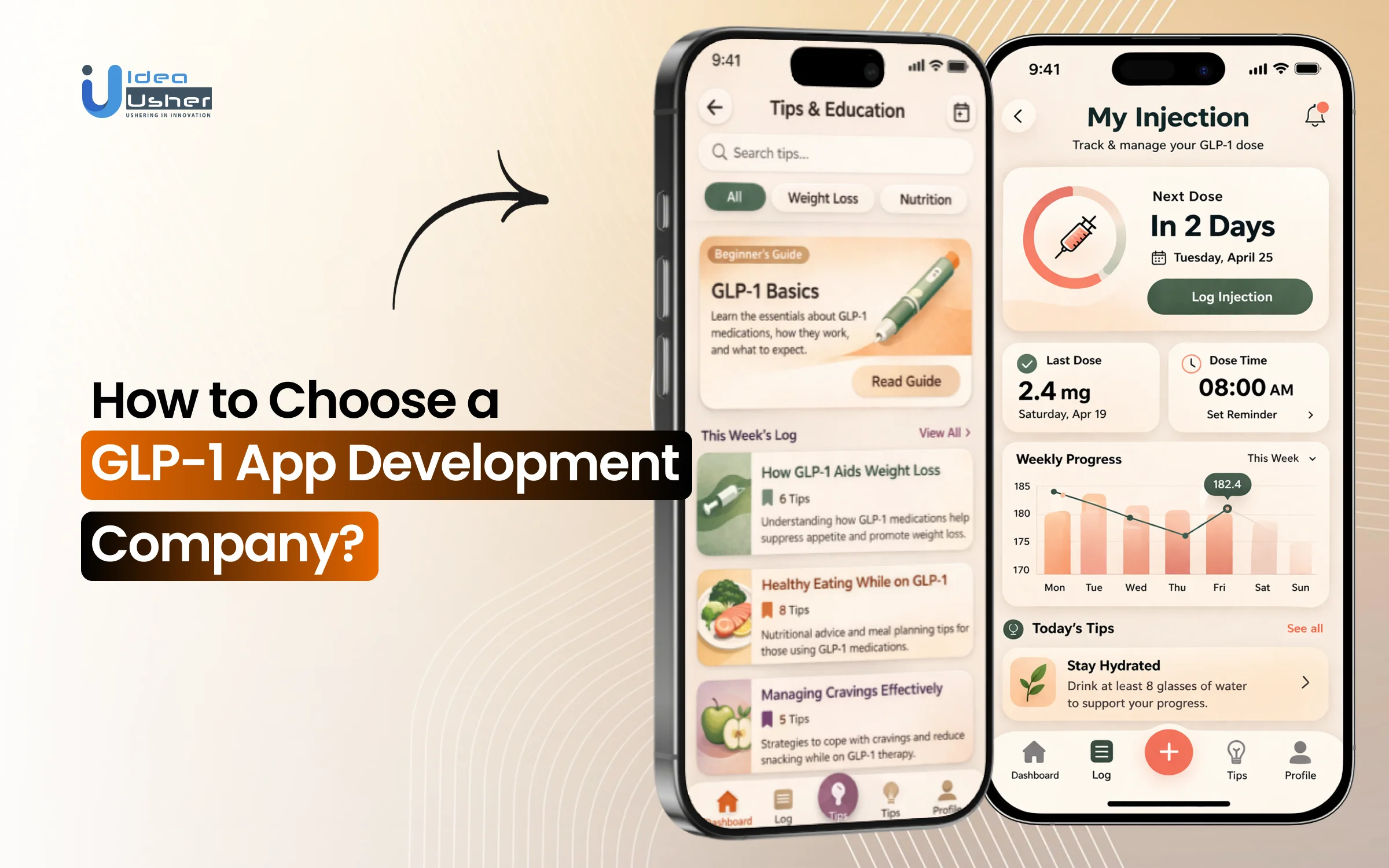
GLP-1 results may feel predictable early on, but that phase rarely lasts without structure. Users often start skipping small habits, and the system should quickly detect that drift. A well-built app can quietly track adherence and surface early risk signals. It is important to choose the GLP-1 app development company carefully because the system must balance clinical logic with simple user flows.
The platform should gradually introduce deeper insights as user behavior evolves. It can also use real-time data to adjust feedback without adding friction. This balance usually defines whether the product sustains engagement or slowly loses it.
Over the years, we’ve built several GLP-1 apps that use technologies like clinical decision support systems and connected health data pipelines. As we have built this expertise, we’re sharing this blog to discuss how to choose a GLP-1 app development company.
Why GLP-1 Apps Are Gaining Serious Demand?
According to FutureMarketInsights, the GLP-1 nutritional support market is forecast to reach USD 13 billion by 2035, up from USD 4.1 billion in 2025, advancing at a 12.2% CAGR. This growth signals a fundamental restructuring of metabolic health. For investors, these figures represent a massive gap between medication supply and the digital infrastructure required to manage patients at scale.

Source: FutureMarketInsights
Medications like Semaglutide have created a secondary gold rush in software. While drugs handle biology, they require digital support for monitoring and nutrition. Traditional healthcare is ill-equipped for this oversight, making companion software a mandatory component of the ecosystem.
Investors recognize that medication alone is an incomplete solution. An app serves as a bridge for long-term success. Platforms like Shotsy have already validated this demand, amassing nearly a million downloads by focusing specifically on the logistics of injection tracking and dosage clarity. Without such digital intervention, risks like muscle loss can hurt a provider’s reputation. Proprietary platforms are now a prerequisite for market entry.
Rising Demand for Digital Care
The surge is driven by patients requiring high clinical oversight. These users need medical-grade platforms rather than basic fitness trackers.
- Biological Monitoring: Users must track protein to prevent muscle loss and monitor hydration.
- Automated Adherence: Apps automate dosing schedules and ensure compliance.
- Business Scalability: Automation allows one clinician to oversee a larger patient panel efficiently.
From Clinics to Continuous Apps
We are seeing a shift from episodic to continuous care. In GLP-1 therapy, the time between doctor visits is when critical interventions happen. A clinic-only model is reactive, while a digital model is proactive.
High-value patients expect a concierge experience. They want immediate access to titration schedules and progress data. This is why established players like Noom have pivoted toward Noom Med, integrating their psychological tracking with clinical GLP-1 prescriptions. This shift creates a resilient business model based on recurring subscriptions rather than one-off consultation fees.
Why Startups are Investing Now
The window for early-mover advantage is closing. Entrepreneurs are moving aggressively to secure market share for strategic reasons.
- Expanding TAM: As insurance coverage grows, the total addressable market will include millions of new users.
- High Lifetime Value: This therapy is often a multi-year commitment, leading to higher LTV than standard wellness apps.
- Data Moats: Capturing real-world evidence on patient responses creates a valuable asset for insurers and pharma.
- Regulatory Barriers: Building HIPAA-compliant platforms takes time. Early investors create a defensive moat against future competitors.

What a High-Quality GLP-1 App Must Deliver?
Strategic GLP-1 apps must move beyond basic tracking. To ensure patient safety and market dominance, the digital architecture must address the specific physiological demands of GLP-1 therapy. A high-quality app acts as both a clinical safety net and a performance optimizer.
The efficacy of GLP-1 medications creates a unique paradox. Rapid weight loss is certain, but the quality of that loss is determined by software. Premium platforms focus on metabolic integrity to ensure patients emerge stronger rather than just smaller. Investors should prioritize products where users depend on the app to interpret shifting biological signals.
1. Protein Tracking for Muscle Safety
GLP-1 medications carry the risk of sarcopenia, or rapid muscle loss. Because these drugs suppress appetite, patients often fail to consume enough protein.
- Smart Protein Buffers: The UI must prioritize protein targets based on lean mass and activity levels.
- Anabolic Alerts: High-quality apps use notifications when protein intake falls below critical thresholds.
- Muscle Defense: Educational modules explain why protein is essential biological insurance for the weight loss journey.
2. Injection and Dosage Systems
The titration phase is the most vulnerable period for a patient. Errors in dosage or timing lead to gastrointestinal distress or stalled results.
Strategic Note: Platforms must include a visual injection map. Rotating subcutaneous sites is critical to avoid lipohypertrophy and ensure consistent medication absorption.
A clear timeline of the titration schedule allows users to see upcoming dose increases. It also provides a historical record of how the body responded to previous levels. This data is invaluable for physician consultations.
3. Wearable and Feedback Loops
Static apps are legacy products. Modern software must bridge the gap between medication and continuous biometric data.
| Biometric Data | Clinical Value for GLP-1 |
| Resting Heart Rate | Monitors for cardiovascular stress or side effects. |
| Sleep Quality | Tracks how medication impacts metabolic rest. |
| Step Count | Ensures activity levels prevent metabolic slowdown. |
| Glucose (CGM) | The gold standard for monitoring glucose stabilization. |
Real-time feedback loops allow the app to flag successes in metabolic flexibility. This happens when glucose levels remain stable even at lower doses.
4. Symptom and Response Logging
Side effects like nausea and fatigue often lead to treatment abandonment. If symptoms are not managed, platforms lose recurring revenue.
The app must feature a frictionless symptom logger tied to injection timing. If a patient feels nauseous 24 hours after a dose, the AI suggests smaller meals during that specific window. This transforms the software into an active clinical assistant.
5. Insights for Metabolic Optimization
Premium platforms turn raw data into actionable intelligence. Entrepreneurs should focus on proprietary algorithms that predict metabolic trajectories.
- Non-Scale Victories: Highlight improvements in waist-to-hip ratios and energy levels rather than just weight.
- Predictive Titration: Use data to suggest when a patient is ready for a maintenance phase.
- User ROI: Visualizing the link between habits and results makes the app indispensable, creating a high barrier to entry for competitors.
How to Choose a GLP-1 App Development Company?
Investing in high-quality GLP-1 apps requires more than a functional interface; it demands a clinical-grade ecosystem. Your development partner dictates the platform’s regulatory safety, scalability, and long-term valuation.
Generalist agencies often lack the technical depth to manage metabolic nuances. For entrepreneurs, a vendor who doesn’t understand clinical logic becomes an expensive mistake. Your partner must act as a technical consultant who treats the software as a medical intervention.

At IdeaUsher, we combine deep health-tech expertise with a proven framework for metabolic platforms to ensure your investment is clinically sound.
1. Evaluate GLP-1 Experience
The GLP-1 sector is distinct from general telehealth. You need a partner that understands titration logic and pharmacy fulfillment hurdles.
- Portfolio Specificity: Look for case studies involving medical weight loss or direct-to-consumer pharmacy integrations.
- Domain Knowledge: Verify their understanding of dose escalation schedules. If they don’t know that Semaglutide requires specific titration, they are a poor fit.
- Regulatory Track Record: Ensure they can navigate HIPAA and local health data laws without external oversight.
How IdeaUsher Excels: Our team has a specialized portfolio in pharmaceutical and weight loss software, ensuring we understand the nuances of GLP-1 delivery.
2. Assess Clinical-Grade Features
Wellness apps are built for engagement, but GLP-1 apps are built for safety. This requires a shift in how features are architected.
Your partner must be able to sync with standard Electronic Health Records (EHRs) to ensure secure data flow. The system also needs logic-driven safety nets that flag red-flag symptoms and escalate them to clinicians automatically. Finally, they should have expertise in electronic prior authorization to streamline medication access.
How IdeaUsher Excels: We build secure, interoperable systems that integrate seamlessly with major EMR/EHR providers for high-stakes clinical environments.
3. Check Wearable Integration Expertise
To build a high-quality metabolic platform, developers must be experts in biometric synchronization. This goes beyond simple API calls.
The value lies in synthesizing data from CGMs and smart scales into a single dashboard. Your partner should demonstrate how they filter data noise to present actionable insights. This capability transforms a basic app into a proprietary clinical tool.
How IdeaUsher Excels: Our engineers specialize in multi-device synchronization, turning raw biometric streams into clear, actionable metabolic insights.
4. Review Retention Strategies
Patient dropout due to side effects is the primary cause of program failure. High churn rates destroy ROI, so your developer must have a strategy for behavioral engineering.
Ask about their experience with AI-driven symptom triage and personalized notifications. Features like CBT modules or gamification that reward hitting protein targets keep patients on the medication longer, making the platform more valuable.
How IdeaUsher Excels: We implement advanced AI behavioral triggers and triage systems specifically designed to minimize patient churn and maximize adherence.
5. Validate System Scalability
Your platform must scale from 1,000 to 1,000,000 users without a rebuild. This requires a cloud-native, microservices-based architecture from day one.
- Concurrency: Ensure the system handles thousands of simultaneous video sessions or data syncs.
- Database Design: The tech stack must process massive biometric influxes without lag.
- Security: Verify end-to-end encryption and multi-factor authentication to protect against data breaches as you grow.
How IdeaUsher Excels: We utilize robust, cloud-native architectures that support rapid user growth while maintaining military-grade data security.
6. Ensure Product Evolution
In this market, science moves faster than software. New drug indications are discovered frequently, and your platform must be agile enough to pivot.
A quality company offers a roadmap for maintenance and feature expansion. Whether adding support for new medications or integrating AI scanners, your partner must evolve the product. This keeps your investment at the cutting edge of the metabolic health revolution.
How IdeaUsher Excels: We provide ongoing strategic support and modular development, ensuring your platform stays ahead of pharmaceutical and regulatory shifts.
How IdeaUsher Approaches GLP-1 Apps Differently?
Successful app development in the metabolic space requires a departure from standard software engineering. At IdeaUsher, we recognize that when you are building GLP-1 apps, the software is not just a tool. It is a digital therapeutic. Our approach focuses on creating a moat around your business through clinical depth and technical sophistication.

Clinical vs. Generic Design
Generic wellness apps prioritize time spent in the app. Clinical first platforms prioritize safety and efficacy. IdeaUsher bridges this gap by designing interfaces that reduce cognitive load for patients while increasing data accuracy for providers.
- Logic over Aesthetics: While our UI is premium, our backend logic handles complex titration schedules and pharmacy protocols.
- Regulatory DNA: We build with HIPAA and GDPR compliance as the foundation, not an afterthought.
- Physician Portals: We create high-utility dashboards for clinicians that highlight patients at risk, allowing for early intervention.
Why does IdeaUsher Prioritize Metabolic Logic?
Metabolic health is dynamic. A static tracking app cannot account for the way GLP-1s alter appetite, insulin sensitivity, and energy expenditure.
Our development process centers on Metabolic Logic. This is software that understands the physiological impact of the drug.
Our Philosophy: If the app does not understand that a patient’s caloric needs change as they lose 20% of their body weight, the app is failing the patient.
We implement algorithms that suggest protein adjustments and hydration reminders based on the specific medication. This ensures the user is not just losing weight but also improving their metabolic age. This depth makes a platform investable and defensible against copycat apps.
Advanced Feature Sets
To dominate the market, your platform must offer features that users cannot find in a free calorie counter. IdeaUsher focuses on high value, proprietary features that drive long term retention.
| Feature Layer | IdeaUsher Implementation | Business Impact |
| Dose Management | Visual injection site mapping and titration history. | Reduces clinical errors and increases safety. |
| Biometric Sync | Deep integration with CGMs and body composition scales. | Creates a switching cost for long term users. |
| Symptom Triage | Creates a switching cost for long-term users. | Lowers churn by keeping patients comfortable. |
| Community Support | Secure, moderated peer groups and clinician chat. | Increases LTV through expert accountability. |
By moving beyond basic tracking, we help entrepreneurs build a brand synonymous with medical excellence. We focus on the off-ramp strategy. These are the digital tools needed to maintain weight once medication ends. This ensures your platform remains relevant for the entire duration of the patient’s health journey.
How IdeaUsher Evaluates GLP-1 App Requirements?
Success in the metabolic health sector begins long before the first line of code is written. At IdeaUsher, our discovery phase is designed to stress-test your business model against clinical realities. We ensure that your platform isn’t just a technical achievement, but a viable, compliant business.

We treat product discovery as a high-stakes diagnostic process. By identifying the intersection of patient needs, provider workflows, and regulatory constraints, we build a roadmap that minimizes waste and maximizes market impact. Our goal is to ensure your GLP-1 apps are built on a foundation of medical truth and technical scalability.
Asking Product Questions
Generic questions lead to generic products. We dig into the specifics of your clinical model to uncover the unique value proposition that will attract investors and patients.
- Dosing Logic: Will your platform support multiple medications with differing titration schedules?
- Provider Access: Who is the prescriber of record, and how will they interact with the data?
- Supply Chain: How will the app handle medication shortages or pharmacy switches?
- Data Ownership: How will you manage the portability of patient health data?
Identifying Development Risks
In healthcare software, moving fast and breaking things can lead to catastrophic legal and clinical consequences. We proactively identify risks during the requirement phase.
| Risk Category | Potential Impact | IdeaUsher Mitigation |
| Clinical Safety | Inaccurate titration leading to adverse events. | Multi-layer validation logic and physician overrides. |
| Regulatory | Hefty fines for non-compliant data storage. | Built-in HIPAA-compliant cloud architecture. |
| Adherence | High churn due to unmanaged side effects. | Integrated AI symptom triage and dietary support. |
| Interoperability | Siloed data that doctors cannot use. | Standardized FHIR/HL7 integration protocols. |
Mapping Clinical Workflows
We do not just map a user journey; we map a clinical workflow. This ensures that the app integrates seamlessly into the lives of both the patient and the healthcare provider.
At IdeaUsher, we take inspiration from industry leaders like WeightWatchers, specifically how they integrated clinical GLP-1 programs with their existing community logic to maintain long-term engagement.
The IdeaUsher Blueprint:
We visualize the entire lifecycle of a patient. This includes the initial blood test, prior authorization, weekly injections, and the long-term maintenance phase.
We also look to platforms like Calibrate for inspiration on how to combine medication with intensive lifestyle intervention. By documenting these flows early, we create a technical specification robust enough for rigorous clinical environments. This meticulous planning is why IdeaUsher is the preferred partner for high-stakes metabolic health platforms.
How We Personalize GLP-1 User Journeys at IdeaUsher?
Effective GLP-1 apps must evolve alongside the user. At IdeaUsher, we move away from one-size-fits-all templates by engineering systems that respond to real-time biological data. We build software that learns how a patient’s body reacts to medication, making the digital experience as unique as their DNA.

Personalization is the difference between a tool and a companion. By leveraging machine learning and clinical logic, we ensure every notification and meal suggestion is perfectly timed. This deep customization drives the high retention rates our clients expect.
1. Adaptive Metabolic Plans
Standard plans fail because they are static. IdeaUsher builds adaptive engines that recalibrate based on biometric milestones. If a user’s weight loss plateaus or heart rate fluctuates, the app adjusts automatically.
- Dynamic Caloric Buffers: Our system auto-adjusts macronutrient targets as body composition shifts.
- Titration Feedback Loops: We use reported outcomes to suggest dose timing adjustments to clinicians.
- Activity Scaling: The app recommends training intensity based on energy levels logged after injection days.
2. Behavior-Driven Nudges
We utilize behavioral economics to keep users on track. Instead of generic alerts, IdeaUsher implements context-aware nudges that trigger based on specific user habits and psychological profiles.
The IdeaUsher Edge: We take inspiration from platforms like Noom, which uses psychological triggers to build habits. We combine this with the clinical precision found in apps like Ro to ensure nudges are backed by medical necessity.
3. AI Insights vs. Static Plans
Static plans are outdated the moment they are printed. IdeaUsher replaces these with AI-led insights that turn raw data into a narrative of progress. Unlike a static plan that provides generic weekly summaries, our AI provides real-time alerts on metabolic efficiency.
While a traditional plan requires users to search an FAQ for help, our AI predicts nausea windows based on dose timing. We replace fixed weight targets with elastic goals that prioritize muscle preservation. This ensures engagement increases over time as the AI provides deeper personal discoveries.
By focusing on these personalized layers, we help you build a platform that becomes essential to the user’s life. We do not just track progress. We predict and optimize it to ensure your app stands out in the marketplace.
How We Solve Gaps Others Miss in GLP-1 Apps?
Many platforms fail because they treat medical treatment like a simple fitness challenge. At IdeaUsher, we bridge the critical gaps that generalist developers overlook. We focus on the clinical blind spots that determine whether a patient succeeds or drops out within GLP-1 apps.
Most apps focus solely on the user interface. The real value of a GLP-1 app lies in its backend intelligence. We solve for medication side effects, muscle preservation, and physician oversight. This ensures your product is a medical-grade solution.
Embedding Clinical Logic
A major gap in current apps is the lack of titration intelligence. We build platforms that understand the specific biological timeline of therapy.
- Safety Guardrails: Our architecture includes automated flags for severe side effects that require immediate clinical attention.
- Dosage Tracking: We implement precise logging for various delivery methods. This accounts for different pen types and concentration levels.
- Prescriber Alignment: We take inspiration from Teladoc Health and how they sync patient data with provider dashboards for real-time adjustments.
Device and Lab Integrations
Static data leads to inaccurate results. IdeaUsher bridges this by creating a unified data ecosystem. We integrate with smart scales to monitor fat-to-muscle ratios and CGMs to track glycemic stability.
Beyond wearables, we prioritize lab integrations. Pulling data from blood tests like HbA1c levels provides a complete picture of metabolic health. This holistic view is inspired by platforms like Forward, which use diagnostic data to drive preventative care. This transforms your app into a comprehensive clinical portal.
Advanced Personalization
Most apps offer generic personalization. We solve the gap of metabolic adaptation. As a patient loses weight, their basal metabolic rate changes.
Our systems use predictive modeling to adjust nutritional targets before a plateau occurs. We personalize the content journey by delivering modules on muscle health exactly when data suggests a user is falling behind. This proactive approach keeps users engaged because the app thinks steps ahead of their symptoms.
How IdeaUsher Outperforms Other Firms in GLP-1 App?
Many platforms fail because they treat medical treatment like a simple fitness challenge. At IdeaUsher, we bridge the critical gaps that generalist developers overlook. We focus on the clinical blind spots that determine whether a patient succeeds or drops out within GLP-1 apps.
Most apps focus solely on the user interface. The real value of a GLP-1 platform lies in its backend intelligence. We solve for medication side effects, muscle preservation, and physician oversight. This ensures your product is a medical-grade solution.
Embedding Clinical Logic
A major gap in current apps is the lack of titration intelligence. We build platforms that understand the specific biological timeline of therapy.
- Safety Guardrails: Our architecture includes automated flags for severe side effects that require immediate clinical attention.
- Dosage Tracking: We implement precise logging for various delivery methods. This accounts for different pen types and concentration levels.
- Prescriber Alignment: We take inspiration from Teladoc Health and how they sync patient data with provider dashboards for real-time adjustments.
Device and Lab Integrations
Static data leads to inaccurate results. IdeaUsher bridges this by creating a unified data ecosystem. We integrate with smart scales to monitor fat-to-muscle ratios and CGMs to track glycemic stability.
Beyond wearables, we prioritize lab integrations. Pulling data from blood tests like HbA1c levels provides a complete picture of metabolic health.
This holistic view is inspired by platforms like Forward, which use diagnostic data to drive preventative care. This transforms your app into a comprehensive clinical portal.
Advanced Personalization
Most apps offer generic personalization. We solve the gap of metabolic adaptation. As a patient loses weight, their basal metabolic rate changes.
Our systems use predictive modeling to adjust nutritional targets before a plateau occurs. We personalize the content journey by delivering modules on muscle health exactly when data suggests a user is falling behind. This proactive approach keeps users engaged because the app thinks steps ahead of their symptoms.
Why Choose IdeaUsher for GLP-1 Apps?
With over 500,000 hours of coding experience, the IdeaUsher team of ex-MAANG/FAANG developers engineers medical-grade ecosystems. We build high-stakes healthcare software with the same technical rigor as global tech giants. For investors, this ensures a stable, secure platform designed for the complex needs of GLP-1 therapy.
Metabolic Health Expertise
Our portfolio reflects a deep understanding of metabolic logistics. We build platforms that manage titration schedules and specialized tracking, bypassing the learning curve of generic wellness apps. This allows us to deliver a refined product that simplifies the user journey.
Clinical Data Intelligence
We prioritize clinical integrity by capturing high-fidelity patient data. Our platforms transform metrics like lean muscle mass and caloric intake into actionable insights. This improves outcomes while creating a valuable data asset, positioning your venture as a leader in metabolic health.
Scalable Development for ROI
Our process is focused on return on investment and growth. We use modular architectures that scale with your patient load without requiring technical overhauls. By integrating automated onboarding and retention-focused UI/UX, we ensure your platform is clinically effective and commercially dominant.
Conclusion
Selecting the right partner requires looking beyond basic coding skills to find a firm with deep clinical empathy and regulatory expertise. For an investment of this scale, prioritize a company that offers proven HIPAA compliance, experience with complex titration logic, and the ability to integrate seamlessly with pharmacy and EHR systems. The ideal developer should not just build a functional interface but also provide a scalable, secure architecture that protects your data asset and ensures a high-tier concierge experience for your users.
FAQs
A1: Look for a partner with deep metabolic health expertise and a track record of HIPAA-compliant builds. Priority should be given to firms that offer sophisticated architectural security to manage complex clinical data. Evaluate their ability to integrate medical logic, such as titration schedules, rather than just basic fitness features.
A2: The investment typically ranges from $40,000 to $150,000+, depending on complexity and integration requirements. A basic MVP sits at the lower end, while platforms with AI-driven insights and EHR integrations require a higher budget. For investors, the focus should be on the total cost of ownership and the scalability of the initial build.
A3: Core features include automated dosage logs, injection site rotators, and nutritional trackers focused on protein and hydration. High-end platforms also integrate telehealth modules for clinician access and muscle mass monitoring via smart-scale sync. For business owners, backend dashboards and automated billing are essential for operational efficiency.
A4: These apps function as a digital companion to pharmaceutical therapy, bridging the gap between a prescription and the patient’s daily life. They use data inputs like calorie intake and side-effect logs to provide real-time feedback and ensure medication adherence. By syncing with wearables, they provide a 360-degree view of metabolic health to optimize safety.


