


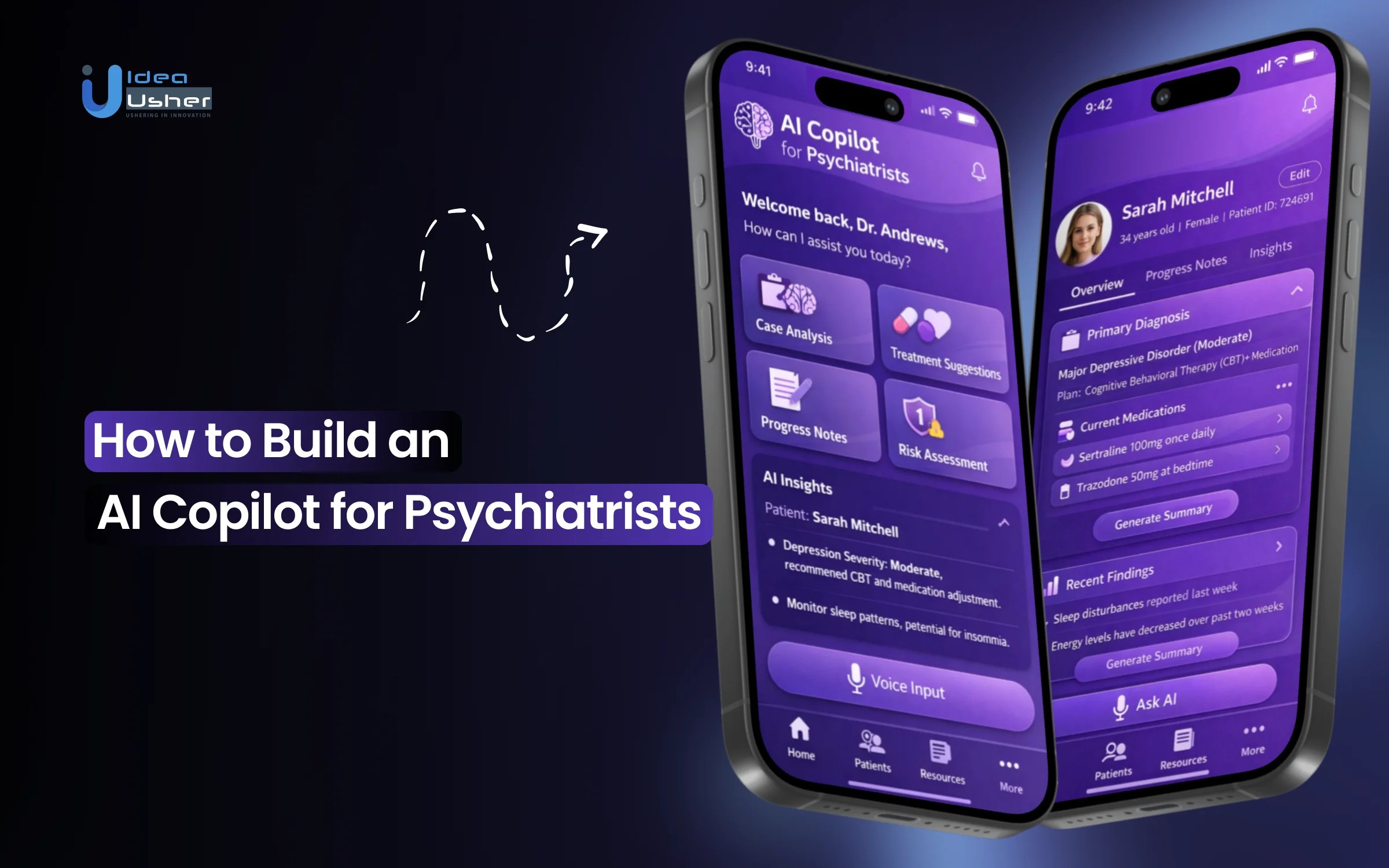
Psychiatric care often involves nuanced conversations, longitudinal patient histories and context that evolves over time rather than in isolated visits. The AI psychiatry copilot empowers clinicians to capture insights and track patterns while staying fully present during sessions, as the system provides seamless documentation, context retrieval and structured insights without interrupting the therapeutic interaction.
The systems required to support this workflow must interpret conversations organize clinical context and surface relevant information at the right moment by integrating natural language understanding, longitudinal data mapping, summarization and clinical system connectivity within a secure and compliant environment. The effectiveness of the platform depends on how well these components support clinical judgment while preserving accuracy, privacy and trust.
In this blog, we explain how to build an AI copilot for psychiatrists by examining core features, system architecture and practical considerations involved in developing responsible and effective AI support tools for mental healthcare.
Why AI Copilots Are Transforming Psychiatry Care?
The integration of an AI psychiatry copilot is fundamentally reshaping the operational landscape of mental health practices through a market shift valued at USD 3.05 billion in 2024 and projected to reach USD 9.65 billion by 2032, growing at a CAGR of 15.57% and automating the extraction of clinical insights from session audio, these platforms allow providers to move away from clerical tasks and focus entirely on patient outcomes.

70% of psychiatrists surveyed at an American Psychiatric Association (APA) session agreed that generative AI tools make documentation more efficient. AI-generated psychiatric notes require only 45% of the time compared to manual documentation.
A meta-analysis of AI applications in psychiatry found a pooled diagnostic accuracy of 85%, with machine learning models excelling in detecting complex disorders
A. Rising Documentation Burden in Mental Health
The administrative load in psychiatry is disproportionately high due to the qualitative nature of the work. Psychiatrists often face a choice between active listening and meticulous note-taking, a conflict that frequently leads to burnout or incomplete records. An AI psychiatry copilot resolves this tension by serving as an invisible, high-fidelity scribe.
| Impact Area | Traditional Documentation | AI-Enhanced Workflow |
| Time Allocation | 15 to 20 minutes per patient session. | Near-instant summary generation. |
| Provider Focus | Divided between the patient and a screen. | 100% engagement with the patient. |
| Record Quality | Subjective, brief and prone to memory bias. | Objective, detailed and comprehensive. |
| Burnout Risk | High due to after-hours administrative work. | Significantly lower due to real-time completion. |
B. Shift Toward Data-Driven Psychiatric Decisions
Transitioning to a data-centric model allows for higher precision in treatment. An AI psychiatry copilot analyzes longitudinal data to provide a clearer picture of a patient’s trajectory over months or years.
- Symptom Velocity Tracking: The system calculates the rate of change in mood markers, alerting the clinician if a patient is deteriorating faster than usual.
- Speech Pattern Analysis: Advanced NLP identifies changes in cadence, tone or word choice that may indicate shifts in cognitive load or emotional stability.
- Medication Efficacy Reports: By cross-referencing patient mentions of side effects with dosage changes, the AI generates a clear timeline of how specific interventions are performing.
- Risk Detection: The platform can highlight subtle linguistic cues related to self-harm or ideation that might be missed during a complex, hour-long conversation.
C. From Therapy Notes to Clinical Intelligence Systems
Modern platforms are evolving beyond simple transcription into sophisticated intelligence layers. This involves transforming raw dialogue into structured medical data that follows strict clinical protocols.
- Automated MSE Generation: The system extracts observations about appearance, behavior, speech and thought content to populate a Mental Status Exam automatically.
- DSM-5 Alignment: The AI suggests relevant codes and diagnostic criteria based on the symptoms discussed during the session, ensuring billing accuracy.
- Inter-session Monitoring: Beyond the office, these systems can integrate with patient-facing apps to track progress between appointments, providing a continuous stream of data.
- Workflow Integration: Instead of acting as a standalone tool, the copilot feeds directly into EHR systems, pharmacy portals and referral networks to create a unified care ecosystem.
What Is an AI Copilot for Psychiatrists?
An AI psychiatry copilot is a sophisticated clinical intelligence engine designed to handle the unique complexities of mental health interactions. Unlike basic recording tools, it functions as a specialized layer of software that understands the nuances of psychiatric evaluation, providing real-time support that extends from initial intake to long-term recovery monitoring.

A. Core Concept of a Psychiatry AI Copilot
The fundamental architecture of this technology revolves around ambient intelligence. As a psychiatrist speaks with a patient, the system captures the dialogue and uses Large Language Models (LLMs) trained on clinical datasets to transform unstructured conversation into structured medical insights.
- Linguistic Parsing: The engine identifies specific psychiatric symptoms, emotional valences and behavioral patterns mentioned during a session.
- Structured Output: It automatically organizes these findings into standardized formats like SOAP (Subjective, Objective, Assessment and Plan) or BIRP (Behavior, Intervention, Response and Plan) notes.
- Clinical Reasoning Assistance: By referencing established medical knowledge, the platform can surface relevant clinical guidelines or drug-to-drug interactions based on the current discussion.
- Privacy-First Design: These systems are built with zero-retention policies and enterprise-grade encryption to ensure every interaction remains confidential and compliant with global healthcare regulations.
B. How It Differs From Generic Medical Scribes
The AI psychiatry copilot is optimized for the qualitative and emotional depth of mental healthcare while a general medical scribe focuses on physical symptoms and lab results. The differences lie in the depth of context and the ability to interpret non-linear narratives.
| Feature | Generic Medical Scribe | AI Psychiatry Copilot |
| Primary Focus | Physical symptoms and vitals. | Behavioral nuances and thought processes. |
| Narrative Handling | Linear, fact-based reporting. | Interprets complex, emotional and non-linear dialogues. |
| Specialized Tasks | Updates medical history and scripts. | Generates Mental Status Exams and risk assessments. |
| Vocabulary | General medical terminology. | Psychotherapy modalities like CBT, DBT and psychodynamics. |
| Contextual Awareness | Low; records what is stated. | High; detects subtle shifts in mood or speech cadence over time. |
C. Role in End-to-End Mental Health Workflows
The utility of a copilot is not restricted to the duration of the therapy session. It acts as a connective tissue across the entire care continuum, ensuring that no critical data point falls through the cracks between appointments.
- Intake and Assessment: During the first meeting, the AI helps synthesize the patient’s history, identifying trauma markers or previous treatment failures to help the clinician build a robust baseline.
- Treatment Planning: The system suggests evidence-based interventions aligned with the gathered data, such as specific therapeutic exercises or medication adjustments.
- Longitudinal Tracking: It maintains a high-level view of patient progress, summarizing weeks of sessions into a single concise report for review or insurance justification.
- Risk Management: By continuously monitoring for indicators of crisis or self-harm, the copilot provides a safety net that alerts the provider to urgent needs that require immediate intervention.

How an AI Psychiatry Copilot Works Step-by-Step?
The technical pipeline behind an AI psychiatry copilot is a sophisticated multi-stage process that converts raw acoustic data into actionable clinical intelligence. This workflow ensures that while the psychiatrist remains the final decision-maker, the heavy lifting of data organization and analysis is handled by high-performance algorithms.

1. Capturing and Transcribing Therapy Conversations
The process begins with ambient listening where professional-grade microphones or integrated software modules capture the audio from the session. The system must be capable of distinguishing between the provider and the patient in a process known as speaker diarization.
- Acoustic Clarity: High-quality capture ensures that even whispered or emotionally charged speech is recorded accurately.
- Real-time Transcription: Automatic Speech Recognition (ASR) engines convert audio into text with a specific focus on medical and psychiatric terminology.
- Privacy Controls: Data is encrypted at the point of capture and identifiable information can be redacted in real-time to maintain patient confidentiality.
2. NLP Processing for Clinical Context Extraction
Once the conversation is converted to text, Natural Language Processing (NLP) layers analyze the transcript to identify clinical significance. This is where the AI psychiatry copilot differentiates between a patient talking about their weekend and a patient describing symptoms of anhedonia or cognitive fog.
- Entity Recognition: Identifying mentions of specific medications, dosages and durations.
- Sentiment and Tone Analysis: Evaluating the emotional state of the patient by analyzing word choice and linguistic patterns.
- Symptom Mapping: Linking natural language descriptions (e.g., “I can’t get out of bed”) to clinical terms like “lethargy” or “depressive episode.”
3. Structuring Notes Into Medical Formats
After extracting the relevant data points, the AI organizes the information into structured medical records. This eliminates the need for manual data entry and ensures that the clinical documentation meets all necessary standards for audit and insurance purposes.
| Documentation Component | AI Transformation Process |
| Subjective (SOAP) | Summarizes the patient’s self-reported feelings and experiences. |
| Objective (SOAP) | Extracts observable facts, speech patterns and physical cues. |
| Assessment | Synthesizes current symptoms against previous history to suggest a status update. |
| Mental Status Exam (MSE) | Populates fields for mood, affect, thought content and orientation based on the dialogue. |
4. Generating Insights and Clinical Suggestions
The most advanced phase involves the AI acting as a supportive partner by surfacing insights that may require clinical attention. These suggestions are based on a combination of the current session data and the patient’s longitudinal history.
- Risk Alerts: Identifying linguistic markers that suggest an escalation in risk, such as self-harm or aggression.
- Treatment Alignment: Checking the current session outcomes against the established treatment plan to see if progress is being made.
- Clinical Knowledge Retrieval: Providing instant access to relevant DSM-5 criteria or peer-reviewed literature related to the specific symptoms discussed.
5. Syncing With EHR and Workflow Systems
For a platform to be truly effective, it must exist within the clinician’s existing ecosystem. The final step of the workflow is the seamless transfer of generated notes and insights into the Electronic Health Record (EHR).
- Seamless Integration: Direct API connections allow the AI psychiatry copilot to push completed notes into systems like Epic, Cerner or specialized mental health EHRs.
- Interoperability: Ensuring that the data follows HL7 or FHIR standards so it can be shared safely with other members of the patient’s care team.
- Validation Loop: The psychiatrist reviews the AI-generated draft, makes any necessary adjustments and signs off, ensuring that the human clinician always has the final word on the medical record.
Key Features That Define a Psychiatry AI Copilot
A high-performance AI psychiatry copilot differentiates itself through specialized features designed for behavioral health. These components ensure the platform understands clinical nuances, maintains safety protocols and integrates seamlessly into the daily operations of a modern mental health practice.

1. Ambient Listening for Therapy Sessions
This technology uses high-fidelity audio capture to record conversations without intrusive hardware. It utilizes speaker diarization to distinguish between provider and patient, ensuring a clean, accurate transcript of the dialogue.
Advanced noise-filtering algorithms eliminate background distractions, allowing the AI psychiatry copilot to focus on verbal nuances. This enables psychiatrists to maintain uninterrupted eye contact and build a stronger therapeutic alliance.
2. Automated Psychiatric Notes and MSE Generation
The system transforms unstructured session data into standardized formats like SOAP, BIRP or DAP notes. It identifies clinical observations to automatically populate a comprehensive Mental Status Exam (MSE) report.
By automating these high-volume tasks, the platform reduces clerical overhead by up to 80%. This ensures that documentation is completed immediately after the session, preserving clinical accuracy and detail.
3. DSM-5 Aligned Diagnosis Support System
The engine cross-references patient symptoms with DSM-5 and ICD-11 criteria in real-time. It suggests potential differential diagnoses by analyzing the frequency and severity of reported mental health markers.
This feature acts as a clinical safety net, ensuring that no diagnostic criteria are overlooked. It provides clinicians with evidence-based justifications for their findings, streamlining the entire diagnostic process.
4. AI-Based Risk Detection for Self-Harm Signals
Safety is paramount and the AI monitors for linguistic patterns associated with crisis or self-harm. It flags high-risk keywords and tonal shifts that may indicate an escalation in patient instability.
When a risk is detected, the system provides immediate clinical alerts to the provider. This proactive monitoring allows for faster intervention and more robust risk management protocols within the practice.
5. Continuous Patient Monitoring Between Sessions
The copilot extends its utility beyond the office by analyzing data from patient-facing applications. It tracks mood changes, sleep patterns and medication adherence to provide a holistic view of progress.
These insights are synthesized into a longitudinal report for the next appointment. This bridge ensures that the AI psychiatry copilot provides a continuous stream of actionable data for clinicians.
6. Personalized Treatment Plan Recommendations
The system suggests tailored therapeutic interventions and goal-setting strategies based on gathered data. It aligns recommendations with specific modalities like Cognitive Behavioral Therapy (CBT) or Dialectical Behavior Therapy.
The AI analyzes historical outcomes to predict which strategies may be most effective. This allows for precision psychiatry where treatment plans are dynamically adjusted based on real-world patient data.
7. EHR Integration and Clinical Data Sync
A core feature is the ability to push data directly into Electronic Health Records (EHR). It supports industry standards like HL7 and FHIR to ensure seamless interoperability across platforms.
This synchronization eliminates redundant data entry and ensures the medical record is updated in real-time. It creates a unified ecosystem where clinical intelligence flows effortlessly between all healthcare stakeholders.
Business Benefits of Building a Psychiatry AI Copilot
A specialized AI psychiatry copilot offers a significant competitive advantage by addressing the structural inefficiencies of traditional mental health services. Beyond clinical utility, these platforms serve as an operational catalyst that enhances practice scalability, improves provider satisfaction and secures long-term financial viability.

1. Reducing Clinician Burnout and Admin Load
The primary driver of turnover in the mental health sector is the overwhelming volume of non-clinical work. By automating the most labor-intensive aspects of the practice, an AI psychiatry copilot restores the professional autonomy of the psychiatrist.
- Time Recovery: Automating note-taking can save a single provider up to three hours of administrative work daily, allowing for more billable sessions or essential rest.
- Cognitive Offloading: When the system handles data organization and formatting, clinicians experience less mental fatigue, leading to higher quality care during the final hours of a shift.
- Operational Streamlining: Standardizing documentation across a large clinic ensures that all records are audit-ready without requiring manual review from senior staff.
2. Improving Diagnostic Accuracy With AI Support
A data-driven approach to psychiatry reduces the margin for human error and ensures that every diagnosis is backed by comprehensive evidence. The copilot serves as a persistent clinical memory, cross-referencing years of patient history in milliseconds.
- The Error Mitigation: Flags potential contraindications or overlooked symptoms in real-time.
- The Objective Baselines: Replaces anecdotal progress reports with quantifiable mood and speech metrics.
- The Standardized Care: Ensures every patient receives an evaluation that meets the highest clinical benchmarks.
3. Enhancing Patient Engagement and Retention
The “leakage” of patients between sessions is a major hurdle in psychiatry. An AI psychiatry copilot creates a more connected experience, making patients feel heard and supported even outside the clinic walls.
- Continuous Support: By integrating with digital touchpoints, the platform provides patients with a sense of continuity, leading to higher adherence to treatment plans.
- Personalized Feedback: AI-generated summaries shared with patients can help them visualize their own progress, fostering a sense of agency and commitment to the therapeutic process.
- Reduced Wait Times: Faster documentation leads to better scheduling availability, ensuring patients can get the help they need when they need it most.
4. Unlocking New Revenue Models in Mental Health
From a strategic perspective, building an AI psychiatry copilot opens doors to sophisticated billing and service categories that were previously difficult to manage manually.
- Remote Patient Monitoring (RPM): The platform facilitates the collection and analysis of physiological and behavioral data, allowing practices to bill for continuous monitoring services.
- Value-Based Care Contracts: With the ability to prove patient outcomes through objective data, practices can negotiate more lucrative contracts with insurance payers who prioritize results over volume.
- Scalable Group Therapy: AI can help manage the complex documentation requirements of group sessions, making it more profitable to run diverse therapeutic programs at scale.
Step-by-Step Development Process for AI Psychiatry Copilot
Building a clinical-grade platform requires a methodical approach that balances technical innovation with medical rigor. This development lifecycle ensures the final product is secure, accurate and deeply integrated into daily practice.

1. Defining Clinical Workflows and Use Cases
A successful build begins by mapping the intricate journeys of patients and providers within a mental healthcare setting. This process involves identifying specific friction points in intake assessments and follow-ups to ensure the AI provides highly relevant, context-aware support.
2. Designing HIPAA-Compliant System Architecture
The infrastructure must be engineered with a security-first mindset to handle sensitive protected health information. This architecture utilizes end-to-end encryption and decentralized data processing layers to meet the rigorous standards of HIPAA and other global regulatory frameworks.
3. Building AI Models for Psychiatry Use Cases
Specialized intelligence layers involve fine-tuning Large Language Models on domain-specific psychiatric datasets. This focused training enables the system to perform complex tasks like identifying emotional shifts, extracting diagnostic markers and maintaining a high sensitivity for risk detection signals.
4. Developing Ambient Listening and Note Generation
The technical implementation of ambient intelligence relies on sophisticated speech-to-text engines capable of speaker diarization. This component captures the nuance of therapeutic dialogue and automatically translates it into structured clinical outputs including comprehensive Mental Status Exams and progress notes.
5. Integrating EHR and Third-Party Systems
Robust interoperability is required for the platform to function as a seamless part of the healthcare ecosystem. The development team focuses on building secure API connections and utilizing FHIR standards to ensure data flows bi-directionally between the copilot and various records.
6. Testing for Clinical Accuracy and Safety
A rigorous validation process involves a feedback loop with subject matter experts to eliminate algorithmic hallucinations. This phase includes extensive quality assurance testing to ensure the AI-generated insights are clinically sound, safe and consistently meet professional medical standards.
7. Deployment and Continuous Improvement
The final stage transitions the platform into real-world clinical environments where performance is monitored in real-time. Continuous improvement is driven by clinician feedback and updated medical guidelines, ensuring the model evolves to maintain its accuracy and utility over time.
AI Psychiatry Copilot Development Cost Breakdown
Launching a specialized AI psychiatry copilot involves a tiered investment strategy. The following breakdown illustrates the financial requirements for transitioning from a validated prototype to a market-ready, enterprise-grade clinical platform.
| Development Phase | MVP Level | Enterprise Level | Key Deliverables |
| Discovery & Planning | $7,000 – $12,000 | $15,000 – $30,000 | Feature roadmap, compliance strategy and UI/UX wireframes. |
| Data Engineering | $15,000 – $30,000 | $40,000 – $80,000 | Cleaned datasets, clinical labeling and secure data pipelines. |
| AI Model Development | $40,000 – $75,000 | $100,000 – $220,000 | Fine-tuned LLMs, risk detection models and MSE generators. |
| Software Core Build | $30,000 – $60,000 | $80,000 – $180,000 | Backend architecture, ambient listening API and frontend web/mobile. |
| Compliance & Security | $12,000 – $25,000 | $35,000 – $60,000 | HIPAA/GDPR audits, BAA agreements and end-to-end encryption. |
| System Integration | $10,000 – $20,000 | $30,000 – $70,000 | Bi-directional EHR sync (Epic/Cerner) and FHIR interoperability. |
| QA & Clinical Testing | $8,000 – $15,000 | $20,000 – $50,000 | Expert validation, bias testing and hallucination reduction. |
| Total Estimated Cost | $83,000 – $144,000 | $227,000 – $442,000+ | Full-scale, scalable clinical intelligence ecosystem. |
Critical Cost-Affecting Factors During Development
The final budget for an AI psychiatry copilot is influenced by technical complexity and regulatory mandates. Understanding these variables allows for more precise financial forecasting and resource allocation.
- Depth of Regulatory Compliance: HIPAA or GDPR standards add 20% to 30% to project costs through technical overhead for audit logs, automatic session timeouts and legal fees for Business Associate Agreements (BAAs).
- Model Selection and Fine-Tuning: Pre-trained APIs like GPT-4o or Claude 3.5 limit setup to $5,000–$15,000 whereas custom models for niche psychiatric terminology increase costs via specialized data labeling.
- EHR Integration Complexity: Deep bi-directional synchronization with legacy systems increases costs by 15% to 25% and requires custom middleware for FHIR or HL7 data standards.
- Ambient Listening and Diarization: High-fidelity speaker diarization logic for distinguishing between psychiatrist and patient adds $20,000 to $40,000 to the initial development phase.
- Infrastructure and Inference Costs: Monthly GPU-backed cloud hosting via AWS HealthLake or Azure scales from $1,000 to over $10,000 based on total session volume.
- Continuous Safety Monitoring: A clinical safety net for real-time risk detection adds 10% to 15% to the QA budget to ensure testing against edge cases and prevent false negatives.
Tech Stack Needed for Psychiatry AI Copilot
Selecting the right technology stack is vital for ensuring clinical reliability and data security. A modern architecture must balance high-performance AI processing with the stringent compliance requirements of the mental healthcare industry.
| Component | Recommended Stack | Key Purpose and Value |
| Frontend and Cross-Platform | Flutter or React Native (Mobile), React.js (Web) | Provides a responsive, consistent UI for clinicians across mobile and desktop devices. |
| Backend Infrastructure | Node.js (TypeScript) or Python (FastAPI/Django) | Manages high-concurrency requests and coordinates secure communication between services. |
| AI Models and Speech | Deepgram Nova-3 Medical, Whisper Large V3, GPT-4o | Enables medical-grade transcription and clinical reasoning with fine-tuned psychiatric context. |
| Cloud and Data Storage | AWS HealthLake, Azure for Health, PostgreSQL (Encrypted) | Offers HIPAA-compliant storage and specialized services for healthcare data analytics. |
| Integration Layers | Redox Engine, Smile Digital Health (FHIR/HL7) | Facilitates bi-directional data flow between the copilot and various Electronic Health Records. |
Must-Have Compliance for Psychiatry AI Platforms
Operating within the mental health sector requires a rigorous commitment to legal and ethical frameworks. Establishing robust compliance protocols is not merely a regulatory hurdle but a foundational requirement for building the clinical trust necessary for long-term platform adoption.
1. HIPAA Compliance for Patient Data Security
The Health Insurance Portability and Accountability Act serves as the mandatory baseline for any AI psychiatry copilot operating within the United States. This involves implementing administrative, physical and technical safeguards to protect sensitive health information.
- Encryption Standards: All data must be encrypted using AES-256 at rest and TLS 1.2 or higher during transit.
- Audit Logging: Maintaining immutable logs that track every instance of data access, modification or deletion by clinicians or administrators.
- Business Associate Agreements: Executing BAAs with every third-party vendor, from cloud hosting providers to AI model API services to ensure shared accountability.
2. GDPR and Global Data Protection Standards
For platforms scaling internationally, compliance with the General Data Protection Regulation is essential for managing the rights of individuals. This framework emphasizes the principle of data minimization, ensuring the system only collects information strictly necessary for clinical care.
- Right to Erasure: Users must have the ability to request the permanent deletion of their personal data from the system.
- Consent Management: Implementing granular consent mechanisms where patients explicitly agree to the use of ambient listening and AI analysis.
- Data Sovereignty: Utilizing regional data centers to ensure that sensitive psychiatric records do not cross international borders illegally.
3. Ethical AI Use in Mental Health Decisions
The deployment of clinical intelligence requires a high degree of transparency to prevent algorithmic bias and ensure patient safety. Ethical AI frameworks focus on maintaining the human-in-the-loop model where the AI psychiatry copilot supports rather than replaces the psychiatrist.
- Bias Mitigation: Regularly auditing models to ensure they perform equitably across different demographics, avoiding skewed diagnostic suggestions.
- Explainability: Ensuring the AI can provide a clear rationale for its suggestions, such as citing specific DSM-5 criteria it identified in the session.
- Transparency: Clearly labeling AI-generated content within the EHR to distinguish it from human-verified clinical notes.
4. Handling Sensitive Mental Health Data Safely
Psychiatric records often contain highly sensitive details that require extra layers of protection beyond standard medical data. Safe handling protocols focus on anonymization and restricted access to prevent the unauthorized disclosure of therapeutic dialogues.
- PII Redaction: Automatically scrubbing Personally Identifiable Information from transcripts before they are used for model training or research.
- Granular Access Control: Utilizing Role-Based Access Control (RBAC) to ensure that only the assigned clinician can view the full session transcript.
- Ephemeral Processing: Implementing zero-retention policies for raw audio files where the audio is deleted immediately after the structured clinical note is generated.
Key Challenges in Building Psychiatry AI Copilots
Developing clinical-grade AI for mental health involves navigating significant technical and ethical hurdles. Success depends on overcoming the complexities of nuanced human emotion, stringent regulatory environments and the fragmentation of existing healthcare infrastructure to ensure a reliable user experience.

1. Ensuring Clinical Accuracy and Reliability
Challenge: AI models may generate “hallucinations” or misinterpret figurative language which can lead to inaccurate clinical summaries or diagnostic errors.
Solution: Our developers implement RAG (Retrieval-Augmented Generation) and fine-tune models on curated medical datasets, ensuring the system cites specific DSM-5 evidence while keeping a human-in-the-loop for final clinical validation.
2. Managing Sensitive and Unstructured Data
Challenge: Psychiatric dialogue is often non-linear and deeply personal, making it difficult to extract structured medical insights without compromising privacy.
Solution: We utilize advanced diarization and PII-redaction layers that scrub identifiable data in real-time. Our architecture uses ephemeral processing, meaning raw audio is deleted immediately after the clinical note generation.
3. Bias and Ethical Risks in Mental Health AI
Challenge: Algorithms can inadvertently reflect cultural or demographic biases present in training data, potentially leading to unequal care for minority populations.
Solution: Our team conducts rigorous bias audits and uses diverse training sets. We implement explainability features, allowing clinicians to see exactly why the AI suggested a specific symptom or risk flag.
4. Integration With Legacy Healthcare Systems
Challenge: Many psychiatric practices rely on outdated Electronic Health Record systems that lack modern APIs, making seamless data synchronization difficult.
Solution: We build custom integration middleware using HL7 and FHIR standards. Our developers leverage tools like Redox to bridge the gap between our modern AI layer and traditional medical databases safely.
How IdeaUsher Builds AI Copilots for Psychiatry?
IdeaUsher specializes in bridging the gap between advanced neural modeling and clinical necessity. Our development methodology ensures that every AI psychiatry copilot we build is medically grounded, technologically superior and fully optimized for market scalability.
A. Deep Expertise in Healthcare AI Solutions
With over 1,000 successful projects and a decade of experience, our team brings specialized knowledge in deploying generative AI within medical frameworks. We understand the nuances of psychiatric data, ensuring models accurately interpret emotional and behavioral cues.
B. End-to-End Development From Idea to Scale
Our process covers the entire lifecycle, from initial clinical workflow mapping and UI/UX design to full-scale deployment. We provide comprehensive support, ensuring the platform evolves alongside emerging psychiatric trends and growing user demands for data-driven care.
C. Experience With HIPAA-Compliant Platforms
Security is at the core of our healthcare architecture, utilizing multi-layered encryption and secure data pipelines to protect patient privacy. We ensure every platform strictly adheres to HIPAA and GDPR standards, providing a safe environment for clinicians.
D. Custom AI Models Tailored for Psychiatry
We move beyond generic solutions by fine-tuning Large Language Models specifically for mental health terminology and DSM-5 criteria. Our developers build proprietary risk-detection and MSE-generation algorithms that offer high precision for complex, real-world psychiatric evaluations.
Case Study: AI Copilot for Mental Health Platform
IdeaUsher’s extensive experience in behavioral health technology is exemplified by our work on Kamelion, a robust mental health and well-being platform. By integrating advanced notification architectures and real-time feed systems, we demonstrated how scalable infrastructure supports a high-engagement user base without performance degradation
A. Client Problem and Market Opportunity
The primary challenge involved existing wellness apps experiencing performance lags with real-time data. This gap created an opportunity to build a high-concurrency system providing the instantaneous feedback and reliable data streams essential for mental health.
- The High-Concurrency Management: Building a system capable of handling intense user interactions ensures that the platform remains stable under heavy loads.
- The Clinical Alert Speed: Prioritizing rapid data processing prevents delays in clinical alerts, maintaining the safety and responsiveness of the intervention.
- The Habit-Tracking Reliability: Ensuring seamless updates for habit-tracking features allows for consistent data collection and patient progress monitoring.
- The Market Opportunity: Addressing these technical shortcomings provides a significant opening to deliver a high-performance system that outpaces standard wellness apps.
B. Solution Architecture and AI Implementation
IdeaUsher developed a specialized backend architecture designed for low-latency data processing and intelligent event triggering. This infrastructure allows for the future integration of an AI psychiatry copilot by providing the necessary data pipelines for real-time analysis.
- Scalable Notification Engine: Engineered to handle thousands of simultaneous alerts without delay, ensuring timely patient engagement.
- Optimized Feed Architecture: Developed a dynamic content delivery system that adapts to user behavior and clinical needs.
- Security Layers: Implemented high-level encryption protocols to ensure that all user-generated wellness data remains protected and private.
C. Results Achieved in Clinical Efficiency
The deployment of this robust architecture led to a significant improvement in platform stability and provider engagement. By streamlining the way data is fed to clinicians and coaches, the platform achieved a higher level of operational efficiency that supported rapid growth.
| Metric | Result Achieved |
| System Latency | Reduced by 60% during peak usage periods. |
| User Scaling | Successfully managed a 3x increase in user count without performance drops. |
| Admin Efficiency | Automated notification logic reduced manual oversight by 25%. |
| Data Reliability | Achieved 99.9% uptime for critical clinical data feeds. |
D. Lessons Learned and Key Takeaways
The development of a successful AI psychiatry copilot relies on a technical foundation that prioritizes clinical trust and system reliability. Through our build process, we identified several critical takeaways that ensure the platform meets the high standards of mental healthcare:
- The Infrastructure as a Trust Anchor: System latency directly impacts clinical credibility because any lag in processing diminishes the perceived reliability of the mental health support.
- The High-Concurrency Management: Technical success requires a framework capable of handling simultaneous sessions and heavy data loads without performance degradation.
- The Asynchronous Data Processing: Utilizing non-blocking data workflows ensures that the platform remains fast and responsive even as complex AI features are integrated.
- The Enterprise-Level Scalability: Building for the future means creating a foundation that is secure and ready to scale alongside evolving psychiatric demands.
Leading Platforms Using AI Copilots in Psychiatry
Real-world AI Copilots for psychiatrists range from specialized niche tools to enterprise-grade medical systems. Unlike general transcription, these platforms are specifically trained to handle the nuances of mental health, such as Mental Status Exams (MSE) and risk assessments. Here are 5 real-world platform examples:
1. Upheal

Upheal is purpose-built specifically for mental health professionals rather than general medicine. It focuses on the therapeutic relationship by capturing clinical nuances.
Key Features: Automatically generates SOAP and DAP notes. It also provides session analytics, such as “speaking-to-listening ratio” and “silence detection,” to help psychiatrists reflect on their therapeutic style.
Best For: Private practices and outpatient psychiatrists who want deeper insight into their patient interactions.
2. Eleos Health

Eleos Health positions itself as a “Behavioral Health AI” platform. It is designed to work in both outpatient and high-volume clinical settings.
Key Features: It uses specialized NLP to identify clinical interventions (e.g., “the clinician used CBT techniques”). It also tracks patient outcomes over time to help provide evidence-based care.
Best For: Behavioral health organizations and clinics that require data-driven oversight and standardized documentation.
3. Microsoft Nuance (DAX Copilot)

DAX (Dragon Ambient eXperience) Copilot is the heavyweight “enterprise” choice. It is deeply integrated into major hospital systems and standard Electronic Health Records (EHRs).
Key Features: It offers a seamless experience within systems like Epic or Cerner. It captures the conversation via a mobile app and pushes a structured note directly into the patient’s chart.
Best For: Psychiatrists working in large hospital systems or academic medical centers where strict EHR integration is mandatory.
4. Berries AI

Berries AI is designed specifically for behavioral health, focusing on extreme ease of use and speed.
Key Features: It creates structured psychiatric notes (intakes, follow-ups, med management) in seconds. It is particularly known for a high degree of customization, allowing doctors to “teach” the AI their specific writing style.
Best For: Solo practitioners or small groups looking for a fast, “low-friction” tool that doesn’t require a complex setup.
5. Mentalyc

Mentalyc focuses heavily on the unique language used in therapy and psychiatric evaluations, specifically catering to those who handle long-form counseling sessions.
Key Features: It specializes in generating progress notes and treatment plans that meet insurance requirements. It offers robust language support for multi-lingual clinics.
Best For: Psychiatrists who balance medication management with significant psychotherapy components.
Future Trends in AI for Mental Healthcare
The next generation of mental health technology is moving toward proactive and highly personalized intervention models. As an AI psychiatry copilot evolves, it will transition from a documentation assistant to a predictive engine that anticipates patient needs.

1. Predictive Mental Health Risk Modeling
Sophisticated machine learning models are now being trained to identify early warning signs of relapse or suicidal ideation by analyzing historical health records. This shifts the care paradigm from reactive treatment to proactive prevention.
Real-World Platform: Holmusk utilizes its NeuroMap platform to analyze longitudinal behavioral health data, helping clinicians predict patient trajectories and the likelihood of hospitalization based on historical clinical evidence and real-world data.
2. AI-Driven Personalized Therapy Journeys
Future platforms will utilize deep learning to suggest customized treatment paths based on an individual’s unique response to specific therapeutic modalities. This ensures that every patient receives a care plan that is dynamically adjusted.
Real-World Platform: Limbic uses an AI-driven clinical assessment tool that integrates with the UK’s NHS to triage patients. It identifies specific mental health needs with high accuracy, ensuring patients are matched with the correct therapeutic pathway immediately.
3. Integration With Wearables and Biomarkers
The fusion of an AI psychiatry copilot with wearable devices allows for the continuous monitoring of physiological markers like heart rate variability and sleep cycles. These digital biomarkers provide objective data that complements subjective reporting.
Real-World Platform: DeepCura is an ambient AI scribe specifically built to handle complex psychiatric documentation. It allows clinicians to pull in validated screening instruments(like PHQ-9 or GAD-7) and clinical data streams from patient-worn devices to automate the Objective portion of psychiatric notes.
4. Evolution of Human + AI Collaborative Care
The “Augmented Clinician” model represents the future of the industry where AI handles data-intensive administrative tasks while humans focus on empathy. This synergy ensures that technology enhances the therapeutic alliance rather than replacing human connection.
Real-World Platform: Eleos Health acts as an ambient intelligence layer that listens to therapy sessions and provides clinicians with “superpowers,” such as identifying which evidence-based techniques were used and suggesting improvements for future sessions while automating the note-taking process.
How to Get Started With Your AI Psychiatry Copilot?
Launching a clinical-grade platform requires a strategic balance of medical expertise and technical innovation. By following a structured roadmap, you can transition from initial concept to a scalable, high-impact clinical solution.
1. Define Your Product Vision and Use Case
Establishing a clear focus is the first step toward a successful build. Determine whether your platform will prioritize ambient note-taking, diagnostic support or risk detection to ensure the final product meets the specific needs of your target psychiatric practice.
2. Choose the Right AI Development Partner
Selecting a partner with deep healthcare expertise is critical for navigating complex regulatory and technical landscapes. Look for a team that understands HIPAA compliance, specialized medical NLP and the intricate requirements of psychiatric clinical workflows to ensure a secure, high-quality build.
3. Build MVP With Core Clinical Features
The Minimum Viable Product should focus on high-impact features like ambient listening and automated SOAP note generation. This allows you to gather real-world feedback from psychiatrists, ensuring the core functionality provides immediate value while validating your platform’s technical reliability.
4. Scale With Advanced AI and Integrations
Once the core platform is validated, expand its capabilities with bi-directional EHR synchronization and predictive risk modeling. Scaling involves integrating deeper clinical intelligence layers and connecting with the broader healthcare ecosystem to provide a comprehensive, end-to-end mental health intelligence system.
Build Your AI Psychiatry Copilot With IdeaUsher
Transform your vision into a clinical-grade reality with IdeaUsher. Our elite team of ex-FAANG/MAANG developers brings a wealth of technical sophistication to the healthcare sector. With over 500,000+ hours of experience in high-stakes software engineering, we specialize in building secure, intelligent platforms that reduce clinician burnout while maintaining the highest standards of psychiatric care and medical accuracy.
Why Hire Us:
- Our team utilizes proprietary pre-built healthcare modules that significantly accelerate your time-to-market while ensuring foundational security is never compromised.
- We provide dedicated post-launch maintenance and real-time model monitoring to ensure your AI remains accurate as medical clinical guidelines evolve.
- Every project benefits from our strategic architectural consulting, helping you choose the most cost-effective LLMs for high-volume psychiatric data processing.
- We offer seamless cross-platform synchronization, ensuring your copilot performs flawlessly across mobile devices, tablets and legacy desktop medical workstations.
Talk to Our Healthcare AI Experts and get a custom development roadmap that aligns with your specific clinical and business goals.
Explore our portfolio of high-performance builds and start your journey toward deploying a market-leading psychiatric intelligence platform.
Conclusion
Building an AI psychiatry copilot is a high-impact investment that addresses the most critical challenges in mental healthcare today: clinician burnout and the need for data-driven precision. By automating administrative burdens and providing deep clinical insights, these platforms allow psychiatrists to focus on the human element of therapy while maintaining the highest standards of documentation and safety. For those looking to innovate in the EdTech or healthcare space, this technology represents the future of clinical intelligence, offering a scalable solution that improves both provider efficiency and patient outcomes.
FAQs
A.1. The initial development costs generally range between $80,000 and $140,000+. Total investment depends on feature complexity, HIPAA compliance requirements, EHR integration depth and the use of custom fine-tuned models versus pre-trained APIs.
A.2. The platform must implement end-to-end encryption, automatic session timeouts and detailed audit logs. Developers must also sign Business Associate Agreements (BAAs) with cloud providers to guarantee the security of sensitive mental health data.
A.3. The system achieves seamless connectivity through FHIR or HL7 standards and custom middleware. This bi-directional synchronization allows the AI to pull patient history and push structured clinical notes directly into legacy healthcare records.
A.4. The essential features include ambient listening for session transcription, automated MSE generation and real-time risk detection for self-harm. These tools must prioritize accuracy and privacy to support clinical judgment without interrupting therapy.


